
Pilots of deadly Miami plane crash weren’t warned of tailwinds, report says
Air traffic controllers in the United States failed to relay a critical wind advisory to the pilots of an Amazon cargo aircraft that overran the runway at Miami International Airport on 6 September, a preliminary report from the National Transportation Safety Board (NTSB) confirms.
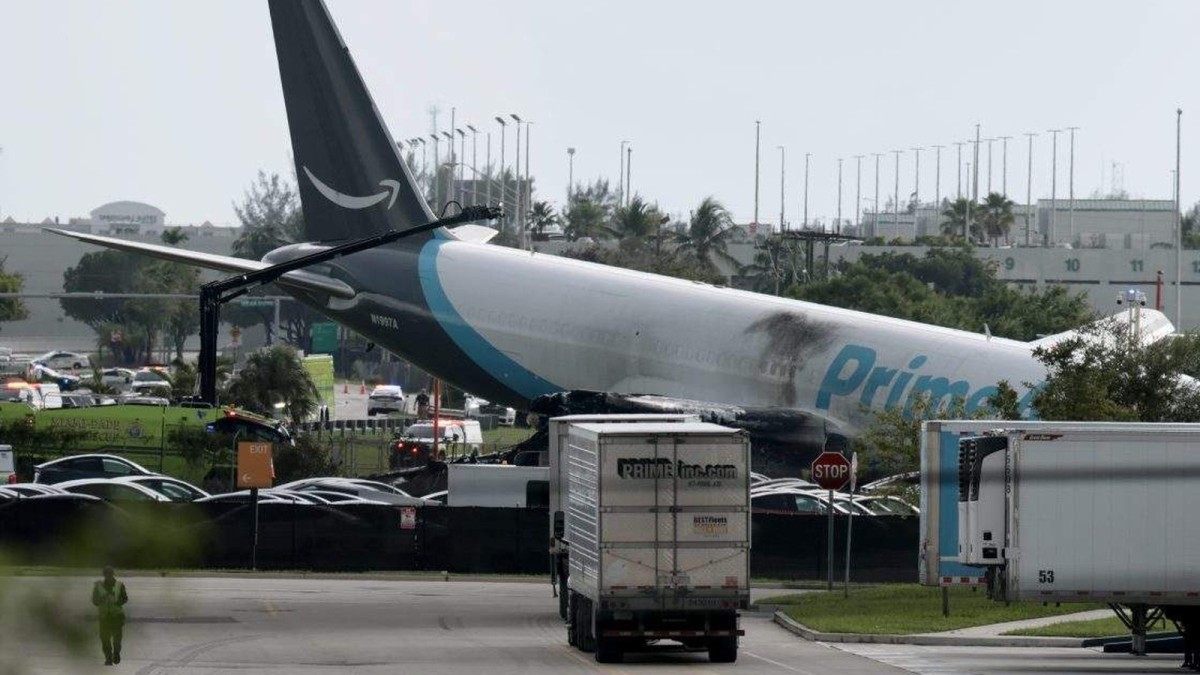
Air traffic controllers in the United States failed to relay a critical wind advisory to the pilots of an Amazon cargo aircraft that overran the runway at Miami International Airport on 6 September, a preliminary report from the National Transportation Safety Board (NTSB) confirms. The omission, which contravenes federal regulations that require controllers to state both wind direction and velocity when a tailwind exists, is now being examined as one link in a chain of events that led to the loss of five lives. While the final cause of the crash will not be determined for many months, the incident raises questions about procedural compliance, pilot‑controller communication and the broader safety culture that also underpins Canada’s own aviation system.
What the NTSB report reveals
The NTSB’s preliminary findings show that, four minutes before the Amazon flight was cleared to land, a controller issued a wind advisory to another aircraft, warning of gusts up to 25 mph (40 kph) from the south. The same controller, however, did not convey any wind information to the Amazon crew, even though the runway they were using was subject to a tailwind at the time. Federal regulations explicitly require controllers to announce both wind direction and speed when a tailwind is present, a rule that was not followed in this case.
Evidence released by the board indicates that the Amazon plane, which had departed Puerto Rico with a load of contact‑lens packages, travelled roughly 1,200 feet (366 metres) beyond the runway’s end before breaking through a fence and colliding with a van carrying aircraft‑cleaning staff. The impact killed five occupants of the van and caused serious injuries to two other van occupants and a driver of a nearby car. The two pilots, who suffered only minor injuries, later reported that they had attempted to abort the landing at the last minute, a maneuver made more difficult by the unexpected tailwind.
Why tailwinds matter
Tailwinds increase an aircraft’s ground speed during the landing roll, reducing the distance available to decelerate. As former Federal Aviation Administration official Tony Mello explained, “When you’ve got winds like that, it is your responsibility as a controller to issue that to a pilot, especially on landing and especially when you have gusts.” The gusting nature of the wind adds another layer of complexity, requiring pilots to adjust thrust and braking more precisely.
Former NTSB member John Goglia cautioned that the lack of a wind briefing, while a “significant omission,” would not alone cause a crash. “Every crash is a chain of events. That’s just one event,” he said. In this incident, the chain also included the pilots’ own concerns about speed; an earlier NTSB preliminary report noted that one pilot warned of “excessive speed” repeatedly during the approach.
Pilot experience and crew dynamics
The flight crew comprised a 55‑year‑old captain with 7,145 flight hours and a 37‑year‑old first officer with 2,655 hours, according to the NTSB. Although both pilots were seasoned, the report notes that the pair had flown together for the first time on the day of the accident. This lack of familiarity may have limited their ability to coordinate a rapid response to the unexpected tailwind and the resulting speed concerns.
Both pilots survived with minor injuries, and the board indicated that more in‑depth interviews would be required to understand how they perceived the wind conditions and why they chose to continue the approach rather than divert or request a different runway. Their testimony will be crucial in determining whether the omission of the wind advisory materially affected their decision‑making.
Corporate response and accountability
Amazon, the cargo’s ultimate customer, suspended its partnership with the flight operator, 21 Air, immediately after the crash, reiterating that safety “has always been our top priority, whether in our own operations or when we’re working with partners.” 21 Air’s chief executive, Keith Winters, pledged to support those affected, assist authorities and provide accurate information as it becomes available.
The swift corporate reaction mirrors how Canadian companies have handled similar incidents, where partnership contracts often contain safety clauses that can be invoked following a breach of regulatory standards. The episode underscores the importance of contractual safeguards that compel operators to adhere strictly to aviation regulations, a principle that Canadian regulators have long championed through the Canadian Aviation Regulations (CARs).
Implications for Canadian aviation safety
While the accident occurred in the United States, the procedural lapse is a reminder for Canada’s own air traffic control system. Canadian controllers are likewise mandated to provide wind information, especially when tailwinds exceed certain limits. The Transport Canada Safety Management System (SMS) framework stresses that every link in the safety chain—pilot, controller, operator—must communicate effectively to mitigate risk.
Canadian pilots and controllers regularly train for tailwind landings, and the incident may prompt a review of how wind advisories are prioritised during busy periods. It also highlights the value of continuous professional development for controllers, ensuring that they remain vigilant about regulatory requirements even when handling multiple aircraft simultaneously.
Legal and investigative outlook
The NTSB’s preliminary report does not assign a definitive cause, and a full investigation could take up to a year. In the United States, the board’s final report will likely address whether the controller’s omission constituted a violation of federal regulations and whether any disciplinary action is warranted. In Canada, similar investigations would fall under the purview of the Transportation Safety Board of Canada, which would examine both human factors and systemic issues.
Families of the five victims—identified by the Miami‑Dade sheriff as Rolando Aleman Leon, Yoel Rodriguez Naranjo, Julio C. Pineda, Carlos Acosta Fajardo and Javierkys Reyes Quevedo—are now seeking answers and, potentially, compensation. The cross‑border nature of the cargo operation means that legal claims could involve both U.S. and Canadian jurisdictions, especially if Canadian‑registered aircraft or crews were involved.
Looking ahead: lessons for the industry
The Miami crash underscores a timeless lesson: safety is a collective responsibility. Controllers must adhere to clear procedural mandates, pilots must remain vigilant to changing conditions, and operators must enforce robust safety cultures. As Canada continues to modernise its air traffic management system, including the rollout of digital communications and automated weather reporting, the industry must ensure that technology enhances—not replaces—human oversight.
In the months ahead, both Canadian and U.S. regulators will be watching the NTSB’s final findings closely. The outcome could inform updates to training curricula, procedural checklists and perhaps even the thresholds for permissible tailwinds on certain runways. For Canadians, the incident is a sobering reminder that even routine cargo flights can become tragedies when communication breaks down, and that the safeguards embedded in our own aviation regulations are only as strong as the people who enforce them.
This article was produced with AI-assisted research and editorial support. Reporting is based on the source material cited below. Sources: Global News Canada; globalnews.ca; Global1.News (02 October 2026).
By Alex Thompson, Staff Writer
What's Your Reaction?
 Like
0
Like
0
 Dislike
0
Dislike
0
 Love
0
Love
0
 Funny
0
Funny
0
 Wow
0
Wow
0
 Sad
0
Sad
0
 Angry
0
Angry
0

Canada Correspondent at Global1.News. Based in Toronto, covering Canadian politics, energy, trade, and US-Canada relations. Provides the Canadian perspective on North American and global affairs.












Comments (0)