
US Raises Reward for CJNG's New Leader 'Pelón' to $25 Million Following El Mencho's Death
Washington Targets the Cartel's New Command On Wednesday, August 5, 2026, the US State Department raised the reward for Juan Carlos Valencia González — known as "Pelón," or the Bald One — from $5 million to $25 million.

US Raises Reward for CJNG's New Leader 'Pelón' to $25 Million Following El Mencho's Death
\n\nWashington Targets the Cartel's New Command
\n\nOn Wednesday, August 5, 2026, the US State Department raised the reward for Juan Carlos Valencia González — known as "Pelón," or the Bald One — from $5 million to $25 million. Valencia González is the stepson of the late Nemesio Rubén Oseguera Cervantes, better known as "El Mencho," and the DEA now assesses that he has taken control of the Jalisco New Generation Cartel (CJNG), the organization considered Mexico's largest criminal enterprise.
Born in Santa Ana, California on September 12, 1984, Valencia González holds dual US-Mexico citizenship. His California birth certificate makes him an American citizen, a detail with significant legal implications as US prosecutors prepare new federal indictments against the cartel's leadership. The fivefold increase in his reward signals just how seriously Washington takes the transition at the top of CJNG.
\n\nActing Attorney General Todd Blanche, joined by the heads of the DEA and FBI, announced the new rewards and accompanying measures. DEA Administrator Terrance Cole put the challenge plainly: "El Mencho's demise did not end CJNG. It underscores the organization's resilience and the continued threat it poses." Secretary of State Marco Rubio added, "The United States is hunting down, dismantling, and destroying Cártel de Jalisco Nueva Generación."
\n\nThe action comes just over five months after El Mencho was mortally wounded by Mexican Armed Forces in a shootout on February 22, 2026, in Tapalpa, Jalisco — an operation carried out with US intelligence support. His death unleashed a wave of violence across several states, with roadblocks, vehicle fires and clashes that left communities across western Mexico in a state of fear.
\n\n\n\n$102 Million in Rewards Across Eight Leaders
\n\nThe new $25 million reward for "Pelón" is part of a much larger strategy: Washington is now offering a combined $102 million in rewards across eight CJNG leaders. The message is unmistakable — the entire command structure, not just the top boss, is in the crosshairs.
The other rewards announced on Wednesday include up to $15 million each for Audias Flores Silva, known as "El Jardinero" (the Gardener); Gonzalo Mendoza Gaytán, known as "Sapo"; and Julio Alberto Castillo Rodríguez, known as "Chorro," who is El Mencho's son-in-law. Up to $10 million each is offered for Ricardo Ruiz Velasco ("Tripa"), Julio César Montero Pinzón ("El Tarjetas"), and Carlos Andrés Rivera Varela ("La Firma"). A $2 million reward was also posted for Griselda Margarita Arredondo Pinzón.
\n\nBeyond the rewards, Washington has revoked or restricted visas for 65 relatives and associates tied to sanctioned traffickers — a move that strikes directly at the cartel's support network. US authorities also announced new federal indictments covering drug trafficking, weapons trafficking, money laundering, and material support to a foreign terrorist organization.
\n\nThese measures build on earlier pressure. Weeks before Wednesday's announcement, the Trump administration imposed sanctions on 50 people and companies linked to the cartel, freezing assets and blocking US financial transactions. In June 2026, the Treasury Department's OFAC sanctioned two men and nine companies tied to a cartel-linked fuel theft ring, exposing yet another revenue stream feeding the organization.
\n\nA Cartel Built to Outlive Its Leader
\n\nThe speed with which Valencia González has stepped into the void left by El Mencho's death has raised alarms both in Washington and Mexico City. For an organization that lost its founding leader, the transition has been remarkably smooth — and that, according to former acting DEA head Derek Maltz, is no accident. Cartels, he says, have developed continuity-of-operations plans.
\n\n"This is a multibillion-dollar global enterprise," Maltz said. "When they lose their key operations people like El Mencho or whoever it may be, they are going to have replacements ready for them quickly."
\n\nThat assessment matches the concern in Mexican security circles. CJNG has a presence in 21 of Mexico's 32 states, making it the most geographically expansive criminal organization in the country. Its operations extend into the United States and several other nations, and it is one of eight Mexican cartels designated by the US as foreign terrorist organizations.
\n\nThe cartel's adaptability has made it a formidable opponent for authorities on both sides of the border. Even with El Mencho gone, CJNG continues to control key drug trafficking corridors, extort businesses, and recruit young people across Jalisco and neighboring states — all while diversifying into new criminal economies that reach deep into Mexican communities.
\n\nCommunities in Jalisco Caught in the Crossfire
\n\nFor the people of Tapalpa, a picturesque Pueblo Mágico in the mountains of Jalisco, the shootout that killed El Mencho turned their world upside down. A town known for its cobblestone streets, pine forests and quiet weekends became the site of a military operation that residents will never forget. The violence that followed his death — roadblocks, burning vehicles, armed clashes in the streets — left families barricaded in their homes and children kept out of school.
\n\nIn the months since, communities across Jalisco, Michoacán, Colima and Nayarit have watched the cartel's leadership transition with deep apprehension. For many families, the change at the top means little for daily life: the extortion of small business owners continues, the threats to local farmers persist, and the fear of disappearance remains a constant companion in colonias across the region.
\n\nThe cartel's reach extends into legitimate economies that sustain ordinary Mexican families. CJNG is deeply involved in avocado production, a sector that employs thousands of campesinos in western Mexico. Farmers in regions like Jalisco and Michoacán have long faced demands for "derecho de piso" — protection money — just to harvest their crops. The avocado that reaches breakfast tables in the United States carries a hidden cost paid by Mexican farming communities.
\n\nFor many households, the violence is also a driver of migration. Mothers across the region have watched their children leave for the United States or other parts of Mexico, hoping to escape cartel recruitment. The economic disruption caused by extortion, blockades and insecurity has closed small businesses, emptied tianguis, and pushed families deeper into poverty, while the emotional toll on communities caught between criminal groups and security forces remains immeasurable.
\n\nUS-Mexico Relations Under Growing Strain
\n\nWednesday's announcement lands at a delicate moment in US-Mexico relations. The Trump administration has repeatedly pressured President Claudia Sheinbaum's government to crack down harder on cartels, including threats of military action against the groups — a position that has generated deep unease in Mexico City, within Morena, and across the country's political spectrum.
\n\nThe Sheinbaum administration has responded by emphasizing Mexico's sovereignty while pointing to its own security efforts. The operation that killed El Mencho was carried out by Mexican Armed Forces — SEDENA — with US intelligence support, and the Guardia Nacional and the SSPC have deployed personnel across cartel strongholds in Jalisco and neighboring states. Still, the results have been mixed, and violence persists.
\n\nThe US sanctions and rewards, while officially framed as cooperative measures, also carry a subtext of frustration with the pace of Mexico's efforts. Washington's designation of CJNG as a foreign terrorist organization, and the growing list of related sanctions, reflect a policy approach that treats the cartels as an existential threat to US national security.
\n\nFor the Sheinbaum administration, the central challenge is balancing the need for security cooperation with the political imperative of defending Mexican sovereignty. The threat of unilateral US military action — however remote — remains a deeply sensitive issue in Mexican politics, summoning historical wounds and triggering strong reactions at the mañanera briefings in Palacio Nacional, where reporters regularly press the president on the subject.
\n\n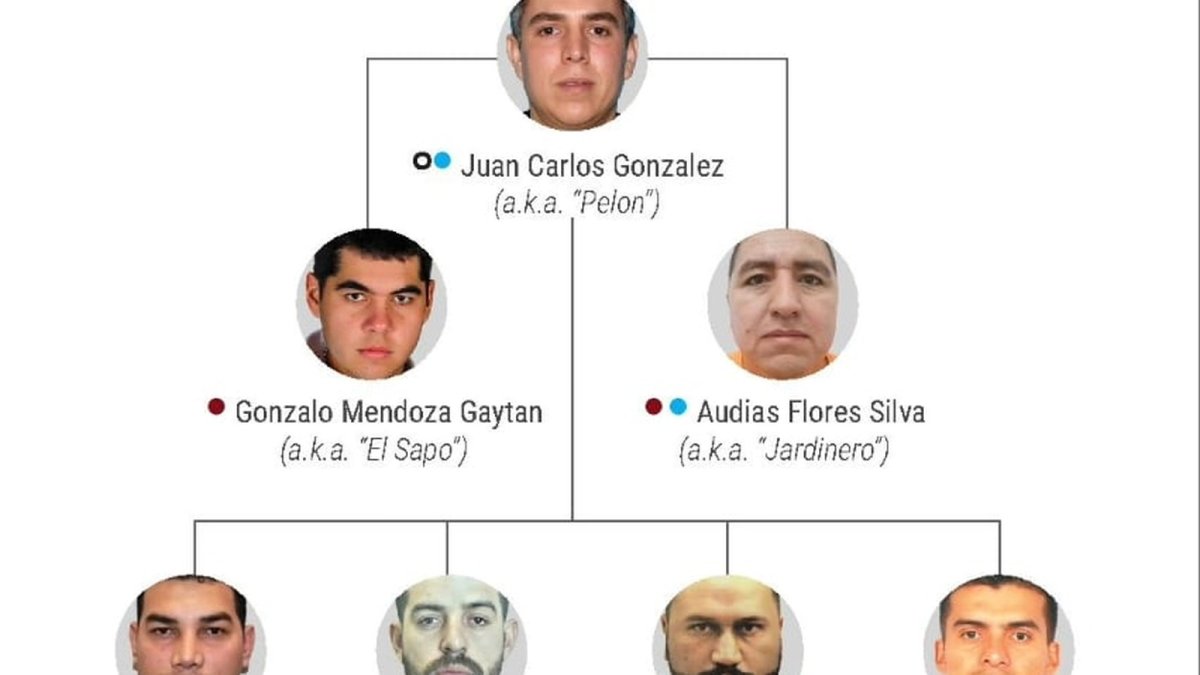 \n\n
\n\nA Criminal Empire: Fentanyl, Avocados and Fuel
\n\nCJNG is not merely a drug trafficking organization — it is a diversified criminal corporation with its hands in multiple industries. At the center of its operations is the trafficking of fentanyl and other narcotics into the United States, a crisis that has killed hundreds of thousands of Americans and fueled addiction in communities from California to Ohio.
\n\nThe cartel's involvement in avocado production has drawn increasing scrutiny in recent years. Beyond extorting farmers, CJNG has been known to control packing houses, set prices, and infiltrate export operations — creating a situation where a beloved ingredient of guacamole connects American consumers to cartel profits. This dynamic has led to US inspections and import restrictions that have hurt legitimate Mexican growers who are themselves victims of the cartel.
\n\nFuel theft is another lucrative line of business. The June 2026 OFAC sanctions targeted two men and nine companies tied to a cartel-linked fuel theft ring, exposing a sophisticated network that siphons gasoline from pipelines and sells it on the black market. This practice costs Pemex billions of dollars annually and has caused deadly explosions near pipeline routes in years past, endangering entire communities.
\n\nThe sanctions imposed weeks earlier on 50 people and companies linked to the cartel were designed to choke off these revenue streams. By freezing assets and blocking US financial transactions, Washington hopes to undermine the financial infrastructure that allows CJNG to pay soldiers, bribe officials, and maintain operations across Mexico and abroad. Whether these measures reach the cartel's actual finances remains uncertain — but for Mexican families, the real question is whether any of it will make their streets safer.
\n\nWhat This Means for Mexican Families
\n\nIn the end, increased rewards and sanctions are tools of pressure, not solutions. For communities in Jalisco and across western Mexico, the death of El Mencho and the targeting of his successors has not brought peace. The cartel's resilience — its ability to replace leaders, adapt strategies, and maintain control over territory — means the threat is likely to continue for the foreseeable future.
\n\nWhat Mexican families need, community leaders have long argued, is a comprehensive approach that combines security with social investment: economic opportunities for young people, support for small businesses like the tortillerías and taquerías that anchor local economies, and programs that offer real alternatives to cartel recruitment. The demands have been repeated at the mañanera, in town halls, and in church gatherings across the affected regions.
\n\nThere is also a human cost that numbers cannot capture. The families of the disappeared — the mothers who march in Guadalajara and across the country demanding answers — know that cartel leadership changes do not bring their children back. The campesinos who till the land under the shadow of extortion know that rewards for kingpins do not stop the threats at their doorsteps.
\n\nStill, there is resilience in these communities. In Tapalpa, residents have begun to rebuild and reclaim their Pueblo Mágico. In the colonias of Guadalajara, mothers organize to keep their children safe. The Mexican people have lived through violence before and found ways to resist, to organize, to demand justice. As the United States turns up the pressure on Cartel de Jalisco Nueva Generación, the hope is that ordinary Mexicans — the families caught in the middle — will finally see a future where peace is more than a word spoken at press conferences.
\n\nTags: CJNG, El Mencho, Pelón, Juan Carlos Valencia González, drug cartel, reward, State Department, DEA, fentanyl, Jalisco, Sheinbaum, foreign terrorist organization, US-Mexico relations
\n\nThis article was produced with AI-assisted research and editorial support. Sources: US State Department, DEA, OFAC, CBS News, USA Today, Mexico News Daily.
\n\nBy Rosa Martinez, Staff Writer
What's Your Reaction?
 Like
0
Like
0
 Dislike
0
Dislike
0
 Love
0
Love
0
 Funny
0
Funny
0
 Wow
0
Wow
0
 Sad
0
Sad
0
 Angry
0
Angry
0
Latin America/Andes Correspondent at Global1.News. Based in Bogota, covering politics, environment, energy, and social movements across the Andean region. Passionate about environmental journalism and communities protecting their land.












Comments (0)