
Baguio City Landslide Death Toll Rises to Eight as Rescuers Dig Through the Night
In a recent ANC 24/7 report on The World Tonight, the nation witnessed the grim aftermath of a massive landslide that buried three homes in Barangay Guisad Surong, Baguio City, killing at least seven people and leaving three others missing. The tragedy, which struck around 7 p.m. on Sunday night amid relentless rains from the enhanced southwest monsoon, has once again put the spotlight on the vulnerability of mountain communities in the Cordilleras.
In a recent ANC 24/7 report on The World Tonight, the nation witnessed the grim aftermath of a massive landslide that buried three homes in Barangay Guisad Surong, Baguio City, killing at least seven people and leaving three others missing. The tragedy, which struck around 7 p.m. on Sunday night amid relentless rains from the enhanced southwest monsoon, has once again put the spotlight on the vulnerability of mountain communities in the Cordilleras. For the families in Purok 2, Riverside, the earth that has sustained their generations became an instrument of sudden, unforgiving loss.
Baguio City Landslide Death Toll Rises to Eight as Rescuers Dig Through the Night
Baguio City, Philippines — The death toll from the landslide that buried three houses in Barangay Guisad Surong climbed to eight by Monday evening, as Mayor Benjamin Magalong supervised a desperate search and retrieval operation involving around 150 rescuers working on a rotation basis. The incident, which affected five families, initially accounted for 13 people: seven occupants in the first house, two in the second, and three in the third. As the rain continued to pour, the numbers shifted with heartbreaking frequency—from four rescued on Sunday night, to seven victims recovered by Monday morning, and finally to eight confirmed dead by Monday evening, with three still missing.
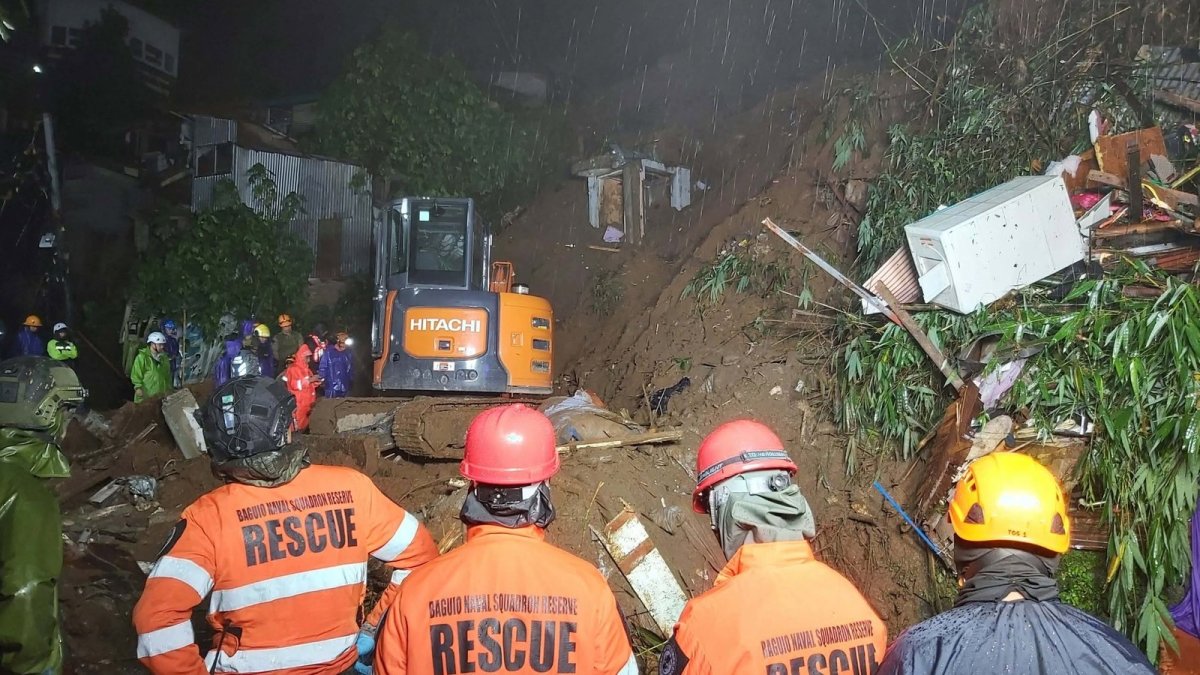
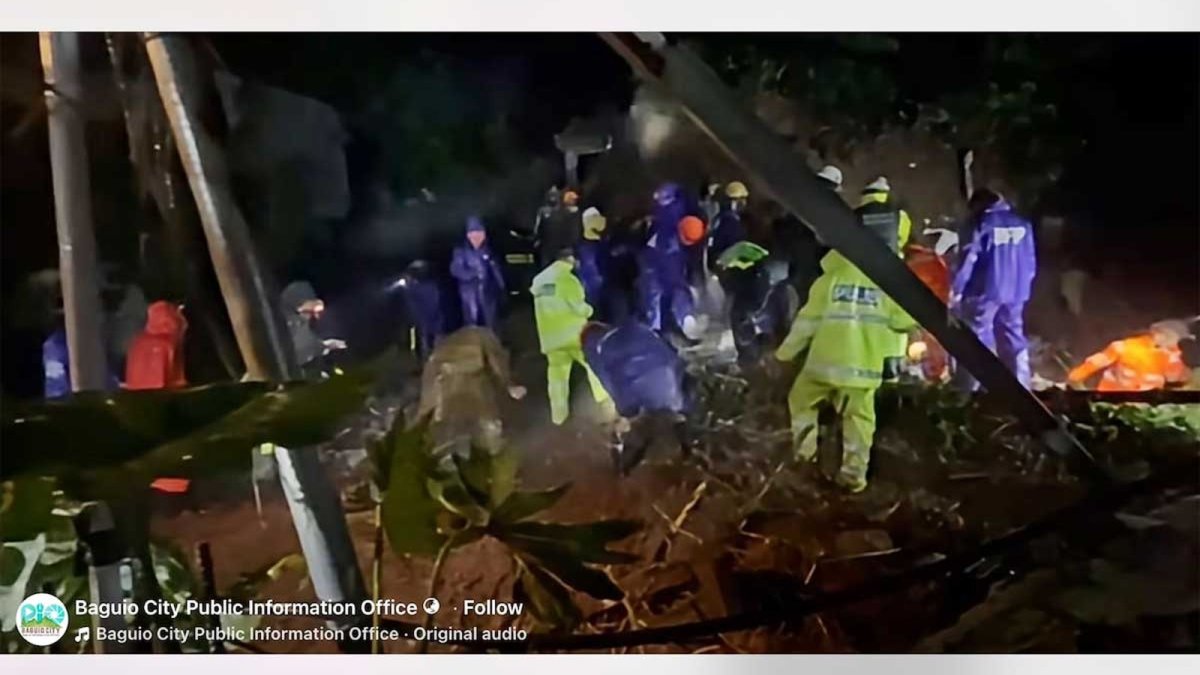
The rescue operation, a coordinated effort by the City Disaster Risk Reduction and Management Office (CDRRMO), the Baguio City Fire Station, the Baguio City Police Office (BCPO), barangay first responders, and civilian volunteers, was a race against time and nature. Rescuers dug through tons of saturated soil and debris, their work hampered by persistent rains that showed no sign of letting up. In a moment of small mercy amid the tragedy, a dog was successfully pulled from the rubble alive, a testament to the rescuers' commitment to leave no life behind, human or otherwise.
A City Under Siege by Rain
The landslide in Guisad Surong was not an isolated event but the 14th such incident monitored across Baguio City in the past week. Mayor Magalong, visibly weary from the continuous operations, stated plainly, "That's the 14th one. And it's not over yet. We'll likely receive more reports today." His words proved prophetic as the city braced for more rain. The Philippine Atmospheric, Geophysical and Astronomical Services Administration (PAGASA) reported that Baguio recorded a staggering 1,413 millimeters of rainfall from August 1 to 9—the highest nine-day rainfall accumulation recorded anywhere in the country during that period. This deluge, fueled by the enhanced southwest monsoon (habagat) and the lingering effects of tropical cyclones Luis and Maymay, saturated the soil and mountain slopes, turning the city's steep terrain into a deadly hazard zone.
As of Monday, PAGASA placed Baguio City, La Trinidad, Sablan, and Tuba under a Yellow Heavy Rainfall Warning, while other Benguet municipalities—Atok, Bakun, Bokod, Buguias, Itogon, Kabayan, Kapangan, Kibungan, Mankayan, and Tublay—experienced light to moderate rains, with some areas seeing heavy downpours. The agency warned that heavy monsoon rains are expected to persist throughout the week, with Tropical Storm Peilou being monitored outside the Philippine Area of Responsibility. For residents of the Summer Capital, the rain that once drew tourists seeking cool respite has become a source of dread.
Echoes of a 1967 Tragedy
For the residents of Guisad Surong, this week's disaster carries a painful historical resonance. On October 18, 1967, a massive landslide struck the same barangay at the height of Typhoon Trining (international name Carla), killing dozens. The storm's overall death toll was approximately 250, with another 30 missing, as Baguio recorded 1,216 millimeters of rainfall in just 24 hours. Survivor Virgie Cacao, now 69, was in Guisad Surong when the 1967 landslide occurred; nine members of her family were killed. The fact that history has repeated itself in the same community, nearly six decades later, raises urgent questions about land use planning, geohazard mapping, and the enforcement of no-build zones in high-risk areas.
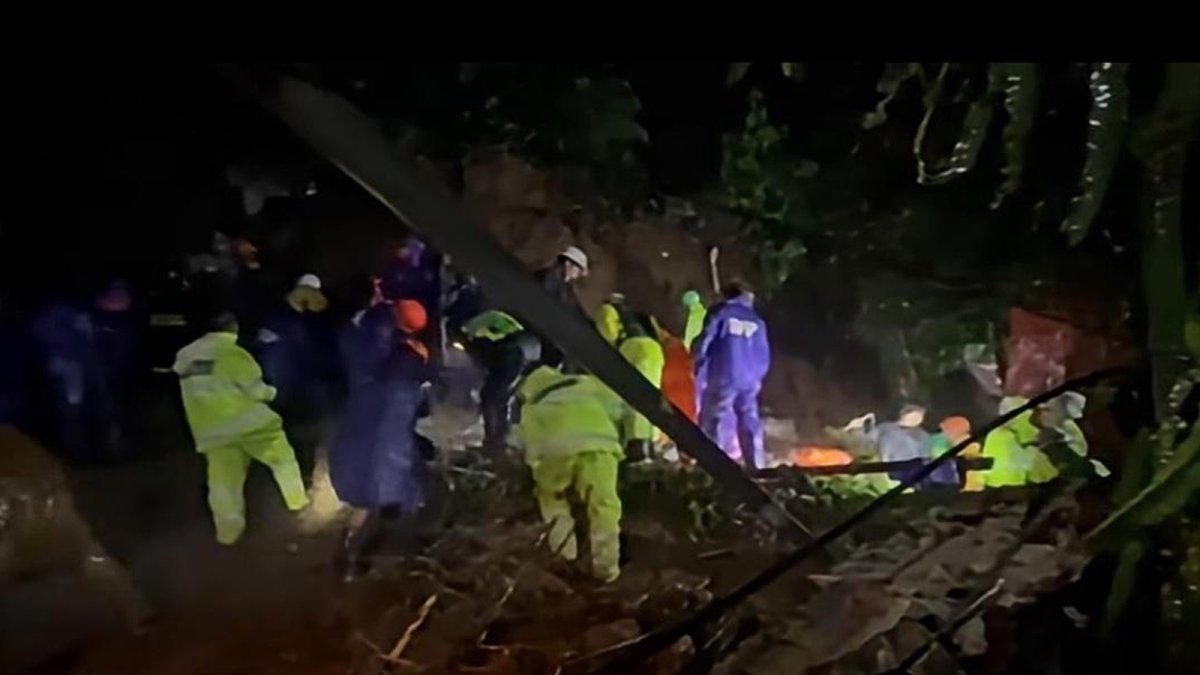
Mayor Magalong has directed barangay officials and police to continue rounds in communities, particularly areas vulnerable to landslides and geohazards. Residents in high-risk areas have been urged to evacuate to designated centers. In Guisad Surong, 14 families composed of 62 individuals, including children aged three to seven, have evacuated their homes and are staying at the Baguio International Academy. Seven evacuees urgently need food, blankets, clothes, and toiletries; donations can be brought to the Baguio International Academy or the Guisad Surong Barangay Hall. The bayanihan spirit is alive, but the need is immediate and pressing.
Regional Devastation and Displacement
The Baguio landslide is part of a broader pattern of destruction wrought by the enhanced monsoon across the country. According to the National Disaster Risk Reduction and Management Council (NDRRMC) as of 6 a.m. Monday, eight fatalities have been reported, still subject to validation: two in Rizal due to a rockslide, two in Batangas due to drowning and electrocution, two in Benguet due to landslides, and two in La Union due to electrocution and drowning. One person remains missing in Batangas, and seven were injured in Benguet due to a landslide and a vehicular accident. The Manila Standard later reported that the 'Habagat' has killed 10 and affected over 380,000 people, with the Office of Civil Defense (OCD) confirming the staggering figure.
Approximately 124,000 families or 486,000 individuals have been displaced across the Ilocos Region, Cagayan Valley, Central Luzon, Calabarzon, Mimaropa, Bicol Region, Western Visayas, Zamboanga Peninsula, and the Cordillera Administrative Region. There are 119 evacuation centers currently active, sheltering about 2,500 families or 8,300 individuals. The economic cost is mounting: infrastructure damage is estimated at around P1.12 billion, with agricultural losses pegged at P3.53 million. The government has provided nearly P34 million in assistance, a figure that, while significant, pales in comparison to the long-term recovery needs of the affected communities.
Metro Manila Underwater
The enhanced southwest monsoon also flooded parts of Metro Manila on Sunday, forcing thousands to evacuate their homes. In Quezon City, 351 families or 884 people were evacuated across seven barangays, with most—151 families or 494 people—taking shelter at the Bagong Silangan evacuation center in District 2. Marikina City saw 342 families or 1,961 people seek refuge in evacuation centers, a familiar scenario for a city that has repeatedly borne the brunt of river flooding. Pasig City experienced flooding in Barangay Dela Paz, with evacuation centers in two barangays sheltering 101 people.
The San Juan River reached alarm level, with water rising to 12.84 meters at 12:20 p.m. Sunday. Mayor Francis Zamora placed 27 evacuation centers on standby, including Pinaglabanan Elementary School. Las Piñas reported floods in parts of San Dionisio, San Isidro, BF Homes, San Antonio, and Sun Valley, though waters subsided in the afternoon and Zapote Junction became passable. The Department of Health (DOH) has urged the public to take precautions against leptospirosis, reminding everyone to seek medical consultation after any exposure to floodwaters. For urban dwellers, the flood is not just an inconvenience but a direct threat to health and livelihood.
Reactions and Calls for Action
Beyond the rescue site, the response has been a test of coordination between the city government, national agencies, and ordinary citizens. Mayor Magalong has directed barangay officials and police to continue rounds in geohazard-vulnerable communities and urged residents in high-risk areas to evacuate to designated centers, warning that the danger has not passed. His message reflects a grim reality: with the ground still saturated and more rain on the way, the window for prevention is narrow.
At the national level, disaster officials have been careful to note that the fatality figures remain subject to validation, with deaths reported across Rizal, Batangas, Benguet, and La Union as the enhanced monsoon's toll continues to climb. The government's nearly P34 million in assistance, while a start, underscores how much more will be needed as families begin the slow work of rebuilding homes and livelihoods.
In Barangay Guisad Surong itself, the bayanihan spirit remains the community's strongest resource. With evacuees sheltering at the Baguio International Academy and needs ranging from food and blankets to clothes and toiletries, local officials have appealed for donations to be brought directly to the academy or the Guisad Surong Barangay Hall. For those watching from afar, the call is simple: every contribution, no matter how small, reaches families who lost everything in a matter of minutes.
These responses matter because they bridge the gap between government capacity and community need. For ordinary Filipinos, the message is clear: donate what you can to the evacuation centers, heed evacuation warnings even if the rain seems to pause, and report any signs of ground movement or geohazard risk to your barangay officials. Every report, every peso, and every act of bayanihan can mean the difference between another 1967 and a community that lives to rebuild.
What to Watch For
As the week progresses, the focus remains on the search for the three still missing in Guisad Surong and the recovery of the community. PAGASA's forecast of continued heavy monsoon rains means the threat of further landslides remains high, not just in Baguio but across the Cordillera region. Mayor Magalong's directive for barangay officials to conduct rounds in geohazard-prone areas is a critical preventive measure, but it relies on the cooperation of residents who may be reluctant to leave their homes and belongings. The historical precedent of 1967, where the same barangay was devastated, underscores the need for a more permanent solution—relocation, stricter enforcement of land use policies, and a comprehensive early warning system that reaches the most vulnerable.
The tragedy in Baguio City is a stark reminder that climate change is not a distant threat but a present reality. The record-breaking rainfall, the saturated slopes, and the loss of lives in a community that has already suffered once before demand a national conversation about resilience and adaptation. For the families in Guisad Surong, the immediate need is for food, clothing, and shelter. For the nation, the need is for decisive action to prevent such tragedies from recurring. As the rain continues to fall, the hope is that the lessons of this disaster will not be buried with the debris.
By Bella Reyes, Staff Writer
This article was produced with AI-assisted research and editorial support. Reporting is based on sources cited in the article.
What's Your Reaction?
 Like
0
Like
0
 Dislike
0
Dislike
0
 Love
0
Love
0
 Funny
0
Funny
0
 Wow
0
Wow
0
 Sad
0
Sad
0
 Angry
0
Angry
0

Philippines/Southeast Asia Correspondent at Global1.News. Manila-based journalist covering Philippine politics, environment, maritime security, and social issues. Passionate about marine conservation and the communities protecting the Philippines' natural heritage.












Comments (0)