
US Launches 'Operation Economic Outcast' as Iran's Rial Plunges to Record Low
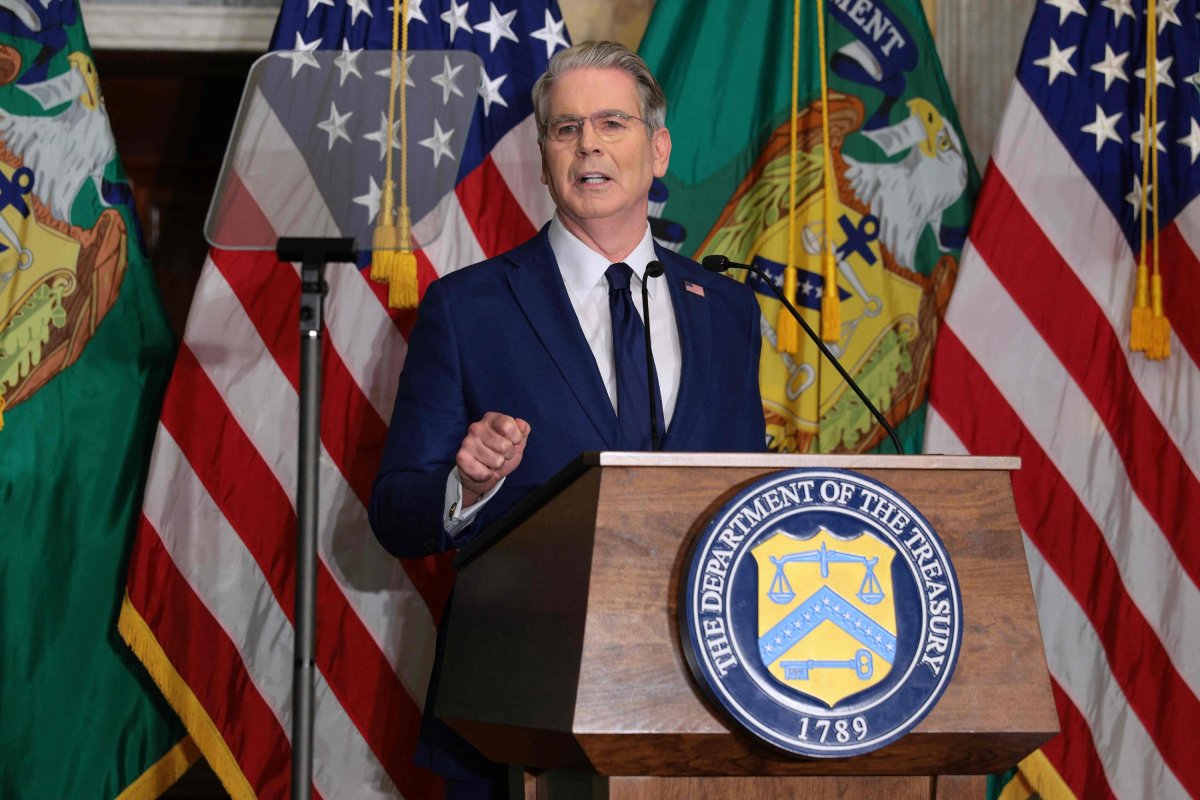
The confrontation between Washington and Tehran has entered a new and perilous phase. On Monday, U.S. Treasury Secretary Scott Bessent unveiled "Operation Economic Outcast," a sweeping secondary sanctions regime designed to sever every remaining financial lifeline of the Islamic

The confrontation between Washington and Tehran has entered a new and perilous phase. On Monday, U.S. Treasury Secretary Scott Bessent unveiled "Operation Economic Outcast," a sweeping secondary sanctions regime designed to sever every remaining financial lifeline of the Islamic Republic. The announcement came as Iran’s rial plunged to a catastrophic record low of 2.02 million to the U.S. dollar on open markets, a stark indicator of the economic toll exacted by nearly six months of conflict that began with the U.S.-Israeli strikes of Feb. 28.
This is not merely a bilateral dispute; it is a regional earthquake. The escalation pits Washington’s financial hegemony against Tehran’s geographic stranglehold on the Strait of Hormuz, a waterway that before the war carried a fifth of the world’s traded oil. As the United States tightens the screws, Iran is leveraging its control over global energy arteries, drawing in regional players from Oman to Pakistan and testing the resolve of major powers like China. The coming weeks will determine whether this is a final, crushing blow or the prelude to a wider conflagration.
The Anatomy of 'Operation Economic Outcast'
Speaking at a press conference on Monday, Treasury Secretary Bessent framed the new campaign in stark, zero-sum terms. "Around the globe, our objective is to sever every economic lifeline that sustains this tyrannical regime until Tehran stands alone," he declared. The Treasury Department has issued determinations against five critical sectors—digital assets, technology, gold, aviation, and shipping—that it says the Iranian regime uses to prop up its failing economy. The message to the international community was unambiguous: cut ties with Tehran or face retaliation. Bessent warned that any entity facilitating money laundering on behalf of Iran would be "removed from the U.S. dollar system." When asked whether Chinese banks dealing with Iran could be targeted, he responded with a pointed warning: "No one is above the reach of U.S. sanctions." He further cautioned that nations not joining the sanctions would "share in the isolation" of Iran, adding that President Donald Trump is personally calling world leaders to demand they halt interactions with Tehran. Bessent, who earlier declared an "economic D-Day" in a column for the Financial Times, presented Tehran with a binary choice: "complete global isolation" or "the path to normalcy." The rhetoric, while forceful, underscores a strategic bet that economic asphyxiation can achieve what military strikes have not—regime behavioral change or collapse.
The rial's Collapse and the Human Cost
The currency markets delivered their own verdict on Monday. The rial dropped to 2.02 million against the dollar at market open, a record low that starkly contrasts with the official central bank rate of around 1.5 million. For ordinary Iranians, the market rate is the one that matters, and it reflects an economy in freefall. The human toll is measurable in basic staples. Since the war began, rice prices have surged approximately 60%, while beef has become more than 150% more expensive. The International Monetary Fund (IMF) forecasts that Iran’s gross domestic product will contract by more than 5% this year. In downtown Tehran, 73-year-old Sadegh Mahmoudi joined a line of about a dozen people to purchase U.S. dollars with his remaining savings. "There is no hope for a deal and peace," he said, capturing the mood of a population battered by double-digit inflation and negative growth that predates the current conflict. Yet, remarkably, this economic pressure has not yet translated into political instability. The regime retains a key strategic asset that complicates Washington’s victory lap: the ability to disrupt global energy markets.Iran's Counter-Leverage: The Strait of Hormuz
While the U.S. wields the dollar, Iran holds the strait. Tehran’s attacks and threats on shipping in the Strait of Hormuz have brought traffic in the vital waterway to a near halt, inflicting damage on the world economy and heaping pressure on President Trump ahead of congressional elections. The war has devolved into a fight over who controls the strait, with Iran refusing to fully reopen it unless it can charge ships for passage. This is the crux of the strategic standoff. Washington’s sanctions aim to isolate Iran economically, but Tehran’s ability to choke global oil supplies gives it outsized leverage. The U.S. naval blockade, combined with Iranian mine threats and drone attacks, has created a dangerous standoff where the world’s energy security hangs in the balance. In a significant diplomatic development, Iran and Oman—located on the opposite side of the strait—are reportedly in the final stages of agreeing on a plan for joint management of the waterway. Oman’s foreign minister is set to visit Iran on Tuesday to finalize the arrangement. This potential Omani-Iranian condominium over the strait would be a direct challenge to U.S. naval dominance and a geopolitical coup for Tehran, positioning Oman as a mediator with a stake in the waterway’s operation.The China Question and the Limits of U.S. Reach
Bessent’s warning that "no one is above the reach of U.S. sanctions" was clearly aimed at Beijing. China remains Iran’s largest oil customer and a critical economic lifeline. The Treasury chief’s threat to remove Chinese banks from the dollar system is a high-stakes gambit that could roil global financial markets and provoke a sharp response from Beijing. The question is whether Washington is willing to follow through on such a threat. Targeting Chinese financial institutions would represent a significant escalation in the broader U.S.-China economic rivalry, potentially triggering retaliatory measures and accelerating de-dollarization efforts. For now, the threat serves as a deterrent, but its credibility will be tested if Chinese banks continue to facilitate Iranian oil sales. The Trump administration’s willingness to risk a financial confrontation with Beijing over Iran remains one of the most volatile variables in this equation.Regional Realignment: UAE Suspension and Pakistan's Mediation
The pressure campaign is already yielding results in the Gulf. Last week, the United Arab Emirates announced it was suspending all trade with Iran. The UAE has long been one of Iran’s largest trading partners and its biggest source of imports, making this a significant blow to Tehran’s economy. The Emirati decision reflects the intense pressure Washington has applied on Gulf states to choose sides, and it signals a major realignment in regional trade dynamics. Meanwhile, Pakistan has emerged as an unlikely mediator. Islamabad, which played a key role in brokering a 60-day cease-fire in June, sent a high-level delegation to Iran on Monday to discuss ending the war. The visit follows a phone call between President Trump and Pakistani Field Marshal Asim Munir, according to a person familiar with the discussion. Pakistan’s involvement highlights the complex web of relationships in the region—Islamabad maintains ties with both Washington and Tehran, and its military leadership appears to be positioning itself as a bridge between the two adversaries.The Diplomatic Tango: Cease-fires and Broken Deals
The current escalation is the latest chapter in a volatile cycle of conflict and negotiation. The U.S. and Israel launched a massive wave of bombing against Iran on Feb. 28, sparking Iranian retaliation across the region. A cease-fire agreement was reached in April, but it proved fragile. In mid-June, Washington and Tehran signed a memorandum of understanding calling for freedom of navigation in the Hormuz Strait, but implementation stalled amid persistent differences. Last month, the U.S. resumed its attacks on Iran, and Tehran responded by targeting U.S. military facilities and equipment in a number of Arab countries. This pattern of escalation and fragile truce suggests that neither side is willing to make the concessions necessary for a durable peace. Iranian Foreign Ministry spokesperson Esmail Baghaei warned on Monday that "any escalation of this situation will undoubtedly bring about consequences," a thinly veiled threat of further retaliation.
The War of Words: Ghalibaf's 'Make America Hungry Again'
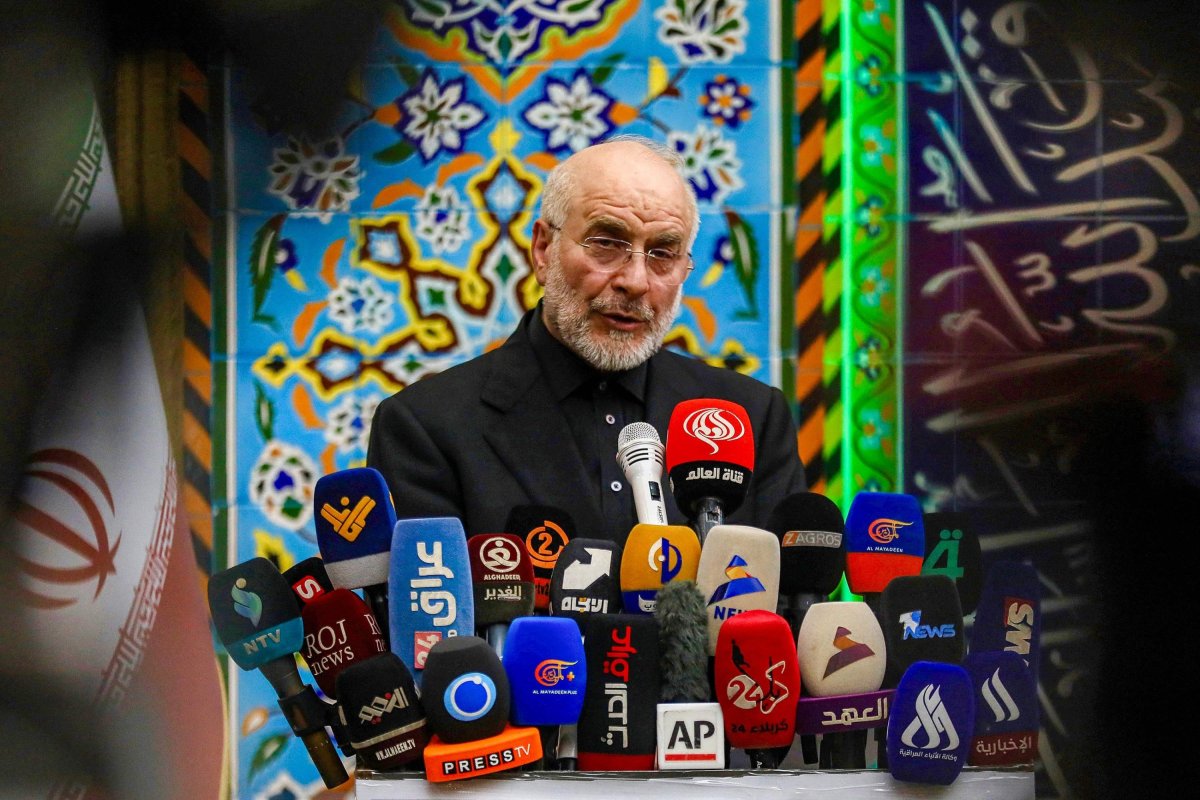
The economic and military confrontation is matched by a propaganda war. Iranian Parliament Speaker Mohammad Bagher Ghalibaf took aim at President Trump on Monday, sharing an image that parodied his signature slogan with the phrase "Make America Hungry Again." The post was a response to Trump sharing a Newsmax report on his Truth Social platform that inaccurately quoted Ghalibaf as saying, "We Are Hungry, We Cannot Survive." In a pointed rebuke, Ghalibaf wrote: "You cannot cover up your defeats with baseless claims." The graphic he shared featured statistics on hunger and food insecurity in the United States, turning the tables on Washington’s narrative of Iranian suffering. This exchange underscores the psychological dimension of the conflict, where each side seeks to portray the other as weakened and desperate.Regional Implications: Energy Markets, Alliances, and Stability
The stakes extend far beyond the bilateral U.S.-Iran confrontation. The near-halt of traffic through the Strait of Hormuz has already damaged the global economy, and the prospect of prolonged disruption threatens to reignite inflation and energy price shocks worldwide. The Iran-Oman joint management talks, if successful, could create a new regional order for the strait, potentially marginalizing U.S. influence in the Gulf. For Gulf states like Saudi Arabia and the UAE, the conflict presents a strategic dilemma. They share Washington’s concerns about Iranian aggression but are wary of being drawn into a war that could devastate their own economies. The UAE’s trade suspension suggests a willingness to align with Washington, but the long-term costs of severing ties with a major neighbor are significant. The broader regional dynamics are shifting. Turkey, which maintains complex relations with both Iran and the West, will be watching closely. Israel, which initiated the conflict alongside the U.S., has a vested interest in seeing Iran’s nuclear program and regional proxy networks dismantled. The Arab-Israeli normalization process, already strained by the war, faces an uncertain future. As the rial continues its freefall and the U.S. tightens its economic stranglehold, the question is whether Tehran will capitulate or double down. Iran’s control over Hormuz gives it a powerful bargaining chip, but the country’s economic isolation is deepening by the day. The path to "normalcy" that Bessent offers may be the only way out, but it requires a level of trust and compromise that has been conspicuously absent from this conflict. For now, the region remains on a knife’s edge, with the world’s energy security and economic stability hanging in the balance.This article was produced with AI-assisted research and editorial support. Sources: Daily Sabah, Reuters, Anadolu Agency.
By Malik Hassan, Staff Writer
What's Your Reaction?
 Like
0
Like
0
 Dislike
0
Dislike
0
 Love
0
Love
0
 Funny
0
Funny
0
 Wow
0
Wow
0
 Sad
0
Sad
0
 Angry
0
Angry
0

Malik Hassan
Middle East Correspondent at Global1.News. Based in Beirut, covering politics, conflict, energy, and society across the Middle East. Brings context and depth to a region often reduced to headlines.










Comments (0)