
US Proposes Nationwide Arms Embargo on Sudan
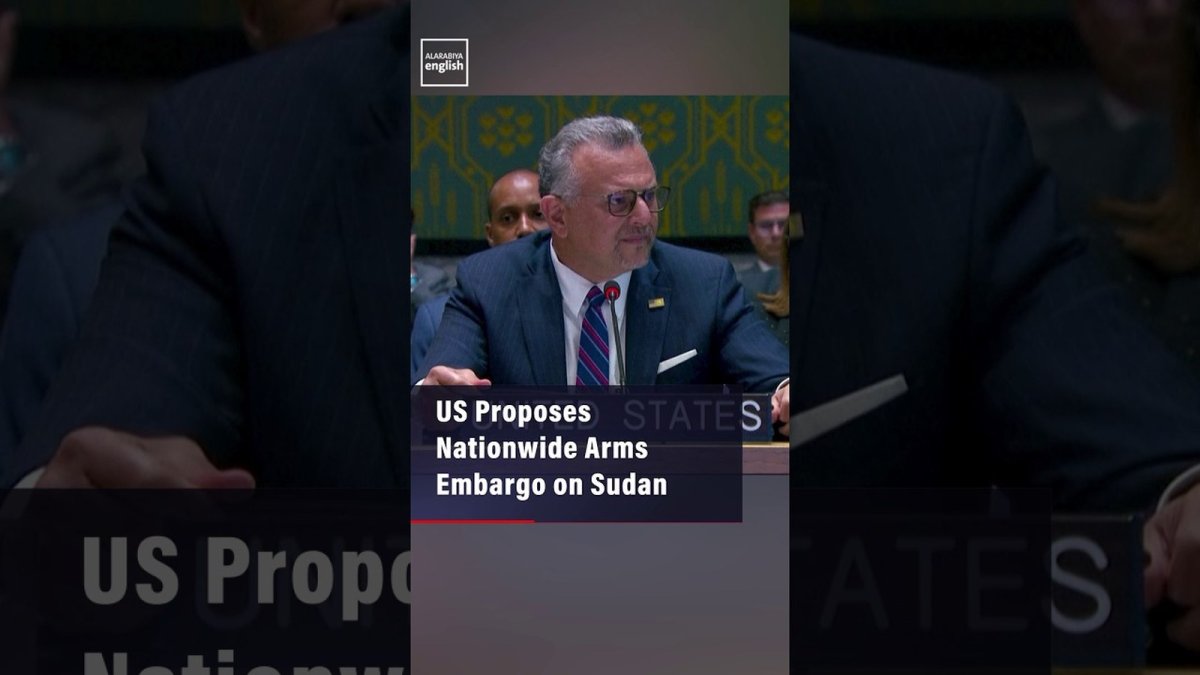
Washington urged the UN Security Council to expand the Darfur arms embargo to all of Sudan, targeting drones and external support. Envoy Massad Boulos warned the conflict risks drawing more regional actors deeper as Russia signals opposition.
The United States has thrown its diplomatic weight behind a sweeping expansion of the United Nations arms embargo on Sudan, a move that threatens to reshape the endgame of a conflict now entering its fourth brutal year. At a Security Council briefing on Monday, Washington called for the existing Darfur-only restrictions to cover the entire country, directly challenging the external patrons whose weapons and drones have fueled what the UN now calls the world’s worst humanitarian catastrophe.
US Proposes Nationwide Arms Embargo on Sudan as Conflict Risks Regional Spillover
United Nations – August 24, 2026 — The United States formally urged the UN Security Council on Monday to expand the long-standing Darfur arms embargo to cover all of Sudan, warning that unchecked external military support is drawing neighboring states deeper into a war that has already killed more than 150,000 people and displaced over 14 million. The proposal, presented by US Senior Advisor for Arab and African Affairs Massad Boulos, comes as the current embargo is set to expire on September 12, 2026, unless the Council reaches a new agreement.
Washington’s Four-Pillar Resolution
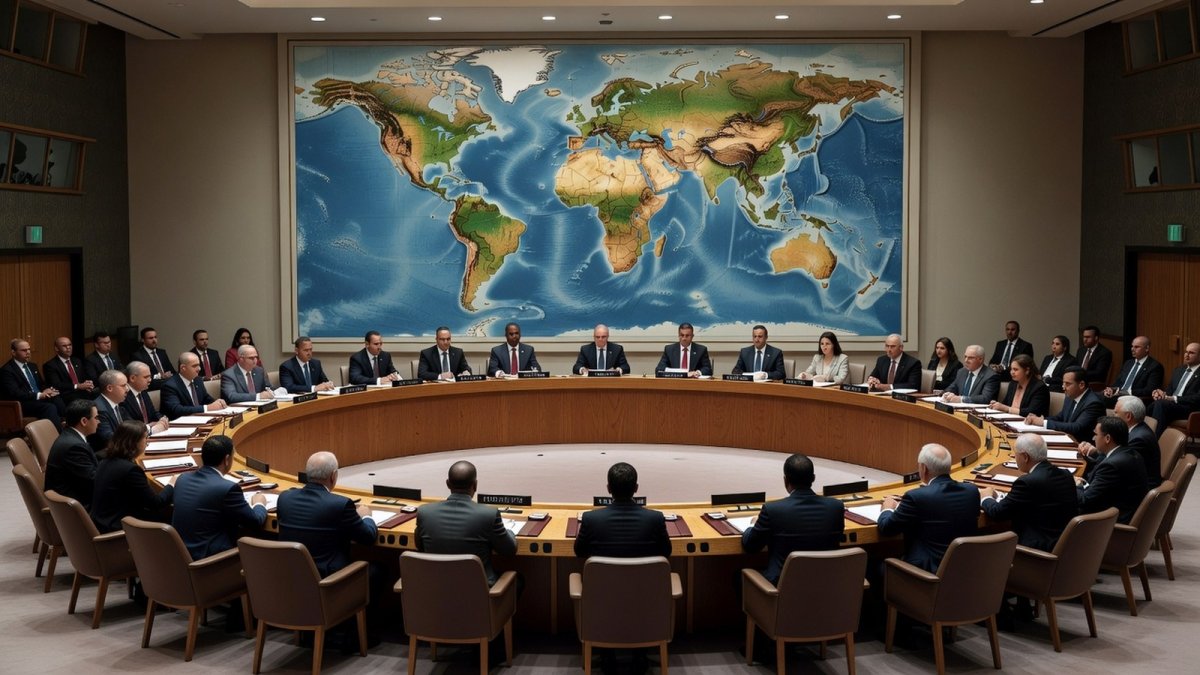
Boulos told the Council that Washington has put forward “a strong resolution that provides for four key things.” The first pillar would expand the arms embargo across the entire territory of Sudan, ending the current geographic limitation to the western Darfur region. The second would bring drones under the arms restriction regime, a direct response to the sophisticated unmanned aerial vehicles that have become a defining feature of recent battlefield tactics. The third pillar increases the number of experts scrutinizing the existing embargo, while the fourth enhances coordination between UN expert panels investigating violations of the arms embargo, asset freezes, and travel bans.
The proposal reflects a growing frustration within the Trump administration over the inability of the current sanctions architecture to stem the flow of weaponry to both the Sudanese Armed Forces (SAF) and the Rapid Support Forces (RSF). The Darfur embargo, originally established under UNSC Resolution 1556 in 2004, was designed to halt the supply of weapons to non-governmental entities and individuals operating in that region. It has remained in place for over two decades, yet the current conflict has seen both sides acquire increasingly advanced military hardware.
Russia’s Veto Threat Looms
Moscow, holding veto power on the Council, immediately signaled its opposition to measures that would impact the Sudanese army. Russian diplomats warned Monday against new restrictions that could hamper the SAF’s ability to defend the state, reflecting Moscow’s long-standing ties with Sudan’s military establishment. This sets the stage for a diplomatic showdown in the coming weeks, as the September 12 expiration date approaches and the US resolution faces an uncertain path through the Council’s procedural machinery.
Sudan’s UN envoy, Al-Harith Idriss Al-Harith Mohamed, echoed Russian concerns while taking a more nuanced position. He urged a “technical extension” of the existing embargo but warned against changes that would hamper the army. “Sudan suffers the most from weapons and their illegal flow,” Mohamed told the Council. “However, expanding such a sanctions regime will weaken the protection of civilians.” This carefully calibrated statement reflects Khartoum’s desire to maintain the appearance of cooperation with the international community while preserving its military options.
UN Officials Document External Support
Rosemary DiCarlo, UN Under-Secretary-General for Political and Peacebuilding Affairs, delivered a stark assessment of the conflict’s trajectory. She highlighted a “worrying aspect... increasing complexity,” noting that “the sophisticated weaponry used continues to point to ongoing external support to both parties.” This assessment was reinforced by UN humanitarian chief Tom Fletcher, who reported that recent weeks have seen “heavy use of drones and localized ground combat” across multiple frontlines.
The UN’s characterization of the conflict as increasingly complex reflects a war that has evolved significantly since its outbreak in April 2023. What began as a power struggle between SAF chief Abdel Fattah al-Burhan and RSF commander Mohamed Hamdan Dagalo, known as “Hemedti,” has transformed into a multi-layered conflict with distinct regional and international dimensions. The SAF controls Sudan’s central and eastern regions, while the RSF holds Darfur in the west and parts of the south, creating a territorial stalemate that neither side appears capable of breaking militarily.
Civil Society Demands Action
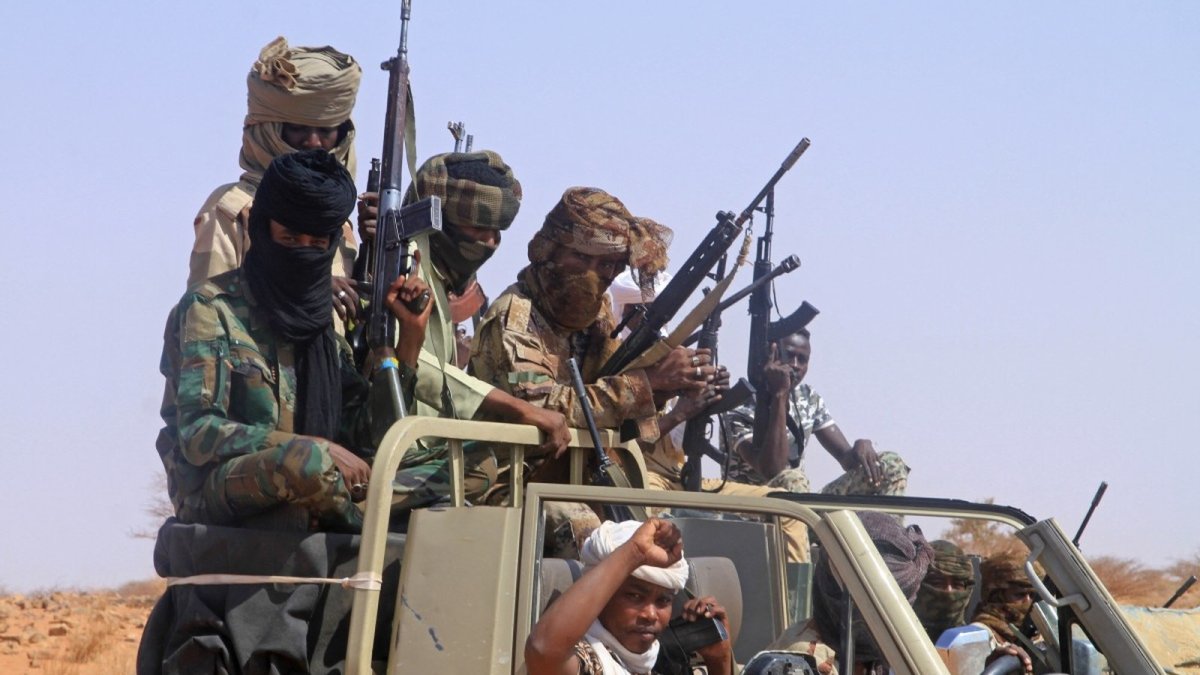
Peacebuilding activist Eva Khair delivered an impassioned plea to the Council, directly challenging the denials of external involvement. “Although they have denied such allegations, external actors are enabling this catastrophe,” she stated, citing “multiple actors in supplying weapons, mercenaries, other forms of military assistance, and diplomatic cover to the RSF on the one hand, and military, logistical, financial assistance to the SAF on the other.” Khair urged the Council to enforce the existing Darfur embargo and expand it to the whole of Sudan, arguing that the current approach has manifestly failed to protect civilians.
Her testimony underscores the disconnect between diplomatic processes and ground realities. The Darfur region, roughly the size of France, has been the epicenter of some of the conflict’s worst atrocities. The 2003-2005 genocide, which saw Janjaweed militias commit mass atrocities under former president Omar al-Bashir, established a grim precedent that has repeated itself in the current war. Displacement camps have been invaded, and ethnic massacres have killed thousands at a time, reviving memories of the earlier genocide that led to International Criminal Court warrants against Bashir.
The Gulf Proxy Dimension
The US proposal lands in the midst of a complex web of regional rivalries that have transformed Sudan into a proxy battleground. Saudi Arabia has provided military support and financial aid to the SAF, a move widely analyzed as an attempt to counterbalance UAE influence, which backs the RSF. Riyadh officially denies these allegations, but the Saudi-Sudanese coordination council established in mid-August 2026 signals deepening Saudi investment in ending the war on terms favorable to its interests. Egypt is also seen as backing the SAF, while Qatar and Turkey have engaged diplomatically with both sides.
This Gulf competition mirrors broader regional dynamics that extend far beyond Sudan’s borders. The Red Sea security architecture, Gulf economic diversification strategies, and the competition for influence in the Horn of Africa all intersect in Sudan. The Jeddah Declaration of May 2023, which established a framework for ceasefire negotiations, has hosted repeated rounds of talks, yet a durable political settlement remains elusive. The US proposal, if adopted, would represent a significant escalation in international pressure on all external actors to cease their military involvement.
Strategic Calculus and Second-Order Effects
The timing of the US resolution is strategically significant. With the embargo set to expire in less than three weeks, Washington is leveraging the deadline to force a broader conversation about Sudan’s future. The inclusion of drones in the restrictions reflects a recognition that the nature of warfare has changed since 2004, and that any effective embargo must address modern weapons systems. The proposed increase in expert scrutiny and enhanced coordination between UN panels would create a more robust monitoring architecture, potentially exposing the extent of external involvement with greater precision.
For the SAF, a nationwide embargo would complicate its ability to receive military hardware from its regional backers, potentially shifting the battlefield balance. For the RSF, the restrictions on drones could limit its tactical advantages in urban warfare and ground combat. However, the practical enforcement of such an embargo faces significant challenges. Sudan’s porous borders, the involvement of multiple regional actors, and the limited capacity of UN monitoring missions all raise questions about implementation.
Humanitarian Catastrophe Deepens
The diplomatic maneuvering occurs against a backdrop of unprecedented human suffering. The UN declared Sudan the world’s worst humanitarian crisis in February 2026, and updated mortality estimates confirm more than 150,000 deaths. The displacement crisis, already the world’s largest, has grown with more than 200,000 newly displaced since late 2025, according to the International Organization for Migration. Famine was declared in Zamzam camp in North Darfur in 2024, the world’s worst since 2020, and the UN warns of catastrophic hunger as rainy-season floods compound the crisis.
Tom Fletcher’s warning about the “heavy use of drones and localized ground combat” in recent weeks suggests that the humanitarian situation will likely deteriorate further before any political solution emerges. The combination of sophisticated weaponry, external support, and a fragmented territorial control map creates conditions for prolonged conflict. The Addis Ababa meeting of Sudanese civilian groups on August 23-24, which sought to coordinate positions on ending the war, and Burhan’s recent call for a Sudanese political dialogue, offer glimmers of diplomatic movement, but the path to peace remains obstructed by the competing interests of regional and international actors.
Regional Implications and the Road Ahead
The US proposal represents a critical test of the Security Council’s relevance in addressing contemporary conflicts. If Washington can secure the necessary votes and overcome Russian opposition, it would establish a precedent for expanding sanctions regimes in response to evolving conflict dynamics. If the resolution fails, it would signal that the Council remains paralyzed by great power rivalries, with devastating consequences for Sudan’s civilian population.
Boulos’s warning that external support “risks drawing more regional actors and neighbors deeper into Sudan’s conflict” speaks to a broader concern about the potential for regional conflagration. The Red Sea’s strategic importance, the competition between Gulf states, and the involvement of multiple African nations create a volatile mix. The coming weeks will determine whether the international community can translate its stated concern for Sudan’s civilians into meaningful action, or whether the country will continue to serve as a battleground for regional ambitions at the expense of its people.
As the September 12 deadline approaches, the diplomatic focus will intensify. The US resolution, if it survives the Council’s political dynamics, would represent the most significant international intervention in Sudan since the conflict began. For the millions of Sudanese who have endured four years of war, displacement, and famine, the outcome of this diplomatic battle may determine whether they can finally glimpse a path toward peace, or whether their suffering will continue indefinitely.
By Malik Hassan, Staff Writer
This article was produced with AI-assisted research and editorial support. Reporting is based on sources cited in the article.
What's Your Reaction?
 Like
0
Like
0
 Dislike
0
Dislike
0
 Love
0
Love
0
 Funny
0
Funny
0
 Wow
0
Wow
0
 Sad
0
Sad
0
 Angry
0
Angry
0

Middle East Correspondent at Global1.News. Based in Beirut, covering politics, conflict, energy, and society across the Middle East. Brings context and depth to a region often reduced to headlines.











Comments (0)