
34 Years After Andrew: The Storm That Rebuilt Florida
Folks, grab a seat. Because thirty-four years ago this morning, at 5:05 AM, the state of Florida didn't just get hit by a hurricane. It got sucker-punched, gutted, and rebuilt from the rubble. We are talking about Hurricane Andrew, the storm that didn't just change the skyline of South Florida—it rewired the entire DNA of how America builds, insures, and survives.
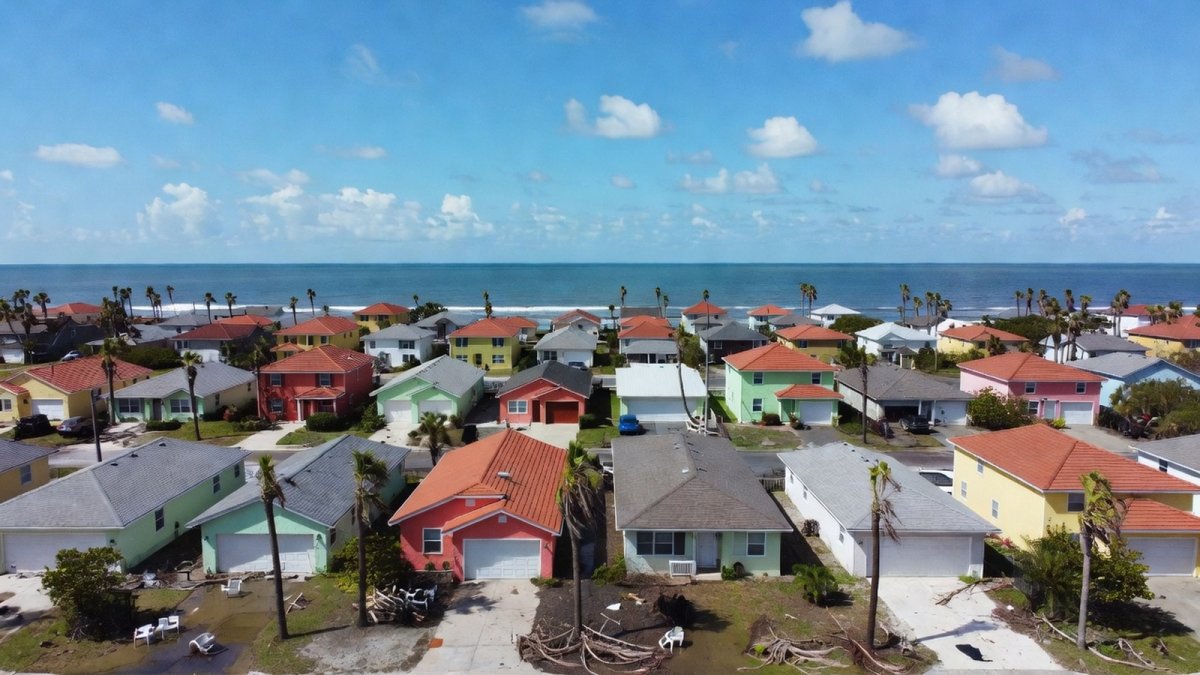
Folks, grab a seat. Because thirty-four years ago this morning, at 5:05 AM, the state of Florida didn't just get hit by a hurricane. It got sucker-punched, gutted, and rebuilt from the rubble. We are talking about Hurricane Andrew, the storm that didn't just change the skyline of South Florida—it rewired the entire DNA of how America builds, insures, and survives. And today, as we mark the 34th anniversary of that catastrophic landfall, we have to ask ourselves one hard question: Are we ready for the next one?
Miami, FL — The date is August 24, 2026. The sun is shining, the Atlantic is churning with tropical waves, and the memory of a monster is creeping back into the collective consciousness of every Floridian who lived through the dark hours of 1992. We aren't here to give you a history lesson, folks. We are here to give you a warning, a blueprint, and a reality check. Because the storm that flattened Homestead didn't just disappear into the history books. It lives on in every concrete block, every insurance premium, and every building code that stands between you and total annihilation.
The Morning the World Ended in Homestead
Let’s set the scene. It’s 5:05 AM on August 24, 1992. Most of South Florida is asleep, dreaming of orange juice and beach days. Then, the sky opens up with a fury that defies comprehension. Hurricane Andrew slams into the coast near Homestead, Florida, as a Category 5 monster with sustained winds of 165 miles per hour. That’s not a breeze, folks. That’s a freight train with wings, moving at the speed of a Formula One car, for hours on end.
But here is the kicker, the detail that should send chills down your spine. For a full decade, the official record books didn't even list Andrew as a Category 5. Why? Because the storm was so violent, so utterly destructive, that it destroyed the very instruments designed to measure its power. Think about that. The wind gauges, the barometers, the high-tech equipment that we rely on to categorize these beasts—Andrew chewed them up and spit them out. It wasn't until 2002, ten years later, that scientists re-analyzed the data and upgraded Andrew to its rightful, terrifying status: a Category 5 with maximum sustained winds of 175 mph. The storm that broke the machines, folks, is the storm that broke the mold.
The Re-Analysis: A Decade of Denial
Let’s dig into that re-analysis, because it matters. In 2019, Bay News 9 confirmed what many meteorologists had suspected for years: Andrew was not just a strong storm, it was a top-tier apocalypse. The re-analysis determined that the maximum sustained winds were actually 175 mph, a significant bump from the 165 mph recorded at landfall. This wasn't just a number on a spreadsheet, folks. This was a fundamental shift in how we view the danger of that morning.
For ten years, the public and even some officials operated under the assumption that Andrew was a "high-end Category 4." That misclassification had real-world consequences. It allowed a false sense of security to creep into the psyche of coastal residents. If a "mere" Cat 4 could do that much damage, what would a Cat 5 do? The answer, folks, is that we didn't want to find out. The 2002 upgrade was a wake-up call that echoed through the halls of the National Hurricane Center and the state legislature. It forced a reckoning with the fact that we had underestimated the enemy, and that underestimation cost us billions.
The Human Toll: Numbers That Scream
Now, let’s talk about the human cost, because that’s where the statistics turn into heartbreak. In Florida alone, Andrew killed 26 people directly. Twenty-six souls, gone in a matter of hours. But the destruction didn't stop at the death toll. The economic impact was a staggering $27 billion in 1992 dollars. Let me put that in perspective for you, folks. That’s not just a bad quarter on Wall Street. That’s a complete wipeout of entire communities.
Hoodline, reporting this month on the anniversary, notes that Andrew killed 15 people in Miami-Dade County alone and destroyed 25,000 homes. But the broader numbers are even more apocalyptic. Across the region, 63,500 homes were destroyed. 175,000 people were left without shelter. Over 160,000 people were suddenly, violently homeless. Imagine that for a second. The entire population of a mid-sized city, sleeping in the streets, surrounded by splinters and twisted metal. That is the legacy of Andrew. It wasn't just a storm; it was a demographic bomb that scattered families to the four winds.
The Exodus and the New Demographics
Here is where the story takes a turn, folks. Andrew didn't just destroy buildings; it destroyed a way of life. In the aftermath, many residents packed up whatever they had left and left South Florida for good. The trauma was too deep, the memories too raw. This exodus created a vacuum, and as we all know, nature abhors a vacuum. Rebuilding brought a wave of new development, new people, and a new demographic landscape to Miami-Dade County.
Hoodline’s analysis from August 2026 points out that Andrew reshaped the demographics of the region. The old neighborhoods, the ones that had stood for decades, were gone. In their place rose a new South Florida, built by newcomers who saw opportunity in the ashes. This shift wasn't just about who lived where; it was about the culture, the economy, and the political power structure of the state. Andrew didn't just rebuild homes, folks. It rebuilt the population. And that demographic shift is still playing out today, 34 years later.
The Building Code Revolution: Concrete and Steel
If there is one silver lining to this catastrophe, it is the revolution in construction standards. Before Andrew, building codes in South Florida were, to put it bluntly, a joke. Roofs were stapled on. Windows were made of glass that shattered like ice cubes. After Andrew, the state got serious. The 1994 South Florida Building Code, which eventually evolved into the statewide Florida Building Code, changed everything.
We are talking about impact-resistant windows that can withstand a two-by-four being shot at them at 100 mph. We are talking about reinforced concrete block construction, hurricane straps that tie the roof to the walls, and gable ends that don't blow off like tissue paper. The code was a direct response to the failures of 1992. It was a promise that we would never build that poorly again. And folks, it worked. When subsequent hurricanes hit Florida, the damage was significantly less severe in structures built under the new code. Andrew’s legacy is literally written in concrete and steel.
The Insurance Crisis: The Market That Collapsed
But the building code revolution came with a price tag, and that price tag was paid in the insurance market. After Andrew, the private insurance industry looked at the $27 billion in claims and said, "No thanks, we're out." Many insurers pulled out of Florida entirely, leaving homeowners with no options. The market was in freefall. It was a crisis of capitalism, folks, where the free market simply refused to price the risk.
Enter Citizens Property Insurance. Created in the wake of the collapse, Citizens became the insurer of last resort. It was the state stepping in to provide coverage when the private sector fled. Today, Citizens is one of the largest insurers in the state, a massive entity that holds the risk for millions of Floridians. It is a direct legacy of Andrew. The storm didn't just reshape the skyline; it reshaped the financial architecture of the state. And it remains a ticking time bomb, folks, because if a major hurricane hits a densely populated area today, Citizens could be overwhelmed, and the cost would be passed on to every policyholder in the state.
The 2026 Season: The Calm Before the Storm?
So, here we are, 34 years later, and what is the state of play? Let’s look at the 2026 hurricane season. So far, folks, it has been eerily quiet. Through early August, we had only seen two named storms, and neither of them reached hurricane status. The National Hurricane Center, as of early August, was forecasting no tropical cyclone formation over the next seven days. It was a snoozefest. But don't let that lull you into a false sense of security.
We are now entering the peak of the Atlantic hurricane season. The period from mid-August through mid-October is historically when the big ones come calling. Florida Today reported on August 17th that the NHC was already tracking tropical waves. Naples News, just this past Saturday, August 22nd, confirmed that the NHC had its eye on more disturbances. The next named storm of the 2026 season will be called Dolly. And folks, Dolly might be the one that breaks the silence.
Analysis: The Ghost of Andrew Hovers Over the Gulf
Let’s step back and analyze what Andrew’s legacy means for Florida and the Gulf Coast today. The storm was a paradigm shift. It forced us to acknowledge that we are living in a war zone, a beautiful war zone, but a war zone nonetheless. The building codes are stronger, but they are only as good as the enforcement. The insurance market is fragile, and the demographic shift has put more people in harm's way than ever before.
The quiet start to 2026 is a gift, folks. It is a chance to prepare. But it is also a trap. The longer we go without a major hurricane, the more complacent we become. We forget the sound of the wind. We forget the smell of the rot. We forget the faces of the 26 dead. Andrew taught us that the storm doesn't care about your politics, your bank account, or your plans. It only cares about the heat in the water and the wind in the sky. And right now, the water is warm, and the sky is watching.
The Gulf Coast, from Tampa Bay to the Florida Panhandle, has been relatively lucky since the 1990s. But luck is not a strategy. The rapid intensification we see in modern storms is a direct result of a warming planet, and it means that a storm like Andrew, which took days to build, can now form in 24 hours. The ghost of Andrew is not just a memory, folks. It is a warning that the next one could be bigger, faster, and more expensive.
Your Action Plan: Don't Be a Statistic
So, what do we do? We don't panic, folks. We prepare. We act. We take control of the things we can control. First, know your zone. Do you live in an evacuation zone? Do you know the difference between a Category 2 and a Category 5? If not, get on your phone right now and look it up. The time to learn is not when the cone of uncertainty is pointing at your house.
Second, build your kit. Water, non-perishable food, batteries, a hand-crank radio, and a first-aid kit. You need enough supplies to survive for at least 72 hours without power or water. Don't wait until the shelves are empty. The time to buy the canned goods is now, not when the hurricane warning is issued.
Third, review your insurance. Do you have flood insurance? Most standard policies don't cover flooding. If you live in a low-lying area, you need a separate flood policy. Call your agent today. Don't assume you are covered. Andrew taught us that the insurance companies will look for any excuse to deny a claim. Make sure your paperwork is in order.
Fourth, harden your home. If you have the budget, install impact-resistant windows or at least invest in plywood for your windows. Check your roof straps and your garage door. These are the weak points that Andrew exploited. A few thousand dollars in upgrades now can save you hundreds of thousands in repairs later.
Finally, make a plan. Where will you go if you have to evacuate? Do you have a full tank of gas? Do you have a place to stay inland? Write it down. Share it with your family. Practice it. Because when the sirens go off, you won't have time to think. You will only have time to act.
Folks, we honor the memory of those lost to Andrew not by crying, but by building. We honor them by being ready. We honor them by refusing to be victims. The storm is coming. It always is. The only question is whether you will be a survivor or a statistic. Choose to be a survivor. Choose to be prepared. Choose to be strong.
Stay safe, stay smart, and stay ready. This is Jessica Ali, reminding you that the sun will rise tomorrow, but only if you are here to see it.
By Jessica Ali, Staff Writer
This article was produced with AI-assisted research and editorial support. Sources: National Hurricane Center, Bay News 9, Hoodline, Florida Today, Naples News.
What's Your Reaction?
 Like
0
Like
0
 Dislike
0
Dislike
0
 Love
0
Love
0
 Funny
0
Funny
0
 Wow
0
Wow
0
 Sad
0
Sad
0
 Angry
0
Angry
0

Editor-in-Chief at Global1.News. Atlanta-based journalist who cuts through the BS and tells it like it is. Lead anchor, host, and the voice you hear when the spin stops and the truth starts.









Comments (0)