
US Officially Removes Syria From State Sponsors of Terrorism List
Washington has removed Syria from its State Sponsors of Terrorism list and delisted Hay'at Tahrir al-Sham, fulfilling Trump's sanctions-relief commitment to the post-Assad government. Officials say the move opens the door to investment, banking and reconstruction, with regional implications.
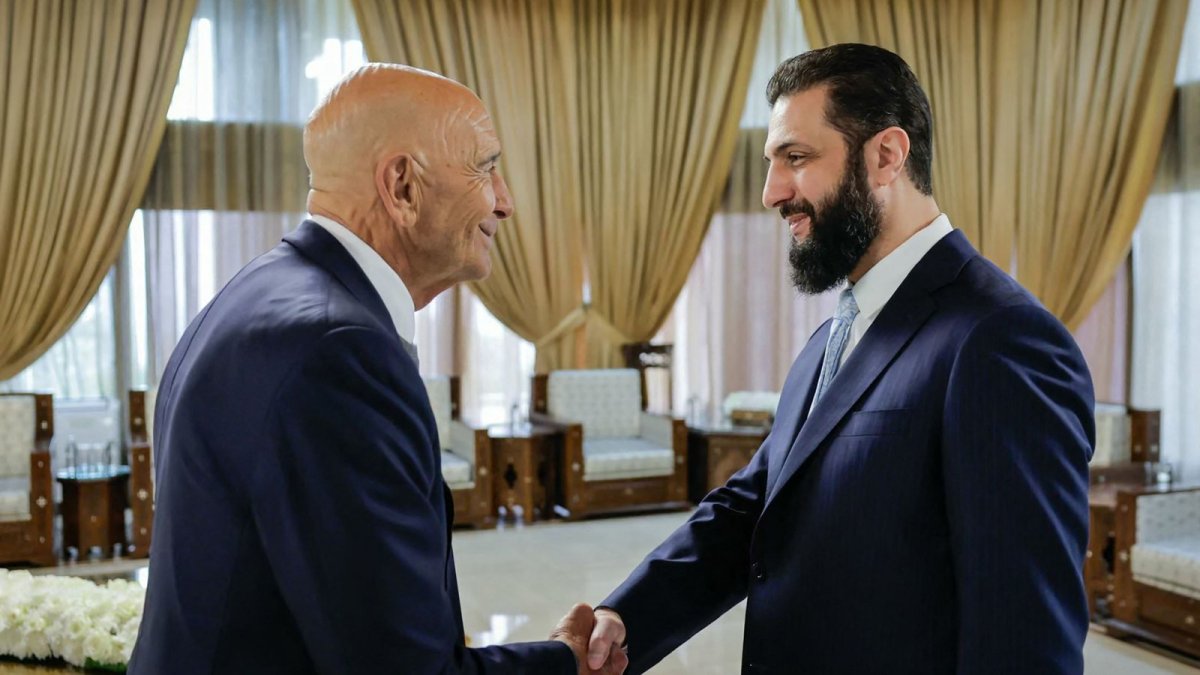
The United States has formally removed Syria from its State Sponsors of Terrorism list, a landmark shift in Washington’s posture toward Damascus that officials on both sides are calling a decisive break with the Assad-era past. The State Department’s announcement, which followed the completion of the mandatory 45-day Congressional notification period, also revoked the Specially Designated Global Terrorist designation for Hay’at Tahrir al-Sham (HTS), the armed group that led the ouster of Bashar Assad and now dominates the country’s transitional government.
The move, confirmed by the Treasury Department’s Office of Foreign Assets Control (OFAC), means Syria is no longer subject to prohibitions under the Terrorism List Governments Sanctions Regulations. Washington has also removed HTS from the Specially Designated Nationals and Blocked Persons list, effectively clearing the group’s leadership—including President Ahmed al-Sharaa—from the most restrictive U.S. financial blacklists. General License 25, which had authorized transactions otherwise prohibited because of the group’s involvement in the government, was revoked as “no longer necessary,” according to OFAC.
A Historic Shift in U.S. Policy Toward Damascus
Secretary of State Marco Rubio framed the decision as recognition of “positive actions” and “further commitments” made by the Syrian government to “fully distance Syria from acts of international terrorism.” In a statement, Rubio noted that Damascus has taken “significant steps” to counter Daesh, al-Qa’ida, Hezbollah, and “Iran-aligned groups,” and formally joined the Global Coalition to Defeat Daesh last November. He emphasized that removing the terrorism label “eliminates the final major barriers” for private sector investment, facilitating Syria’s “economic recovery and reintegration into the global economy.”
U.S. envoy to Syria Tom Barrack called the end of the designation a “decisive step in Syria’s remarkable journey from isolation to partnership, and from a source of terrorism to a committed partner in the global fight against it.” Barrack, a longtime Trump ally who has been the administration’s primary interlocutor with Damascus, has been a vocal advocate for engaging the new Syrian government as a counterweight to Iranian influence in the Levant.
The policy shift did not occur in a vacuum. It follows the fall of the Assad regime in December 2024 and a historic June 2025 Executive Order, “Providing for the Revocation of Syria Sanctions,” which had already accelerated the process of sanctions relief, including terminating the Syria Sanctions Program and the national emergency with respect to Syria. Monday’s action completes the administrative arc of that policy, transforming what was a phased easing into a formal, comprehensive delisting.
What Damascus Gains: Banking, Investment, and Reconstruction
For Syria’s transitional government, the delisting is far more than a symbolic victory. Finance Minister Mohammed Barnieh described Washington’s move as “a major and historic success for Syrian diplomacy,” according to the official news agency SANA. It “opens a major and long-awaited door to strengthening Syria’s integration into the global economic and financial system, attracting investment and modern technologies, and supporting development opportunities.”
Central bank chief Safwat Raslan echoed that sentiment, hailing “a historic step that restores the country to its natural place in the global economic system.” He added that his bank was “working to build a modern and reliable financial system capable of evolving with developments and taking advantage of all opportunities.”
The practical implications are substantial. With Syria removed from the State Sponsors of Terrorism list, U.S. persons and entities can now engage in financial transactions with Syrian counterparties without the threat of OFAC enforcement actions. This paves the way for correspondent banking relationships, dollar-clearing capabilities, and access to international financial institutions that had been off-limits for over four decades, though the actual establishment of such relationships will depend on decisions by private financial institutions. For a country whose infrastructure was devastated by nearly fourteen years of civil war, the ability to attract foreign direct investment, secure project financing, and rebuild its banking sector is existential.
President al-Sharaa hailed the decision as “historic,” saying it would help the country’s recovery. The delisting also likely removes a major reputational barrier for Gulf investors and European firms who had been wary of running afoul of U.S. sanctions even when their own governments were more permissive, though lingering security and political risks may temper the speed of new investment.
Washington’s Strategic Calculus: Why Now?
The timing of the announcement reflects a confluence of factors. First, the Trump administration has made clear its desire to reduce U.S. military and diplomatic entanglement in the Middle East while preserving leverage over key adversaries. By delisting Syria and HTS, Washington is betting that engagement with al-Sharaa’s government will yield more tangible results than isolation ever did.
Second, the administration sees Damascus as a potential partner in containing Iranian influence. Rubio’s explicit mention of Hezbollah and “Iran-aligned groups” is telling. The Islamic Republic has lost its most critical state ally in the region with Assad’s fall, and Washington is keen to ensure that Syria does not become a new theater for Iranian proxy activity. By rewarding al-Sharaa’s government with sanctions relief, the United States is effectively purchasing Syrian cooperation in countering Tehran’s residual networks.
Third, there is the Daesh factor. Syria formally joined the Global Coalition to Defeat Daesh last November, and U.S. officials have privately expressed concern about the resurgence of the terror group in the country’s eastern desert regions. A functioning, internationally engaged Syrian government is seen as a more effective bulwark against Daesh than a fractured collection of local militias.
Finally, there is the personal diplomacy of Tom Barrack. The U.S. envoy has been a consistent advocate for normalization, arguing that the post-Assad government represents a genuine break from the past and that continued sanctions would only push Damascus back into the arms of Russia and Iran.
Iran and Its Proxies: A Strategic Setback
The delisting is a significant blow to Iran’s regional calculus. For years, Tehran relied on the Assad regime as a land bridge to Hezbollah in Lebanon and a forward operating base for its proxy networks. The fall of Assad in December 2024 severed that link, and Monday’s U.S. action further consolidates the new reality: Syria is no longer a sanctioned pariah that Tehran can exploit as a financial and logistical hub.
Iran’s options are limited. It retains influence in parts of eastern Syria through local militias and maintains a residual military presence in some areas, but its ability to move money, weapons, and personnel through Syrian territory has been severely degraded. The U.S. delisting also complicates Iranian efforts to use Syrian banks as conduits for sanctions evasion, as Damascus now has a powerful incentive to cooperate with U.S. financial regulators.
For Hezbollah, the loss of Syrian state sponsorship is existential. The group’s supply lines from Iran ran through Syrian territory, and the new government in Damascus has shown no appetite for continuing that arrangement. Rubio’s explicit reference to Hezbollah in his statement suggests that Washington expects the Syrian government to actively suppress the group’s activities on its soil.
Regional Reactions: Gulf States, Israel, and Turkey
The Gulf states, particularly Saudi Arabia and the UAE, have been quietly preparing for this moment. Both countries have already re-engaged with Damascus diplomatically, and the U.S. delisting removes the last major obstacle to large-scale Gulf investment in Syrian reconstruction. Saudi Arabia, in particular, sees Syria as a natural market for its Vision 2030 diversification strategy, with opportunities in energy, infrastructure, and real estate. The UAE, which has maintained channels to al-Sharaa’s government since before Assad’s fall, is likely to move quickly on banking and logistics partnerships.
Israel’s reaction is more complicated. While Jerusalem welcomed the fall of Assad and the degradation of Iranian influence, it remains deeply wary of al-Sharaa’s Islamist credentials and the presence of Turkish-backed forces in northern Syria. The Israeli government has conducted airstrikes against Iranian and Hezbollah targets in Syria since the regime change, and it will be watching closely to see whether the new government can control its territory and prevent the re-emergence of hostile forces near its borders. The delisting does not change Israel’s security calculus, but it does remove a diplomatic irritant that had complicated U.S.-Israeli coordination on Syria policy.
Turkey, which backed HTS and other opposition groups during the civil war, is a clear beneficiary of the delisting. Ankara has long advocated for the normalization of Syria’s new government and has been a key economic partner for Damascus. The removal of U.S. sanctions will facilitate Turkish construction, energy, and trade projects in Syria, deepening Ankara’s influence in a country that was once a battleground for regional influence. Turkey’s role as a mediator between Damascus and the international community is likely to grow.
The Historical Arc: From Assad to al-Sharaa
Syria was first designated a State Sponsor of Terrorism in 1979, under the Carter administration, in response to the Assad regime’s support for Palestinian militant groups. The designation was maintained and expanded under successive administrations, becoming a cornerstone of U.S. policy toward Damascus. The Assad regime’s brutal crackdown on the 2011 uprising, its use of chemical weapons, and its alliance with Iran and Russia only deepened Syria’s isolation.
The fall of Assad in December 2024, after a lightning offensive led by HTS, fundamentally altered the strategic landscape. Al-Sharaa, who had spent years as the leader of an al-Qa’ida-affiliated group, reinvented himself as a pragmatic state-builder, promising inclusive governance, religious tolerance, and a break with the Assad regime’s regional alliances. His government’s formal entry into the Global Coalition to Defeat Daesh was a critical signal to Washington that Damascus was willing to align with U.S. counterterrorism priorities.
Monday’s delisting is the culmination of that transformation. It is also a bet—by both Washington and Damascus—that the new Syria can succeed where the old one failed.
Remaining Sanctions and Barriers
Despite the historic nature of the delisting, significant barriers remain. Syria is still subject to other U.S. sanctions programs, including those related to human rights abuses, weapons proliferation, and the Caesar Act, which targets individuals and entities involved in war crimes. The Caesar Act, in particular, remains a powerful tool for those seeking to hold the Assad regime accountable, and its provisions could complicate investment in certain sectors.
Additionally, Syria’s banking system remains fragile, and the country’s reconstruction needs are estimated in the hundreds of billions of dollars. The delisting opens the door, but it does not guarantee that investors will walk through it. Security concerns, political uncertainty, and the unresolved status of Kurdish-held territories in the northeast all remain significant obstacles.
For Washington, the delisting is a calculated risk. If al-Sharaa’s government delivers on its commitments—countering terrorism, curbing Iranian influence, and pursuing inclusive governance—the policy will be vindicated. If it fails, the United States will have lost a significant piece of leverage. For now, both sides are betting that the path of engagement offers more than the path of isolation.
By Malik Hassan, Staff Writer
This article was produced with AI-assisted research and editorial support. Reporting is based on sources cited in the article.
What's Your Reaction?
 Like
0
Like
0
 Dislike
0
Dislike
0
 Love
0
Love
0
 Funny
0
Funny
0
 Wow
0
Wow
0
 Sad
0
Sad
0
 Angry
0
Angry
0
Middle East Correspondent at Global1.News. Based in Beirut, covering politics, conflict, energy, and society across the Middle East. Brings context and depth to a region often reduced to headlines.











Comments (0)