
MBS, Macron Welcome Hamas Disarmament Deal, Urge Iran Diplomacy
The Elysee Palace played host this week to a meeting that may well define the trajectory of Middle Eastern security for the remainder of this decade....
The Elysee Palace played host this week to a meeting that may well define the trajectory of Middle Eastern security for the remainder of this decade. Saudi Crown Prince and Prime Minister Mohammed bin Salman concluded a two-day state visit to France on August 24, 2026, sitting down with President Emmanuel Macron at a moment when the region is caught between an escalating US-Iran economic confrontation and the fragile promise of a new Gaza disarmament framework.
The visit, which marked a century of Saudi-French political relations, was never going to be a routine diplomatic affair. It came as Washington declared "economic D-Day" sanctions against Tehran, as oil prices surge on threats to Strait of Hormuz shipping, and as the Trump administration's envoy Jared Kushner claims credit for a breakthrough agreement that would see Hamas lay down its weapons. Macron and MBS found themselves in the unusual position of being the adult brokers in a room where the loudest voices are those of confrontation.
Paris and Riyadh Forge Strategic Consensus on Hamas Disarmament and Iran Diplomacy as Gulf Security Order Undergoes Its Most Significant Test Since 1979
Paris, France – August 25, 2026 — The joint statement issued following the MBS-Macron summit reads like a blueprint for what a stable Middle East might look like, if only the parties involved could agree to follow it. On Gaza, the two leaders welcomed the announcement of an agreement providing for the disarmament of Hamas and called for its implementation. On Iran, they stressed the need for a negotiated solution to tensions and reaffirmed commitment to a diplomatic approach ensuring the peaceful nature of Tehran's nuclear program. On Lebanon, they demanded full implementation of UN Security Council Resolution 1701 and the complete disarmament of all non-state armed groups.
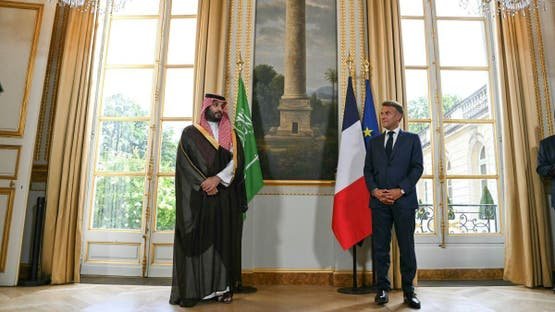
The symmetry is not accidental. Paris and Riyadh are positioning themselves as the diplomatic counterweight to Washington's maximalist approach toward Tehran and Israel's insistence on total Hamas capitulation before any withdrawal from Gaza. Macron called the visit an "important step" in Paris-Riyadh relations, noting that "faced with the challenges in the region, France and Saudi Arabia have always worked together to promote peace and stability and will continue their consultations to this end."
Geopolitical Context — A Region Between Escalation and Diplomacy
The summit's timing is everything. The USS George Washington carrier has reached the Middle East as what officials now openly call "the Iran war grinds on." Washington's "economic D-Day" sanctions package, announced by the Trump administration, has drawn a sharp response from Tehran. Iran's Foreign Ministry spokesman Esmail Baghaei has warned Gulf states against cooperation with US sanctions and vowed to counter them, while Iran has threatened to halt oil exports entirely. China has rejected the US approach, creating a rare moment of Beijing-Tehran solidarity against Washington's financial warfare.
Into this cauldron steps the Saudi-French axis. The joint statement's language on Iran is carefully calibrated: both leaders stressed the need for a negotiated solution and called on Iran to resume full cooperation with the International Atomic Energy Agency (IAEA). This is not the language of regime change or economic strangulation; it is the language of managed containment. The reference to restoring navigation in the Strait of Hormuz to conditions prevailing before February 28, 2026 — freedom of navigation, regular shipping, passage without direct or indirect fees or restrictions — is a direct rebuke to Iranian threats to levy tolls or restrict traffic through the chokepoint through which roughly 20% of global oil passes.
Historical Background — A Century of Ties, A New Strategic Depth
The 100-year anniversary of Saudi-French relations is more than ceremonial nostalgia. France has long been Saudi Arabia's second-most-important Western partner after the United States, but the relationship has historically been transactional — arms deals, energy contracts, and cultural exchanges. The December 2024 state visit by Macron to Riyadh, which launched the Saudi-French Strategic Partnership Council, signaled a shift toward strategic depth. This week's inaugural meeting of that council, chaired by MBS and Macron themselves, institutionalized the relationship at the highest level.
The economic outcomes are substantial. Twenty-one agreements and memoranda of understanding were signed spanning defense, health, artificial intelligence, emerging technologies, entertainment, energy, industry, financial services, transport and logistics, and tourism. Bilateral trade reached approximately $11.8 billion in 2025. A €6 billion Qiddiya Investment Company project will explore a major mixed-use destination and theme parks in Cergy-Pontoise, Ile-de-France. Reports also cite a $5 billion credit line for French companies seeking to operate in the Kingdom. The AlUla cultural partnership has been extended to 2035, and France will participate in Expo 2030 Riyadh. The third Esports World Cup was held in Paris in summer 2026, cementing a soft-power axis that extends from gaming to quantum computing.
A defense cooperation declaration covering armaments and training was also signed, though details remain classified. The strategic calculus is clear: Saudi Arabia is diversifying its security partnerships beyond the United States, and France is positioning itself as the European gateway to Gulf investment and influence.
Regional Dynamics — The Hamas Disarmament Gambit
The centerpiece of the summit's political agenda was the Hamas disarmament agreement. US President Donald Trump announced on Truth Social an agreement for the complete disarmament of Hamas and other armed groups in Gaza, with phased Israeli troop withdrawal as disarmament progresses. Hamas has signaled acceptance — Ghazi Hamad, a member of Hamas's negotiating delegation, confirmed the agreement to Al Jazeera. The EU welcomed the deal as a "constructive step towards peace."
But the devil is in the details, and the details are contested. Israel has insisted that Hamas must fully disarm before any Israeli withdrawal, with weapons handed to a Western entity, per Israel's Channel 12. Hamas, for its part, has historically refused to disarm as a precondition, viewing its arsenal as its primary leverage. The agreement follows the Gaza ceasefire deal signed in Egypt on August 23 after high-stakes shuttle diplomacy by Kushner, who has emerged as the Trump administration's de facto Middle East envoy.
The Saudi-French joint statement's welcome of the agreement is significant because it provides international legitimacy to a framework that might otherwise collapse under the weight of Israeli security demands and Hamas's survival instincts. Both Paris and Riyadh have skin in the game: France has historical ties to Lebanon and the broader Levant, while Saudi Arabia has positioned itself as the guardian of the Palestinian cause in the Gulf, even as it pursues normalization with Israel through the Abraham Accords framework.
Strategic Calculus — What Each Side Wants
MBS's strategic calculus is multi-layered. Domestically, he needs Vision 2030 to succeed, which requires foreign investment, technological partnerships, and a stable regional environment. The €6 billion Qiddiya project in France and the $5 billion credit line for French companies are not charity; they are investments in a relationship that can deliver European capital and expertise to the Kingdom's diversification efforts. Regionally, MBS wants to position Saudi Arabia as the indispensable mediator — the one actor that can talk to Washington, Tehran, Moscow, and Beijing simultaneously. The summit's joint statement on Lebanon, Yemen, Sudan, and Syria demonstrates that Riyadh is claiming a leadership role across the region's conflict zones.
Macron's calculus is equally strategic. France has lost influence in the Sahel, faces an increasingly assertive Russia on its eastern flank, and sees the Gulf as a critical arena for maintaining French relevance in global affairs. The defense cooperation declaration and the financial framework for French companies in the Kingdom are designed to lock in French economic and military presence in the Gulf for decades. Macron is also positioning France as the European alternative to US unilateralism — a broker that can engage with Iran diplomatically while maintaining pressure on its nuclear program.
The Iran dimension is where the strategic calculus gets complicated. Washington's "economic D-Day" sanctions are designed to cripple Iran's economy and force regime change or capitulation. France and Saudi Arabia, by contrast, are pushing for a negotiated solution that would see Iran resume full IAEA cooperation in exchange for sanctions relief. This is not altruism; it is pragmatism. A collapsed Iranian state would destabilize the entire Gulf, threaten oil supplies, and potentially trigger a refugee crisis that would reach European shores. The joint statement's call for Iran to resume full cooperation with the IAEA is a face-saving formula that allows Tehran to climb down from its nuclear brinkmanship without appearing to surrender to US pressure.
Energy and the Hormuz Factor
The Strait of Hormuz remains the single most important chokepoint in the global energy system. Iran has threatened to halt oil exports entirely and has been accused of attacking vessels in the strait. The joint statement's condemnation of these attacks and its insistence on restoring navigation to pre-February 28, 2026 conditions is a direct challenge to Iranian threats. Iran claims that Gulf pipelines aim to weaken Hormuz as bypass routes reshape the energy map — a reference to the Saudi-East and UAE-East pipelines that allow Gulf producers to export oil without transiting the strait.
Oil prices have surged in response to the escalating confrontation. The USS George Washington carrier's presence in the region is a reminder that the United States is prepared to use military force to keep the strait open. But the Saudi-French approach suggests a different path: diplomatic pressure combined with economic incentives to persuade Iran that its interests lie in cooperation, not confrontation. The reference to "passage without direct or indirect fees or restrictions" is a pointed rejection of Iranian proposals to levy tolls on tankers transiting the strait — a proposal that would fundamentally alter the economics of global energy trade.
Regional Implications — A New Order Taking Shape
The MBS-Macron summit is best understood as a declaration of intent. France and Saudi Arabia are building a strategic axis that can serve as a counterweight to US unilateralism, Israeli maximalism, and Iranian revisionism. The joint statement's coverage of Lebanon — full implementation of UN Security Council Resolution 1701, complete disarmament of all non-state armed groups, Israel's withdrawal from all Lebanese territory, and support for President Joseph Aoun, Prime Minister Nawaf Salam, and the Lebanese Armed Forces — is a template for how Paris and Riyadh believe regional conflicts should be resolved: through international law, state institutions, and the disarmament of non-state actors.
The same logic applies to Yemen, where the joint statement supports the Presidential Leadership Council and condemns Houthi attacks on Saudi civilian infrastructure and commercial shipping. It applies to Sudan, where the two leaders called for an end to the crisis and external interference. And it applies to Syria, where they called for unity, stability, and economic recovery, with a joint Saudi-Syrian-French Business Council to facilitate reconstruction.
The forward-looking implications are profound. If the Hamas disarmament agreement is implemented — a significant "if" given the history of failed ceasefires and broken promises — it would mark the first time a major Palestinian armed faction has voluntarily surrendered its weapons. The phased Israeli troop withdrawal, conditioned on disarmament progress, would test whether Israel is genuinely willing to trade territory for security guarantees. The EU's welcome of the deal as a "constructive step towards peace" provides international cover, but the real test will be on the ground in Gaza.
For Saudi Arabia, the summit represents a maturation of its foreign policy. MBS is no longer content to be a regional power broker; he is positioning the Kingdom as a global actor capable of shaping outcomes from Paris to Gaza to Tehran. For France, the summit represents a reassertion of European relevance in a region where the United States has historically dominated. The Saudi-French axis is not an anti-American alliance, but it is a hedge against American unpredictability.
The coming months will test whether this axis can deliver. The Iran nuclear file remains unresolved, with Tehran's cooperation with the IAEA still in question. The Hamas disarmament agreement could collapse at any moment. The Strait of Hormuz remains a flashpoint. But for now, Paris and Riyadh have offered a vision of regional order based on diplomacy, international law, and economic integration — a vision that stands in stark contrast to the gunship diplomacy and economic warfare emanating from Washington.
By Malik Hassan, Staff Writer
This article was produced with AI-assisted research and editorial support. Reporting is based on sources cited in the article.
What's Your Reaction?
 Like
0
Like
0
 Dislike
0
Dislike
0
 Love
0
Love
0
 Funny
0
Funny
0
 Wow
0
Wow
0
 Sad
0
Sad
0
 Angry
0
Angry
0

Middle East Correspondent at Global1.News. Based in Beirut, covering politics, conflict, energy, and society across the Middle East. Brings context and depth to a region often reduced to headlines.











Comments (0)