
US Launches 'Operation Economic Outcast' Against Iran
In a recent Middle East Eye report, the MEE Live programme examined the Trump administration's latest strategy to isolate Iran's economy, a campaign that US officials are billing as unprecedented in scale and severity. The video explainer, published on August 25, 2026, lays out the mechanics of what the Treasury Department has dubbed "Operation Economic Outcast," a sweeping financial offensive that targets the remaining lifelines of the Iranian state.
In a recent Middle East Eye report, the MEE Live programme examined the Trump administration's latest strategy to isolate Iran's economy, a campaign that US officials are billing as unprecedented in scale and severity. The video explainer, published on August 25, 2026, lays out the mechanics of what the Treasury Department has dubbed "Operation Economic Outcast," a sweeping financial offensive that targets the remaining lifelines of the Iranian state. The report arrives at a moment of acute regional tension, nearly six months into a US-Israel war on Iran that has reshaped the Middle East's geopolitical landscape.
The new measures, announced by Treasury Secretary Scott Bessent on August 24, represent a significant escalation in Washington's approach to Tehran, moving beyond the military campaign that has so far failed to dislodge the Iranian governing system. As the video report details, the administration is now betting that economic strangulation can achieve what kinetic strikes have not.
Operation Economic Outcast: Washington's Financial War on Iran
Washington, DC – August 25, 2026 — The Trump administration has launched what it describes as an unprecedented economic campaign against Iran, a multi-pronged financial offensive designed to sever the Islamic Republic's remaining connections to the global economy. Treasury Secretary Scott Bessent announced "Operation Economic Outcast" on Monday, framing it as "an economic onslaught against Iran's financial connections around the globe" with a singular objective: to "sever every economic lifeline that sustains this tyrannical regime until Tehran stands alone."
The announcement marks a decisive shift in US strategy, coming after months of military confrontation that has killed senior Iranian leaders but failed to produce the political outcome Washington seeks. In a Financial Times op-ed, Bessent described the campaign as "economic D-Day — the single greatest financial offensive ever marshalled against an adversary," language that signals the administration's determination to treat economic warfare as the primary instrument of pressure.

What Operation Economic Outcast Means
The new campaign is built around a series of sectoral sanctions determinations targeting what the Treasury Department identifies as five of Iran's "most vital lifelines": digital assets, technology, gold, aviation, and shipping. These designations broaden secondary sanctions risk for any country or company doing business with Iran, effectively threatening to cut off from the US financial system any entity that facilitates trade with Tehran, regardless of where that entity is based.
Bessent was explicit about the scope of the enforcement mechanism. He announced a "zero-leakage approach" — meaning no breathing space for the regime — and warned that any entity facilitating money laundering on behalf of Iran "will be removed from the U.S. Dollar system." The threat is not idle: the dollar remains the world's reserve currency, and exclusion from dollar clearing mechanisms is effectively a death sentence for international businesses.
The Treasury also imposed fresh sanctions on 60 entities, vessels, and individuals across the world, including in the United Arab Emirates, Hong Kong, China, Singapore, and Switzerland, accusing them of enabling the Iranian regime. The geographic spread of these designations underscores the global reach of the campaign and the administration's willingness to target allies and adversaries alike in its pursuit of economic isolation.
Five Lifelines Under Pressure
The sectoral focus of the new sanctions reveals a sophisticated understanding of Iran's economic vulnerabilities. Digital assets represent a growing channel for Iran to circumvent traditional banking restrictions, with Tehran having invested in cryptocurrency mining and blockchain-based trade mechanisms to move money across borders. By targeting this sector, Washington aims to close a loophole that has allowed Iran to partially evade the dollar-based financial system.
Technology sanctions are designed to restrict Iran's access to everything from telecommunications equipment to industrial machinery, while the gold sanctions target a commodity that has long served as a medium of exchange for countries cut off from conventional banking. Aviation sanctions aim to ground Iran's civilian and military air capabilities, and shipping sanctions target the maritime routes that carry Iran's oil exports and imports.
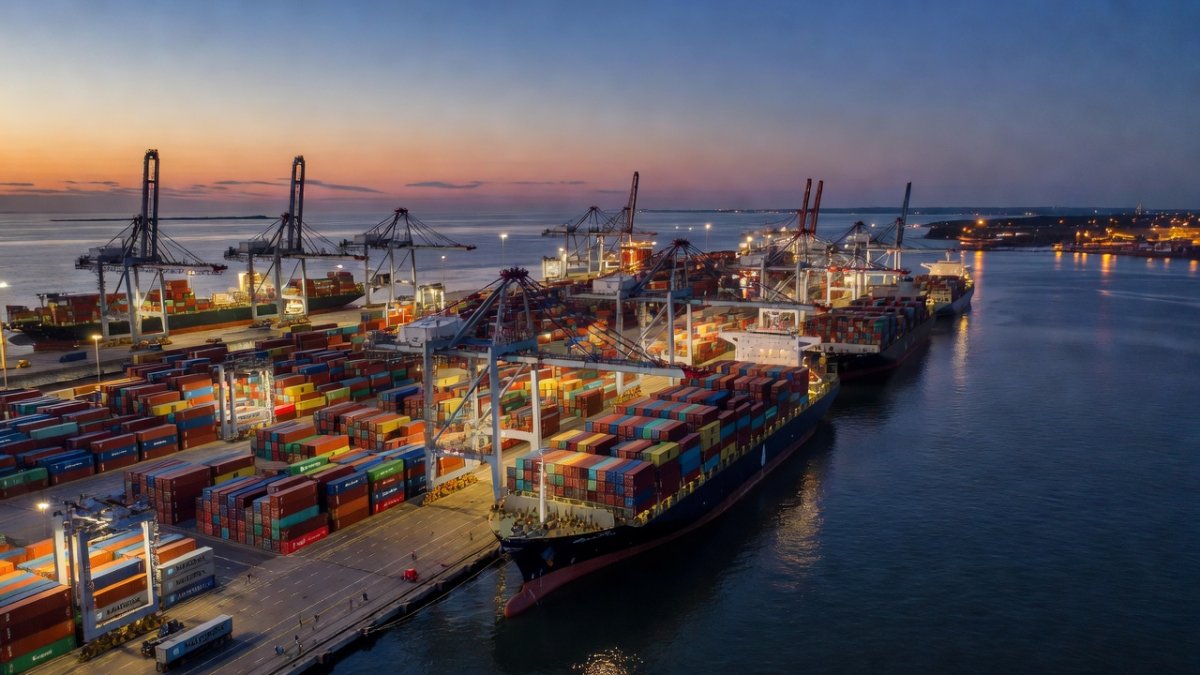
The shipping dimension is particularly significant given the broader regional context. Since the war began in February 2026, Iran has largely shut down and asserted control over the Strait of Hormuz, a major artery for global energy transit. The disruption has sent oil and gas prices soaring worldwide, creating economic pain that extends far beyond the region. The new sanctions on shipping entities appear designed to pressure Iran's remaining maritime trade routes, even as Tehran continues to hold the strait in a strategic standoff.
A War That Has Not Ended
The economic campaign must be understood against the backdrop of a military conflict that has not gone according to Washington's plan. The US-Israel war on Iran, launched in February 2026 during ongoing nuclear talks, began with a series of strikes that killed Supreme Leader Ali Khamenei and several other top officials. The assumption among some strategists was that decapitating the regime would trigger its collapse or at least force a rapid capitulation on the nuclear file.
That assumption has proven unfounded. Tehran responded with missile and drone attacks across the region, and the governing system in Iran has remained intact despite the loss of its supreme leader. In April 2026, the US announced a blockade on Iranian ports, but Iran has remained defiant, continuing to assert control over the Strait of Hormuz and maintaining its regional military posture.
Sina Toossi, a fellow at the Center for International Policy, offered a sober assessment of the situation in comments to Al Jazeera. "The blockade has clearly hurt Iran, especially its oil exports, but it hasn't produced the political outcome Washington wants," Toossi said. "Iran hasn't capitulated. Hormuz remains heavily disrupted, and the costs to the US and global economy are mounting. So, 'economic D-Day' looks like an effort to intensify the pressure now that the military campaign has failed to deliver a decisive outcome."
The China Question
Any assessment of the new sanctions must grapple with the role of China, which buys an estimated 80% of Iran's oil exports. Beijing has denounced the US threat of secondary sanctions as illegal, warning that it would take "all necessary measures" to protect its national interests, according to The Guardian's reporting on August 25, 2026. The Chinese response is critical because the effectiveness of the entire campaign hinges on whether Beijing will comply with US demands to cease its purchases of Iranian crude.
China's position is complicated by its own economic interdependence with the United States. While Beijing has strategic reasons to maintain its relationship with Tehran — including access to oil and a counterweight to US influence in the Middle East — it also has significant commercial interests that could be threatened by US secondary sanctions. The Trump administration appears to be betting that the threat of exclusion from the dollar system will be sufficient to compel Chinese compliance, but Beijing's public defiance suggests the calculation may be more complex.
Bessent indicated that President Donald Trump has been personally engaged in the diplomatic push, calling world leaders "with specific requests to cease their interaction with the regime." The Treasury Secretary delivered a stark warning: "Those who stand with the United States will reap the rewards of our partnership. Those who tether themselves to the Iranian regime should expect to share in the isolation."
Tehran's Defiance
Iranian officials have dismissed the new campaign as a recycled approach that has failed before. On Sunday, Iranian Foreign Minister Abbas Araghchi brushed aside the pressure, saying: "They cannot think of any other solution in confronting the great Iranian people, so they repeatedly put forward the same old plans." The dismissive tone reflects a regime that has weathered decades of sanctions and has developed sophisticated mechanisms for economic survival.
US Defense Secretary Pete Hegseth struck a more bellicose note on Monday, insisting that Iran will have "no choice" but to return to the negotiating table over its nuclear programme. "If we need to use kinetic strikes, we'll use them. If Iran is foolish enough to overplay their hand or mess with the American military, we'll do what we need to do," Hegseth said. "But economic pressure, we know, hurts them the most right now."
The combination of continued military threats and intensified economic pressure suggests the administration is pursuing a dual-track strategy, hoping that financial pain will accomplish what military force has not. But the history of US-Iran relations offers little evidence that Tehran capitulates under pressure. The Islamic Republic has survived decades of sanctions, assassination campaigns, and military confrontations, and its leadership has consistently framed external pressure as a test of national resolve.
Human Cost of Economic Warfare
Behind the geopolitical calculations and strategic posturing lies a humanitarian crisis that is deepening by the day. Ordinary Iranians already face soaring prices, a collapsing currency, and shortages of medicine and basic goods. The new sanctions threaten to exacerbate these conditions, cutting off remaining channels for essential imports and further devaluing the rial.
The human impact of economic warfare is often abstracted in policy discussions, reduced to statistics and projections. But for the Iranian people, the consequences are visceral: families struggling to afford food, patients unable to access life-saving medications, workers losing their livelihoods as businesses collapse under the weight of sanctions. The regime's own failures and corruption have contributed to these conditions, but the external pressure campaign is making an already dire situation significantly worse.
The disruption around the Strait of Hormuz has also pushed global energy prices up, hitting consumers worldwide. In Europe, Asia, and Africa, households are feeling the pinch of higher fuel costs, and developing economies are particularly vulnerable to energy price shocks. The economic warfare against Iran is not contained to the Islamic Republic; its ripple effects are being felt in markets and homes across the globe.
Analysis and Implications
The "zero-leakage approach" announced by Bessent represents a maximalist strategy that assumes the United States has both the will and the capacity to enforce total economic isolation. But the track record of such campaigns is mixed at best. Sanctions against Cuba, North Korea, and Venezuela have caused immense suffering without achieving their stated political objectives. There is little reason to believe Iran will prove more susceptible to economic pressure than these other cases.
The timing of the campaign is also notable. Coming nearly six months into a war that has already exacted a heavy toll on the region, the economic offensive suggests a recognition that the military path has reached its limits. The killing of Khamenei and other senior officials was supposed to be a decisive blow, but the regime has proven more resilient than anticipated. The administration is now reaching for economic tools in the hope that they can accomplish what bombs and missiles could not.
For the Iranian people, the implications are deeply troubling. They have already endured years of sanctions, a collapsing economy, and now a war that has brought missile strikes and drone attacks to their cities. The new campaign threatens to deepen their suffering without offering any clear path to relief. The humanitarian dimension of this policy is not a side effect; it is an integral part of the strategy. Economic warfare is designed to inflict pain on the civilian population in the hope that they will pressure their government to capitulate.
History suggests this calculation is flawed. Populations under siege often rally around their leaders, even unpopular ones, when faced with external threats. The Iranian regime has repeatedly used foreign pressure to consolidate domestic support, framing itself as the defender of the nation against American aggression. The new sanctions may well have the opposite effect of what Washington intends, strengthening rather than weakening the regime's position.
As the campaign unfolds, the world will be watching to see whether China holds the line, whether the dollar system proves as powerful a weapon as the administration believes, and whether the Iranian people can withstand yet another round of economic warfare. The stakes extend far beyond Iran's borders. The outcome of this confrontation will shape the future of the Middle East, the global energy market, and the international financial system for years to come.
For now, the people on the ground — in Tehran, in Isfahan, in Mashhad — are left to navigate an increasingly uncertain landscape. They face the prospect of further shortages, further price increases, and further isolation from the global community. The economic war against Iran is not an abstract policy debate; it is a lived reality for millions of people whose lives are being shaped by decisions made in Washington, Beijing, and Tehran. As the pressure intensifies, the human cost will only grow, and the question of whether this strategy can achieve its objectives without catastrophic consequences remains unanswered.
By Fatima Al-Rashid, Staff Writer
This article was produced with AI-assisted research and editorial support. Reporting is based on sources cited in the article.
What's Your Reaction?
 Like
0
Like
0
 Dislike
0
Dislike
0
 Love
0
Love
0
 Funny
0
Funny
0
 Wow
0
Wow
0
 Sad
0
Sad
0
 Angry
0
Angry
0
Gulf/MENA Correspondent at Global1.News. Based in Doha, covering Gulf politics, energy markets, diplomacy, and development across the Middle East and North Africa. Tracks the economic transformation of the Gulf states.









Comments (0)