
Taiwan Can’t Fight Beijing’s History War While Erasing Its Own ROC Legacy
At the October 1, 2026 summit between U.S. This linguistic shortcut, as Taiwan’s Mainland Affairs Council (MAC) warned, risks allowing the PRC to inherit a wartime legacy it never earned.
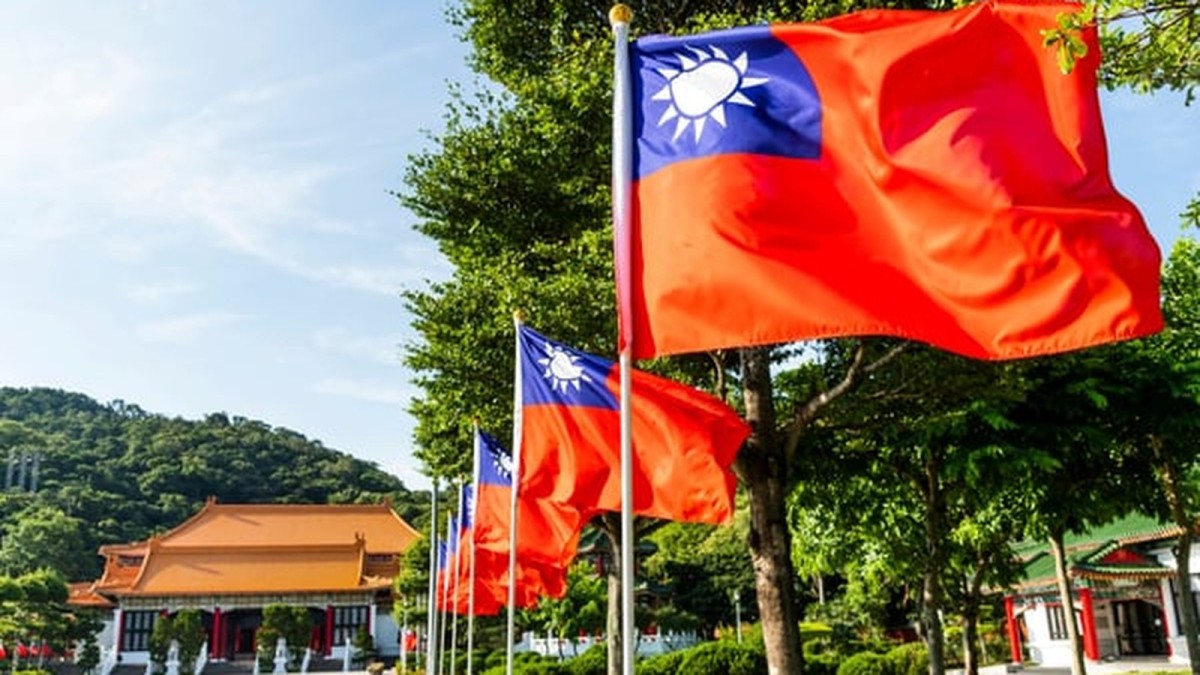
At the October 1, 2026 summit between U.S. President Donald Trump and China’s President Xi Jinping, the White House described the United States and China as World War II allies who “fought side by side to win the war.” While the phrasing was brief, the omission was profound: it collapsed the Republic of China (ROC), the government that actually fought alongside the United States against Japan, into a single, unbroken “China.” The People’s Republic of China (PRC) did not exist until 1949, four years after Japan’s surrender. This linguistic shortcut, as Taiwan’s Mainland Affairs Council (MAC) warned, risks allowing the PRC to inherit a wartime legacy it never earned.
Historical Context of the ROC’s Wartime Role
The ROC, under Chiang Kai‑shek, was the internationally recognised government of China during the Second World War and a principal member of the Allied coalition. It signed the San Francisco Peace Treaty in 1951, a post‑war arrangement that Taiwan continues to invoke in diplomatic arguments against Beijing’s territorial claims. By contrast, the PRC emerged only after the Chinese Civil War, inheriting a different historical narrative that excludes direct participation in the 1941‑45 conflict.
Scholars have long noted that the ROC’s wartime contribution underpins Taiwan’s claim to a distinct historical trajectory. The MAC’s objection to the summit’s wording, articulated by Deputy Foreign Minister Wu Chih‑chung as an act of “de‑ROC‑ization,” reflects a concern that erasing the ROC from the World War II narrative would diminish this foundational argument.
Taiwan’s Diplomatic Language Shift
Ironically, Taipei’s own diplomatic practice has begun to downplay the ROC label. In 2025, Taiwan’s representative office in Los Angeles issued National Day invitations branded simply “Taiwan National Day,” whereas the previous year’s invitations bore the full “Republic of China 114th National Day” heading. This subtle rebranding aligns with a broader trend of emphasizing “Taiwan” over “Republic of China” in official communications.
The shift is not merely cosmetic. By reducing the visibility of the ROC moniker, Taiwan narrows the rhetorical space in which it can assert the ROC’s historical continuity—a key element of its legal and diplomatic posture against the PRC’s claims.
Evolving Commemorative Terminology
In August 2025, marking the 80th anniversary of Japan’s surrender, President Lai Ching‑te referred to the event as the “end of the war” (終戰) rather than the traditional ROC‑centric phrase “victory in the War of Resistance” (抗戰勝利). Lai’s wording highlighted universal lessons of aggression, unity, and victory, but it also signalled a departure from language that foregrounds the ROC’s wartime role.
Opposition lawmakers criticised the omission, interpreting it as part of a broader shift toward a Taiwan‑centered historical narrative. While the term “end of the war” is not new to Taiwanese official vocabulary, its use in a high‑profile commemoration underscores an evolving framing of the conflict that distances the ROC from the central narrative.
Domestic Drivers of Identity Recalibration
Successive Taiwanese administrations have faced domestic pressures to soften the ROC’s historical claims. A growing proportion of the citizenry now identifies as Taiwanese rather than Chinese, prompting policymakers to avoid language that might revive a rival claim to “all of China.” This democratic evolution, while legitimate, creates a tension between domestic identity politics and the strategic need to preserve the ROC’s historical continuity in international fora.
The paradox is evident: the more Taipei retreats from ROC symbolism in its own diplomatic and commemorative practices, the less salient the ROC’s distinct historical trajectory becomes abroad. This retreat can inadvertently expand Beijing’s narrative space to portray the wartime “China” as an uninterrupted predecessor of today’s PRC.
Strategic Implications for Taiwan’s Sovereignty Claims
Taiwan’s legal arguments against Beijing’s territorial assertions rely in part on the ROC’s wartime and post‑war history, including references to the San Francisco Peace Treaty and the ROC’s status as a United Nations member until 1971. When the ROC label recedes from official discourse, the clarity of these arguments may diminish, making it harder for Taiwan to communicate a separate historical identity to the international community.
Moreover, the PRC’s state‑backed historical revisionism—exemplified by the Trump‑Xi summit’s phrasing—seeks to present a seamless Chinese continuity from the 1930s to the present. If Taiwan’s own narrative becomes less anchored in the ROC’s wartime role, Beijing’s version may gain greater acceptance, subtly reshaping global perceptions of “China’s” World War II legacy.
Future Trajectories and Policy Recommendations
To preserve the strategic utility of the ROC’s historical legacy, Taipei must balance its democratic identity evolution with a calibrated diplomatic language that retains the ROC’s distinctiveness in key international contexts. This could involve re‑emphasizing the ROC in multilateral settings, such as United Nations‑style forums or when invoking the San Francisco Treaty, while continuing to promote a Taiwan‑centered identity domestically.
In addition, coordinated efforts with allied think‑tanks—such as the Asan Institute for Policy Studies and the Korea Development Institute (KDI)—could help craft narratives that foreground Taiwan’s wartime contributions without alienating its domestic audience. By aligning scholarly research with diplomatic outreach, Taiwan can sustain the “live argument” against Beijing’s historical claims, ensuring that the ROC’s wartime legacy remains a viable pillar of its sovereignty case in the evolving geopolitical landscape of Northeast Asia.
This article was produced with AI-assisted research and editorial support. Reporting is based on the source material cited below. Sources: The Diplomat; thediplomat.com; Global1.News (05 October 2026).
By Prof. David Park, Staff Writer
What's Your Reaction?
 Like
0
Like
0
 Dislike
0
Dislike
0
 Love
0
Love
0
 Funny
0
Funny
0
 Wow
0
Wow
0
 Sad
0
Sad
0
 Angry
0
Angry
0

East Asia/Technology Correspondent at Global1.News. Seoul-based voice covering Korean politics, technology, business, and culture. Analyzes how technology and geopolitics intersect across East Asia.









Comments (0)