
Tasmania Just Approved a 288MW AI Data Centre With 276 Diesel Generators — and the Council Says Its Hands Were Tied
Tasmania's George Town Council approved Firmus Technologies' 288-megawatt AI data centre at Bell Bay in a six-to-one vote despite an e-petition of nearly 6,000 signatures. A hosting founder on the diesel generators, the abandoned Gunns pulp mill site, and the planning-law trap.
Tasmania Just Approved a 288MW AI Data Centre With 276 Diesel Generators — and the Council Says Its Hands Were Tied
I've been running hosting infrastructure for over a decade, and in all that time I've learned one thing about the AI buildout: the fight is never about the compute. It's about everything around the compute — the power, the water, the land, and the people who live next to it. Today, Tasmania handed me the perfect example of all four at once.
On Tuesday, the George Town Council voted six to one to approve Firmus Technologies' 288-megawatt AI data centre at Bell Bay — a facility so big it will make Firmus the single largest electricity consumer in the entire state, overtaking Bell Bay Aluminium, an industrial giant that has been feeding on that grid for decades. The approval came with 276 backup diesel generators, nineteen conditions, and an e-petition of nearly 6,000 signatures begging the councillors to reject it. They voted yes anyway. And here's the kicker — they say their hands were tied.
The Approval — What Just Happened at Bell Bay
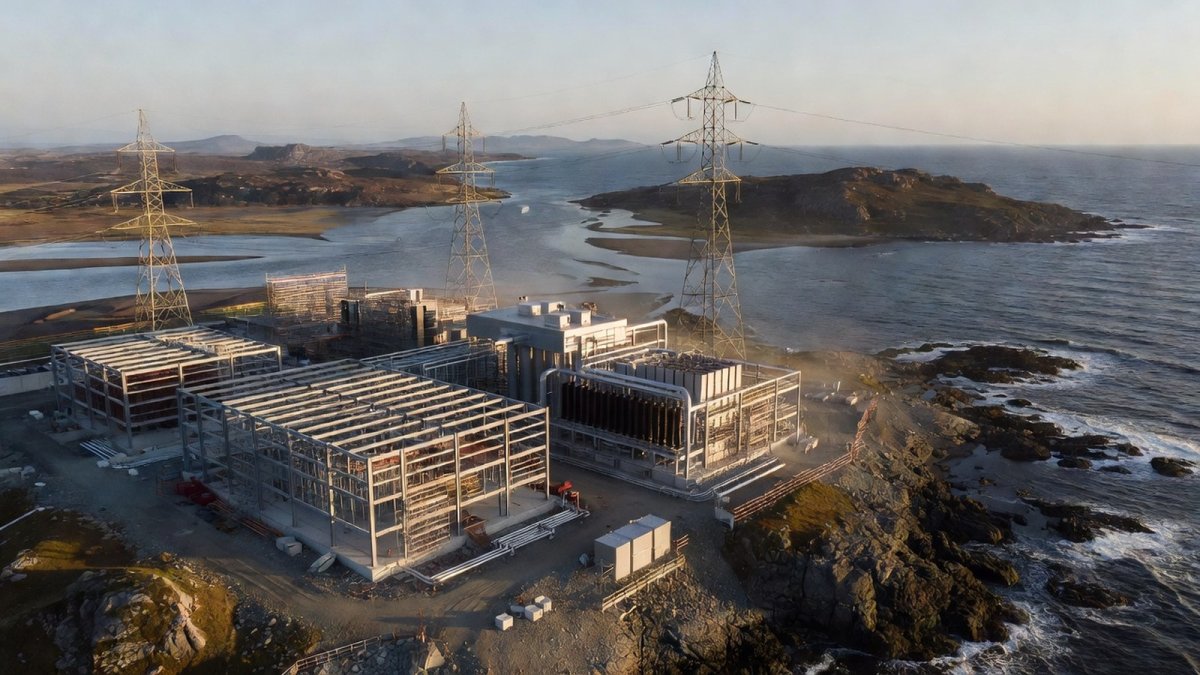
Let me give you the numbers first, because the numbers are the story. 288 megawatts. Two data halls. An office building. A new substation connecting to the existing 220kV transmission lines. A recirculating cooling system designed to limit water use. And 276 backup diesel generators — which, by the way, the developer originally listed as 128 in its planning application. The council caught the discrepancy and made the company correct its own paperwork before approving anything.
The facility runs around the clock. Once operational, it becomes Tasmania's largest power user, ahead of every major industrial customer in the state. Firmus says the project will create more than 380 jobs during construction and support 115 permanent local roles once operational. The company's co-CEOs, Tim Rosenfeld and Oliver Curtis, have been quietly assembling an Australian AI empire — a $2 billion raise earlier this year at a $10.5 billion valuation, backed by Nvidia, Blackstone, Coatue and Jane Street, and a pipeline of projects across the country. Bell Bay is one of three Firmus sites planned for northern Tasmania, alongside a 104-megawatt facility already under construction at St Leonards in Launceston and a proposed 52-megawatt site at Wesley Vale.
And where is this 288-megawatt AI factory going? On the cleared pad of the abandoned Bell Bay Pulp Mill — the former Gunns project at Long Reach.
The Site Nobody's Talking About — the Ghost of the Gunns Pulp Mill
You have to understand what that land means to Tasmanians. The Bell Bay Pulp Mill was a $2.3 billion proposal that tore the state apart for the better part of a decade. Gunns Limited, then one of Australia's biggest forestry companies, wanted to build a bleached kraft pulp mill in the Tamar Valley. Environmentalists fought it in the streets and the courts. There were blockades, arrests, and a national campaign against the company's logging practices. The mill became the most contested piece of industrial land in Australian history.
Gunns collapsed in 2012 — a $904 million loss in a single financial year, including a $796 million write-off on the Bell Bay project alone. The company went into administration, and the pad that had been cleared for the pulp mill sat there, a ghost of a project that never got built.
Now the ghosts have company. That same cleared pad — zoned general industrial, connected to heavy transmission, with the environmental battles already fought and lost — is exactly the kind of land the AI buildout is hungry for. It took a council six to one and a stack of conditions to put an AI factory on land it took a decade of protest to keep a pulp mill off of.
The Two Readings — Industrial Rebirth, or the Consent Gap With a Permit
Reading one: this is Tasmania's industrial rebirth. The island runs on hydro, wind and solar — Firmus's own community page boasts that Bell Bay will draw its power from a grid fed largely by renewables. Premier Jeremy Rockliff says Tasmania welcomes AI investment for the jobs it creates. "We don't want to see those guardrails become too restrictive," he said, "because we want to ensure that Tasmania is open for business." You can see the pitch: a state that watched its forestry giant die and its industrial crown slip gets a new flagship tenant, powered by green electrons, on land that has been sitting idle for fourteen years.
Reading two: the consent gap just got a permit. The council received 349 formal submissions and an e-petition of nearly 6,000 signatures. About 80 people stood outside the council building before the vote. A 15-year-old named Ayla Heawood addressed the meeting. And none of it moved the outcome, because the council's planners had already concluded that the things residents were worried about — power use, water use, air and noise pollution, environmental impact — do not "directly relate to the applicable provisions of the planning scheme." The councillors were legally required to assess the project against the Tasmanian Planning Scheme and nothing else. So a 288-megawatt facility, the largest power load in the state, was approved by a planning authority that was explicitly not allowed to consider power, water or pollution.
The Secondary Bottleneck Nobody's Talking About — the Planning-Law Trap
Here's the part that should worry every hosting provider watching this story: the system that is supposed to filter bad projects is structurally unable to filter the things that actually matter. The council's own planners wrote that they "may only consider matters that are relevant under the planning scheme and within its powers as the planning authority." They weren't being careless. They were being honest about a law that gives a local council jurisdiction over land use and nothing else.
The Environment Protection Authority decided in August that it did not need to assess the project at all, finding the risk of serious harm very low or negligible. So who assessed the power draw? Nobody. Who weighed what 288MW of new baseload does to a grid the size of Tasmania's? Nobody. Who asked what 276 diesel generators — more than double what the developer first admitted to — mean for the island's climate position? The council can't. The EPA won't. The approval carries nineteen conditions — noise surveys, air quality assessments, a public complaints register, a limit on running more than one generator at a time — but the big questions were never in scope.
This is the planning-law trap, and it is not a Tasmania problem. It's the same trap we saw in Vineland, New Jersey, where a 300MW data centre hit stop-work orders over its fuel cells. It's the same trap in every jurisdiction where the permit system was built for offices and warehouses and is suddenly being asked to judge power plants and GPU factories. When the law can't see the problem, the problem doesn't disappear. It just becomes somebody else's problem, later, at ten times the cost.
What This Means for Independent Hosting Providers
First — treat every "approved" announcement as the beginning, not the end. A 288MW approval is not 288MW online. Firmus still needs detailed design, procurement and construction planning, and there is a 14-day window in which any of those 349 submitters can appeal the decision to the Tasmanian Civil and Administrative Tribunal. This project could still stall — and so could the one in your backyard.
Second — read the diesel generator count as a signal. 276 generators is what a 288MW facility actually needs for backup in a grid-constrained location. If a developer miscounts its own generators by more than double in its application, the odds are good it is miscounting other things too. Due diligence is not a formality.
Third — the green-power pitch is a double-edged sword. Tasmania's renewables make this project politically palatable, but they don't change the physics: 288MW of new load on an island grid is a lot of load. If you are hosting in a renewables-heavy region, watch the connection queue like a hawk — the big consumer always gets served first, and the little guy waits.
Fourth — expect the consent fight to follow the buildout everywhere. The AI industry has moved past the phase where it could build quietly in exurbs. Every new market — Tasmania, Indonesia, Saudi Arabia, anywhere with cheap power and flat land — will get its own version of the 6,000-signature petition. Plan your site selection around the political timeline, not just the power timeline.
Fifth — remember what this site represents. The land was cleared for a project that died because a community refused to accept it. It's now being reused for a project that community is refusing again. The names change. The pattern doesn't.
The Bottom Line
I'll be honest with you — I don't blame the George Town councillors. They were handed a law that says "land use only" and asked to judge a power plant. They did what the law allowed, and the system did what systems always do: it moved the hard questions to the next stage, where they'll be harder and more expensive to answer.
But here's what I know from a decade in this business: the AI buildout doesn't fail because the chips aren't fast enough. It fails when the people around it stop saying yes. Tasmania just became the latest test case — a state desperate for industry, sitting on the ghost of a pulp mill, approving the largest power load in its history with its hands tied behind its back. Ent? You can build a data centre on a cleared pad. You can't build one on a cleared conscience.
— Allan Ali, Founder
This article was produced with AI-assisted research and editorial support. Sources: ABC News, Pulse Tasmania, W.Media, Wikipedia.
What's Your Reaction?
 Like
0
Like
0
 Dislike
0
Dislike
0
 Love
0
Love
0
 Funny
0
Funny
0
 Wow
0
Wow
0
 Sad
0
Sad
0
 Angry
0
Angry
0

Publisher of Global1.News. Automation architect, systems builder, and the guy making sure the truth gets published.















Comments (0)