
Another 6 Palestinians killed by Israeli strikes across beleaguered Gaza Strip
Six Palestinians were killed Tuesday by Israeli strikes across the Gaza Strip, a local medical source said, as Israel continues to violate a ceasefire that ostensibly went into effect last October, Anadolu reports.
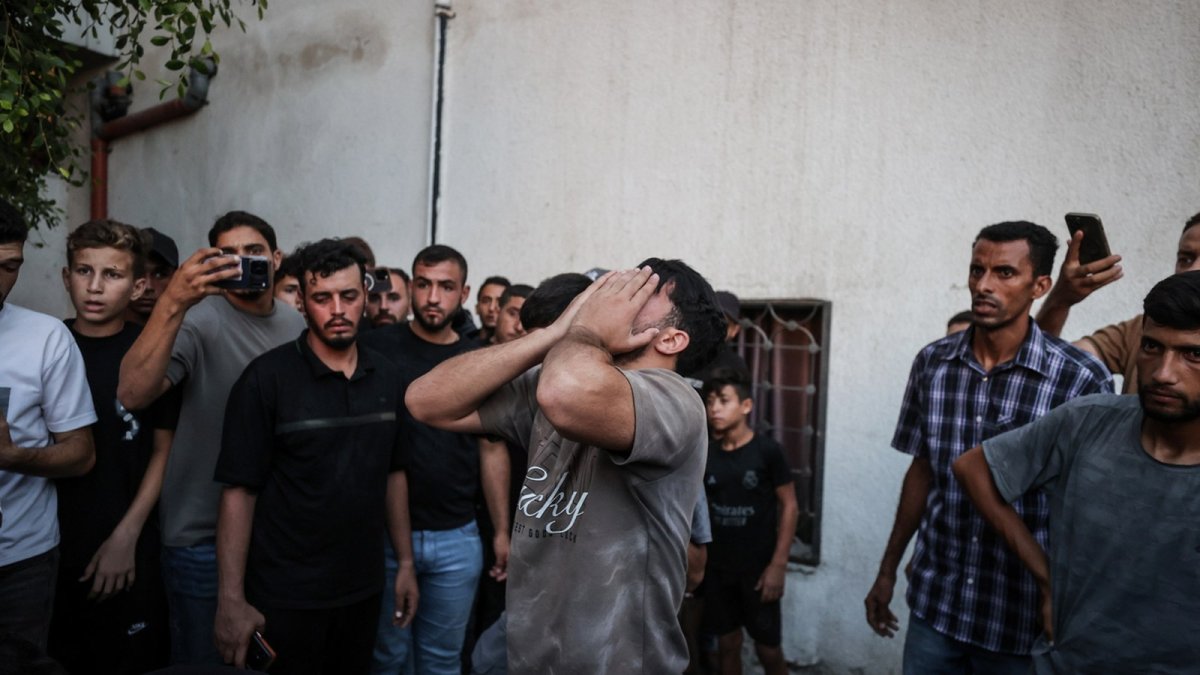
Six Palestinians were killed Tuesday by Israeli strikes across the Gaza Strip, a local medical source said, as Israel continues to violate a ceasefire that ostensibly went into effect last October, Anadolu reports. The latest casualties included two people who succumbed to injuries sustained in earlier Israeli strikes, underscoring the slow and agonizing toll of a conflict that has shown no sign of abating for the enclave's civilian population.
The deaths come despite US President Donald Trump’s earlier call for Israel to halt strikes on Gaza. In an interview with Fox News on Aug. 17, Trump said that Israel “should not be striking in Gaza,” adding that “Hamas agreed to lay down their weapons” under the terms of a US-backed peace plan. Yet on the ground, the reality for Palestinians remains one of relentless bombardment, displacement, and loss.
The Latest Casualties
A medical source at the Al-Shifa Hospital told Anadolu that the bodies of three Palestinians had been brought to the hospital following an Israeli strike on a home in Beit Lahia. Local eyewitnesses told Anadolu that the targeted home was located near the Kamal Adwan Hospital in the Beit Lahia Project area. The strike killed three Palestinians and injured a number of others. What kind of munitions were used in the strike was not immediately clear.
Earlier Tuesday, a Palestinian man was killed in an Israeli drone strike in the Al-Mawasi area of Khan Younis in the southern Gaza Strip, according to a medical source who spoke to Anadolu. On the same day, two Palestinians died after having been struck by Israeli gunfire, the medical source said. The same source added that another Palestinian had succumbed to injuries sustained from Israeli shelling west of Khan Younis on Monday.
Another Palestinian died from injuries sustained in an Israeli strike on the Al-Amal neighborhood of Khan Younis several days earlier, the source said. These deaths, spread across different locations and different methods of attack, paint a picture of a ceasefire that exists only on paper — a fragile arrangement that has done little to shield civilians from the daily reality of war.
Attacks on Displaced Civilians
Local sources told Anadolu that Israeli military vehicles had opened fire on homes and tents sheltering displaced civilians south of Khan Younis. This is a particularly alarming development, as the area has become a refuge for thousands of Palestinians who have been forced to flee their homes multiple times over the course of the conflict. The targeting of tents and shelters — structures that offer minimal protection — raises serious questions about the safety of civilians who have already been displaced multiple times.
Israeli artillery also reportedly targeted the Bureij refugee camp and areas near the Wadi Gaza Bridge in the central Gaza Strip. In the north, Israeli vehicles opened fire on Palestinian homes in Beit Lahia amid intense artillery barrages, eyewitnesses said. The pattern of attacks across the north, center, and south of the Strip suggests a coordinated military campaign that continues to operate with little regard for the civilian infrastructure that remains standing.
For the families living in these areas, the constant threat of shelling and gunfire has created an atmosphere of pervasive fear. Children who have already endured months of conflict are now facing the added trauma of attacks on the very places they have sought refuge. The psychological toll of this ongoing violence cannot be overstated, even as the physical casualties continue to mount.
The Fragile Ceasefire
Since the ceasefire was signed last October, Israeli attacks have killed 1,296 Palestinians and injured 4,296 others, according to Gaza’s Health Ministry. These figures, while stark, only tell part of the story. The ceasefire was supposed to bring an end to the violence, to allow families to return to their homes, and to enable the delivery of much-needed humanitarian aid. Instead, it has become a framework within which Israel continues to conduct strikes with apparent impunity.
The discrepancy between the stated terms of the ceasefire and the reality on the ground has created a deep sense of betrayal among Palestinians. Many had hoped that the agreement, brokered with US support, would finally bring an end to the suffering that has defined life in Gaza since October 2023. Instead, they find themselves caught in a seemingly endless cycle of violence, with no clear path to a lasting peace.
President Trump’s comments on Aug. 17, in which he said Israel “should not be striking in Gaza,” have done little to change the situation on the ground. While his words may signal a shift in US policy, they have not translated into concrete action to halt the strikes. For Palestinians, the gap between diplomatic statements and military reality is a familiar and bitter experience.
Medical Infrastructure Under Pressure
The continued strikes have placed an immense strain on Gaza’s already fragile medical infrastructure. Hospitals like Al-Shifa and Kamal Adwan, which have been repeatedly targeted or damaged during the conflict, are struggling to cope with the influx of casualties. Medical staff, many of whom have been working around the clock for months, are facing shortages of supplies, equipment, and personnel.
The fact that a strike targeted a home near Kamal Adwan Hospital is particularly concerning. Hospitals and their immediate surroundings should be protected under international humanitarian law, yet the proximity of the strike to a medical facility raises serious questions about the conduct of the Israeli military. Medical workers in Gaza have repeatedly called for the protection of healthcare facilities, but their appeals have largely gone unheeded.
The deaths of two Palestinians who succumbed to injuries sustained in earlier strikes highlight the long-term consequences of the violence. Even those who survive the initial attack may face a slow and painful recovery, often without access to adequate medical care. The health system in Gaza, already weakened by years of blockade and underfunding, is now on the brink of collapse.
The Broader Human Cost
Since October of 2023, the Israeli army has killed more than 73,000 people — and injured over 174,000 others — in its genocidal war on the Gaza Strip, which remains ongoing. These figures, provided by Gaza’s Health Ministry, represent not just numbers but individual lives — fathers, mothers, children, grandparents — each with their own stories, dreams, and aspirations. The scale of the loss is almost incomprehensible, yet for the families who have lost loved ones, the pain is deeply personal and enduring.
The ongoing attacks have also exacerbated the humanitarian crisis in Gaza. Displacement, food insecurity, and lack of access to clean water and healthcare have become the norm for the vast majority of the population. The destruction of infrastructure, including the desalination plant that was recently reported to have been damaged, has further compounded the suffering of civilians who are struggling to survive under the most difficult conditions imaginable.
For the international community, the continued violence in Gaza represents a moral failure. Despite repeated calls for a ceasefire, despite the mounting death toll, and despite the clear violations of international law, the world has largely stood by as the people of Gaza endure yet another chapter of suffering. The words of President Trump, while welcome, have not been backed by the kind of decisive action that could actually bring an end to the violence.
What the Ongoing Strikes Mean for Palestinian Civilians
For the civilians of Gaza, the ongoing strikes mean that there is no safe place to hide. Whether in the north, where Beit Lahia has come under intense artillery fire, or in the south, where displaced families are sheltering in tents, the threat of death or injury is ever-present. The psychological impact of living under constant threat cannot be measured, but it is a burden that the people of Gaza have been forced to carry for far too long.
The targeting of homes, tents, and areas near hospitals suggests a deliberate strategy of collective punishment that violates the most basic principles of international humanitarian law. Civilians are not legitimate targets, yet they continue to bear the brunt of the violence. The international community has a responsibility to hold those responsible for these attacks to account, but so far, such accountability has been conspicuously absent.
As the death toll continues to rise, the prospects for a lasting peace seem increasingly remote. The ceasefire, which was supposed to be a first step toward a political solution, has instead become a cover for continued military operations. For the people of Gaza, the promise of peace remains as distant as ever, and the reality of war remains an inescapable part of daily life.
The six Palestinians killed Tuesday are the latest victims of a conflict that has already claimed tens of thousands of lives. Their deaths, like so many before them, are a reminder of the urgent need for a genuine and enforceable ceasefire — one that actually protects civilians and paves the way for a just and lasting peace. Until then, the people of Gaza will continue to mourn, to bury their dead, and to hope that the world will finally act to end their suffering.
This article was produced with AI-assisted research and editorial support. Sources: Middle East Monitor, Anadolu Agency, Gaza Health Ministry.
By Fatima Al-Rashid, Staff Writer
What's Your Reaction?
 Like
0
Like
0
 Dislike
0
Dislike
0
 Love
0
Love
0
 Funny
0
Funny
0
 Wow
0
Wow
0
 Sad
0
Sad
0
 Angry
0
Angry
0

Gulf/MENA Correspondent at Global1.News. Based in Doha, covering Gulf politics, energy markets, diplomacy, and development across the Middle East and North Africa. Tracks the economic transformation of the Gulf states.













Comments (0)