
70 Cents Left: How an Immigration Case Turned into a Cost-of-Living Crisis
In a recent DW News report, the story of Deonna Nungaray puts a human face on a staggering statistic: a routine traffic stop in Valley Brook, Oklahoma, didn't just derail an immigration case years in the making—it upended a family's finances.
In a recent DW News report, the story of Deonna Nungaray puts a human face on a staggering statistic: a routine traffic stop in Valley Brook, Oklahoma, didn't just derail an immigration case years in the making—it upended a family's finances. The video, titled "70 Cents Left: How an immigration case turned into a cost-of-living crisis," captures how the machinery of immigration enforcement in the United States is now directly shaping the financial survival of Latino families, a reality that resonates deeply in communities from Oklahoma City to Guadalajara.
For Mexican families on both sides of the border, this is not an isolated incident but a growing pattern. When a breadwinner or a caregiver is detained, the economic shockwaves travel fast, hitting rent payments, grocery budgets, and the remittances that sustain millions of households in Mexico. The DW News report zooms in on Deonna's frantic juggling act—multiple jobs, mounting legal bills, and the daily costs tied to her mother's detention—to illustrate a broader crisis that immigration advocates and economists have been warning about for months.
70 Cents Left: How an Immigration Case Turned into a Cost-of-Living Crisis for One Oklahoma Family
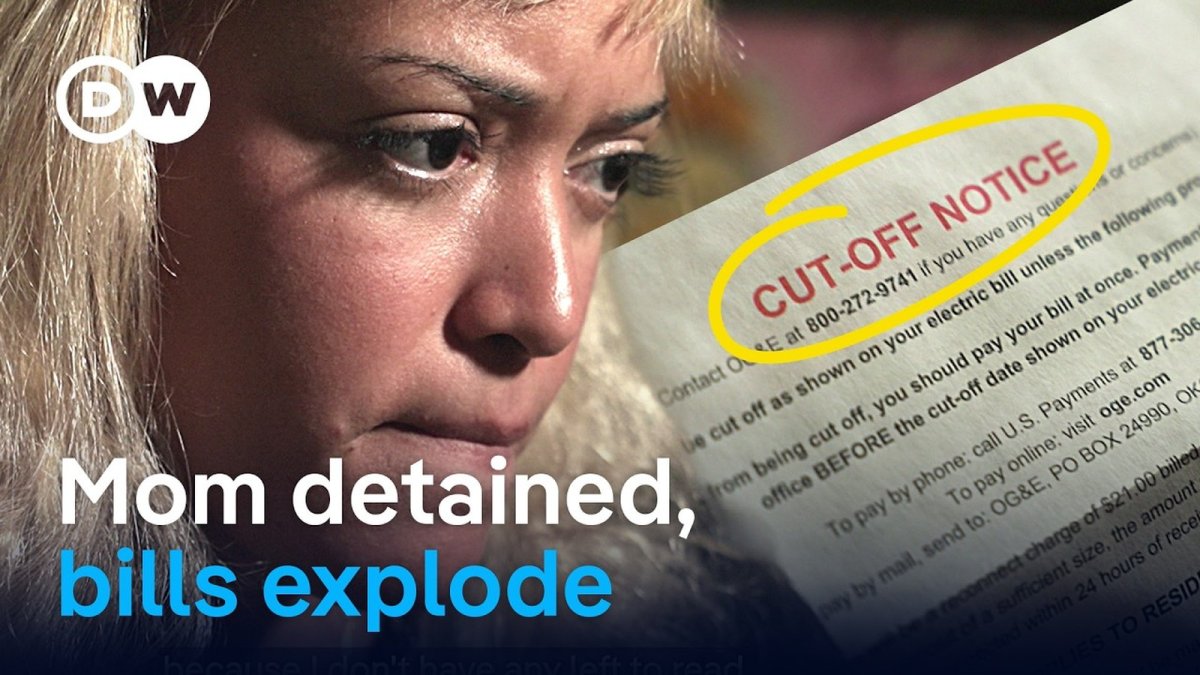
Valley Brook, Oklahoma – United States — When Deonna Nungaray's mother was detained after a routine traffic stop in this tiny Oklahoma County town, it didn't just upend an immigration case years in the making—it upended the family's finances. The DW News report documents how the detention by U.S. Immigration and Customs Enforcement (ICE) has consumed nearly every dollar the family earns. Deonna now works multiple jobs, but the combined weight of her mother's detention costs, legal fees, and everyday living expenses has pushed her to the brink of financial collapse.
The Story Unfolds: A Traffic Stop That Changed Everything
The incident began as a routine traffic stop in Valley Brook, a municipality of roughly 665 residents per the 2020 census, located in the Oklahoma City metropolitan area. Deonna's mother, who had been navigating an immigration case for years, was taken into custody by local police and subsequently transferred to ICE custody. The DW News video follows Deonna as she describes the moment her world tilted: a phone call, a detention facility, and a sudden, crushing realization that her family's finances were about to be upended.
What makes this case particularly poignant is the timing. The family had been working with legal counsel to resolve the immigration case, but the detention reset everything. According to the DW News report, Deonna now spends her days shuttling between shifts at her jobs and her evenings making phone calls to lawyers and detention facility staff. The emotional toll is visible, but so is the financial one. With her mother's income gone, Deonna is covering rent, utilities, and the cost of phone calls and commissary items for her detained mother—expenses that add up quickly when you are living paycheck to paycheck.
The Town Behind the Traffic Stop: Valley Brook's Enforcement History
Valley Brook is not new to controversy over its traffic enforcement practices. In July 2024, the town agreed to a legal settlement to stop jailing people who could not pay traffic fines and tickets—a practice that civil rights lawyers from the Lawyers' Committee for Civil Rights Under Law and the law firm Ballard Spahr described as a "modern-day debtor's prison." The litigation highlighted how fines and forfeitures historically made up a large share of the town's operating budget, creating a perverse incentive for aggressive policing.
For Latino drivers in Valley Brook, this history adds a layer of anxiety to every trip through town. The DW News report does not explicitly state that Deonna's mother was targeted because of her ethnicity, but community advocates in Oklahoma have long documented that traffic stops in small towns like Valley Brook disproportionately affect Latino drivers, often serving as a gateway to immigration enforcement. The 2024 settlement was supposed to curb the worst abuses, but the Nungaray case suggests that the intersection of local policing and federal immigration enforcement remains a dangerous fault line for families.
The Price of Detention: $152 a Day and Rising
The economics of immigration detention are staggering. According to 2025-2026 reporting by NPR and other outlets, ICE detention costs taxpayers approximately $152 per detained person per day. With individuals in immigration detention spending an average of 44 days in custody, a single detention can cost more than $6,600—money that comes out of the federal budget but has real consequences for families like the Nungarays, who are often asked to help cover incidental costs.
The scale of the problem is growing. The U.S. immigration detention population reached a record of about 66,000 in November 2025, and projections suggested it could rise to as high as 107,000 by January 2026. As of early January 2026, the detained population was costing approximately $10.5 million per day to maintain. Meanwhile, alternatives to detention—such as electronic monitoring, case management, and check-ins—cost under $10 per day. The contrast could not be starker: for the price of detaining one person for a day, the government could fund alternatives for 15 people, keeping families intact and communities stable.
Impact on Latino Families and Mexican Communities
The Nungaray family's story is part of a broader pattern documented across the United States. Reporting from Minnesota's Sahan Journal in February 2026 and the Austin American-Statesman in April 2026 found that ICE detentions are leaving families without income, struggling to cover rent and legal bills, with wives and daughters often scrambling to replace lost income. In many cases, the detained individual was the primary earner; in others, like Deonna's, the detained mother was the emotional and logistical anchor of the household.
For Mexico, the ripple effects are profound. The Baker Institute has analyzed that large-scale deportations of undocumented Mexican immigrants would place considerable financial pressure on Mexican states, particularly those in the central and southern regions that rely heavily on remittances. Mexican President Claudia Sheinbaum has proposed social and economic measures to support returning immigrants, including job placement programs and access to social services. But for families still in the United States, the immediate crisis is local: how to pay the rent, keep the lights on, and put food on the table when a loved one is behind bars.
The emotional cost is harder to quantify. Deonna describes feeling like she is holding everything together while her mother fights to come home. That sentiment echoes across thousands of Latino households in the United States, where the fear of a traffic stop turning into a deportation proceeding is a constant undercurrent of daily life. In colonias from Houston to Los Angeles, families are having conversations about what to do if a parent is detained—who will pick up the kids, who will pay the mortgage, who will explain to the children why their abuela is not coming home.
Reactions and Responses: Advocates, Lawyers, and Officials Weigh In
Immigration advocates have seized on the Nungaray case as a stark example of why detention reform is urgent. The Lawyers' Committee for Civil Rights Under Law, which was involved in the Valley Brook settlement, has framed cases like this not merely as immigration disputes but as family stability and economic justice issues. "When you detain a mother, you are not just punishing her—you are punishing her children, her community, and ultimately the American taxpayers who foot the bill," advocates argue.
Civil rights lawyers have also pointed to the Valley Brook connection as evidence that local policing practices need federal oversight. The 2024 settlement was a victory, but the Nungaray case shows that the underlying dynamics have not disappeared. Meanwhile, officials at ICE have defended detention as a necessary tool for ensuring compliance with immigration laws, arguing that alternatives are not appropriate for all cases. The debate is likely to intensify as the detention population continues to grow and the costs mount.
In Mexico, the reaction has been one of concern and preparation. President Sheinbaum's administration has been in talks with U.S. officials about consular assistance for detained Mexicans and support for families affected by detention. Mexican consulates, including the one serving Oklahoma, offer legal orientation and guidance to families in similar situations, but advocates say more is needed, particularly in the realm of mental health support for children whose parents are detained.
What to Watch For
The coming months will be critical for families like the Nungarays. Court decisions on the legality of mass detention, legislative proposals to fund alternatives to detention, and the Trump administration's enforcement priorities will all shape what happens next. Deonna's mother's case is still pending, and the family is hoping for a resolution that allows her to return home while her immigration case proceeds.
For Mexican and Latino readers, the key question is whether the United States will continue down the path of expensive, family-destroying detention or pivot toward more humane and cost-effective alternatives. The evidence is clear: electronic monitoring and case management are cheaper, keep families together, and allow people to work and contribute to their communities. The Nungaray family's 70 cents is a powerful symbol of what is at stake—not just for one family in Oklahoma, but for millions of people whose lives are caught in the gears of the U.S. immigration system.
As Deonna continues her daily grind—working, calling lawyers, visiting her mother—she represents the resilience of Latino families in the face of overwhelming odds. But resilience has its limits, and the cost-of-living crisis triggered by detention is a burden no family should have to bear alone. The DW News report closes on a note of determination, with Deonna still fighting to keep her family together while her mother fights to come home. Her story is a reminder that behind every statistic about detention costs and deportation numbers, there is a human story—a daughter, a mother, a family—struggling to hold it all together.
By Rosa Martinez, Staff Writer
This article was produced with AI-assisted research and editorial support. Reporting is based on sources cited in the article.
What's Your Reaction?
 Like
0
Like
0
 Dislike
0
Dislike
0
 Love
0
Love
0
 Funny
0
Funny
0
 Wow
0
Wow
0
 Sad
0
Sad
0
 Angry
0
Angry
0

Latin America/Andes Correspondent at Global1.News. Based in Bogota, covering politics, environment, energy, and social movements across the Andean region. Passionate about environmental journalism and communities protecting their land.














Comments (0)