
US-Iran: War Risk Persists as Tehran and Washington Circle a Fragile Truce
In a recent CGTN opinion segment published August 4, 2026, titled "Opinion: Risk of renewed US-Iran war remains, door to talks still open," analysts noted that the abrupt cancellation of planned large-scale US-Israeli strikes on Iran has not eliminated underlying tensions.
In a recent CGTN opinion segment published August 4, 2026, titled "Opinion: Risk of renewed US-Iran war remains, door to talks still open," analysts noted that the abrupt cancellation of planned large-scale US-Israeli strikes on Iran has not eliminated underlying tensions. The report emphasized that while diplomatic openings persist through Omani channels, the pattern of escalation since February 2026 continues to threaten stability across the Gulf. This assessment aligns with verified developments showing repeated cycles of military action and fragile pauses.
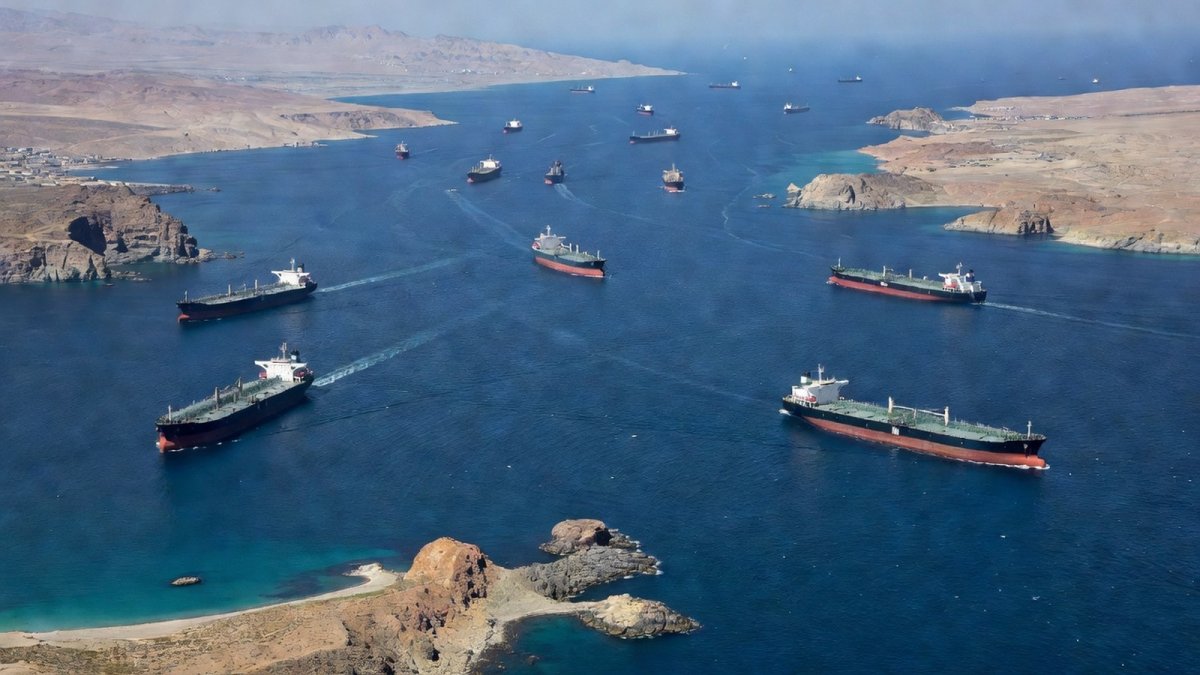
The stakes extend beyond bilateral US-Iran dynamics. Disruptions in the Strait of Hormuz directly threaten global energy markets and China's crude import routes, while involvement from Russia and China in supporting Iranian operations adds layers to great-power competition. Beijing's strategic interests in maintaining open maritime corridors under the Belt and Road Initiative make any prolonged closure or conflict a direct concern for energy security and regional influence.
The conflict's trajectory carries implications far beyond U.S.-Iran bilateral dynamics, threatening global energy security through potential disruptions to Hormuz shipping that supplies major importers across Asia and beyond, while signaling to Gulf states, ASEAN economies, and Global South nations the limits of great-power crisis management in an era of fragmented deterrence. Precedents set here, from the rapid shift between the June 17 memorandum and subsequent July exchanges, may reshape expectations for how regional actors calibrate their alignments amid competing spheres of influence.
From Ultimatum to Memorandum: The Long Road to the Islamabad Accord
The trajectory began with a March 7, 2025, letter from US President Donald Trump to then-Iranian Supreme Leader Ali Khamenei, proposing nuclear talks while threatening military action and vowing to cut Iran's oil exports to zero. Indirect negotiations followed through Omani mediation, with US special envoy Steve Witkoff and Iranian Foreign Minister Abbas Araghchi meeting in Muscat and Rome between April and June 2025, yet no agreement emerged.
Israel's June 13, 2025, strikes initiated the Twelve-Day War, followed by US strikes on June 21 against Fordow, Natanz, and Isfahan facilities. A ceasefire took hold on June 24. Renewed large-scale US-Israeli operations in February 2026 marked the start of the 2026 Iran war, during which Khamenei was assassinated and Ali Larijani killed on March 17. A temporary ceasefire announced April 7 gave way to the June 17 Islamabad Memorandum, signed remotely by Trump at the Palace of Versailles and Iranian President Masoud Pezeshkian in Tehran. The accord set a 60-day ceasefire, plans to reopen the Strait of Hormuz, and discussions on sanctions relief including up to $25 billion in frozen assets. Iran's new Supreme Leader Mojtaba Khamenei endorsed it with reservations on June 18.
The August Reversal: Anatomy of a Called-Off Strike
On August 2, 2026, Trump stated that the United States and Israel had halted a planned massive operation against Iran after the Iranian regime requested additional time for a deal, describing it as the largest US operation since World War II. Iran's armed forces immediately denied making any such request, labeling the claim a lie. The following day, Iranian Foreign Ministry spokesman Esmail Baghaei confirmed that Iran was not negotiating directly with the Americans and that talks with Oman had not produced sufficient terms to reopen the Strait of Hormuz.
These exchanges reveal the narrow margin separating de-escalation from renewed fighting. The cancellation occurred against a backdrop of intensified Iranian attacks since July 12, supported by Russian and Chinese satellite imagery, which have proven more extensive and effective according to Farzin Nadimi of The Washington Institute. The episode underscores how last-minute diplomatic signals can interrupt operational momentum without resolving core disputes over nuclear capabilities and sanctions.
Beijing's Stake in the Gulf: Energy, Radar, and Restraint
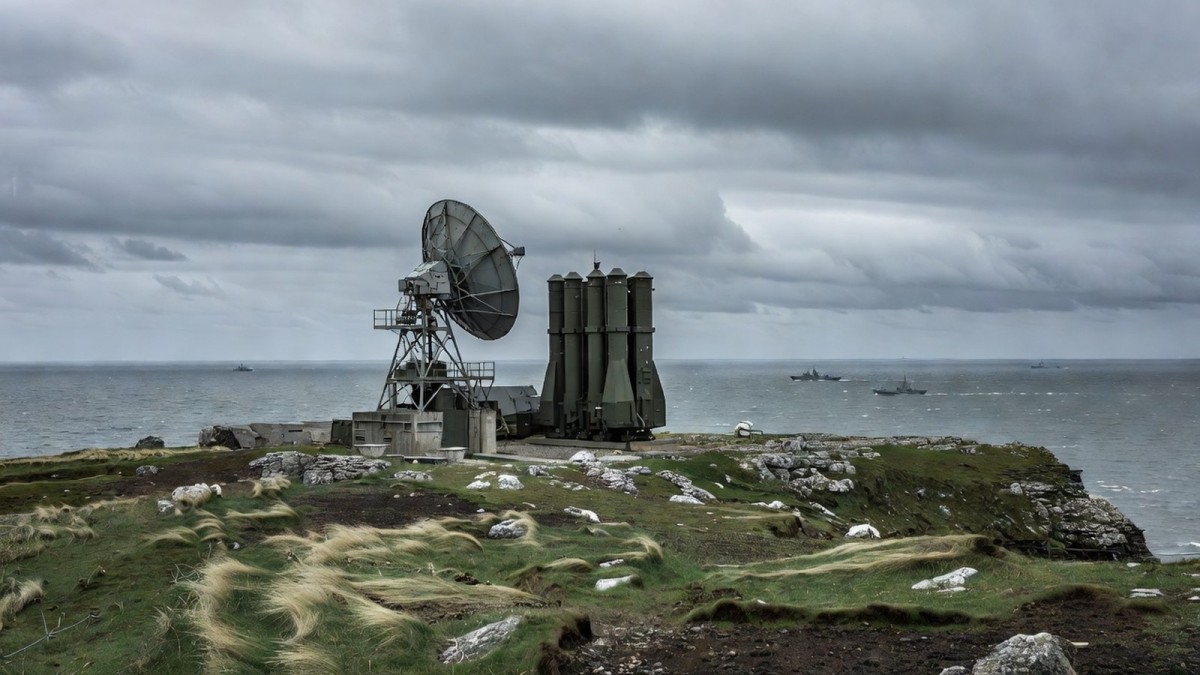
China maintains concrete interests in Gulf stability through energy imports and infrastructure projects. The Strait of Hormuz serves as a critical chokepoint for Chinese crude supplies, and any sustained disruption would affect both domestic energy security and Belt and Road maritime routes. Reports indicate a Chinese YLC-8B UHF-band 3D long-range anti-stealth surveillance radar was deployed in Iran in early 2026, while Al Monitor has documented strengthened bilateral relations supporting the Iranian government.
US sanctions have targeted Chinese entities, including six chemical companies in April 2025 and additional individuals and firms in May over ballistic missile support. A joint China-Russia-Iran meeting with the IAEA on April 24, 2025, addressed Iran's nuclear program. Beijing's provision of satellite imagery for targeting and damage assessment since July 12 illustrates selective technical assistance that advances Iranian operational reach while preserving diplomatic space for Beijing to advocate restraint and multilateral engagement.
This calibrated posture supplies technical assistance that bolsters Iranian defensive capabilities without committing Chinese personnel or direct military assets. This posture aligns with China's longstanding doctrine of non-interference while simultaneously hedging against U.S. dominance in the Gulf, preserving leverage with both Tehran and Washington. In contrast to its active role as a JCPOA stakeholder from 2015 to 2018, when Beijing helped sustain the agreement after the U.S. withdrawal, current Chinese actions emphasize bilateral economic and security ties with Iran, including joint IAEA coordination in April 2025, even as U.S. sanctions targeted Chinese entities for missile-related support. Such positioning underscores intensifying U.S.-China competition over energy routes and influence in the Middle East, where Hormuz remains vital for Chinese crude imports and Belt and Road maritime corridors.
Beijing's restraint also reflects a broader strategic calculus aimed at avoiding entanglement that could disrupt its global trade networks or invite secondary sanctions, allowing China to position itself as a potential stabilizer should diplomatic channels reopen. This hedging strategy may limit escalation risks but simultaneously complicates U.S. efforts to isolate Iran, as Chinese technical contributions sustain Iranian operational resilience amid ongoing strikes.
Regional Spillover: Hormuz, the Houthis, and Gulf Security
Conflict effects have spread beyond Iranian territory. On July 20, 2026, the Houthis declared a blockade of Saudi Arabian ports and ships in the Bab-el-Mandeb, compounding pressure on Red Sea shipping. Iranian cyberattacks linked to water systems in at least seven US states, as reported by The New York Times on August 1, and documented damage to nine American military bases including Muwaffaq Salti, Tower 22, Isa, Erbil, and Mina Abdullah between July 12 and August 1 demonstrate expanded asymmetric reach.
US strikes on Iranian facilities in late June followed accusations of truce violations involving drone attacks on Hormuz shipping. Iranian ballistic missile and drone launches toward US bases in Kuwait and Bahrain on June 28 further illustrated the risk of direct confrontation involving third-party Gulf states. These developments carry second-order consequences for ASEAN energy importers, EU sanctions policy coordination, and Global South economies dependent on stable oil flows.
What to Watch: Talks, Truce, and the Risk of Relapse
Current diplomatic activity centers on Omani-mediated discussions, yet Baghaei's August 3 statement indicates the existing framework falls short of requirements for Hormuz reopening. The US-Iran coordination center established in Doha in late June offers a limited operational channel, but mutual accusations of violations persist. Iran's denial of requesting strike delays and rejection of immediate negotiations signal that any new round will require substantive concessions on sanctions relief and nuclear limits.
A realistic path to reopening the Strait of Hormuz hinges on tangible progress beyond the June 17 Islamabad Memorandum's framework of a 60-day ceasefire and discussions of up to $25 billion in frozen assets. Oman and Qatar, having facilitated earlier indirect rounds between Witkoff and Araghchi, alongside Pakistan's role in the remote signing, could serve as credible intermediaries to bridge gaps, potentially linking Hormuz access to phased sanctions relief and verifiable limits on uranium enrichment. Specific concessions signaling advancement would include incremental U.S. asset unfreezing tied to Iranian compliance metrics and assurances against further ballistic missile proliferation, building on the coordination center established in Doha in late June 2026.
Yet the repeated pattern since March 2025, where temporary pauses have repeatedly collapsed into renewed strikes, including the escalation after the June 24 ceasefire and the July 12 renewal of conflict, raises the prospect that the 60-day window may simply expire without renewal. Without enforceable verification mechanisms or broader buy-in from regional actors, the framework risks reverting to the cycle of accusations, such as the June 26 U.S. strikes following drone allegations, and Iranian retaliatory launches against bases in Kuwait and Bahrain.
Second-order effects include potential escalation involving additional Chinese technical support or Russian coordination, alongside pressure on Gulf states to manage Houthi threats and base vulnerabilities. For Beijing, the priority remains preventing a full closure of Hormuz while advancing technological self-sufficiency and regional influence without direct military entanglement. Observers should monitor whether the 60-day ceasefire framework can be extended or whether renewed strikes become the default response to stalled talks. By Prof. Marcus Chen, Staff Writer
This article was produced with AI-assisted research and editorial support. Reporting is based on sources cited in the article.
What's Your Reaction?
 Like
0
Like
0
 Dislike
0
Dislike
0
 Love
0
Love
0
 Funny
0
Funny
0
 Wow
0
Wow
0
 Sad
0
Sad
0
 Angry
0
Angry
0

World Politics Analyst at Global1.News. Based in Beijing, covering US-China relations, global trade, and geopolitical strategy. Brings deep analytical perspective to the power dynamics shaping international affairs.










Comments (0)