
US-Iran MoU Expires as Trump Demands Surrender, Erdogan Urges Diplomacy, and Drones Strike Erbil
The US-Iran MoU expired Monday without a final deal as Trump refused an extension and demanded surrender. Erdogan urged continued diplomacy in a call with Trump, Fidan and Araghchi discussed reopening Hormuz, and suspected Iranian drones struck Erbil.
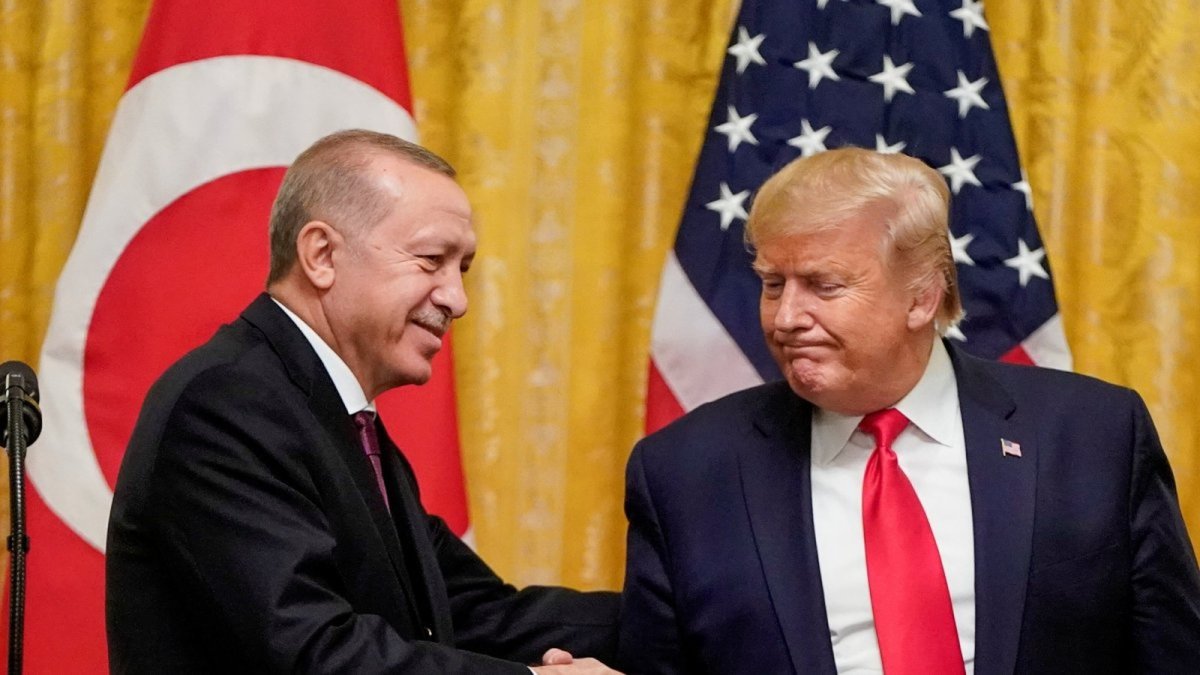
The 60-day window for a final U.S.-Iran agreement slammed shut on Monday, August 17, 2026, without a comprehensive deal, plunging the Gulf into a new phase of acute uncertainty. The expiration of the June 17 memorandum of understanding (MoU) has not merely stalled diplomacy; it has triggered a cascade of escalatory signals—from President Donald Trump’s demand that Tehran "put up the white flag of surrender" to a senior Iranian official’s declaration that the Islamic Republic has shifted to a "fully offensive" posture. In the same volatile 24-hour window, Turkish President Recep Tayyip Erdogan spoke directly with Trump to urge continued diplomacy, while Foreign Minister Hakan Fidan coordinated with his Iranian counterpart on reopening the Strait of Hormuz. The diplomatic scramble was punctuated by suspected Iranian drone strikes targeting the office of Kurdistan Regional Government (KRG) Prime Minister Masrour Barzani in Erbil.
This convergence of events underscores a region caught between a superpower demanding capitulation, a regional power (Türkiye) attempting to mediate, and an Iran that appears unwilling to return to the status quo ante. The "suspended crisis of measurable fragility" that followed the February 28 war has now entered a distinctly more dangerous phase, with implications for global energy markets, Gulf security architecture, and the credibility of new regional defense pacts.
US-Iran MoU Expires as Trump Demands Surrender, Erdogan Urges Diplomacy, and Drones Strike Erbil
Ankara, Türkiye – August 18, 2026 — The 60-day window for a final U.S.-Iran agreement closed Monday without a deal, and the Gulf is bracing for what comes next as Türkiye works both channels to keep diplomacy alive.
The Collapse of the June 17 Framework
The MoU signed on June 17, 2026, was always a fragile construct. It declared the "immediate and permanent termination of military operations on all fronts" and set a 60-day timeline for Washington and Tehran to negotiate a broader deal covering Iran's nuclear program and U.S. sanctions. However, the interim agreement quickly unraveled over a single, critical issue: control of the Strait of Hormuz, the narrow waterway through which approximately a fifth of global oil and LNG flowed before the war. Tehran argued that point 5 of the MoU granted it the right to manage the strait, which it shares with Oman. Washington categorically rejected that interpretation. The dispute turned violent when Tehran began firing on vessels attempting to transit via an unapproved route. By July 7, Trump declared the pact "over," and later that month, U.S. airstrikes targeted southern Iran and its coastal belt—a demonstration of how thin the line between pause and renewed war had become. Monday’s expiration formalized what was already operational reality. Trump, in a Fox News phone interview, was unambiguous: Washington was not seeking to extend the MoU, and Iran "should put up the white flag of surrender." He further vowed to hit Oman if it interfered with U.S. naval operations, stating, "If Oman gets in the way, we'll bomb the s**t out of them." This threat is particularly significant given that Iran and Oman have been separately negotiating an agreement over the strait's management, a parallel track that Washington views as a direct challenge to its blockade strategy.Iran’s Shift to a "Fully Offensive" Posture
The most consequential development is Tehran’s stated strategic reorientation. A senior Iranian official told Reuters on Monday that the Islamic Republic has decided to shift its policy from defensive to "fully offensive" due to the deadlock in efforts to agree on a permanent end to the war. Iran, the official said, will not wait for the U.S. to continue the naval blockade indefinitely. Reports indicate Tehran has set a deadline of a few weeks for its next move. This is not mere rhetoric. The institutional groundwork for an offensive posture has been laid. In early August, Supreme Leader Mojtaba Khamenei signed off on a sweeping consolidation of the security establishment: Mohsen Rezaei replaced Mohammad Bagher Zolghadr as secretary of the Supreme National Security Council; Maj. Gen. Ali Abdollahi was named chief of the General Staff; and Maj. Gen. Ahmad Vahidi took command of the Islamic Revolutionary Guard Corps (IRGC). These appointments reflect Khamenei’s defense concept of "maximum deterrence," emphasizing intelligence capacity for offensive operations, higher readiness, and integration between the General Staff and the Khatam al-Anbiya Central Headquarters. The trajectory is telling. The 12-day conflict of June 2025 exposed significant command-and-control deficiencies in Iran’s military. The war that began on February 28, 2026, rendered the reorientation toward a more offensive posture permanent and institutionally binding. The first signs emerged with the "True Promise" operations of 2024, when Iran used its own military capability directly against Israel for the first time since the Iran-Iraq war. Now, with the MoU dead, Tehran appears prepared to operationalize this doctrine on a broader scale.Erdogan’s Mediation Gambit and the Mecca Pact
Into this breach steps Türkiye, positioning itself as the indispensable diplomatic intermediary. President Erdogan’s phone call with Trump on Monday was a masterclass in strategic messaging. Erdogan stressed the need to "maximize diplomatic efforts" to ease tensions between Washington and Tehran, expressing hope that negotiations would continue. He emphasized that Ankara would maintain its support for efforts aimed at securing peace. Crucially, Erdogan invoked the Mecca Joint Defence Agreement—signed on August 7, 2026, by Türkiye, Pakistan, and Saudi Arabia—as evidence of a strong commitment to regional stability. This pact, which operates on a NATO-style collective defense principle (an attack on one is an attack on all three), unites a major oil exporter (Saudi Arabia), a NATO member (Türkiye), and a nuclear-armed power (Pakistan). Its invocation in the context of U.S.-Iran tensions is a pointed reminder that the Gulf’s security architecture is no longer solely dependent on Washington’s security guarantees. Erdogan also raised Gaza, warning that Israeli actions targeting Palestinians had intensified at a time when efforts were focused on advancing to the second phase of the Gaza peace process. This linkage is deliberate: Ankara is signaling that regional stability cannot be compartmentalized, and that Washington’s hardline posture on Iran risks undermining progress on other fronts where Türkiye has invested diplomatic capital.
Fidan’s Direct Channel with Tehran
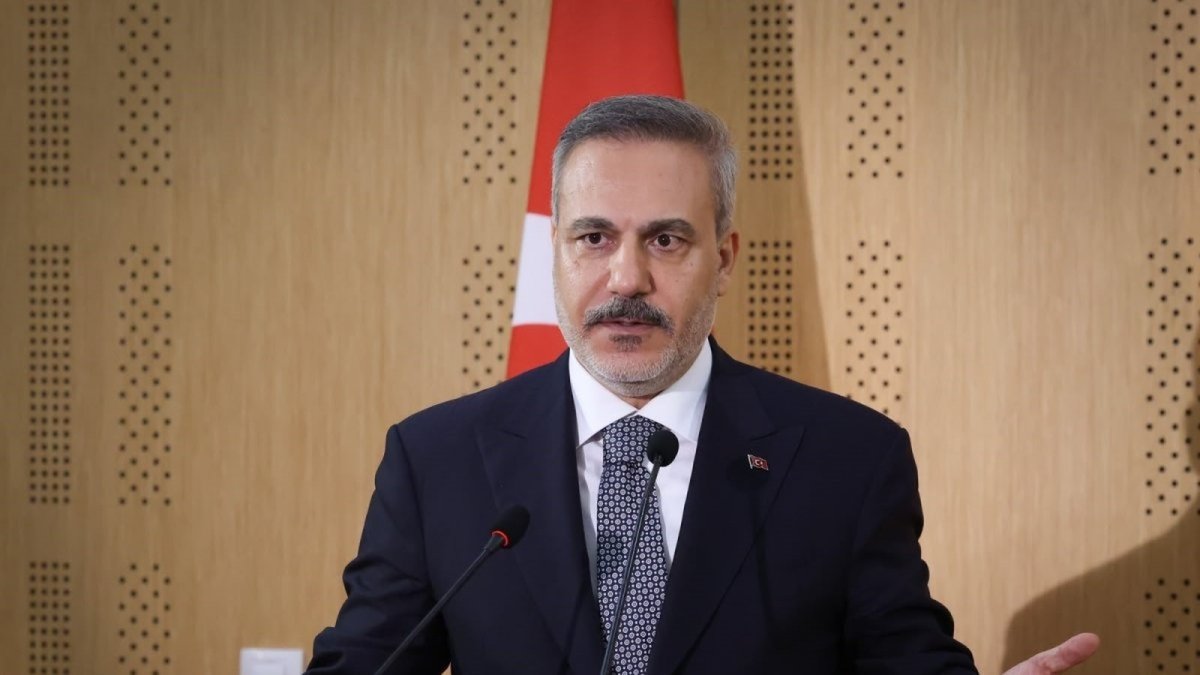
While Erdogan engaged Trump, Foreign Minister Hakan Fidan worked the Iranian track. Fidan and Iranian counterpart Abbas Araghchi discussed efforts to reopen the Strait of Hormuz and preserve the cease-fire in a phone call on Monday. The two ministers reviewed the latest developments in ongoing negotiations concerning the strategic waterway and the continuation of the cease-fire. The timing is critical. With the MoU expired and Trump refusing an extension, the cease-fire that ended the heaviest phase of the war is now hanging by a thread. Fidan’s call with Araghchi represents a direct attempt to keep that thread intact, even as Washington and Tehran trade threats. Türkiye’s ability to maintain communication channels with both sides gives it unique leverage—it can convey U.S. red lines to Tehran while tempering Washington’s expectations of imminent Iranian capitulation. Fidan also held separate calls with KRG President Nechirvan Barzani and KRG Prime Minister Masrour Barzani, focusing on the latest regional developments. This outreach is significant given the suspected Iranian drone strikes that targeted Barzani’s office and the home of a senior local security official in Erbil on Monday. The KRG’s Counter-Terrorism Service confirmed the attacks, and Barzani condemned them in the strongest terms as "reckless and unacceptable."The Erbil Strikes and the Iraqi Flashpoint
The drone attacks on Erbil are a stark reminder that the U.S.-Iran confrontation is not confined to the Gulf. Iran has long used Iraqi territory as a pressure point, targeting Kurdish opposition groups and, at times, U.S. interests. The strikes on Barzani’s office—a senior figure in a region that hosts U.S. forces—carry a dual message. First, they demonstrate Tehran’s willingness to expand the conflict geographically if pressured. Second, they serve as a warning to the KRG and other regional actors against aligning too closely with Washington’s blockade strategy. The timing of the strikes, coinciding with the MoU’s expiration and Iran’s declared shift to an offensive posture, suggests a deliberate signaling campaign. Iran is demonstrating that its "fully offensive" doctrine extends beyond the Strait of Hormuz to include proxy networks and direct strikes across the region. For the KRG, which has sought to maintain a delicate balance between its U.S. partnership and its complex relationship with Tehran, the attacks represent a significant escalation.Strategic Calculus: What Each Side Wants
Washington’s central aim remains breaking Iranian resolve over Hormuz and securing a return to pre-war conditions. Trump’s preference is negotiation, but the intensification of the naval blockade and tightening of economic sanctions are equally usable methods of coercion. Military action remains a last resort—not out of restraint, but because Iran would answer a large-scale campaign with far heavier retaliation against the Gulf states. CENTCOM commander Brad Cooper’s assessment that the July campaign reached "saturation" carried a subtext: the next phase could be an amphibious operation directed at Iran’s southern coastline. CENTCOM is already planning Task Force Falcon Strike, a multinational, multi-domain attack-drone formation building on Task Force Scorpion Strike. Tehran’s calculus is more complex. The leadership has concluded that the defensive posture of the past is untenable. The "fully offensive" shift is designed to raise the cost of continued U.S. pressure, potentially by targeting Gulf infrastructure or escalating naval confrontations in Hormuz. Iran is betting that its ability to disrupt global energy markets gives it leverage that conventional military superiority cannot match. The parallel negotiations with Oman over strait management suggest Tehran is also seeking to legitimize its role as a co-guarantor of the waterway, a status Washington refuses to accept. Türkiye’s interests are multifaceted. Ankara wants to prevent a full-scale regional war that would destabilize its southern periphery and disrupt energy supplies. The Mecca Pact gives Türkiye a stake in Gulf security that transcends mere diplomacy. By positioning itself as a mediator, Erdogan enhances Türkiye’s regional influence while demonstrating that the new defense architecture can function as a stabilizing force.Regional Implications: Energy, Alliances, and Stability
The expiration of the MoU without a final deal has profound implications for global energy markets. Before the war, Hormuz carried roughly a fifth of global oil and LNG. The blockade has already disrupted these flows, and the prospect of renewed hostilities—or Iranian attempts to enforce its own management regime—threatens further volatility. Gulf states, particularly Saudi Arabia and the UAE, face a dilemma: they support Washington’s goal of breaking Iranian resolve, but they fear the economic and security consequences of an uncontrolled escalation. The Saudi operations in Iraq and Yemen, conducted in coordination with Washington, suggest that Gulf states may now provide active military support rather than just basing and logistics. This represents a significant shift from the 1991 and 2003 wars, when Gulf cooperation was more passive. The Mecca Pact adds another layer: if Iran attacks Saudi Arabia, Türkiye and Pakistan are treaty-bound to respond. This creates a potential escalation spiral that neither Washington nor Tehran can fully control. The coming weeks will be decisive. Iran has reportedly set a deadline of a few weeks for its next move. Trump shows no willingness to extend the MoU. Erdogan continues to push for diplomacy, but his leverage is limited. The "suspended crisis" that followed the February 28 war has now become an active crisis, with the Strait of Hormuz as its epicenter. For the Gulf states, for global energy markets, and for the millions of people in the region who have already endured two wars in 18 months, the stakes could not be higher.This article was produced with AI-assisted research and editorial support. Sources: Daily Sabah, Anadolu Agency, Reuters, Al Jazeera, Türkiye Today, The National.
By Malik Hassan, Staff Writer
What's Your Reaction?
 Like
0
Like
0
 Dislike
0
Dislike
0
 Love
0
Love
0
 Funny
0
Funny
0
 Wow
0
Wow
0
 Sad
0
Sad
0
 Angry
0
Angry
0

Malik Hassan
Middle East Correspondent at Global1.News. Based in Beirut, covering politics, conflict, energy, and society across the Middle East. Brings context and depth to a region often reduced to headlines.









Comments (0)