
Iran's Bounty on US Soldiers: A $30,000 Price Tag and the Battle for the Strait of Hormuz
The Strait of Hormuz, the narrow waterway through which a fifth of the world's oil flows, has become the fulcrum of a new and dangerous phase in the 2026 Iran war. With the US Navy enforcing a total blockade of Iranian ports and President Donald Trump openly musing about declaring the strait American territory, Tehran has responded with a weapon that bypasses conventional naval power entirely: a cash bounty on American soldiers.
The Strait of Hormuz, the narrow waterway through which a fifth of the world's oil flows, has become the fulcrum of a new and dangerous phase in the 2026 Iran war. With the US Navy enforcing a total blockade of Iranian ports and President Donald Trump openly musing about declaring the strait American territory, Tehran has responded with a weapon that bypasses conventional naval power entirely: a cash bounty on American soldiers.
Iran's Bounty on US Soldiers: A $30,000 Price Tag and the Battle for the Strait of Hormuz
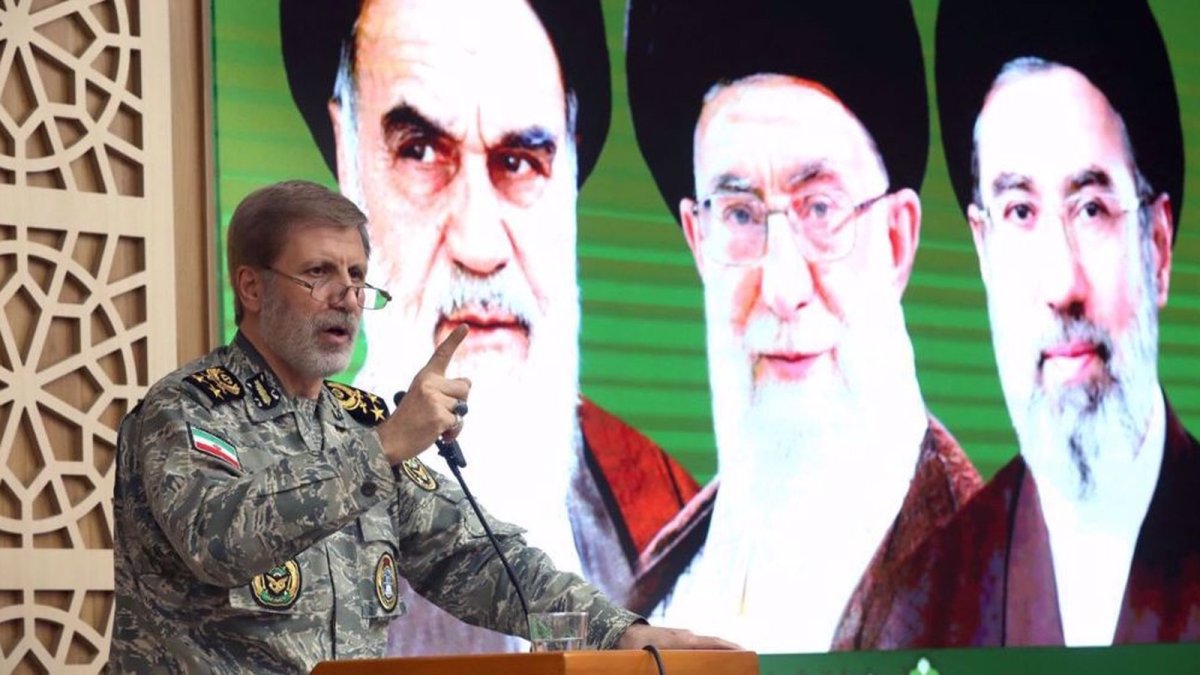
Tehran, Iran - August 18, 2026 - The Islamic Republic of Iran has formally placed a price on the head of every American soldier in the region, a move that signals a decisive shift from conventional defense toward asymmetric warfare as the US naval blockade tightens its grip. The announcement, made by Iran's Army Commander-in-Chief Major General Amir Hatami at a National Journalist Day ceremony in Tehran on August 16, offers 5 billion tomans (approximately $30,000) to anyone who kills or captures a US soldier and hands them over to Iranian authorities. Iranian women who carry out the act receive double the reward, approximately $60,000, and any weapons used in such operations will be purchased by the Iranian Army at twice their market value for display in a planned museum.
The Bounty: Crowdfunding a War
Hatami's announcement was framed not as a government initiative but as a response to popular will. According to the state-run IRNA news agency, the plan is backed by public crowdfunding campaigns in which Iranian citizens donate to support the armed forces. Hatami said the bounty followed "a large number of requests" from the Iranian public, a narrative designed to portray the reward as a grassroots expression of national defiance rather than a calculated military policy.
The structure of the bounty is notable for its psychological warfare component. By doubling the reward for women, Tehran is explicitly encouraging civilian participation in the conflict, blurring the line between combatant and non-combatant. The promise to purchase weapons at twice market value and display them in a museum is a symbolic gesture aimed at glorifying acts of resistance, turning individual attacks into state-sanctioned propaganda victories. The move echoes previous Iranian practices; during the 2025 Twelve-Day War period, Tehran offered similar rewards, and Iran-backed militias have long posted bounties on US officials, a practice documented by Newsweek.
Former senior British adviser to US Central Command, Major General Chip Chapman, analyzed the development in an Al Arabiya English segment on August 18, questioning whether Iran is deliberately encouraging asymmetric attacks on US forces through the bounty program. The timing is critical: the US Navy's blockade of Iranian ports in the Strait of Hormuz began on Monday, August 10, at 6pm Gulf Standard Time, and the bounty appears designed to raise the cost of that blockade for American personnel both on ships and potentially on shore.
Geopolitical Context: The Blockade and the War
The bounty cannot be understood outside the broader trajectory of the 2026 Iran war, which began on February 28 when US and Israeli forces launched Operation Epic Fury. The opening strikes killed Supreme Leader Ali Khamenei, and his successor, Ayatollah Seyyed Mojtaba Khamenei, has since ordered a sweeping military reorganization, including the appointment of Major General Mohsen Rezaei as Secretary of the Supreme National Security Council (SNSC). The war has been brutal and costly on all sides. The US has lost 19 soldiers and one contractor, with 624 wounded and 42 aircraft downed. Israel has suffered 40 soldiers killed and 31 civilians. Iranian figures, which are difficult to verify independently, list 3,528 killed and 27,170 injured, while US and Israeli claims put Iranian military deaths at over 6,000 with 155 naval vessels destroyed or damaged. The UN's OCHA counts more than 3,400 civilians killed.
The current blockade phase follows a failed diplomatic interlude. A June memorandum of understanding, the Islamabad Memorandum mediated by Pakistani Prime Minister Shehbaz Sharif and Field Marshal Asim Munir, ended a ceasefire phase. But President Trump declared the agreement "over" on July 8 after Iran struck commercial vessels in the Strait of Hormuz, and hostilities resumed in earnest. On August 11, a US Navy helicopter fired two Hellfire missiles at a cargo ship in the Gulf of Oman that ignored warnings to turn away from Iranian ports. Trump, posting on Truth Social, claimed Iran's navy is "laying at the bottom of the sea, completely obliterated - 158 ships."
The blockade's economic impact is severe. The Strait of Hormuz carries approximately a fifth of global oil and gas, and Brent crude traded near $84-87 per barrel in mid-August as the standoff persisted. Earlier analysis estimated Iran's loss of import/export capacity at US$435 million per day during the first blockade phase. The cost to the US is also mounting: Defense Secretary Pete Hegseth told a Senate committee the US had spent $37.5 billion on the war and requested an additional $67 billion, while Trump submitted an $87.6 billion war funding request in July. The Center for International Policy estimated nearly $72 billion was spent in the first two months alone, roughly $1.2 billion per day.
Historical Background: A Legacy of Confrontation
The bounty is the latest chapter in a decades-long US-Iran confrontation that has oscillated between covert action, economic warfare, and direct military engagement. The killing of Qassem Soleimani, commander of Iran's Quds Force, in a January 2020 US drone strike in Baghdad remains a defining wound for Tehran. The subsequent "maximum pressure" campaign of 2019-2021, which sought to strangle Iran's oil exports, set the stage for the current conflict. The 2025 Twelve-Day War, a brief but intense exchange, demonstrated Iran's willingness to use asymmetric tactics, including attacks on shipping, when conventional options are foreclosed.
The tanker wars of the 1980s, during the Iran-Iraq War, offer a grim precedent. Then, as now, the Strait of Hormuz was the arena, and the US Navy escorted reflagged Kuwaiti tankers while Iran laid mines and attacked shipping. The current blockade, however, is more comprehensive, and Iran's navy has been largely neutralized. With 155 vessels destroyed or damaged, Tehran cannot contest the sea lanes conventionally. The bounty is therefore a recognition of this reality: Iran cannot win a naval war, so it will attempt to make the occupation of the strait untenable for American personnel through the threat of individual attacks, whether from Iranian agents, sympathetic civilians, or foreign fighters drawn by the reward.
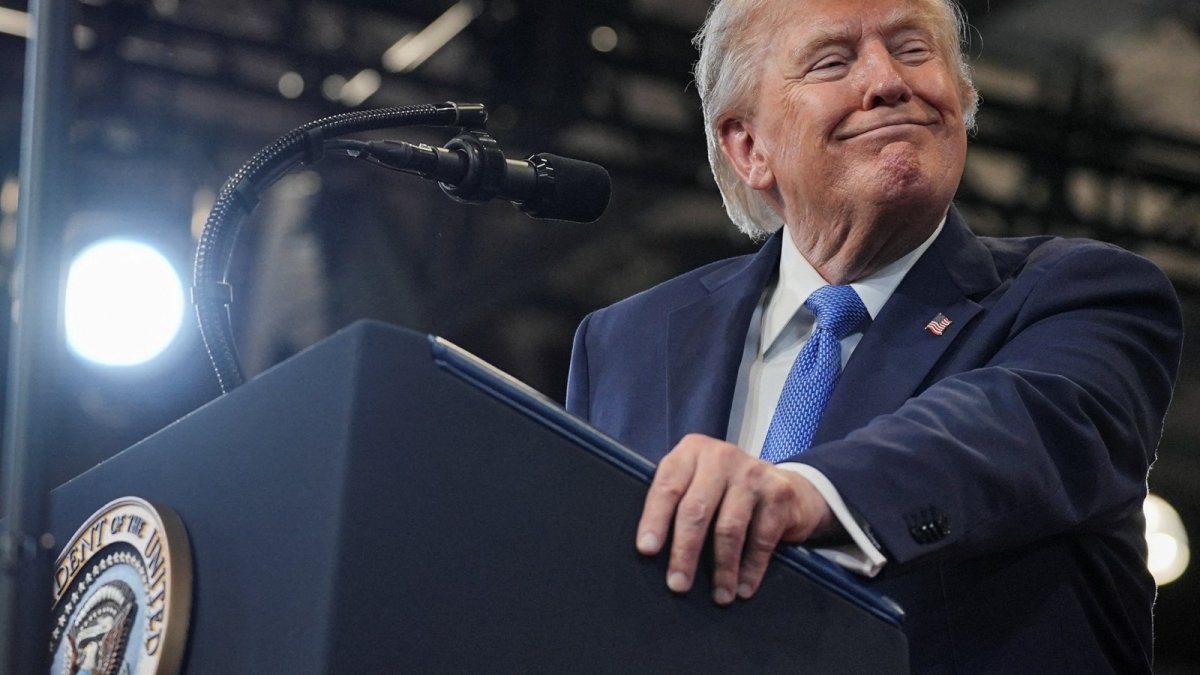
Hatami's rhetoric on August 16 was explicitly confrontational. Responding to Trump's August 14 speech at a police academy in Garden City, New York, in which the president said, "After we finish defeating Iran, which is being very badly defeated, pretty soon I'll be declaring the Hormuz Strait a territory of the United States," Hatami warned: "You are very wrong! Even joking about this is a massive mistake. This is Iran, and it has guardians who will break your leg." He called the Strait a "divine geopolitical capacity," declared that the expulsion of American forces from the region is "an accomplished reality," and warned that "If the enemy attempts a ground operation, not a single one should escape alive."
Regional Dynamics: Gulf States, Oman, and the Energy Calculus
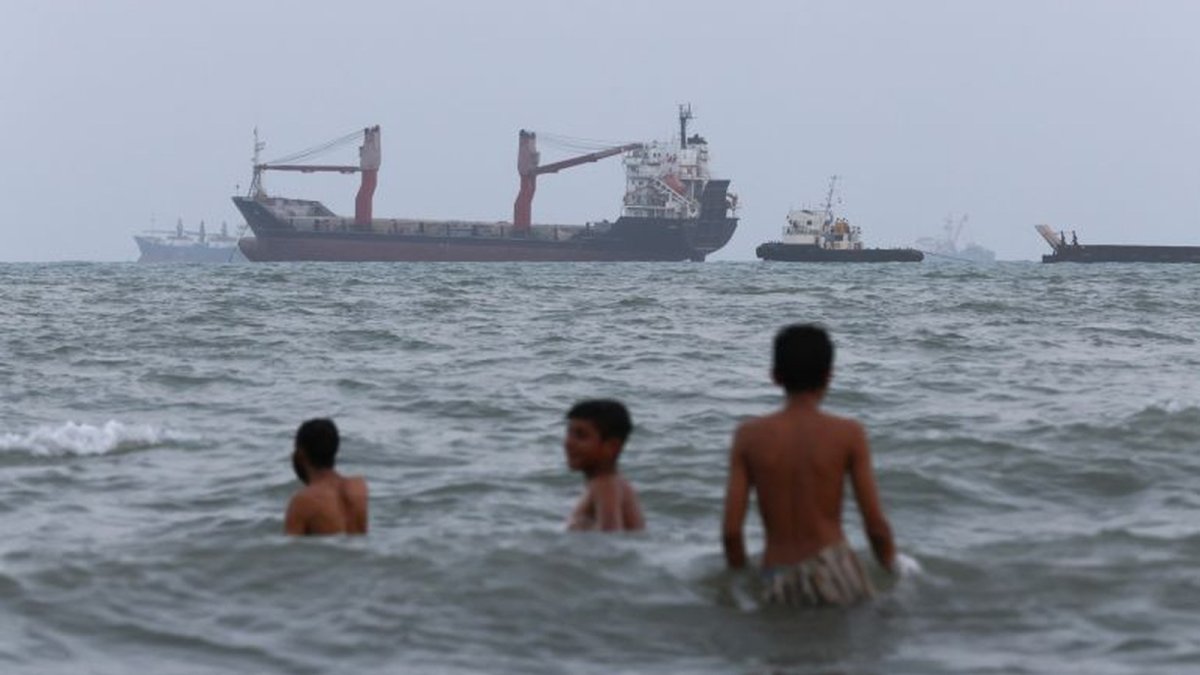
The bounty and the blockade are reverberating across the Gulf, where the region's monarchies are walking a tightrope between their security dependence on the United States and their economic and geographic proximity to Iran. Saudi Arabia and the UAE, both of which have sought to de-escalate tensions with Tehran in recent years, now face the prospect of a prolonged conflict on their doorstep. Neither has publicly endorsed the blockade, and both are acutely aware that any disruption to Hormuz shipping affects their own exports, which also transit the strait.
Oman, the only other coastal state of the strait, has emerged as a critical diplomatic channel. Foreign Minister Abbas Araghchi said negotiations with Muscat "may reach a conclusion soon," and that Tehran now seeks the removal of the naval blockade and sanctions as conditions for merely reopening the waterway. This is a significant escalation of Iran's demands: previously, Tehran sought to maintain freedom of navigation; now, it is conditioning the strait's reopening on the lifting of the blockade and sanctions, a position that Washington is unlikely to accept. Iran's deputy foreign minister, Kazem Gharibabadi, dismissed Trump's territorial ambitions with characteristic bluntness: "The Strait of Hormuz cannot be seized by tweet, nor by aircraft carrier, nor by issuing an order, nor by an election speech."
Turkey, a NATO member with complex relations with both Washington and Tehran, has been notably quiet, though Ankara has historically opposed any permanent US military presence in the Gulf. The energy markets are watching closely. With Brent hovering near $87, any sustained disruption could push prices toward $100, a scenario that would have global inflationary consequences and potentially strain the US economy ahead of the midterm elections. The blockade is also a humanitarian concern: OCHA counts over 3,400 civilians killed in the war, and the blockade restricts food and medicine imports to Iran, compounding the suffering.
Strategic Calculus: Why Tehran Is Using a Bounty
The bounty is a classic asymmetric warfare tactic, designed to exploit the asymmetry of costs between a superpower and a regional power. For the US, the cost of protecting every soldier, sailor, and installation in the region is enormous, both financially and in terms of morale. For Iran, the cost of the bounty is negligible: even if 100 US soldiers were killed, the payout would be $3 million, a fraction of the cost of a single fighter jet. The psychological effect, however, is disproportionate. Every American service member in the region now knows that a portion of the local population has a financial incentive to kill them, and that the Iranian state will reward their deaths.
The bounty also serves a domestic purpose. The Iranian economy is under severe strain from the blockade, and the regime of Ayatollah Mojtaba Khamenei faces the challenge of maintaining public support for a costly and losing war. By framing the bounty as a response to popular demand and crowdfunding, Tehran is attempting to channel nationalist fervor into a form of participation that does not require the state to expend scarce resources. The doubling of the reward for women is a deliberate appeal to a demographic that has been disproportionately affected by the war's economic toll.
For Washington, the bounty presents a dilemma. The US cannot negotiate with a state that has placed a price on the heads of its soldiers, yet the alternative - escalating the war to remove the regime - carries risks that the Trump administration has so far been unwilling to accept. There has been no confirmed US ground offensive inside Iran; the only known US ground presence was an April rescue mission for a downed F-15E pilot and weapons systems officer. The US Navy's carrier presence, including the USS Abraham Lincoln, which has been deployed for more than 250 days, is showing signs of strain. Democratic senators have disclosed deteriorating conditions aboard, including moldy facilities, rationed meals, and a mental health crisis with reported suicide attempts. Hatami claimed Iranian forces struck the carrier at least once, temporarily grounding its fighter jets, though Washington denies the damage.
The second-order effects of the bounty are potentially destabilizing. It legitimizes violence against US personnel not just by Iranians but by anyone in the region, including non-state actors who may seek the reward. It also complicates the position of Gulf states that host US forces, as they now face the prospect of their territories being used as launching points for bounty hunters. The bounty may also harden US public opinion against Iran, making a negotiated settlement less likely and increasing pressure on the administration to respond with overwhelming force.
Regional Implications: The Road Ahead
The coming weeks will be decisive. On August 17, a senior Iranian official told Reuters that Tehran will escalate tensions in the Strait of Hormuz and the wider region if diplomacy with the US fails, pointing to a policy shift from defense toward offense. This suggests that the bounty is not a one-off stunt but the opening salvo of a new phase of the war, one in which Iran will seek to make the blockade as costly as possible for the United States and its allies.
The diplomatic track, mediated by Oman, remains the only visible off-ramp. But the gap between the two sides is vast: Iran demands the lifting of the blockade and sanctions as a precondition for reopening the strait, while Washington insists on the cessation of Iranian attacks on shipping and the dismantling of its nuclear program. Neither side appears willing to blink. The energy markets, meanwhile, are pricing in a prolonged disruption, with Brent crude expected to remain elevated.
The bounty is a signal of Iranian resolve, but it is also a signal of desperation. A state that must pay its citizens to attack enemy soldiers is a state that cannot defeat them on the battlefield. The question is whether the United States, facing a costly and unpopular war, has the patience to outlast a regime that has little left to lose. The Strait of Hormuz, once a symbol of global commerce, has become a crucible in which the future of the region - and perhaps the global economy - will be forged.
By Malik Hassan, Staff Writer
This article was produced with AI-assisted research and editorial support. Reporting is based on sources cited in the article.
What's Your Reaction?
 Like
0
Like
0
 Dislike
0
Dislike
0
 Love
0
Love
0
 Funny
0
Funny
0
 Wow
0
Wow
0
 Sad
0
Sad
0
 Angry
0
Angry
0

Middle East Correspondent at Global1.News. Based in Beirut, covering politics, conflict, energy, and society across the Middle East. Brings context and depth to a region often reduced to headlines.










Comments (0)