
Pope Leo in Uruguay to kick off South America tour just weeks after lung surgery
Pope Leo’s South American itinerary, launched on 6 November 2026, arrives at a moment when the continent’s historical ties to Catholicism intersect with contemporary geopolitical currents.
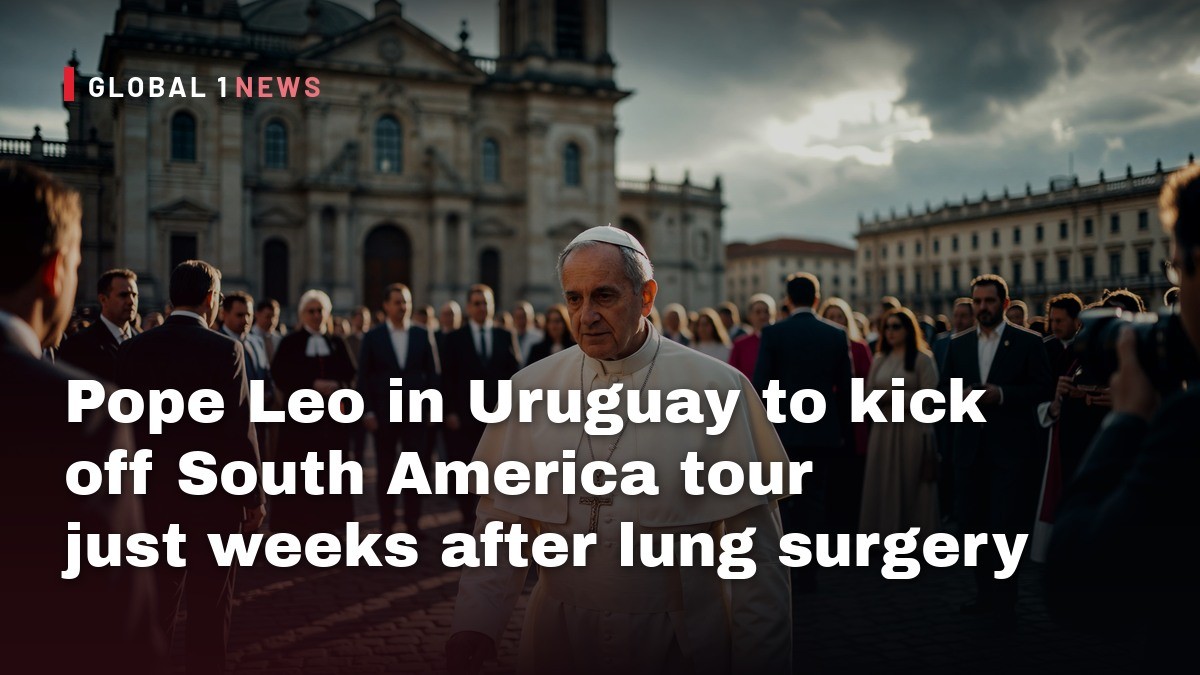
Pope Leo’s South American itinerary, launched on 6 November 2026, arrives at a moment when the continent’s historical ties to Catholicism intersect with contemporary geopolitical currents. The pontiff’s visit, undertaken merely three weeks after lung cancer surgery, underscores a personal narrative of resilience that the Vatican hopes to translate into a broader “message of hope” for societies grappling with political, social and economic turbulence. While the trip’s logistical details are modest—spanning Uruguay, Argentina and Peru over twelve days—the symbolic weight of a papal pilgrimage to a region that shaped his early ministry is profound, inviting analysis of how religious soft power may intersect with the strategic interests of external actors, including China, in Latin America.
Geopolitical Context of the Papal Tour
The South American continent has long been a focal point for competing influences, from historic missionary activity to contemporary diplomatic overtures by major powers. In recent years, China has deepened its engagement through infrastructure investments and cultural exchanges, seeking to cultivate goodwill among predominantly Catholic populations. Pope Leo’s arrival, therefore, occurs against a backdrop where religious authority can serve as a conduit for broader geopolitical narratives, even as the Vatican maintains its doctrinal independence.
By emphasizing a “message of hope,” the pontiff implicitly addresses the region’s challenges—economic inequality, political polarization and social unrest—that have also attracted external attention. The timing, just weeks after a serious health crisis, adds a personal dimension that may amplify the emotional resonance of his outreach, potentially affecting public sentiment in ways that extend beyond purely spiritual concerns.
Historical Roots of Leo’s Connection to South America
The source material notes that South America “helped shape his priesthood.” Historically, many Catholic clerics have spent formative years in Latin America, absorbing its vibrant religious culture and social realities. This background informs Leo’s pastoral style, which blends traditional doctrine with a keen awareness of the lived experiences of the poor and marginalized—a hallmark of Latin American Catholicism since the era of liberation theology.
Understanding this lineage is essential for interpreting the tour’s significance. The pontiff’s personal history aligns him with a tradition of clergy who view pastoral work as inseparable from social advocacy, a stance that can influence how his messages are received by political leaders and civil society alike.
Agenda and Symbolic Encounters
The itinerary includes meetings with political leaders, prisoners, the poor and “old friends.” Each of these engagements carries distinct symbolic weight. Dialogues with heads of state signal the Vatican’s continued relevance in diplomatic circles, while visits to prisons and impoverished communities foreground the Church’s preferential option for the poor, a core tenet of Catholic social teaching.
These encounters also serve as platforms for the pontiff to articulate moral perspectives on governance, justice and human dignity. By addressing both elite and marginalized audiences, Leo reinforces the Church’s claim to moral authority across societal strata, a claim that can indirectly shape policy debates in the host nations.
Message of Hope in Contemporary Context
Leo’s explicit statement—“I’m very happy to be here… I want to bring a ‘message of hope in today’s world’”—frames the tour as a response to prevailing anxieties. The phrase “today’s world” implicitly acknowledges global challenges such as pandemics, economic instability and ideological fragmentation. In Latin America, where many countries confront political crises and social inequality, a message of hope can be interpreted as an appeal for unity and moral renewal.
From a strategic perspective, the Vatican’s emphasis on hope may also serve to counter narratives of despair that external actors could exploit. By positioning the Church as a source of stability, the pontiff potentially fortifies the institution’s role as a mediator in conflicts and a partner in humanitarian initiatives.
Implications for Sino‑Latin American Relations
While the source material does not mention China, the broader geopolitical environment makes it pertinent to consider how the papal tour intersects with Beijing’s interests. China’s Belt & Road Initiative has extended into Latin America, and its diplomatic outreach often seeks to engage religious communities as part of a soft‑power strategy. The Vatican’s renewed visibility in the region could either complement or compete with Chinese cultural diplomacy, depending on how local actors perceive the relative influence of religious versus secular partnerships.
Should the Pope’s messages resonate strongly with populations, they may reinforce a cultural affinity for institutions rooted in tradition, potentially moderating the appeal of purely economic overtures. Conversely, the Vatican’s moral authority could be leveraged by governments to balance foreign influence, using religious legitimacy to negotiate more favorable terms in engagements with China.
Domestic Political Repercussions in Host Nations
Meetings with political leaders are likely to generate domestic headlines, prompting governments to align themselves with the pontiff’s moral agenda. In Uruguay, Argentina and Peru, where Catholicism remains a significant cultural force, leaders may seek to demonstrate solidarity with the Pope to bolster their own legitimacy among faithful constituencies.
These interactions can also pressure authorities to address social grievances highlighted during the tour, such as poverty and incarceration. By spotlighting these issues, the Vatican may indirectly influence policy priorities, encouraging reforms that align with Catholic social teaching and, by extension, affect the political calculus of ruling parties.
Strategic Outlook and Long‑Term Significance
The brevity of the tour—twelve days—does not diminish its potential long‑term impact. Historically, papal visits have catalyzed renewed religious engagement, inspired charitable initiatives and occasionally reshaped diplomatic relations. Leo’s personal narrative of recovery and his emphasis on hope may invigorate the Catholic faithful, prompting increased participation in Church‑led social programs.
Strategically, the tour underscores the Vatican’s capacity to project soft power across continents, reminding both regional actors and global powers that religious authority remains a potent factor in international affairs. As China continues to expand its footprint in Latin America, the Vatican’s renewed presence could serve as a counterbalance, ensuring that moral and cultural dimensions remain integral to the region’s evolving geopolitical tapestry.
This article was produced with AI-assisted research and editorial support. Reporting is based on the source material cited below. Sources: South China Morning Post; scmp.com; Global1.News (07 November 2026).
By Prof. Marcus Chen, Staff Writer
What's Your Reaction?
 Like
0
 Dislike
0
 Love
0
 Funny
0
 Wow
0
 Sad
0
 Angry
0

World Politics Analyst at Global1.News. Based in Beijing, covering US-China relations, global trade, and geopolitical strategy. Brings deep analytical perspective to the power dynamics shaping international affairs.









Comments (0)