
US-Mexico Drone Agreement Targets Cartel Aerial Threats
In a significant step for bilateral security cooperation, Mexico and the United States have signed a declaration of intent that opens the door for Mexico to acquire unmanned aerial systems (UAS) and counter-drone technology from the U.S. Army's marketplace. The agreement, announced on August 17, 2026, was signed by U.S. Army Secretary Dan Driscoll during his visit to Mexico, with Mexico's Defense Ministry (Sedena) serving as the Mexican signatory.
US-Mexico Drone Agreement Targets Cartel Aerial Threats
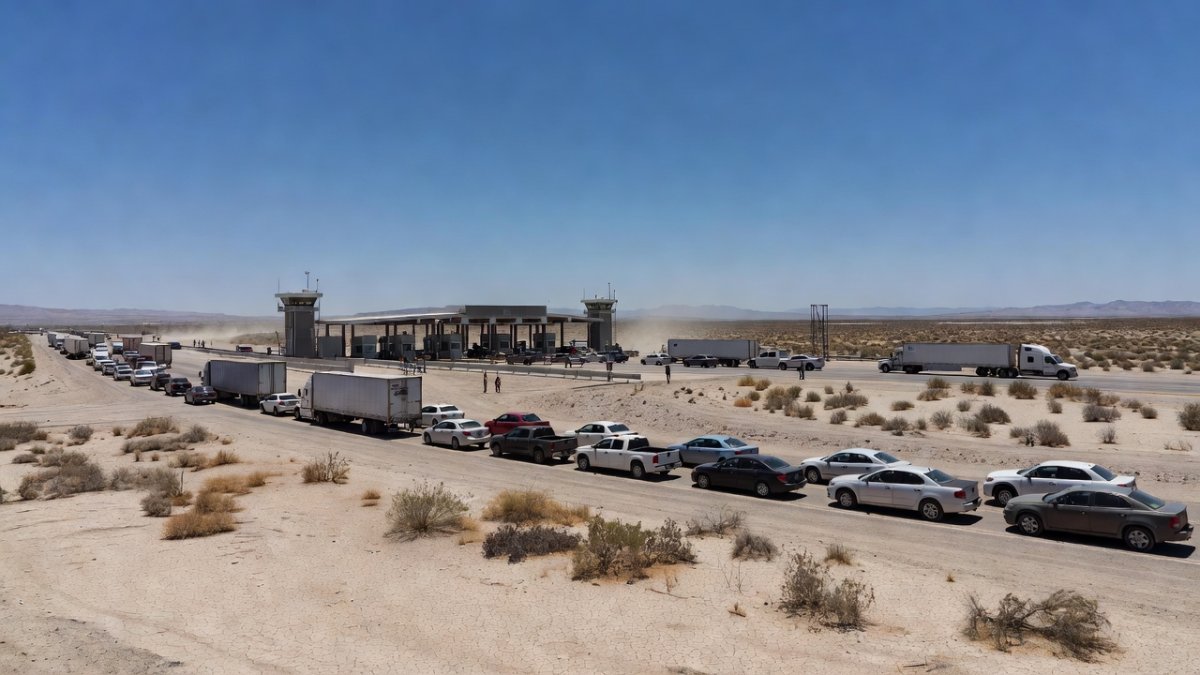
In a significant step for bilateral security cooperation, Mexico and the United States have signed a declaration of intent that opens the door for Mexico to acquire unmanned aerial systems (UAS) and counter-drone technology from the U.S. Army's marketplace. The agreement, announced on August 17, 2026, was signed by U.S. Army Secretary Dan Driscoll during his visit to Mexico, with Mexico's Defense Ministry (Sedena) serving as the Mexican signatory. While the pact is non-binding and contains no purchase commitment, it represents a formal acknowledgment of the growing threat that cartel drone operations pose to both nations. U.S. Ambassador to Mexico Ronald Johnson announced the agreement on social media, writing that "this technology will enhance our capacity to combat cartels and address our shared security challenges." Johnson framed the agreement as part of broader bilateral security cooperation promoted by U.S. President Donald Trump and Mexican President Claudia Sheinbaum. The declaration allows Mexico to buy drones and anti-drone systems from the U.S. digital marketplace at competitive costs, though specific details about pricing, quantities, or delivery timelines remain unspecified. The timing of this agreement is no coincidence. Mexican communities from Michoacán to Tamaulipas have watched with growing concern as cartels have transformed commercial drone technology into weapons of war. What began as surveillance tools have evolved into platforms for explosive attacks, fentanyl smuggling, and territorial control. This agreement signals that both governments recognize the urgency of addressing what security analysts now describe as a new era of aerial threats along the border and deep within Mexican territory.Tags: US-Mexico drone agreement, cartel drones, Sedena, CJNG, bilateral security, Claudia Sheinbaum, Donald Trump, fentanyl trafficking, counter-drone systems, Mexico security cooperation
The Story Unfolds: From Declaration to Deployment
The declaration of intent signed this week is deliberately modest in scope, a fact that both governments have acknowledged openly. It is non-binding, includes few operational details, and notably contains no purchase commitment from Mexico. What it does provide is access — Mexico can now tap into the U.S. Army's established marketplace of unmanned aerial systems and counter-unmanned aircraft systems (C-UAS) at competitive prices, bypassing the lengthy procurement negotiations that typically characterize international arms deals. For the Sheinbaum administration, this agreement represents a careful balancing act. The president has consistently emphasized Mexican sovereignty and the importance of domestic solutions to security challenges, yet the reality of cartel drone warfare has pushed her government toward deeper cooperation with Washington. The agreement allows Mexico to maintain its independent decision-making while gaining access to technology that could protect Mexican soldiers, police officers, and civilians from explosive-laden drones that have become a hallmark of cartel tactics. The U.S. Army's marketplace is not a simple retail catalog. It includes a range of systems from small reconnaissance drones to sophisticated counter-drone technologies capable of detecting, tracking, and neutralizing hostile aerial threats. For Mexican security forces, this could mean everything from better surveillance capabilities in remote mountainous regions to electronic warfare systems that can jam cartel drone signals before they reach their targets. The agreement's flexibility allows Mexico to select what it needs based on its specific operational requirements. Ambassador Johnson's announcement emphasized the shared nature of the security challenge, noting that the technology "will enhance our capacity to combat cartels and address our shared security challenges." This language reflects a broader shift in U.S.-Mexico relations, where the border is increasingly viewed not as a dividing line but as a shared operational space requiring coordinated responses. The agreement, while modest in its immediate impact, establishes a framework for deeper technological cooperation in the months and years ahead.Mexican Context: The Rising Threat of Cartel Drones
To understand why this agreement matters, one must look at how cartels have weaponized consumer drone technology with devastating effect. The Jalisco New Generation Cartel (CJNG) began using explosive-laden drones against security forces around 2021, with the first attacks detected in Michoacán, Guanajuato, and Jalisco. What started as crude devices has evolved into a sophisticated aerial threat that now includes fixed-wing drones capable of carrying significant payloads over long distances. The numbers tell a sobering story. U.S. data recorded more than 27,000 drone detections near the southern border in the latter half of 2024 alone. A February 2026 report by the National Counterterrorism Innovation, Technology, and Education Center (NCITE) at the University of Nebraska at Omaha, which is funded by the Department of Homeland Security, counted 221 cartel drone attacks and warned that cartel UAS activity is expanding geographically and evolving tactically. These are not isolated incidents but part of a systematic campaign that has forced both militaries to adapt. The threat became dramatically visible in February 2026 when the El Paso airport was briefly closed after U.S. authorities initially blamed an incursion by a Mexican cartel drone. Though the initial assessment was later revised, the incident underscored how cartel drone operations have crossed the border in ways that disrupt civilian life and challenge traditional security responses. For Mexican families living in border communities, the constant hum of drones overhead has become an unwelcome soundtrack to daily life. The February 22, 2026, killing of CJNG leader El Mencho in an operation in Tapalpa, Jalisco, by Mexican Armed Forces demonstrated that Mexico can strike decisive blows against cartel leadership. However, the drone threat persists even as leadership changes, because the technology and tactics have been diffused throughout criminal organizations. This is why access to counter-drone systems is seen as essential — not just for offensive operations but for protecting Mexican communities from aerial attacks that show no regard for civilian casualties.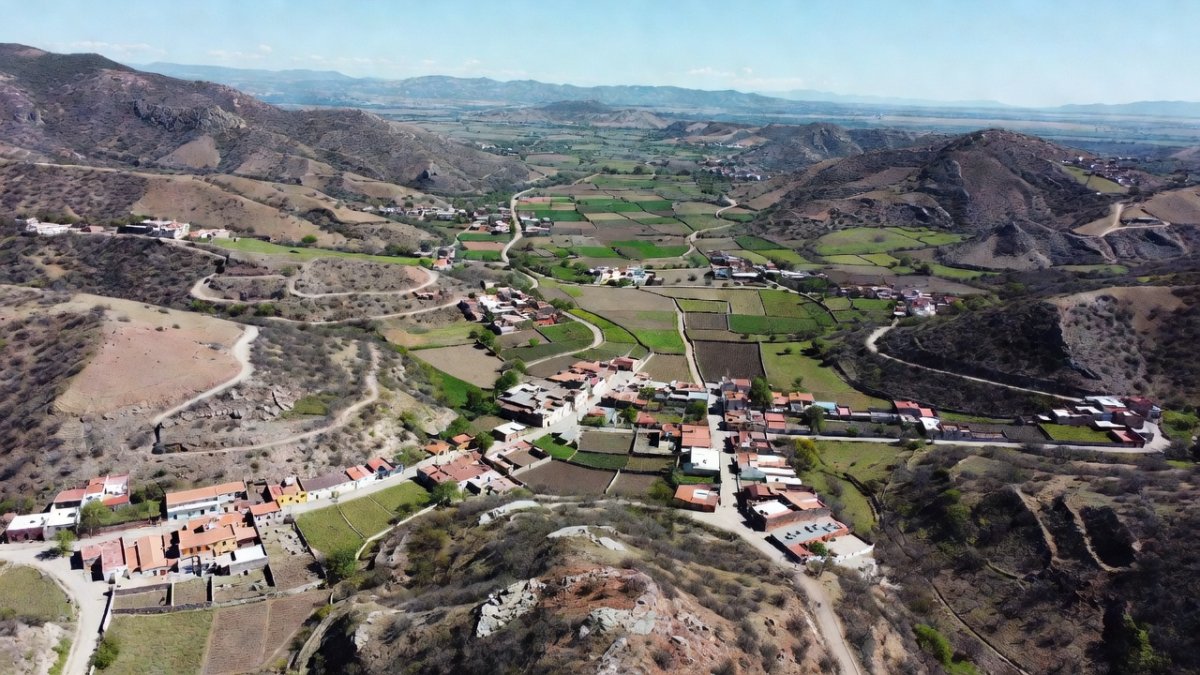
Impact on Mexican Communities: Safety, Sovereignty, and Daily Life
For ordinary Mexicans, the drone agreement represents a potential shield against a threat that has reached into their communities in terrifying ways. In rural areas of Michoacán and Jalisco, campesinos have reported drones flying over their fields, sometimes dropping explosives near military patrols or community police forces. In border cities like Tijuana and Ciudad Juárez, residents have grown accustomed to the sight of drones monitoring crossings, coordinating smuggling operations, and occasionally engaging in aerial attacks that have injured bystanders. The agreement's focus on counter-drone technology could provide Mexican security forces with tools to detect and neutralize these threats before they reach populated areas. For families in colonias along the border, this could mean fewer nights interrupted by the sound of explosions and fewer mornings waking to news of another drone attack. For indigenous communities in remote regions where cartels have established operations, the ability to monitor aerial activity could provide early warning of cartel movements and help protect vulnerable populations. However, the agreement also raises questions about sovereignty and the nature of security cooperation. Some Mexican analysts and civil society organizations have expressed concern about deepening military ties with the United States, particularly given the history of U.S. intervention in Mexican affairs. The Sheinbaum administration has sought to address these concerns by emphasizing that the agreement is non-binding and that Mexico retains full control over how any acquired technology is used. The president's commitment to a "human rights-based" security approach has been a cornerstone of her administration's messaging. The economic dimension cannot be ignored either. Mexican communities have suffered economically from cartel violence, with businesses closing early, tourism declining in affected areas, and investment flowing away from regions perceived as unsafe. If counter-drone technology helps reduce attacks and restore a sense of security, it could have tangible economic benefits for communities that have been held hostage by cartel violence. The agreement, while modest, is a step toward restoring the peace that Mexican families deserve.Reactions and Responses: Navigating a Complex Bilateral Relationship
The drone agreement arrives at a delicate moment in U.S.-Mexico relations. El País reported on August 17, 2026, that Mexico and Washington are steering the security relationship back on track despite a rift over the Andy López Beltrán visa case. President Sheinbaum has authorized Security Secretary Omar García Harfuch to travel to a DEA conference in Argentina, signaling a willingness to maintain operational cooperation even as political tensions simmer beneath the surface. The Bilateral Implementation Group (BIG), launched on June 12, 2026, has formalized field-level security coordination targeting fentanyl trafficking, illegal firearms, organized crime, and drone-enabled smuggling. The drone agreement builds on this framework, adding a technological component to what has primarily been an operational and intelligence-sharing arrangement. For both governments, the BIG represents a pragmatic approach to security cooperation that focuses on concrete results rather than political posturing. Mexican officials have been careful to frame the agreement as part of Mexico's sovereign security strategy rather than as submission to U.S. pressure. The Sedena's role as the Mexican signatory underscores the military's central role in countering cartel threats, a position that has been reinforced by the successful operation against El Mencho. The Mexican Armed Forces have demonstrated their capability and willingness to confront cartels directly, and this agreement provides them with additional tools to do so effectively. The response from civil society has been mixed. Some community leaders in border states have welcomed the agreement as a necessary step to protect civilians from drone attacks, while others have expressed skepticism about whether the technology will actually reach the communities that need it most. There are also concerns about the potential for drone technology to be used for surveillance of Mexican citizens, raising privacy and civil liberties questions that have not been fully addressed in public discourse.What to Watch For: Implementation, Expansion, and Accountability
The coming months will reveal whether this agreement translates into tangible security improvements for Mexican communities. Key indicators include whether Mexico actually purchases systems from the U.S. Army marketplace, how quickly those systems are deployed, and whether they prove effective against the evolving drone tactics employed by cartels. The NCITE report's warning that cartel UAS activity is expanding geographically suggests that the threat will continue to grow, making timely implementation critical. The political dimension will also bear watching. The agreement's non-binding nature means it could be easily abandoned if bilateral relations deteriorate or if domestic political pressures in either country shift. The Sheinbaum administration's commitment to the agreement will be tested by opposition parties who may frame it as ceding Mexican sovereignty to U.S. interests. Similarly, the Trump administration's focus on border security could lead to pressure for more aggressive cooperation that Mexico may be unwilling to accept. For Mexican families, the ultimate measure of this agreement's success will be whether they feel safer in their communities. Will the drone that once dropped explosives near a school in Michoacán be detected and neutralized before it reaches its target? Will the constant surveillance of border communities by cartel drones become a thing of the past? These are the questions that matter most to ordinary Mexicans who have lived with the fear of aerial attacks for too long. The agreement also opens the door for broader technological cooperation that could extend beyond drones. As cartels continue to adapt and innovate, the U.S.-Mexico security relationship will need to evolve in response. The framework established by this agreement could serve as a model for cooperation on other emerging threats, from cyberattacks to autonomous weapons systems. For now, though, the focus remains on the immediate challenge of countering cartel drones and protecting Mexican communities from their devastating impact. The road ahead is uncertain, but the signing of this agreement represents a recognition that the drone threat cannot be addressed by Mexico alone or by the United States alone. It requires the kind of coordinated, respectful cooperation that both governments have pledged to pursue. For the families in Tapalpa who watched their town become the site of El Mencho's downfall, for the residents of border colonias who have learned to distinguish the sound of cartel drones from military aircraft, and for the campesinos in Michoacán who have seen their fields become battlegrounds, this agreement offers a measure of hope that their governments are taking the threat seriously and working together to address it.This article was produced with AI-assisted research and editorial support. Sources: Mexico News Daily, Reuters, El País, The Rio Times, NCITE.
By Rosa Martinez, Staff Writer
What's Your Reaction?
 Like
0
Like
0
 Dislike
0
Dislike
0
 Love
0
Love
0
 Funny
0
Funny
0
 Wow
0
Wow
0
 Sad
0
Sad
0
 Angry
0
Angry
0

Rosa Martinez
Latin America/Andes Correspondent at Global1.News. Based in Bogota, covering politics, environment, energy, and social movements across the Andean region. Passionate about environmental journalism and communities protecting their land.












Comments (0)