
Rocket Report: Artemis II literally tore through the atmosphere; New Glenn delay
Blue Origin’s New Glenn saga just got a fresh twist, and the ripple effects are already reshaping the launch‑service market. On Thursday, the company unveiled a new kick‑stage and a fresh engine concept while confirming a modest slip of its return‑to‑flight slot from December to January.
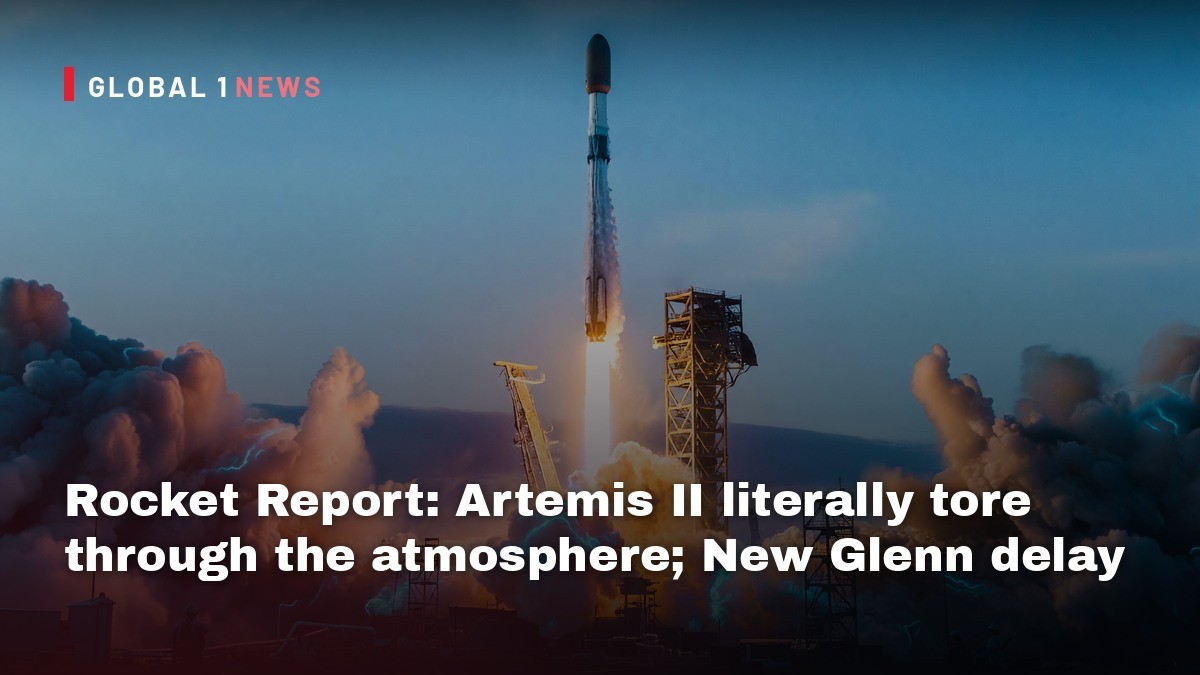
Blue Origin’s New Glenn saga just got a fresh twist, and the ripple effects are already reshaping the launch‑service market. On Thursday, the company unveiled a new kick‑stage and a fresh engine concept while confirming a modest slip of its return‑to‑flight slot from December to January. The news arrives amid a frantic rebuild of the Cape Canaveral pad that was gutted by an explosion six months ago, and against a backdrop of soaring demand from NASA, Amazon and the U.S. Space Force. For anyone watching the commercial‑space race, the timing couldn’t be more critical: a looming launch‑capacity crunch, new water‑propulsion experiments and a surge of activity from rivals in Japan, China and India all point to a reshuffling of who gets to lift the next generation of satellites into orbit.
New Glenn’s kick‑stage reveal and the January delay
Blue Origin used Thursday’s briefing to spotlight a brand‑new kick‑stage slated for the New Glenn heavy‑lift vehicle. While the company didn’t disclose performance numbers, the addition signals an intent to boost payload flexibility for the upcoming mission that was originally penciled for a December launch. The shift to a January window is framed as “minor and widely expected,” suggesting the company is managing expectations rather than confronting a major setback.
The delay is directly tied to the ongoing reconstruction of the launch pad that was destroyed in a catastrophic explosion roughly six months ago. The pad rebuild is progressing “apace,” according to the report, but the timeline still forces a slip in the flight schedule. For Blue Origin’s customers—NASA, Amazon’s Kuiper constellation and the Space Force—the postponement means a tighter launch calendar and a potential scramble to secure alternative lift capacity if New Glenn’s slot slides further.
Demand pressure from government and corporate customers
NASA’s partnership with Blue Origin has been a cornerstone of the agency’s heavy‑lift strategy, especially after the retirement of the Falcon 9 as a primary commercial workhorse. Amazon, meanwhile, is racing to fill its Kuiper broadband constellation, and the Space Force is eyeing New Glenn for national‑security payloads. The article notes “a lot of pent‑up demand” from these three entities, underscoring how critical New Glenn’s return is for meeting upcoming launch commitments.
That demand is not just a matter of schedule convenience; it reflects a broader market reality. A new analysis from Quilty Space warns of a shortfall of about 150 launches worldwide between now and 2030, a gap that could double if U.S. military needs are added and if SpaceX does not expand its Falcon 9/Falcon Heavy fleet. Blue Origin’s ability to get New Glenn back on line could therefore ease a portion of that shortage, at least for the high‑value payloads the company’s customers are queuing.
Water‑propulsion experiments: Argo Space’s bold vision
While Blue Origin works on its heavy‑lift hardware, a trio of former SpaceX engineers are pushing a very different propulsion concept through their startup Argo Space. Founded in late 2022 by the Carlisle brothers, Argo aims to eliminate the need for Earth‑sourced propellants by using water as a multi‑purpose resource: a propellant, a coolant and a radiation shield.
Argo’s first flight in July failed when a solar array didn’t deploy, leaving the propulsion system untested. The company has two more missions slated for 2027 to demonstrate its water‑based thrusters. The system works by electrolyzing onboard liquid water into hydrogen and oxygen, then burning the gases for thrust. If successful, the technology could dramatically lower launch‑mass penalties for satellite operators, especially for missions that already carry large water supplies for life‑support or in‑situ resource utilization.
Japan’s Interstellar Technologies and the Zero rocket
Half a world away, Japan’s Interstellar Technologies secured backing from the Japan Aerospace Exploration Agency (JAXA) for its Zero rocket program. The partnership comes through JAXA’s Acceleration of Commercial Rocket Launch Demonstration program, which allocates up to $76 million per company under the Space Strategic Fund. Interstellar has already raised more than $250 million, split roughly between government and private investors.
Zero is a two‑stage launcher designed to lift up to one metric ton to low‑Earth orbit. The company recently celebrated Japan’s first successful firing test of an orbital‑class methane engine, a milestone that moves it from development to “operational commercial services,” according to Interstellar’s president Satoshi Nakayama. The first Zero launch is projected for 2027, positioning the firm as a potential new source of medium‑lift capacity that could help ease the global launch shortfall highlighted by Quilty Space.
China’s Kinetica 2 mini‑Falcon Heavy and the SpaceSail constellation
China is quietly expanding its own launch ecosystem while pushing a massive satellite constellation. On a recent Tuesday (Monday, US time), a Kinetica 2 rocket lifted 18 SpaceSail Internet satellites, marking the vehicle’s second flight and its first operational mission. Kinetica 2’s architecture mirrors SpaceX’s Falcon Heavy with three side‑by‑side boosters, but each booster carries three kerosene‑fueled engines instead of nine, delivering about 12 metric tons to LEO.
The SpaceSail network, also known as Qianfan, now fields roughly 275 flat‑panel satellites, with a first phase slated for 1,296 units. The constellation’s growth underscores China’s ambition to rival other mega‑constellation operators and highlights the strategic importance of domestic launch capability. CAS Space’s plan to recover and reuse the Kinetica 2 boosters could also introduce a new competitive element in the reusable‑launch market.
India’s navigation satellite launch and the GSLV’s mixed record
India added another piece to its regional navigation puzzle on October 30, when a Geosynchronous Satellite Launch Vehicle (GSLV) lofted the NVS‑03 satellite. The launch aims to restore confidence in the nation’s second‑generation navigation system after earlier satellites suffered atomic‑clock failures. NVS‑03 carries multiple clocks of differing designs to mitigate those reliability issues.
The GSLV, which has flown 20 times since its 2001 debut, remains a workhorse for India’s heavier payloads, though its launch cadence lags behind the country’s smaller PSLV launcher. The mixed performance record—highlighted by occasional failures—means India still leans heavily on foreign launch services for certain missions, feeding into the broader global demand pressure.
What the launch crunch means for the next decade
The convergence of these stories paints a picture of a launch market under strain. Quilty Space’s analysis warns that the shortfall could double when U.S. military requirements are factored in, and that the gap may not ease until the late 2030s. Blue Origin’s delayed New Glenn return, Japan’s upcoming Zero launches, China’s expanding Kinetica 2 fleet, and India’s navigation efforts all represent attempts to plug the void.
For satellite operators and downstream users—whether they’re building broadband constellations, Earth‑observation networks or scientific payloads—the stakes are high. A delayed launch can mean missed revenue windows, regulatory penalties or lost market share. Conversely, breakthroughs like Argo Space’s water‑propulsion could lower costs and simplify logistics, reshaping how missions are planned. As the industry grapples with these pressures, the next few years will likely see intensified competition, more aggressive development timelines and a scramble for any edge that can keep payloads aloft.
This article was produced with AI-assisted research and editorial support. Reporting is based on the source material cited below. Sources: Ars Technica; arstechnica.com; Global1.News (07 November 2026).
By Nova Chen, Staff Writer
What's Your Reaction?
 Like
0
 Dislike
0
 Love
0
 Funny
0
 Wow
0
 Sad
0
 Angry
0

Trend Reporter at Global1.News. Based in San Francisco, tracking the stories crossing from social platforms, forums, and community discussions into mainstream news — tech breakthroughs, cultural shifts, and world events that real people are engaging with right now.















Comments (0)