
US-Canada Trade War Escalates: Tariffs Hit Sept 8
Folks, grab a coffee, because the story I’m about to lay out for you is the kind of economic train wreck that makes you check your grocery receipt twice. We are nine days away from what both Washington and Ottawa are openly calling a period of "massive pain." The US-Canada trade war, which has been simmering and boiling over since the spring, just took a sharp, dangerous turn.
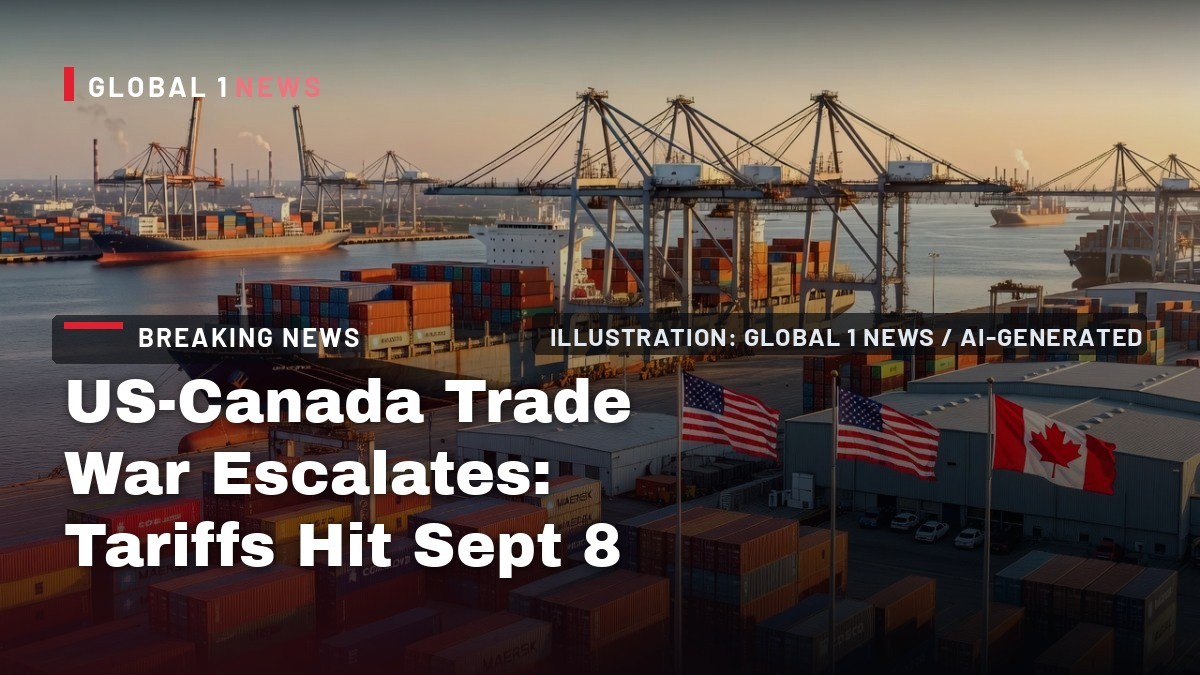
Folks, grab a coffee, because the story I’m about to lay out for you is the kind of economic train wreck that makes you check your grocery receipt twice. We are nine days away from what both Washington and Ottawa are openly calling a period of "massive pain." The US-Canada trade war, which has been simmering and boiling over since the spring, just took a sharp, dangerous turn. Negotiations collapsed on a Friday night, tariffs are flying in both directions, and the world’s most important bilateral trading relationship is now teetering on the brink of a full-blown economic brawl. This isn’t a distant geopolitical squabble; this is about the price of your toilet paper, your car, and the furniture in your living room. Let’s cut through the spin and get to the hard numbers, the raw politics, and what you need to do to brace for impact.
US-Canada Trade War Escalates: Tariffs Hit Sept 8
Washington, D.C. - August 30, 2026 - The United States and Canada are locked in a high-stakes trade confrontation that escalated dramatically over the past ten days, with both nations now preparing for sweeping retaliatory tariffs set to take effect on September 8. The breakdown in negotiations, which occurred late Friday, August 21, has triggered a cascade of punitive measures that economists warn will raise prices for consumers on both sides of the border and inject fresh uncertainty into a global economy already grappling with inflation. The core dispute, rooted in the Trump administration’s invocation of national security to justify tariffs on Canadian steel and aluminum, has now expanded to encompass everything from hockey sticks to fresh tuna, and the rhetoric from both capitals has turned openly hostile.
The Road to Ruin: How We Got Here
To understand where we are, we have to rewind the clock. This trade war didn’t start last week; it started with the Trump administration’s initial tariffs on Canadian steel and aluminum, justified under the guise of national security. That was the opening salvo. Over the subsequent months, the tit-for-tat escalated, with the US imposing tariffs of up to 50% on Canadian steel, aluminum, and automobiles. Canada, for its part, retaliated with its own duties on American goods, and the list has only grown since. It was a classic, grinding trade dispute that ebbed and flowed, but it never truly went away. The USMCA, the trade deal that was supposed to replace NAFTA, was supposed to prevent this kind of chaos, but as we’ve seen, it’s proven to be a flimsy shield against a determined administration.
The situation reached a critical inflection point in mid-August. Both sides had been engaged in what they described as "intense" negotiations to resolve the steel and aluminum dispute, with the added complication of Canada’s protected dairy market, a perennial thorn in the side of US trade negotiators. The White House was demanding significant concessions, and Ottawa was pushing back, insisting that its supply management system for dairy was non-negotiable. The stage was set for a dramatic showdown, and on the night of Friday, August 21, the talks collapsed. According to multiple reports from Reuters and The New York Times, the negotiations broke down late at night, with both sides walking away from the table without a deal. The diplomatic niceties were over.
The Collapse: A Friday Night Meltdown
The collapse of the talks was swift and brutal. Within hours, the Trump administration moved to impose 50% tariffs on roughly $20 billion worth of Canadian goods. We’re not just talking about heavy machinery here; we’re talking about consumer goods that hit close to home. The list, as reported by Bloomberg and ABC News, includes hockey sticks, cement, and a wide range of other products. This new tranche of tariffs covers about 5% of Canadian shipments to the United States, and crucially, it does not exempt goods protected under the USMCA. That’s a significant escalation because it signals that the administration is willing to tear up the rulebook that governs North American trade. It’s a direct shot across the bow, and it was delivered with the subtlety of a sledgehammer.
Canadian Prime Minister Mark Carney did not mince words in his response. He called the breakdown "uneconomic" and "unfair," and he laid the blame squarely at the feet of Washington. In a press conference that was equal parts frustration and defiance, Carney stated that the US demands showed a clear intent to "destroy our major industries," specifically calling out autos, steel, and aluminum. The sticking point, as reported by multiple outlets, was access to Canada’s protected dairy market. The US was demanding a level of access that Canada viewed as existential to its domestic agricultural sector. Carney’s tone was not that of a leader looking for a compromise; it was the tone of a leader preparing his nation for a fight.
Canada’s Retaliation: Dollar-for-Dollar and Then Some
Carney didn’t wait long to respond. On Saturday, August 22, the day after the talks collapsed, he declared that Canada was "at war" over trade. That’s not hyperbole; that’s a direct quote. He announced that Canada would impose dollar-for-dollar retaliatory tariffs, and he set a date: September 8. The initial announcement was broad, but the specifics came on Tuesday, August 25. That’s when Canada formally announced a comprehensive list of retaliatory tariffs on C$27.6 billion (about US$19.94 billion) worth of American goods. The list is a mirror image of the US tariffs, targeting sectors including agriculture, steel, and electronics. But Carney didn’t stop there. He doubled existing tariffs on American steel and aluminum, and he added new targets, including furniture and, in a move that raised eyebrows, fresh tuna.
This is a carefully calibrated response. By matching Washington’s duties dollar-for-dollar, Carney is sending a clear message that Canada will not be bullied. The C$27.6 billion figure is not arbitrary; it’s designed to inflict maximum political and economic pain on the United States, targeting industries in key swing states as the 2026 midterms approach. The inclusion of steel and aluminum is a direct counter-punch to the original US tariffs, while the addition of consumer goods like furniture and tuna is aimed at hitting American households where they live. This is not just a trade dispute anymore; it’s a political weapon being deployed with surgical precision. As Reuters noted, the Canadian tariffs will apply to nearly $20 billion of American products, and the message is clear: if you hit us, we will hit back, and we will hit back hard.
Trump’s Response: Truth Social and Lake Ontario
President Trump, never one to shy away from a rhetorical fight, responded in his signature style. On Truth Social, he posted a message that perfectly encapsulated his view of the relationship: "Canada wants the benefits of being a State, without being one!!!" The exclamation points are his, not mine. But he didn’t stop at social media posts. He threatened new 50% tariffs on Canadian vehicles, auto parts, and steel, which would be a devastating blow to Canada’s manufacturing sector, which is deeply integrated with the US auto industry. And then, in a move that seemed designed to provoke maximum outrage, he floated the idea of renaming Lake Ontario "Lake America." The suggestion was met with immediate and widespread derision in Canada, where it was seen as a juvenile provocation that undermined any remaining credibility in the negotiation process.
Trump’s strategy appears to be one of escalation and intimidation. By threatening to hit Canada’s most important export sectors, he’s trying to force Carney to capitulate. But the "Lake America" comment, as reported by The New York Times, suggests a level of personal animosity that makes a negotiated settlement seem increasingly unlikely. It’s a risky gambit. While Trump may believe he holds all the cards, Canada has leverage of its own, and it’s not afraid to use it. The President’s approach is a high-stakes game of chicken, and both drivers are showing no signs of swerving.
The Ontario Energy Threat: A Nuclear Option
And that brings us to the most dangerous escalation yet. Ontario Premier Doug Ford, a key figure in Canadian politics, has thrown down the gauntlet. Ford stated that Canada should be prepared to cut electricity and critical-mineral supplies to the United States if the confrontation worsens. This is not an idle threat. Ontario provides electricity to several US states, including New York and Michigan, and Canada is a major supplier of critical minerals like nickel and lithium, which are essential for batteries and electronics. Cutting off these supplies would cause immediate and severe disruptions to the US economy, potentially shutting down factories and causing blackouts. It’s a nuclear option, and Ford’s willingness to even mention it signals that Canada is prepared to fight this war on every front.

The threat is a double-edged sword. While it would inflict massive pain on the US, it would also damage Canada’s reputation as a reliable trading partner and could have long-term consequences for its energy exports. But Ford’s comments, as reported by Bloomberg, reflect a growing sentiment in Canada that the country needs to stand firm against what is perceived as an existential threat to its economic sovereignty. The US has long taken Canada for granted, and the current administration’s tactics have awakened a sleeping giant. The question is whether this rhetoric will translate into action, and if it does, the consequences could be catastrophic for both economies.
Impact on American Consumers: The Price of Toilet Paper
Let’s bring this down to the kitchen table, folks. This isn’t just about corporate balance sheets; it’s about your wallet. Economists are warning that the new tariffs will lead to rising prices for American consumers, and the impact will be felt on everyday essentials. We’re not just talking about luxury goods; we’re talking about toilet paper. As tariffs spread to paper products, the cost of this household staple is expected to climb. The same goes for a wide range of goods, from furniture to food products. The US tariffs on Canadian goods will make those products more expensive for American importers, and those costs will inevitably be passed on to consumers. The Canadian retaliatory tariffs will have a similar effect on American exports, but the impact on US consumers is the more immediate concern.
The economic reality is that tariffs are a tax on consumers. They don’t punish foreign countries; they punish the people who buy the goods. The Trump administration has argued that the tariffs are necessary to protect American industries and jobs, but The New York Times reported last week that the US economy could feel the sting from the trade war with Canada, and economists on both sides of the border are warning that broad duties tend to push prices up. For families already struggling with the cost of living, that matters. The price of a new car, a new fridge, or even a roll of toilet paper is going to go up, and there’s no end in sight.
The Political Stakes: Midterms and the Blame Game
The standoff is also rattling US politics as the 2026 midterms approach. The Trump administration is betting that voters will support a tough stance on trade, but the economic pain could easily backfire. If prices rise and the economy stumbles, the blame will fall squarely on the party in power. Democrats are already hammering the administration for what they call a "self-inflicted wound," and they are pointing to the potential job losses in industries that rely on Canadian imports. The political calculus is complex. In swing states like Michigan and Pennsylvania, which have significant auto and steel industries, the tariffs could be popular. But in states that rely on Canadian energy or agricultural imports, the impact could be negative.
Carney is also playing a political game. By standing up to Trump, he is solidifying his domestic support and positioning himself as a defender of Canadian sovereignty. The "war" rhetoric is designed to rally the nation behind him as Canada braces for higher prices of its own. The political dynamics on both sides of the border are pushing the two leaders toward further escalation, not de-escalation. The midterms are a pressure cooker, and trade is the explosive issue.
What Happens Next: A Turn to Europe and a Broken Dialogue
As of August 29, talks remain broken. Bloomberg’s headline sums it up: "Where the US-Canada Trade War Stands After Talks Fell Apart." There is no new negotiation date set, and the rhetoric is getting hotter. Carney is signaling a turn toward Europe for trade diversification, which could test the EU’s borders and trade policy, as Euronews reports. This is a significant geopolitical shift. If Canada starts to pivot its trade away from the US and toward Europe, it could reshape the global trading order. The EU has its own trade disputes with the US, and a Canada-EU alliance could create a powerful counterweight to Washington’s protectionist agenda.
But that’s a long-term play. In the short term, we are heading for a cliff. On September 8, the tariffs take effect, and the "massive pain" that both sides have warned about will become a reality. The question is whether cooler heads will prevail before then. The history of trade wars suggests that they rarely end well, and this one has all the ingredients for a prolonged and damaging conflict. The only way out is a negotiated settlement, but that requires both leaders to step back from the brink. Given the current trajectory, that seems unlikely. So, folks, buckle up. The next few weeks are going to be bumpy.
What can you do? Stay informed. Check your sources. Don’t panic-buy, but do be prepared for price increases. Support businesses that are being impacted, and let your elected officials know how you feel. This is your economy, and you have a voice. The trade war is a choice, and it can be reversed. But it will take political will and public pressure. Don’t be a bystander in this fight. Be an active participant in the solution.
This article was produced with AI-assisted research and editorial support. Sources: Reuters, The Associated Press, The New York Times, Bloomberg, ABC News, CGTN, Euronews.
By Jessica Ali, Staff Writer
What's Your Reaction?
 Like
0
Like
0
 Dislike
0
Dislike
0
 Love
0
Love
0
 Funny
0
Funny
0
 Wow
0
Wow
0
 Sad
0
Sad
0
 Angry
0
Angry
0

Editor-in-Chief at Global1.News. Atlanta-based journalist who cuts through the BS and tells it like it is. Lead anchor, host, and the voice you hear when the spin stops and the truth starts.














Comments (0)