
Anne Carson Wins the 2026 Nobel Prize in Literature
The Swedish Academy has awarded the 2026 Nobel Prize in Literature to the Canadian poet and classicist Anne Carson, citing an oeuvre that reworks ancient Greek texts into new forms. The 76-year-old Toronto-born writer was in Iceland when the academy called to tell her she had won.

Folks, the Nobel Prize in Literature went to a poet who treats the oldest texts in the Western canon like live ammunition, and on Thursday the Swedish Academy said so out loud. Anne Carson, 76, born in Toronto, has spent four decades pulling Sappho, Euripides and Stesichoros into the present tense. Now the highest honour in letters has caught up with her.
Anne Carson Wins the 2026 Nobel Prize in Literature
Stockholm, Sweden. The Swedish Academy named the Canadian poet, classicist and translator Anne Carson the winner of the 2026 Nobel Prize in Literature on Thursday morning, citing an oeuvre that has "created new forms for contemporary literature." She said nothing to the press; she was in Iceland at the time.
A Poet Who Made the Ancient World New
Anne Carson has spent more than four decades treating the literature of ancient Greece not as a museum but as a live wire. The Swedish Academy rewarded that instinct on Thursday, naming the 76-year-old Canadian poet, essayist, translator and classicist the winner of the 2026 Nobel Prize in Literature. The citation honours an oeuvre that moves between poetry, essay, translation and performance without ever settling into one. Carson was born in Toronto on 21 June 1950 and has held Icelandic citizenship since 2022. She is a Companion of the Order of Canada. Her work returns again and again to Sappho, Euripides, Sophocles and Stesichoros, but always as material to be reworked rather than preserved. The decision places a scholar-poet at the centre of world literature. For readers who first met her through Autobiography of Red or If Not, Winter, the recognition arrives late but not unexpectedly.
What the Swedish Academy Actually Said
The Academy's formal motivation reads: "for her bold and inventive oeuvre that, in playful dialogue with the classical tradition, has created new forms for contemporary literature." In its longer assessment, the Academy said almost all her literary production has centred upon "the intersection between the philologist's obsession with words and the poet's desire for new meaning." It noted that she has herself identified the etymology of words as the starting point for all her work, and that her translations from Classical Greek "may be regarded as independent works in their own right." The biobibliography, written by Nobel Committee chair Anders Olsson, describes Carson speaking of a "stereoscopic vision" that allows her to "hold in equipoise two perspectives at once." It also records that she once described boredom as her arch-enemy, a state she confronts with drastic humour and wit. Those phrases together explain why the Academy reached for a writer whose scholarship and poetry are not separate pursuits but one continuous argument.
From Toronto to the Fragments of Sappho
Carson's path to the Nobel began in a Toronto high school, where a Latin instructor agreed to teach her ancient Greek over the lunch hour. That encounter, recorded by the Poetry Foundation, opened the door to classical and Hellenic literature. She attended the University of Toronto, dropping out twice before earning her BA, MA and PhD in Classics. In 1981 she published her doctoral thesis, Odi et Amo Ergo Sum, through the University of Toronto. Throughout her career she has combined poetry writing with translation and teaching at universities in Canada and the United States, including McGill and the University of Michigan. Her scholarly training is not a footnote to the poetry; it is the engine of it. She reads Greek at the level of the syllable, then asks what those syllables do to a contemporary ear. That double attention, learned in Toronto and sharpened across decades of teaching, is the foundation of everything the Academy honoured this week.
The Books That Made Anne Carson
Her first book of essays, Eros the Bittersweet, appeared in 1986, a meditation on desire in ancient Greek literature built around a Sapphic compound adjective that defines Eros as pain and sweetness combined. Short Talks followed in 1992, then Plainwater and Glass, Irony, and God in 1995, the latter containing "The Glass Essay." Autobiography of Red, her 1998 novel in verse, took fragments by the sixth century BC poet Stesichoros about the winged red monster Geryon and recast the giant as a tender teenager; it is often heralded as her greatest work. Economy of the Unlost set Simonides of Keos against Paul Celan. Men in the Off Hours aligned Thucydides with Virginia Woolf and won the Griffin Poetry Prize. The Beauty of the Husband, a fictional essay in 29 tangos, won the T.S. Eliot Prize in 2001. Later came Decreation, Nox, Red Doc>, Float, Norma Jeane Baker of Troy, H of H playbook, Wrong Norma and The Gender of Sound.
Listening to the Wind: How She Heard the News
Ingrid Carlberg, permanent secretary of the Swedish Academy, relayed the moment the academy reached Carson to tell her she had won. The author was in Iceland, Carlberg said, "listening to the wind." Carlberg added: "She was very taken by surprise. We didn't have so much time to speak, and all she had time to tell me was that she is for the moment in Iceland, where she's listening to the wind." That relayed sentence is the only glimpse of Carson's own voice in the public record of the day, and it carries the unmistakable cadence of her writing: precise, slightly oblique, alert to weather. The announcement came from Stockholm on Thursday morning. What lingers is the image: a poet who has spent a career listening closely to fragments of Sappho was, at the moment of the call, listening to something older still.
Why Canada Gets to Claim Her
Canada will claim her, and reasonably so. She was born in Toronto, and Alice Munro, the country's short-story master who won this same prize in 2013, is the laureate she now joins. But Carson's is a complicated national story: she writes in English, holds Icelandic citizenship, and has built a body of work on Greek and Roman material. What Canada can claim with confidence is the formation, and a long record of honours. Her awards include a MacArthur Foundation "genius" grant in 2000, Guggenheim and American Academy in Berlin fellowships, the Lannan Literary Award, a Pushcart Prize and the PEN/Nabokov award. She was the first poet to win the Griffin Poetry Prize, for Men in the Off Hours in 2001, and the first to win it a second time, for Red Doc> in 2013 — a run that reads, in retrospect, like a rehearsal for Stockholm.
Genre Was Never the Point
The Academy's citation speaks of "new forms for contemporary literature," and the phrase is not decorative. Carson has published novels in verse, essay collections, translations, opera texts, performance pieces and boxed sets of chapbooks. Nox, written in memory of her brother Michael, who died in Denmark in 2000, is an accordion-fold-out box of pictures, letters and texts that brings in Catullus's elegy 101. Float, from 2016, is twenty-two chapbooks readable in any order. Norma Jeane Baker of Troy mixes Helen of Troy in Euripides' "Helen" with Marilyn Monroe. Her translations, from Electra and If Not, Winter through Grief Lessons, An Oresteia, Antigonick, Iphigenia among the Taurians, Antigone and Bakkhai, stand as independent works in their own right. The point is not that she refuses categories but that she treats them as temporary shelters. Each book asks what form the material demands, then builds it. That is why the Academy could treat scholarship and poetry as a single pursuit without contradiction.
A Nobel Week That Keeps Arguing With Itself
This year's announcements run from 5 to 12 October, six days and six prizes. Earlier in the week, the medicine prize went to three scientists whose work led to optogenetics, a tool that uses light to help unravel how the brain works. The physics prize recognised a scientist's efforts to demystify a rare group of neutrinos. The chemistry prize honoured two scientists for untangling mysterious mirror images in molecules, a discovery used to develop countless drugs. Friday brings the peace prize, and the Nobel Memorial Prize in Economic Sciences follows on Monday 12 October. Last year's literature prize went to the Hungarian writer Laszlo Krasznahorkai, dubbed the "master of the apocalypse" by American media, whose surreal and anarchic novels combine a bleak world view with mordant humour; the judges said his work upholds the power of art amid "apocalyptic terror." The Academy has been criticised for ignoring Tolstoy, Woolf and Borges, for snubbing US authors despite honouring Bob Dylan in 2016, and for obscurity. Defenders point to popular picks such as Gabriel Garcia Marquez in 1982 and Doris Lessing in 2007.
Why This One Matters
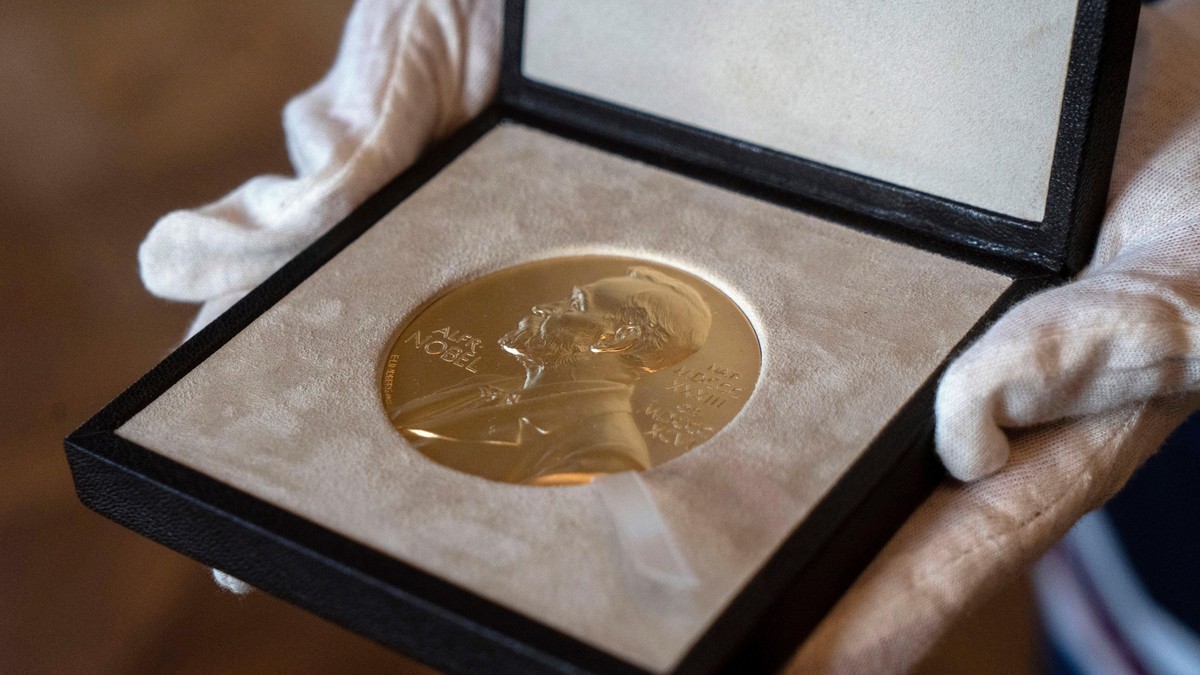
Carson had been among the favourites to win this year's Nobel, according to the bookmaker Ladbrokes, and she appeared on perennial lists of contenders alongside writers such as Margaret Atwood, Can Xue, Haruki Murakami, Thomas Pynchon, Salman Rushdie and Lyudmila Ulitskaya. A betting favourite winning is not the usual shape of a Nobel morning, and it says something about how visible her influence has become. The prize is worth 12 million Swedish kronor, about $1.2 million, and will be presented at a ceremony on 10 December 2026. The literature prize has been awarded since 1901 under the will of Alfred Nobel. The 2026 committee comprises Anders Olsson as chair, Ingrid Carlberg as permanent secretary, and members Ellen Mattson, Steve Sem-Sandberg, Anne Sward and Anna-Karin Palm. For readers who have followed Carson from Eros the Bittersweet to The Gender of Sound, the award confirms what her work has long demonstrated: that the oldest texts can still generate the newest forms.
What Comes Next
The immediate calendar is fixed. The peace prize arrives on Friday 9 October, and the economics prize on Monday 12 October, closing a week that began with optogenetics. Carson's award ceremony follows on 10 December 2026, when she will receive the prize and deliver the lecture that Nobel laureates are expected to give. What she will say is unknown; she has given the public almost nothing to go on. For publishers, the practical effect of a Nobel is well understood: the backlist, which runs from 1986 to 2025, is likely to be reissued and read by people who have never encountered a novel in verse about a winged red monster. For the Academy, the choice answers one long-running criticism while inviting others. For Carson, the work continues, as it always has, at the intersection of the philologist's obsession and the poet's desire.
By Jessica Ali, Staff Writer
This article was produced with AI-assisted research and editorial support. Sources: NobelPrize.org, Associated Press, Reuters, DW, CBC News, the Poetry Foundation and Wikipedia.
What's Your Reaction?
 Like
0
Like
0
 Dislike
0
Dislike
0
 Love
0
Love
0
 Funny
0
Funny
0
 Wow
0
Wow
0
 Sad
0
Sad
0
 Angry
0
Angry
0

Editor-in-Chief at Global1.News. Atlanta-based journalist who cuts through the BS and tells it like it is. Lead anchor, host, and the voice you hear when the spin stops and the truth starts.














Comments (0)