
UNAM Suspends 2026 Enrollment Amid Exam Cheating Scandal
UNAM suspends 2026-2027/1 enrollment after an AI-fueled cheating scandal in its first fully online admission exam. More than 50,000 students wait as a 16-expert commission weighs retakes, reassignments, and legal action.
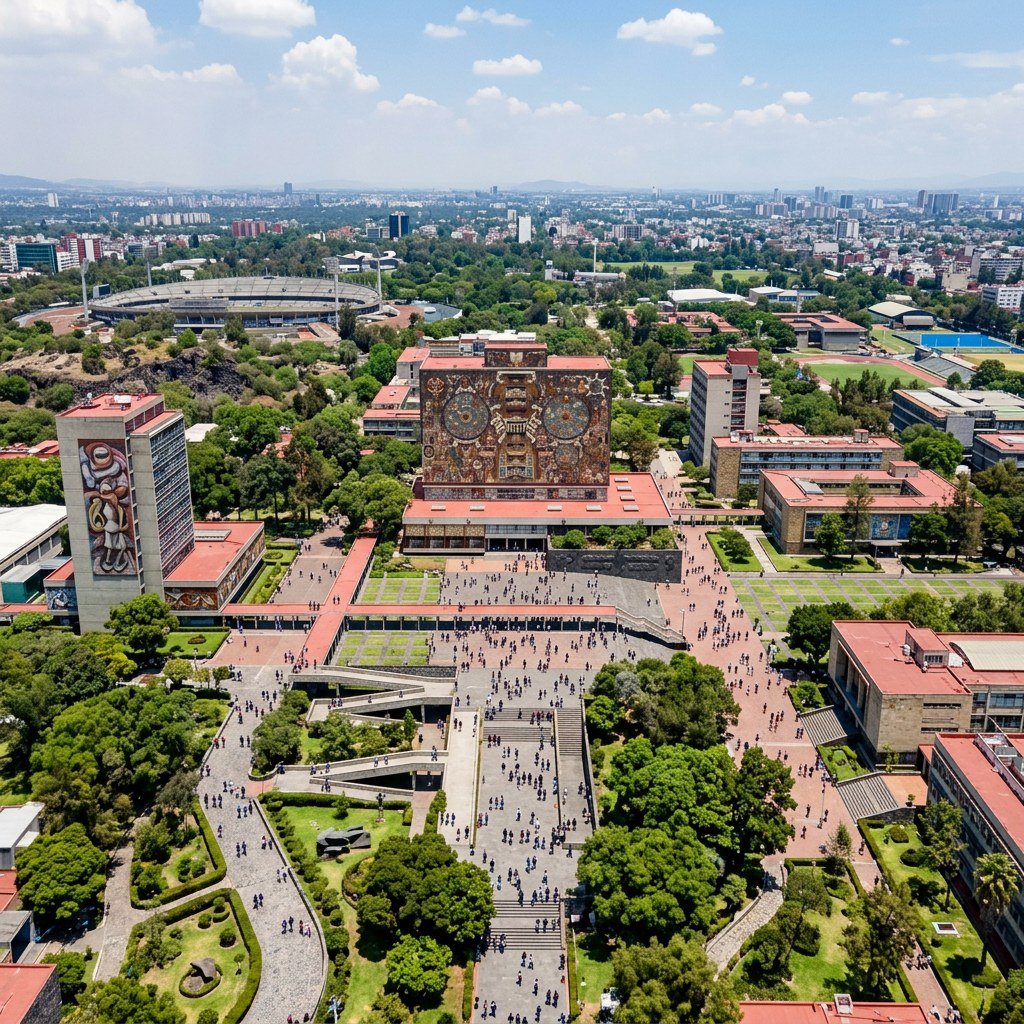
UNAM Suspends 2026 Enrollment Amid Exam Cheating Scandal
The halls of the National Autonomous University of Mexico (UNAM) — that great casa de estudios that has been a beacon of hope for generations of Mexican families — are holding their breath. In a move that has sent shockwaves across the country, UNAM has provisionally suspended document delivery and first-entry registration for all undergraduate programs for the 2026-2027/1 school cycle. The cause: a massive cheating scandal that has cast a dark cloud over its first-ever fully online admission exam, leaving more than 50,000 young people in painful limbo.
For our communities, from the bustling colonias of Mexico City to the rural ejidos of Oaxaca and the migrant towns of Michoacán, the UNAM admission exam is more than a test. It is a ritual of hope, a social elevator that families pin their dreams on. A place at UNAM can change the trajectory of a whole family, a whole barrio. Now that dream is tangled in a web of suspicion, artificial intelligence, and the bitter taste of potential injustice.
Tags: UNAM, cheating scandal, admission exam, online exam, AI cheating, Territorium Life, Leonardo Lomelí, Claudia Sheinbaum, 2026 enrollment, Mexican university, education fraud, students, Mexico City
A Digital Leap and a Cascade of Suspicion
This was the first time UNAM administered its undergraduate admission exam entirely online. The decision was meant to let young people from different regions of Mexico and abroad participate without the costly journey to a test site. The platform, provided by the Monterrey-based company Territorium Life, used the EdTest.ai system, which included multifactor authentication, continuous facial recognition, real-time recording, and detection of unusual behaviors. Artificial intelligence captured and recorded each applicant's actions, generating alerts that university staff then reviewed.
But the digital door swung both ways. On TikTok, Facebook, and WhatsApp, offers of "answer packages" and services to solve the exam in real time spread quickly. Some ads charged around 500 pesos, while testimonies circulating on social media mentioned sums as high as 15,000 pesos. Promoted methods included using second devices, hidden communication, screen-sharing apps, manipulating the camera's field of view, or having another person answer while the applicant sat at the computer.
These stories have a human face. A young woman named Samantha said in a testimony shared on X that she was told, "you sit, you take the exam, and we modify the results" — she refused to pay and prepared legitimately. Camilo Sebastián shared his heartbreak: he scored 116 correct answers and still did not get into the UNAM Faculty of Medicine, after competing twice, first with 112 correct answers and then with 116.
A Suspicious Concentration of Scores
When results were published on July 17, university officials detected atypical scores and an unusual concentration of high marks. An external analysis of public results for the Doctor (Médico Cirujano) program at Ciudad Universitaria found that 113 correct answers out of 120 was the most frequent score. Roughly 267 applicants got that exact result, and about 3,908 scored 100 or more correct answers — all competing for only 271 places.
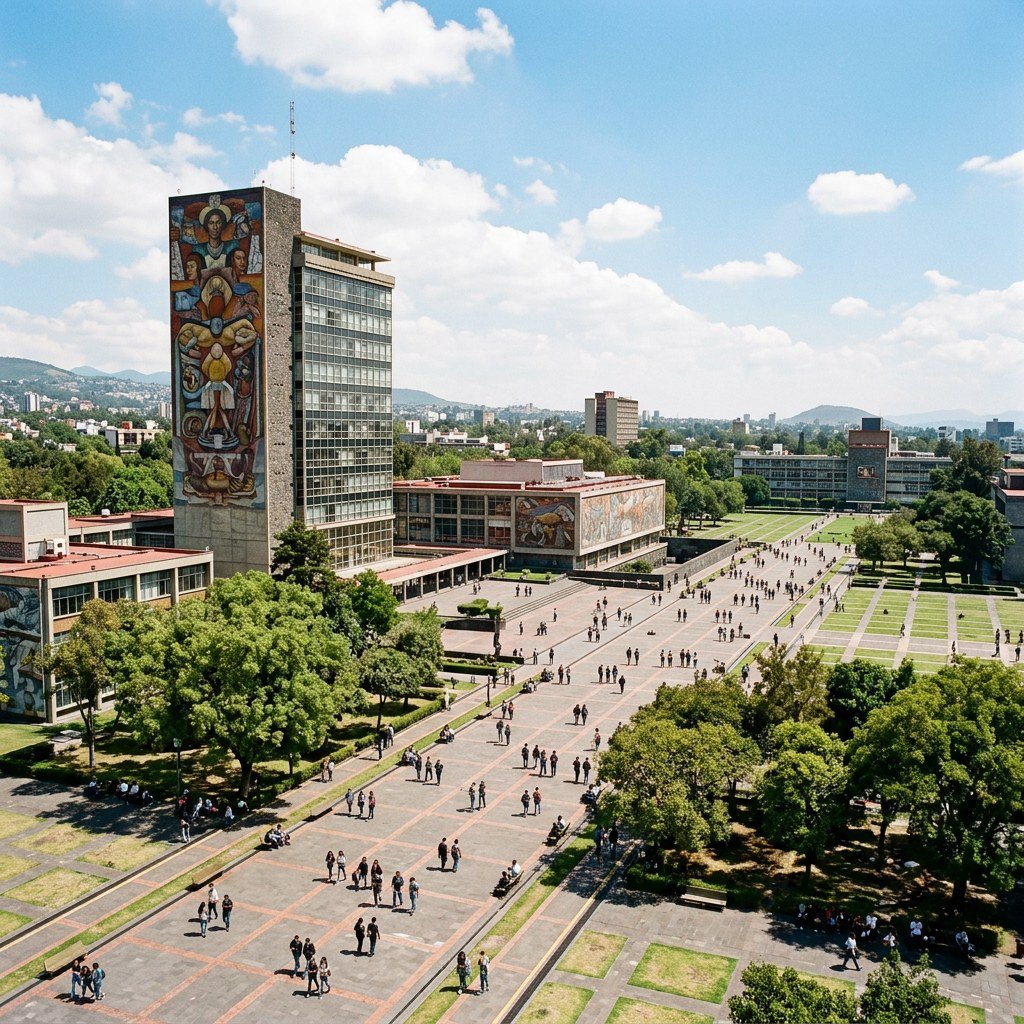
UNAM had already cancelled about 3,000 exams — approximately 2 percent of test takers — for conduct contrary to the call and university legislation, with 1,117 exams blocked during the first two weekends alone. A statistical model by mathematician and actuary Arturo Erdély proposed a focused retake: summoning only those who scored 106 or more correct answers, a group of about 2,818 applicants. That, he argues, would isolate likely cheaters without punishing the vast majority of honest students.
The scale of the numbers tells the story of the waiting families: 191,306 young people registered for the selection contest, and 158,712 actually sat for the exam across 134 undergraduate programs. Of those, 21,962 won places through the Selection Contest, with another 28,151 set to enter through the Pase Reglamentado, the automatic pass for students from UNAM-affiliated high schools. That is a total of 50,113 new students — and UNAM had even added 1,454 more places than the previous cycle.
The Commission's Charge and the Weight of a Nation
Rector Leonardo Lomelí Vanegas convened and formally installed a Technical Commission on July 27. Chaired by Eduardo Bárzana García, an emeritus professor and former secretary general of UNAM, with Joaquín Narro Lobo as technical secretary, the body brings together 16 specialists in educational evaluation, mathematics, statistics, information technology, artificial intelligence, law, and sciences. The commission has broad powers to request additional information, review supervision mechanisms, and summon officials involved in the process.
Rector Lomelí has been firm: "All options are on the table." He emphasized that the priority is to clarify what happened and protect those who prepared legitimately, warning that cheating cannot be normalized because it harms the institution and society. In a communiqué on July 28, the commission said it is working with information from the responsible areas and will formulate a recommendation this week to guarantee transparency, equity, and certainty. The clock is ticking: the school year 2026-2027/1 normally begins in early August.
The pressure comes from all sides. On July 27, rejected applicants protested, demanding an in-person retake. The very next day, students who passed protested in front of the Rectoría against any possibility of repeating the exam. Jorge Márquez, a full-time professor, captured the sentiment: "A process like this cannot be left with an injustice of that size, where cheaters are rewarded and those who did study are punished."
What Happens Now? The Possible Paths Forward
The commission is weighing several outcomes, each with profound implications for the families waiting in anguish. If irregularities are concentrated in identifiable cases, the university can cancel those results and reassign places. It could also apply a second in-person exam to applicants with additional fraud indicators, or repeat the exam in some careers — or even redo the entire contest if its overall validity is compromised. That last scenario is the nightmare for those who already won places.
For students who received help, the consequences are severe: they can lose the exam, the registration, or the assigned place, and if the irregularity is discovered after enrollment, their entry can be cancelled. For enrolled students, the Estatuto General establishes nullity of the exam and suspension of up to one year for giving or receiving fraudulent help. The people or companies that sold assistance could face investigations for fraud, impersonation, or illicit access to systems.
UNAM filed a criminal complaint on July 3 asking authorities to investigate those who allegedly deceived families and sold fraudulent assistance, though it has not publicized the companies' names or the case number. Meanwhile, Territorium Life requested an audience with the commission on July 28 to present the evidence in its possession. The company, contracted by direct award for between 40.7 million and 101.7 million pesos, maintains the platform operated as expected — and could face contractual or legal sanctions if it is proven otherwise.
The Digital Divide and the Cost of Modernization
This scandal has reopened a painful conversation about the digital divide in Mexico. The online format was intended to democratize access, but critics argue it opened new vulnerabilities and may have deepened inequalities: students with unstable internet, limited access to devices, or less technological experience could be at a disadvantage, both in taking the exam and in avoiding the traps of online cheating.
The emotional toll on young people is immense. Imagine studying for months, working part-time to pay for prep courses, and then being told your exam might not count. Imagine being Camilo Sebastián, scoring 116 correct answers and still not getting into medical school, only to learn that others may have bought their way in.
A Community in Waiting: What to Watch For
In colonias and barrios across Mexico, families are gathered around kitchen tables, refreshing UNAM's website and watching the mañanera with new intensity. The 50,113 students in limbo are not numbers; they are sons and daughters, the pride of their households. For many, UNAM is the only path to a better life — the institution that educated our doctors, our lawyers, our engineers, and our artists, and a bastion of public education in a country where private universities are often out of reach.
At her morning press conference on July 29, President Claudia Sheinbaum offered a measured response: "UNAM is an autonomous institution and they have to give a solution to this problem they are facing. Hopefully it will be soon so that the young people who took the exam can have certainty." The federal government has offered support, while respecting the autonomy the Constitution guarantees.
The commission's recommendation, expected this week, will set a precedent for universities across Latin America watching this case closely. The stakes could not be higher: it must punish cheaters without punishing the innocent, restore faith in one of Mexico's most cherished institutions, and honor the university's motto — "Por mi raza hablará el espíritu" ("For my people, the spirit will speak") — for the thousands of young people who did it the right way.
By Rosa Martinez, Staff Writer
This article was produced with AI-assisted research and editorial support. Reporting is based on sources cited in the article.
What's Your Reaction?
 Like
0
Like
0
 Dislike
0
Dislike
0
 Love
0
Love
0
 Funny
0
Funny
0
 Wow
0
Wow
0
 Sad
0
Sad
0
 Angry
0
Angry
0
Latin America/Andes Correspondent at Global1.News. Based in Bogota, covering politics, environment, energy, and social movements across the Andean region. Passionate about environmental journalism and communities protecting their land.










Comments (0)