
Russian Missile Hits Poland as Moscow Barrage Kills Eight
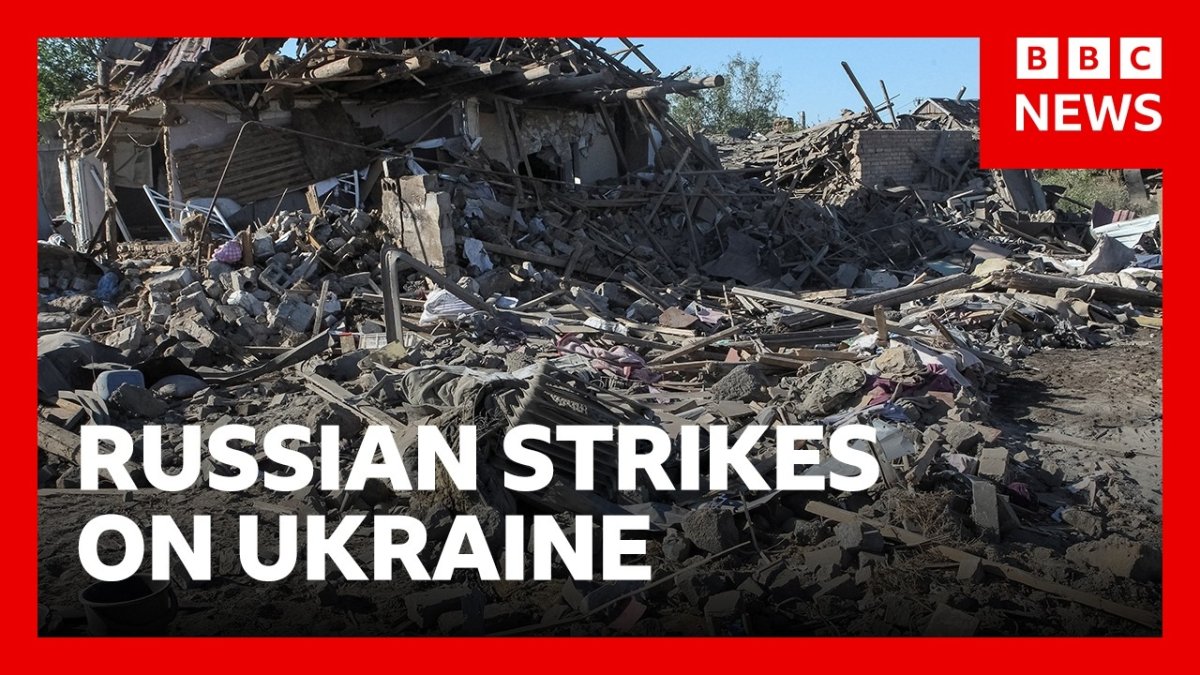
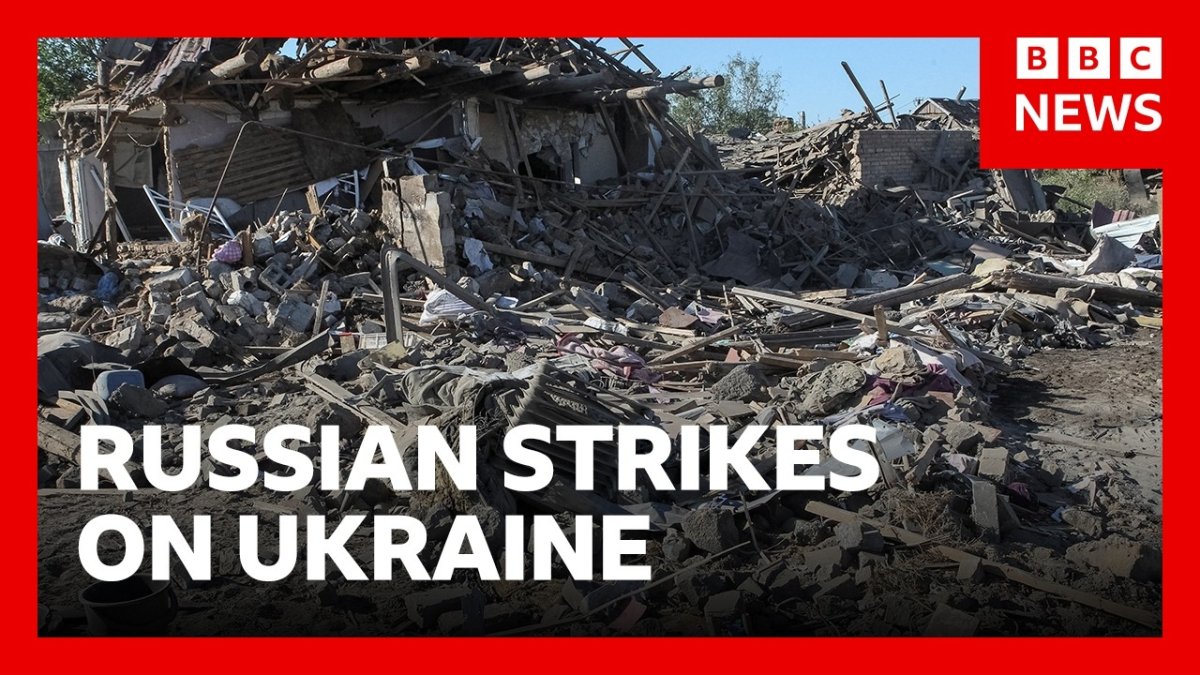
In a recent BBC News report, the full scale of Russia's overnight assault on Ukraine came into focus: more than 70 missiles and over 280 drones launched in a single night, at least eight people dead, and a Russian cruise missile that crashed deep inside NATO territory in eastern Poland. Ukrainian President Volodymyr Zelensky said the worst of the barrage struck near his hometown of Kryvyi Rih, where five members of one family were killed as their home was obliterated.
In a recent BBC News report, the full scale of Russia's overnight assault on Ukraine came into focus: more than 70 missiles and over 280 drones launched in a single night, at least eight people dead, and a Russian cruise missile that crashed deep inside NATO territory in eastern Poland. Ukrainian President Volodymyr Zelensky said the worst of the barrage struck near his hometown of Kryvyi Rih, where five members of one family were killed as their home was obliterated. For Poland, the incident was a blunt reminder that the war next door can reach its soil at any moment — and that the alliance's eastern flank remains exposed.
Russian Missile Crashes in Poland as Moscow's Barrage Kills Eight
Warsaw, Poland – 31 July 2026 — Polish Prime Minister Donald Tusk declared on Thursday that the object which slammed into a field in eastern Poland during Russia's massive overnight strike on Ukraine was "in all probability" a Russian cruise missile, and that it was armed. The missile left a 10-metre-wide crater near the village of Tarnawa Kolonia, about 92km from the Ukrainian border, and forced NATO to scramble fighter jets. Ukrainian President Volodymyr Zelensky said Russia had launched more than 70 missiles and over 280 drones, with the worst attack near his hometown of Kryvyi Rih, where five members of one family — the Voronovs — were killed.
The Missile That Crossed NATO's Border
Poland's military detected the object at about 03:40 local time on Thursday (01:40 GMT) and sent an F-16 fighter jet to intercept it before it disappeared minutes later from radar systems. A military helicopter was then dispatched to search the area. Tusk said initially that "all the indications" were that the missile that violated Polish airspace was a Russian Kh-101 cruise missile, during a specially convened meeting in the eastern city of Lublin. He then travelled to the crash site and said that according to military experts the majority of "recovered fragments point to it being a Russian Kh-101 missile". The Polish prime minister made clear the incident was being taken very seriously even though no casualties had been reported — the missile had not landed in a built-up area, and he added that "we were prepared to shoot it down if it had continued its flight".
Polish Defence Minister Wladyslaw Kosiniak-Kamysz said about 20 objects were seen close to Polish airspace overnight and that pyrotechnical analysis was being carried out. The Polish armed forces said they had mobilised on-duty fighter jets during the strikes after detecting at least a dozen missiles over western Ukraine that could have posed a threat to Polish airspace. The closest one was observed about 5km from the Polish border at 03:29, after which it changed direction and headed eastwards. Air raid sirens blared in Lublin and Krasnystaw, and residents of Tarnawa Kolonia reported hearing a loud bang at about 04:00; police found the crash site about an hour later. It was the latest in a series of incursions: a number of Russian drones and one unarmed Russian missile have landed in Poland since Russia's full-scale war in Ukraine began in February 2022, and two Polish farmers were killed in November 2022 by a missile that landed just over the border — though that was believed to be a Ukrainian air defence missile responding to a Russian attack.
NATO said it was in close contact with Polish authorities, and the Supreme Allied Commander in Europe, Gen Alexus G Grynkewich, said the Western defensive alliance would "continue to take all necessary measures to defend Nato territory". The President of the European Council, António Costa, said Russia's "massive combined strike against Ukraine" had underlined again that "Russia's aggression is a threat to the security as a whole". The language was carefully calibrated — solidarity, vigilance, no escalation — but the underlying question is unavoidable: what happens the next time a Russian weapon crosses into alliance territory, and how much longer can the firewalls of restraint hold?
A Family Wiped Out Near Kryvyi Rih
Ukraine's President Volodymyr Zelensky branded the attack that killed five members of the same family a "horrific crime". In a social media post, he said parents Artem and Olena Voronov and three of their children — Mark, Azariah Ilay, and Emilia — had all been killed after a missile decimated their home in the village of Radushne near Kryvyi Rih in the Dnipropetrovsk region. Their other children — Zakhar, Dominika, Viorika, Federica, and a grandson, Artem — were still missing on Thursday. "Today, the Russians destroyed an ordinary home of an ordinary family," Zelensky wrote on X. "The Russian missile strike was so powerful that almost nothing remained of the house… Under the rubble, fragments of human bodies were found, and only forensic examinations can determine to whom exactly in the family those bodies belong."
Local defence council chief Oleksandr Vilkul said two private homes had been destroyed in the attacks, and another eight people were wounded — including an 84-year-old woman taken to hospital and two children pulled from the rubble alive. Zelensky's message carried a direct plea to Ukraine's allies: "This Russian evil can only be stopped by the entire world. No one in the world can be left alone against such terror. And when we say that Ukraine needs missiles for 'Patriots', when we seek capabilities to defend against Russian ballistics, we are not talking about abstractions."
Across the country, the toll spread from city to city. In Kyiv, one person died and fires broke out in three non-residential buildings overnight, according to Mayor Vitali Klitschko. The mayor of Poltava reported a death after he said a Nova Poshta postal terminal had been attacked. In Lviv, there were explosions and residential buildings were damaged, with Mayor Andriy Sadovyi saying multiple people were injured and some trapped under rubble as residents helped rescuers clear the debris. Ukrainian officials said at least eight people died and dozens more were wounded in the overnight assault.
Seventy Missiles, 280 Drones: Moscow's Message
The scale of the attack was itself part of the message. Zelensky said Russia launched more than 70 missiles and over 280 drones at cities across the country overnight — one of the largest combined barrages of the war. The worst attack was near Kryvyi Rih, the president's hometown in the Dnipropetrovsk region, a target the Kremlin has struck repeatedly. Ukraine had been expecting the offensive: Zelensky warned just hours before the strikes that Moscow was preparing for a "massive attack", and the assault followed his visit to Washington this week to press US President Donald Trump on air defences.
The timing is notable. The barrage came as Ukrainian and American officials were discussing a licence for Ukraine to produce Patriot interceptor missiles domestically — precisely the capability Kyiv says would save lives against Russian ballistic weapons. Russian officials did not publicly claim responsibility for the scale of the assault in the immediate aftermath, but Moscow has consistently framed such strikes as legitimate military action in response to Ukrainian attacks on Russian territory. Analysts suggest the Kremlin is signalling that no diplomatic channel, and no volume of Western sympathy, will deter its campaign against Ukrainian cities.
Inside Russia, the night was not without its own alarms. Governor Oleg Melnichenko of the Penza region reported an overnight attack on a Wildberries warehouse in the city of Penza, with one person injured. Wildberries, often described as "Russia's Amazon", has been a target of recent Ukrainian long-range drone strikes — a reminder that Ukraine's reach now extends deep into Russian territory, hitting commercial infrastructure and adding to the economic strain Moscow is already under from sanctions and fuel shortages.
NATO's Response and the Shadow of Article 5
For NATO, the missile that crossed into Poland is the most serious airspace violation of the war since a stray projectile killed two Polish farmers in November 2022. The alliance's public response has been measured: close contact with Polish authorities, a pledge to "continue to take all necessary measures to defend Nato territory", and a visible show of vigilance through scrambled fighters. Behind the scenes, however, the incident is likely to sharpen the debate in Warsaw and Brussels about air-defence coverage for the eastern flank — a debate that has been running since the first Russian drones appeared over Polish skies.
Poland's own posture has hardened dramatically since 2022. The country has spent heavily on American and South Korean weaponry, hosts NATO's enhanced forward presence, and has repeatedly called for a more robust alliance shield. Thursday's crater, a 10-metre scar in a field 92km from the Ukrainian border, is a physical argument for that spending. The fact that the missile was detected, tracked, and intercepted in the sense that Polish jets were scrambled, but was not shot down, will invite scrutiny of the rules of engagement — Tusk said Poland "was prepared to shoot it down if it had continued its flight", a statement that leaves room for questions about how close to built-up areas the alliance is willing to let such weapons travel.
The diplomatic choreography of the past week has been dense. Tusk met Zelensky in Lublin the previous evening, as the Ukrainian president was returning from talks with Trump in Washington. European leaders, including Tusk, have been shuttling between Kyiv, Brussels, and Washington. Costa's statement — that Russia's aggression is "a threat to the security as a whole" — reflects a growing consensus in European capitals that the war is no longer Ukraine's alone to absorb. Whether that consensus translates into interceptor production lines and standing air-defence deployments is the test the coming weeks will answer.
Patriots and the Air-Defence Gap
At the heart of Zelensky's message on Thursday was a plea that has become a refrain: Ukraine needs air-defence systems it cannot build fast enough on its own. The Patriot is one of the few systems able to intercept ballistic missiles, which Russia has increasingly used to bombard Ukrainian cities — and it is the system Kyiv most wants to produce itself. Zelensky's visit to Washington this week was aimed at firming up a US licence for domestic Patriot interceptor production, an arrangement Ukrainian officials argue would shorten supply lines and reduce dependence on allied stockpiles.
"The protection of people's lives depends directly on their willingness, or lack of willingness, to provide air defence missiles," Zelensky wrote on X on the eve of the strikes. The overnight barrage illustrated the argument with brutal specificity: a family annihilated in Radushne, an 84-year-old woman wounded in the same village, two children pulled alive from the rubble of another home. For every interceptor in Ukraine's arsenal, there are multiple incoming missiles and drones; the arithmetic of defence remains stacked against the defender.
The Russian domestic angle complicates the picture further. Ukrainian strikes on Russian warehouses, fuel depots, and refining capacity have forced Moscow to disperse logistics and absorb economic damage — nearly 43% of Russia's oil refining capacity has been reported disabled by Ukrainian strikes in recent months. Analysts suggest this two-front dynamic — Russian missiles on Ukrainian cities, Ukrainian drones on Russian infrastructure — is creating a war of attrition in which neither side can claim a decisive advantage, and in which civilians on both sides pay the heaviest price.
Analysis: A Night That Changed the Calculus
The combination of events on Thursday — a confirmed missile on NATO soil, the annihilation of a family near Kryvyi Rih, and Moscow's refusal to acknowledge responsibility — points to a deliberate strategy of calibrated escalation, analysts suggest. Each incursion erodes the informal firewalls that have kept the war from spilling across NATO's border. The practical question for Warsaw and Brussels is no longer whether Russian weapons can reach alliance territory; they have. The question is how the alliance responds to the next violation, and whether the response will be different from the statements of concern that followed the last one.
For Poland, the political stakes are existential. Tusk's government has positioned Warsaw as Europe's frontline state, spending more than 4% of GDP on defence and lobbying for a permanent allied air-defence umbrella over eastern Poland. Thursday's crater strengthens his hand in that argument — but it also raises the pressure on him to show that Polish airspace is genuinely protected, not merely monitored. For Ukraine, the night was a reminder that air-defence systems, not statements of solidarity, are the difference between life and death. For ordinary Russians, the Penza warehouse strike is a reminder that the war reaches home too — and that the Kremlin's promises of a quick, clean campaign have long since dissolved into a grinding conflict with no visible end.
What comes next will be shaped in Washington as much as in Moscow or Kyiv. The Patriot-production talks, the pace of allied munitions deliveries, and the Kremlin's calculation of Western resolve will all feed into the trajectory of the war. If the past week is any guide — a White House visit, a Lublin meeting, and a night of 280 drones — the only certainty is that the war's centre of gravity continues to shift, and that the next escalation may arrive before the last one has been fully assessed. The world is watching, as it has been since February 2022, but watching has never stopped a missile.
By Irina Volkov, Staff Writer
This article was produced with AI-assisted research and editorial support. Reporting is based on sources cited in the article.
What's Your Reaction?
 Like
0
Like
0
 Dislike
0
Dislike
0
 Love
0
Love
0
 Funny
0
Funny
0
 Wow
0
Wow
0
 Sad
0
Sad
0
 Angry
0
Angry
0
Russia/Eastern Europe Correspondent at Global1.News. Covering Russian politics, energy, security, and the shifting dynamics of the post-Soviet space. Provides clear-eyed analysis on one of the world's most opaque regions.













Comments (0)