
UN Security Council Backs Libyan Deal Aimed at Elections Within Two Years
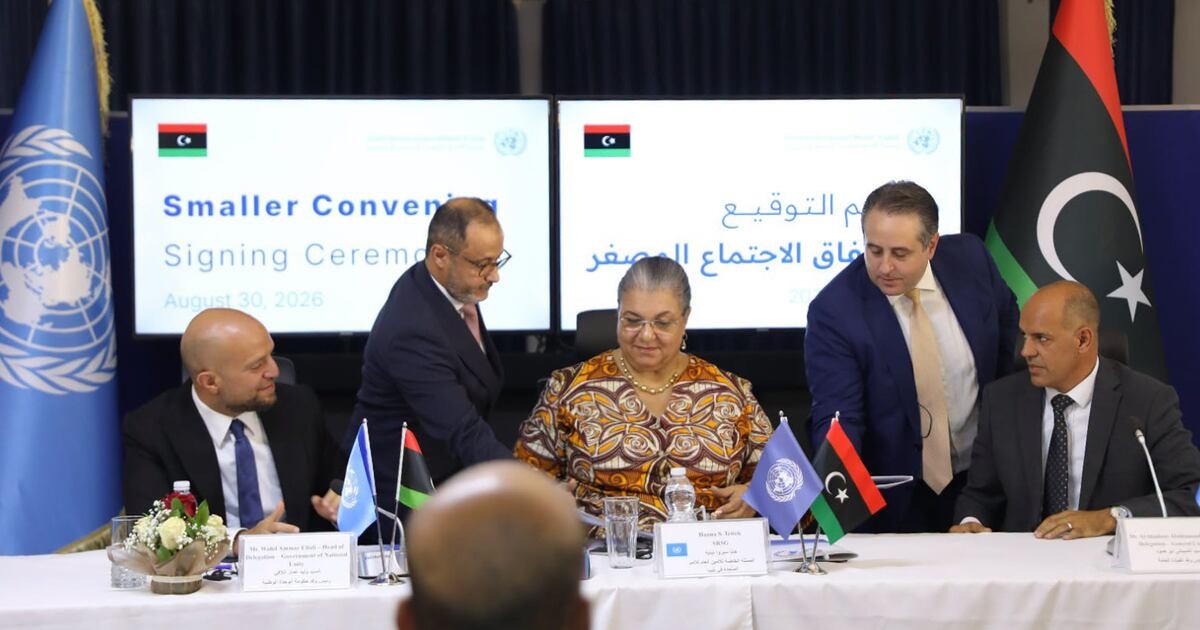
The U.N. Security Council has welcomed the Aug. 30 agreement by Libya's rival factions, endorsing a UN-brokered road map toward national elections within 24 months. The 4+4 committee deal, signed at UNSMIL in Tripoli, is the most concrete attempt in years to break the country's institutional deadlock.
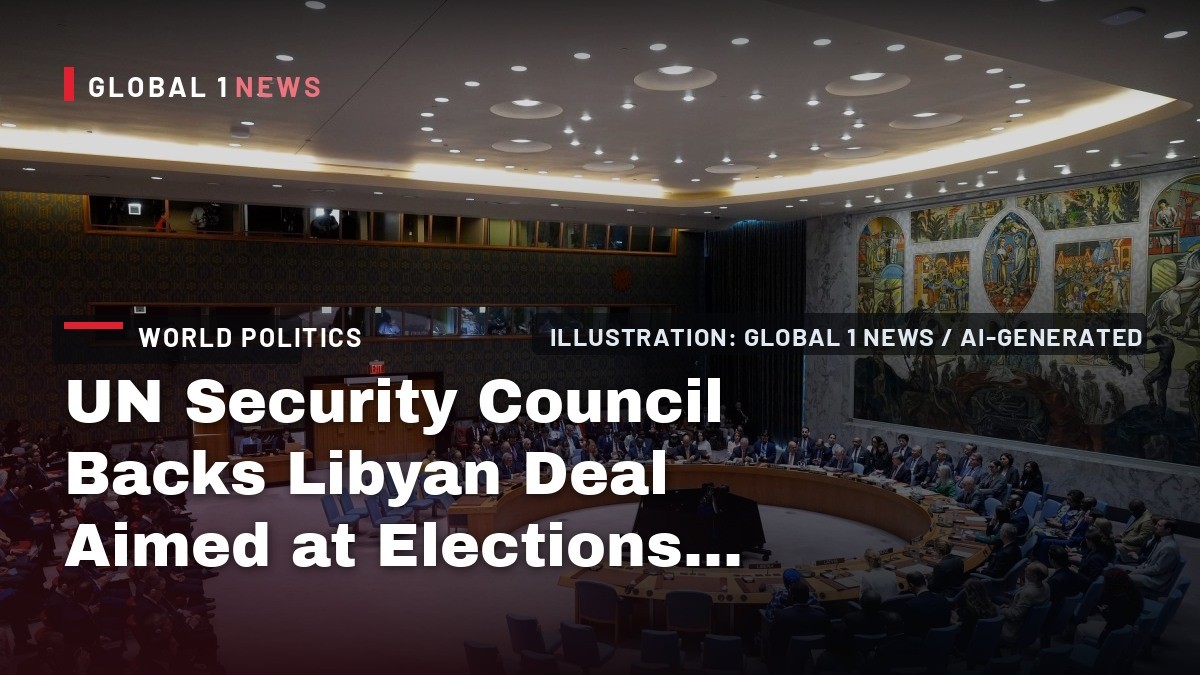
The United Nations Security Council on Tuesday formally welcomed the agreement signed by Libya’s rival political factions on Aug. 30, endorsing a U.N.-brokered road map that seeks to deliver long-delayed national elections within a 24-month framework. The deal, signed at UNSMIL headquarters in Tripoli, represents the most concrete attempt in years to break the institutional deadlock that has paralyzed the oil-rich North African state since the collapse of the December 2021 election track.
Jérôme Bonnafont, France’s permanent representative to the United Nations, who holds the Security Council presidency this month, described the agreement as “an important step towards delivering free, fair, transparent” national elections, as well as “advancing the unification of Libya’s institutions to fulfill the aspirations of the Libyan people.” Bonnafont stressed the importance of “this agreement being supported by all Libyan stakeholders, and encouraged them to work towards its implementation.” The Council also voiced “full support” for Hanna Tetteh, the Special Representative of the Secretary-General for Libya, who has led the mediation effort.
A Product of the 4+4 Committee
The Aug. 30 accord is the culmination of months of negotiations under the so-called 4+4 committee structure, which brought together two representatives each from the eastern-based House of Representatives, the High Council of State, the Tripoli-based Government of National Unity (GNU) led by Prime Minister Abdul Hamid Dbeibah, and the eastern military command of Gen. Khalifa Haftar. Talks concluded in Tunis on Aug. 20 before the formal signing ceremony in Tripoli, according to cross-verified reporting from UNSMIL and regional outlets.
The road map itself was first unveiled by the United Nations in August 2025, and its core provisions have now been accepted in principle by all four power centers. The agreement mandates simultaneous presidential and parliamentary elections within a period not exceeding 24 months, to be held under a single executive authority and unified national institutions. It calls for restructuring Libya’s election commission and settling long-standing disputes over electoral laws that have repeatedly derailed previous attempts to go to the polls.
Walid Ellafi, the GNU’s minister of state for political affairs, confirmed that elections would be held “within a period not exceeding 24 months.” Shibani AbuHamoud, head of the army delegation to the talks, said participants would work with UNSMIL to establish an implementation mechanism within one month. The House of Representatives and the High Council of State now have a one-month window to approve the agreement; if they fail to do so, the parties have indicated they intend to pursue adoption as a constitutional document through broader national mechanisms and to seek UN Security Council support for that path.
Provisions and Eligibility Reforms
The agreement contains several provisions designed to address the contentious issues that sank the December 2021 election track. Military personnel will be permitted to vote and to run as candidates, a significant concession given Haftar’s control over the Libyan National Army and the eastern security apparatus. Libyans holding dual citizenship may run for president provided they renounce their second nationality before taking office, a clause aimed at resolving disputes over candidate eligibility that plagued the 2021 process.
These provisions reflect a pragmatic attempt to widen the political arena while addressing the concerns of the eastern camp, which has long argued that the GNU and its allies in Tripoli sought to monopolize power. The inclusion of military voting rights is particularly notable, as it formalizes a role for the armed forces in the political transition—a sensitive issue in a country where militias and armed groups remain the primary arbiters of power on the ground.
Historical Context: A Decade of False Starts
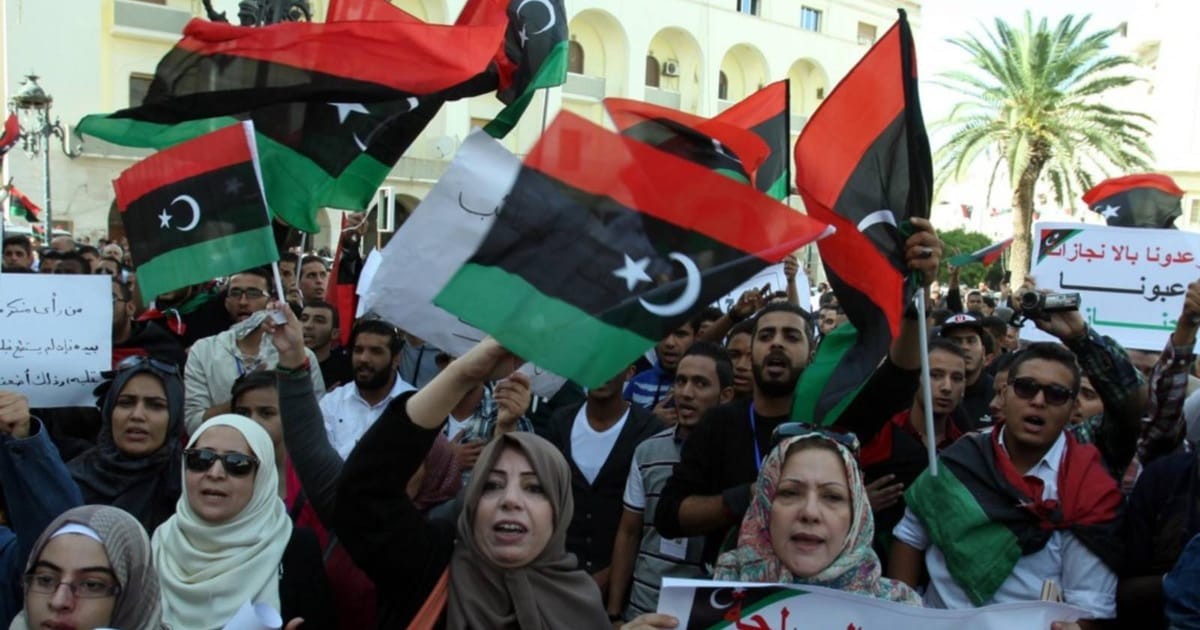
Libya has struggled to recover from the chaos that followed the 2011 NATO-backed uprising that toppled longtime ruler Moammar Gadhafi. The 2015 UN-brokered Skhirat Agreement created the Government of National Accord, but it never achieved genuine authority across the country. A 2020 ceasefire between the Tripoli-based forces and Haftar’s eastern command held, but political reunification stalled as foreign backers—including Türkiye, Egypt, the United Arab Emirates, and Russia—continued to exert influence through proxies and direct military support.
The current institutional architecture dates to 2021, when a UN-backed track appointed Dbeibah as interim prime minister on the condition that elections would be held in December of that year. Those elections were postponed indefinitely over disputes on the legal framework and candidate eligibility, leaving Dbeibah in power without a clear mandate. A joint committee of the two legislative chambers agreed on draft election laws in 2023, but disagreement over the formation of an interim government and implementation mechanisms prevented a vote.
The Aug. 30 agreement is the first time since 2021 that all four major power centers have signed onto a single political document. Yet the road to implementation remains fraught. Claudia Gazzini, senior Libya analyst at the International Crisis Group and a former adviser to a UN special representative for Libya, told The National that “the potential for non-implementation is huge,” noting that the deal lacks a clear path to overcome the divisions that derailed past attempts.
Geopolitical Calculus and Regional Dynamics
The Security Council’s endorsement carries weight beyond the diplomatic formalities. Libya sits at the intersection of several regional flashpoints: its energy exports are critical to European and Mediterranean markets, its coastline is a primary departure point for migration routes to Europe, and its territory has become a staging ground for competing foreign powers. Egypt has historically backed the eastern camp and Haftar, while Türkiye has provided military support to the GNU and maintains a significant troop presence in western Libya. The UAE and Russia have also maintained influence in the east through various channels.
For the Security Council, the agreement offers a rare opportunity to demonstrate that the UN’s mediation framework can still produce results in a region marked by post-2011 state fragmentation. The Council’s welcome of the deal—and its explicit endorsement of Tetteh’s leadership—signals that the major powers are prepared to back the process, at least rhetorically. Whether that support translates into pressure on their respective Libyan clients to implement the agreement remains an open question.
The strategic calculus for each camp is complex. Dbeibah’s GNU seeks to legitimize its rule through elections while retaining control over state institutions and oil revenues. Haftar’s eastern command wants recognition of its military and political authority, and has long sought a role in any future government that reflects its territorial control. The House of Representatives and the High Council of State, meanwhile, are engaged in their own power struggle over the legislative framework and the distribution of seats in any future parliament.
Implementation Hurdles and the Path Forward
The one-month approval clauses embedded in the agreement are both a strength and a vulnerability. If the House of Representatives and the High Council of State ratify the deal within the stipulated timeframe, the process gains significant momentum. If they do not, the parties’ stated intention to pursue adoption as a constitutional document through broader national mechanisms would represent a significant escalation, potentially bypassing the legislative bodies that have historically served as gatekeepers for political transitions.
Analyst Khaled Ben Sassi has argued that presidential elections should not precede agreement on a constitution, warning of uncertainty over presidential powers, the length of the mandate, and the form of government. His concerns echo broader anxieties that rushing to elections without resolving fundamental constitutional questions could reproduce the conditions that led to the 2014 civil war, when competing governments emerged from disputed parliamentary elections.
The 24-month timeline is ambitious by Libyan standards. Even under optimal conditions, restructuring the election commission, settling voter registration disputes, and organizing simultaneous presidential and parliamentary polls in a country with weak central institutions and armed groups controlling significant territory would be a formidable challenge. The agreement’s provision for a single executive authority during the transition period is intended to avoid the dual-government problem that has plagued Libya since 2014, but it remains unclear how that authority would be constituted and who would lead it.
What Failure Would Mean
The stakes extend well beyond Libya’s borders. A collapse of this process would likely entrench the current division, with the GNU controlling the west and Haftar’s forces consolidating control in the east. That outcome would have direct consequences for European energy security, given Libya’s role as a supplier of crude oil and natural gas to Mediterranean markets. It would also perpetuate the migration crisis, as instability and economic collapse continue to drive Libyans and sub-Saharan Africans toward Europe’s southern shores.
For the broader Arab world, Libya remains a case study in post-2011 state fragmentation—a warning of what happens when transitional processes fail to deliver inclusive governance. The Security Council’s endorsement of the Aug. 30 agreement is a recognition that the window for a negotiated settlement is narrowing. Whether Libya’s leaders can seize it will depend on their willingness to make concessions that have eluded them for over a decade.
The coming weeks will be critical. The one-month approval period for the House of Representatives and the High Council of State will test whether the agreement has genuine buy-in or is merely another document to be shelved alongside the Skhirat Agreement and the 2023 draft laws. The Security Council has offered its full support; the Libyan parties must now demonstrate that they are prepared to accept the compromises necessary to make elections a reality.
By Malik Hassan, Staff Writer
This article was produced with AI-assisted research and editorial support. Sources: Daily Sabah, UNSMIL/United Nations, The National, Al Jazeera, RT.
What's Your Reaction?
 Like
0
Like
0
 Dislike
0
Dislike
0
 Love
0
Love
0
 Funny
0
Funny
0
 Wow
0
Wow
0
 Sad
0
Sad
0
 Angry
0
Angry
0

Middle East Correspondent at Global1.News. Based in Beirut, covering politics, conflict, energy, and society across the Middle East. Brings context and depth to a region often reduced to headlines.









Comments (0)