
War Comes to Dubai: Can the Gulf's Luxury Oasis Survive the Conflict With Iran?
In a recent BBC News report, The Global Story examines whether Dubai's carefully cultivated image of safety and glamour can survive a regional war that has brought missiles, drones and falling debris to the Gulf's showcase city. Presenter Asma Khalid speaks with Sameer Hashmi, an independent journalist based in Dubai, about how "Brand Dubai" is weathering the storm.
In a recent BBC News report, The Global Story examines whether Dubai's carefully cultivated image of safety and glamour can survive a regional war that has brought missiles, drones and falling debris to the Gulf's showcase city. Presenter Asma Khalid speaks with Sameer Hashmi, an independent journalist based in Dubai, about how "Brand Dubai" is weathering the storm. The episode notes a striking statistic: throughout the conflict, Iran has attacked the UAE more times than any other country, including Israel. For a city that has spent decades marketing itself as the region's secure, neutral playground, that distinction cuts deep.
War Comes to Dubai: Can the Gulf's Luxury Oasis Survive the Conflict With Iran?
Dubai, United Arab Emirates – 9 September 2026 — Dubai's skyline remains intact, but the emirate is on edge after two weeks of missile and drone attacks that have tested its vaunted air defences and its reputation as a sanctuary. As the summer holiday season draws to a close, foreigners travelling to and from the city face delays, cancellations and severe travel warnings. The question hanging over the glittering towers of the Palm Jumeirah is no longer whether the war can reach Dubai, but what it will do to the city's carefully constructed brand.
War Comes to the Gulf's Showcase City
UAE authorities say that since the start of Iran's attacks, their air defences have dealt with 285 ballistic missiles, 15 cruise missiles and 1,567 drones, with more than 90% intercepted and destroyed. The official figures, released in daily briefings, paint a picture of a country under sustained assault. Six people have been killed and 141 injured across the UAE, according to authorities, a toll that would be far higher without the layered American-supplied Patriot and Terminal High Altitude Area Defense systems that protect the emirate's key sites.
The damage, while limited, has struck at the very landmarks that define Dubai's global image. Debris from intercepted attacks has fallen across residential areas and near the airport. The five-star Fairmont The Palm hotel on Palm Jumeirah was struck directly, sending guests scrambling. A minor fire broke out on the outer facade of the iconic Burj Al Arab hotel after debris from an intercepted drone landed on its helipad-adjacent structure. A berth fire was reported at Jebel Ali port, one of the world's busiest container hubs, and Dubai International Airport suffered damage in what authorities called an incident.
For residents who have long viewed Dubai as a bubble insulated from the region's conflicts, the reality of living under fire has been disorienting. The BBC's Global Story report noted that Iran has attacked the UAE more times than any other country in this conflict, including Israel itself. That statistic has forced a reckoning in a city where the sound of explosions was once unthinkable. The authorities' message has been consistent: the defences work, the casualties are minimal, and life must go on. But the psychological impact of seeing military hardware streak across the sky above the Burj Khalifa is not so easily managed.
Brand Dubai Under Fire
Dubai's brand was built on a simple promise: a place where the world's wealthy and ambitious can live in safety, luxury and tax-free prosperity. The city's skyline, anchored by the Burj Khalifa and the sail-shaped Burj Al Arab, is a monument to that vision. Dubai International Airport, the world's busiest for international passengers, handled nearly 90 million travellers last year, funnelling tourists, businesspeople and investors through its cavernous terminals. The low crime rate, the gleaming malls, the year-round sunshine — all of it was designed to project an image of effortless, conflict-free modernity.
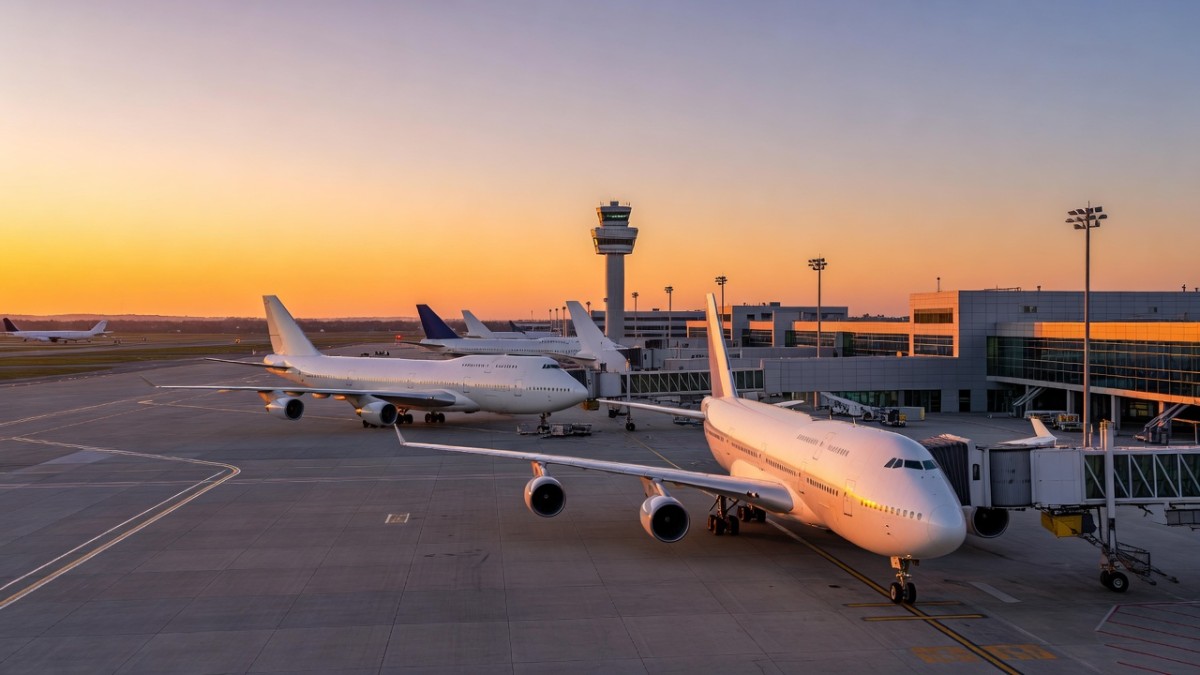
That image has taken a battering. Thousands of flights have been cancelled since the conflict began; BBC reporting this week put the number at nearly 2,000. Emirates, the city's flagship carrier, has been operating a reduced schedule while working to restore its full network. Several international carriers, including British Airways and Air France, suspended Dubai services entirely, with some restarts scheduled for late September or October. The disruption has rippled through the travel industry, leaving holidaymakers stranded and business travellers scrambling for alternative routes through Doha or Istanbul.
The economic toll is already visible in the hospitality sector. The country is seeing scores of flight and hotel cancellations, and rooms in some luxury hotels are going for a fraction of their usual cost. Dr Naim Maadad, founder and chief executive of Gates Hospitality and a Dubai resident for more than two decades, told the BBC that cancellations were being seen "all the way until May." He warned: "When the first quarter starts badly, the rest of the year becomes a race to catch up." Yasser Elsheshtawy, professor of architecture at Columbia University who lived in Dubai for 20 years, said the perception of Dubai as "an ideal model as a contemporary and progressive city" was being "punctured and shattered." Karen Young, a senior research scholar at Columbia's Center on Global Energy Policy, put it more bluntly: the strikes had "pierced the facade of safety."
Residents Dig In While Some Head for the Exit
The BBC spoke to more than 20 residents in the days after the attacks began, and nearly all said they had no plans to leave. Stephanie Baker, a British real estate consultant who was celebrating her birthday at a bar across the street from the Fairmont when debris struck the hotel, said the experience had paradoxically increased her confidence. "If anything, the way the situation has been handled makes me feel more secure," she said, pointing to the rapid response of emergency services and the visible presence of air defences. Eti Bhasin, an Indian expat who has lived all her life in Dubai, echoed that sentiment: "Dubai has grown phenomenally into a massive city. But we have faith in the authorities. This is my home. We stand by it."
Not everyone is so sanguine. Adam Callow, who moved from the UK in 2024 with his wife and two young sons, said his family slept in one room during the first days of the war and his children were afraid to sleep beside windows. "The concern is whether this becomes the new normal," he told the BBC. For the city's vast army of blue-collar workers, the calculus is different. Hamza, a delivery driver from Pakistan, said orders had risen as people stayed indoors, but the danger was ever-present. "There is some fear when we hear explosions or see debris falling. But I cannot stop working. My family back home depends on me. I don't have the luxury of staying home out of fear," he said.
The expatriate mosaic that defines Dubai — about 240,000 Britons, with Emirati citizens making up only about 10% of the population and South Asians accounting for more than half — has largely held firm. But there are cracks. One airline worker who asked not to be named flew back to Melbourne, saying she felt anxious hearing explosions every day, though she planned to return once the situation stabilised. The authorities have sought to project control, issuing daily updates and mobile alerts that residents and businesses have praised. President Sheikh Mohamed bin Zayed has reassured residents the country will protect them, warning that the UAE is "no easy prey" for those threatening its security. At the same time, the government has warned that sharing unverified footage of the conflict online could bring heavy fines or imprisonment; this week a 60-year-old British man was charged in Dubai after allegedly filming Iranian missiles over the city.
Moscow, Abu Dhabi and the Gulf's Balancing Act
For Russian readers, the Dubai story carries a particular resonance. Since Russia's full-scale invasion of Ukraine and the subsequent Western sanctions, Dubai has become a leading destination for Russian capital, businesses and property buyers. The city's luxury real estate market has been buoyed by Russians seeking to park money outside the reach of European regulators, and Russian restaurants, schools and community groups have flourished along Jumeirah Beach Road. The war with Iran now threatens that haven, raising questions about whether the Russian money that helped fuel Dubai's post-pandemic boom will stay or seek safer shores.
The UAE and Russia coordinate closely inside OPEC+ on oil policy, a relationship that has survived the Ukraine war and the West's attempts to isolate Moscow. But the balancing act has grown more complicated. UAE banks, under US pressure over secondary sanctions, began limiting payments with Russia and closing some accounts of Russian nationals as early as February 2024, according to the Moscow Times, citing Vedomosti. The tension between maintaining ties with Moscow and satisfying Washington's demands has been a constant feature of Emirati foreign policy, and the current conflict has only sharpened the dilemma.
Last month, in a significant break with a long trading relationship, the UAE announced it had halted all trade and financial transactions with Iran until further notice. The move was striking given that 2024 UAE-Iran trade stood at around $28 billion, with the UAE serving as Iran's largest source of imports. The UAE hosts major US military facilities, which analysts say is a key reason Iran has targeted it. Yet Abu Dhabi has simultaneously tried to maintain ties with Moscow and Beijing, a multipolar approach that has served it well in peacetime but is now being tested by the exigencies of war. The question is whether the UAE can continue to straddle these competing alliances when Iranian missiles are falling on its territory.
Analysis: Can the Oasis Regain Its Gloss?
Christopher Davidson, a Middle East political economy expert who has written extensively about the UAE, believes the attacks may dent Dubai's appeal in the short term. "But the fundamentals — infrastructure, regulation, weather and geography — remain unchanged," he said. "In the long term its appeal will remain intact." Davidson goes further, suggesting that "a weakened Iran could enhance the UAE's appeal even further," as regional capital and businesses seek a stable base in a turbulent neighbourhood. That analysis, while speculative, reflects a view held by many in Dubai's business community: that the city's advantages are structural, not ephemeral.
The more immediate concern is financial. On Wednesday, the Iranian military threatened to target economic and banking interests linked to the US and Israel in the region after an Iranian bank was attacked. Many financial firms in Dubai responded by asking staff to evacuate their offices. An investment banker, speaking on condition of anonymity, captured the anxiety: "If any of the banks or financial institutions get hit then that could impact the sentiment for businesses." Dubai's status as a regional financial hub, home to the Dubai International Financial Centre and hundreds of global banks, depends on a perception of safety that a single well-placed strike could shatter.
Residents point out that Dubai has weathered the 2008 global financial crash and the 2020 pandemic and emerged stronger each time. Maadad, the Gates Hospitality chief, is confident the pattern will hold: "Dubai always bounces back quickly. Resilience is part of the UAE's DNA." That resilience is real, but it has never been tested by a sustained military threat. The 2008 crisis was economic, the pandemic was biological; both were global shocks that hit every city equally. This war is different — it is targeted, regional and potentially prolonged, and it strikes at the very thing Dubai sells: safety.
The coming weeks will be decisive for Brand Dubai. If the attacks subside and the air defences continue to hold, the city may well emerge with its reputation largely intact, its residents' faith vindicated and its economy recovering. If the conflict escalates, with strikes on financial institutions or further damage to iconic landmarks, the exodus of talent and capital could accelerate. The authorities' handling of the crisis — the daily alerts, the visible military presence, the reassurance from the highest levels — has so far been effective. But in a war that has already defied expectations, no one in Dubai is making long-term plans.
By Irina Volkov, Staff Writer
This article was produced with AI-assisted research and editorial support. Reporting is based on sources cited in the article.
What's Your Reaction?
 Like
0
Like
0
 Dislike
0
Dislike
0
 Love
0
Love
0
 Funny
0
Funny
0
 Wow
0
Wow
0
 Sad
0
Sad
0
 Angry
0
Angry
0

Russia/Eastern Europe Correspondent at Global1.News. Covering Russian politics, energy, security, and the shifting dynamics of the post-Soviet space. Provides clear-eyed analysis on one of the world's most opaque regions.










Comments (0)