
Ukrainian Drones Strike Russia's Saratov Oil Refinery, Igniting Major Blaze
In the pre-dawn darkness of September 8, 2026, the strategic calm that had briefly settled over the skies of Russia’s Volga region was shattered by the roar of Ukrainian long-range drones.
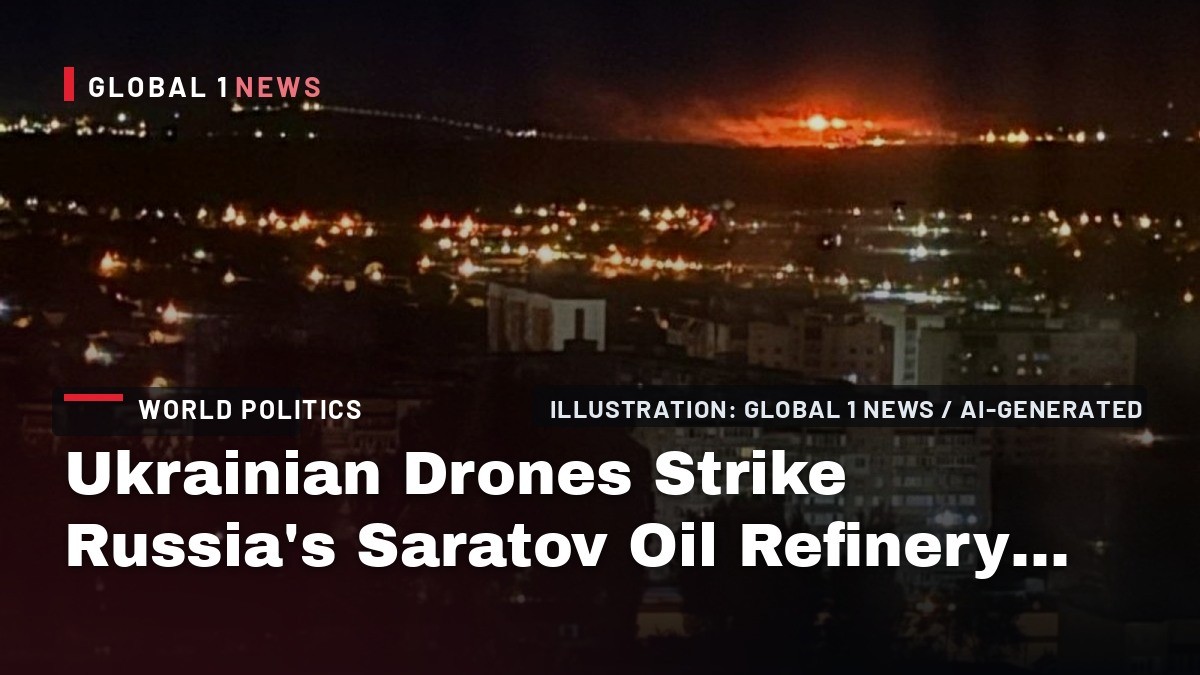
In the pre-dawn darkness of September 8, 2026, the strategic calm that had briefly settled over the skies of Russia’s Volga region was shattered by the roar of Ukrainian long-range drones. Overnight, Ukrainian unmanned aerial vehicles struck the Rosneft-owned Saratov Oil Refinery, igniting a massive blaze that lit up the horizon, while separate explosions were reported near the Engels-2 military airfield, a key base for Russia’s strategic bomber fleet. The attack marks the latest and most significant escalation in Kyiv’s relentless campaign to cripple Russia’s fossil fuel economy, a strategy that is now visibly bleeding into Moscow’s fiscal stability and its ability to sustain a prolonged war.
Videos shared by local residents on social media and subsequently analyzed by the independent Russian outlet Astra confirmed the geolocation of the strike: the Saratov Oil Refinery had been hit and was burning. The facility, located approximately 460 kilometers (285 miles) east of the Ukrainian border near Luhansk Oblast, is one of the largest and oldest oil-processing plants in Russia. The overnight raid came as a stark reminder that despite diplomatic overtures and a brief pause in attacks on the Ukrainian capital, the war’s kinetic reality remains brutally intact, with Russia simultaneously launching a devastating barrage on Kyiv that killed at least two people and wounded ten others.
Governor Confirms Strike Amid Civilian Casualty Reports
Saratov Oblast Governor Roman Busargin moved quickly to address the public in the wake of the explosions, though his statements were characteristically opaque regarding the true nature of the target. In an official statement released via his Telegram channel, Busargin claimed that "civilian infrastructure" had been damaged in the drone attack and noted that there were preliminary reports of casualties. He did not specify the target of the strike, a common practice among Russian regional governors who are often instructed to downplay military damage to avoid public panic and to mask the effectiveness of Ukrainian operations.
Despite the governor’s vague framing, the evidence on the ground painted a different picture. Monitoring channels and local residents reported the activation of air defense systems over both Saratov and the nearby city of Engels. The Engels-2 military airfield, which houses Russia’s long-range aviation including Tu-95 and Tu-160 strategic bombers, was also reportedly targeted in the same wave of drones. While there was no independent confirmation of the extent of damage at the Engels-2 base at the time of reporting, the simultaneous targeting of the refinery and the airfield suggests a coordinated Ukrainian operation designed to degrade both Russia’s fuel logistics and its offensive strike capabilities.
The Ukrainian General Staff, in a statement following the attack, confirmed the operational focus on the region, reiterating that the Saratov Oil Refinery is a legitimate military target due to its role in supplying the Russian armed forces. The General Staff’s assertion underscores a fundamental shift in Ukrainian doctrine: the war is no longer fought solely on the front lines in Donbas, but deep inside Russian territory, targeting the economic arteries that fund the Kremlin’s war machine.
The Strategic Significance of the Saratov Refinery
The Saratov Oil Refinery is not a peripheral target; it is a cornerstone of Russia’s domestic fuel supply and military logistics. Owned by the state-controlled energy giant Rosneft since March 2013, the refinery was founded in 1934, making it one of the oldest oil-processing facilities in Russia. Its longevity is matched by its output; it is one of the largest refineries in the Volga region, with a refining capacity that sources place between 4.8 million and 7 million tons of oil per year, depending on the metric used. The Kyiv Independent cites the lower figure of approximately 4.8 million tons, while The New Voice of Ukraine reports a capacity closer to 7 million tons. Regardless of the precise number, the facility produces over 20 distinct types of petroleum products, including high-octane gasoline, diesel fuel, fuel oil, and bitumen, making it a critical node in the regional and national fuel distribution network.
According to Ukraine’s General Staff, the refinery’s output is not merely for civilian consumption. A significant portion of its refined products is directed toward the Russian military and its defense industry. This direct supply line to the armed forces elevates the refinery from an economic asset to a military installation in the eyes of Kyiv, justifying the repeated and increasingly damaging strikes against it. By severing this supply chain, Ukraine aims to starve Russian tank divisions and aircraft of the fuel they need to operate, a strategy that has proven effective in slowing Russian advances and complicating its logistical planning.
A Pattern of Escalating Attacks on a Familiar Target
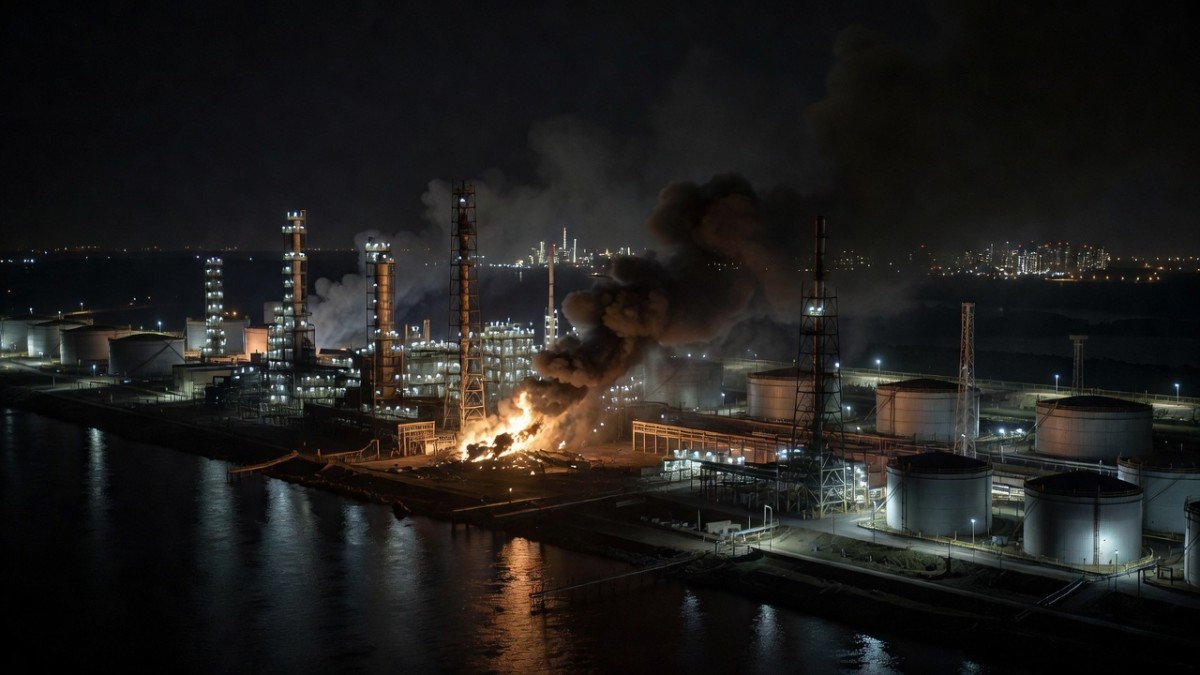
Last night’s strike on the Saratov refinery is not an isolated incident but rather the culmination of a sustained Ukrainian campaign against this specific facility. The plant has been targeted multiple times over the past four months, with each successive strike appearing to cause more significant damage. The first major attack occurred on May 31, serving as a warning shot. However, it was the strike on July 8 that proved most debilitating. According to a Reuters report from that date, the July 8 drone attack forced the refinery to halt all oil processing after its only crude distillation unit, designated CDU-6, was severely damaged. This unit, which has a processing capacity of 20,000 metric tons per day, is the sole facility of its kind at the plant, meaning its destruction effectively shut down the entire refinery’s primary refining operations.
The July strike was a significant operational victory for Ukraine, forcing a complete stoppage of production at a facility that is vital to Russia’s domestic fuel market. The plant remained largely offline for weeks as Russian engineers scrambled to source replacement parts and conduct repairs. Just as the facility was showing signs of a potential restart, Ukrainian forces struck again on August 2. The Main Intelligence Directorate of Ukraine’s Ministry of Defense confirmed the success of this subsequent attack, reporting that the refinery’s main oil refining facilities had been damaged once more, setting back any repair timeline and ensuring that the plant would remain a non-factor in Russia’s fuel supply for the foreseeable future.
Last night’s strike, therefore, represents a third major blow to the Saratov refinery in just over two months. The repeated targeting demonstrates Ukraine’s intelligence capabilities and its commitment to keeping this specific asset offline. It also highlights a broader strategic realization in Kyiv: that the most effective way to pressure the Kremlin is not through territorial gains on the battlefield, which have been slow and costly, but through the systematic destruction of the economic infrastructure that funds the war.
The Wider Campaign Against Russian Refineries
The attack on Saratov is part of a much larger, coordinated campaign that has seen Ukrainian drones reach the majority of Russia’s top refineries. This summer, Ukrainian forces have launched successful strikes on facilities across the breadth of the Russian Federation, from the Omsk refinery in Siberia—Russia’s largest, which suspended operations in early July—to the Rosneft and Lukoil plants in the Volga region. In early September alone, Ukrainian drones hit oil-processing facilities in Russia’s Perm region and Tatarstan, demonstrating a reach that extends over 1,500 kilometers from Ukraine’s borders.
This campaign has emerged as one of the most economically significant aspects of Kyiv’s long-range drone warfare. Unlike tactical strikes on troop concentrations or ammunition depots, which have localized effects, attacks on refineries have a cascading impact on the Russian economy. By knocking out refining capacity, Ukraine has contributed directly to fuel shortages in several Russian regions. Over the summer, Russian refinery output dropped sharply, leading to localized price spikes and shortages of gasoline and diesel for both civilian and military consumers. The Russian government has been forced to implement temporary bans on fuel exports to stabilize the domestic market, a move that cuts into the country’s hard currency earnings.
The economic damage is not merely anecdotal; it is showing up in Russia’s national accounts. Russia’s military intelligence chief, Oleh Ivashchenko, stated in a recent briefing that Ukrainian strikes are a contributing factor to Russia’s ballooning budget deficit, which he placed at a staggering $82 billion. While Russia has managed to sustain its war effort through a combination of Chinese loans and the repurposing of its sovereign wealth fund, the loss of refining revenue and the associated export duties are creating a fiscal hole that is becoming increasingly difficult to fill. Ivashchenko noted that while Russia currently has enough resources to wage war through 2028, the trajectory of these economic losses is unsustainable, particularly if the refinery strikes continue at their current pace.
Russia’s Same-Night Barrage on Kyiv Ends Diplomatic Pause
The Ukrainian drone strike on Saratov was met with an immediate and violent response from Moscow, targeting the Ukrainian capital. In the same overnight window, Russia pounded Kyiv with a combination of ballistic missiles and jet-powered drones, bringing a definitive end to a brief respite that had seen a pause in attacks on the capital. The barrage killed at least two civilians and injured ten others, according to Ukrainian officials, as air defense systems worked to intercept the incoming threats.
This escalation carries profound diplomatic significance. The attack on Kyiv signaled the abrupt end of a fragile truce that had been observed while high-profile U.S. envoys, including Steve Witkoff and Jared Kushner, visited the Ukrainian capital on September 6. Those talks, which were part of a broader push by Washington to broker a ceasefire, failed to achieve a deal. The subsequent missile fire on Kyiv is a clear message from the Kremlin that it is not interested in a pause while its strategic infrastructure is under attack. The timing suggests that Moscow views the Ukrainian strikes on its refineries as a red line, and it is willing to escalate the conflict to deter further attacks on its economic heartland.
The failure of the Witkoff-Kushner mission and the subsequent resumption of strikes on Kyiv have effectively dashed hopes for an imminent peace deal. While the Kremlin has stated it does not rule out restarting three-way peace talks with Ukraine and the U.S., the actions on the ground speak louder than diplomatic statements. Kushner had expressed hope that Washington could resume negotiations in a trilateral format, but the reality of the conflict—with Ukraine striking deep into Russia and Russia retaliating against Ukrainian cities—suggests that both sides are still seeking a military advantage before returning to the negotiating table.
Strategic Stakes: Fueling the War Machine vs. Starving It
The core of this new phase of the conflict is a battle over resources. Ukraine has calculated that the most effective way to end the war is to make it unaffordable for Russia to continue. By targeting refineries like Saratov, Ukraine is directly attacking the revenue streams that Moscow uses to pay its soldiers, purchase munitions from foreign suppliers, and maintain its domestic propaganda machine. The Ukrainian General Staff has been explicit in its assessment: the Saratov refinery supplies the Russian military, and destroying it is a legitimate act of self-defense.
For Russia, the defense of its refining capacity is existential. The strikes are not merely an inconvenience; they threaten the country’s ability to fuel its own economy and its armed forces. The loss of the Saratov refinery’s output, combined with the damage to other major plants, is creating a cumulative deficit in fuel availability that could hamper Russian military operations in the coming months. Tanks and aircraft are useless without fuel, and if Ukraine can continue to degrade Russia’s refining capacity, it can effectively ground the Russian military, regardless of how many troops Moscow can conscript.
The global implications of this refinery war are also significant. The reduction in Russian refining output has contributed to a global crunch in fuel supplies. As reported by Global1 News in early September, diesel prices in the United States hit a record high of approximately $5.85 per gallon, a spike driven in part by the loss of Russian product on the world market. While the U.S. does not import significant volumes of Russian diesel, the global market is interconnected, and the loss of Russian supply forces refiners elsewhere to pick up the slack, tightening supply and driving up prices for consumers worldwide. The war in Ukraine is no longer a regional conflict; it is a primary driver of global inflation and energy insecurity.
What This Means for the Trajectory of the War
As the smoke clears over Saratov and Kyiv, the trajectory of the war appears to be heading toward a prolonged and bitter stalemate with escalating costs for both sides. Ukraine has demonstrated that it possesses the capability and the will to strike at the heart of Russia’s economic infrastructure, but it lacks the capacity to hold territory or force a decisive military victory. Russia, meanwhile, has shown that it is willing to absorb significant economic damage and civilian casualties in its own territory to continue its assault on Ukraine, but it is struggling to make significant gains on the front lines.
The strikes on the Saratov refinery and the Engels-2 airfield are a clear signal that Ukraine is preparing for a long war of attrition, one in which it will seek to use its technological advantages in drone warfare to slowly bleed the Russian economy dry. The Russian response, targeting Kyiv’s energy grid and civilian infrastructure, suggests that Moscow is willing to engage in this trade-off, betting that its larger population and authoritarian political system can withstand the pressure longer than Ukraine’s democracy can. The $82 billion budget deficit cited by Ukrainian intelligence is a significant vulnerability, but Russia has survived economic sanctions and isolation before, and it may find ways to adapt.
For the international community, the resumption of strikes on Kyiv and the continued attacks on Russian refineries signal that the diplomatic window is closing. The brief pause that accompanied the U.S. envoy visit was a mirage, and the war is likely to intensify in the coming weeks as both sides seek to improve their negotiating positions before the onset of winter. The failure of the Witkoff-Kushner mission is a setback for those hoping for a swift resolution, and it raises the specter of a conflict that could indeed stretch on through 2028, as Russia’s military intelligence chief has suggested Russia is prepared for.
The attack on Saratov is a reminder that in this war, there is no sanctuary. The front line extends from the trenches of Donbas to the refineries of the Volga and the streets of Kyiv. As long as the Kremlin believes it can sustain the war, and as long as Ukraine has the means to strike back, the cycle of violence will continue. The only question is which side will run out of resources—or resolve—first.
By Jessica Ali, Staff Writer
This article was produced with AI-assisted research and editorial support. Sources: Kyiv Independent, Reuters, Astra, The New Voice of Ukraine, Censor.NET.
What's Your Reaction?
 Like
0
Like
0
 Dislike
0
Dislike
0
 Love
0
Love
0
 Funny
0
Funny
0
 Wow
0
Wow
0
 Sad
0
Sad
0
 Angry
0
Angry
0

Editor-in-Chief at Global1.News. Atlanta-based journalist who cuts through the BS and tells it like it is. Lead anchor, host, and the voice you hear when the spin stops and the truth starts.















Comments (0)