
Carbon Offsets in Latin America: The Billion-Dollar Question the Market Can't Answer
In November 2022, Al Jazeera English’s investigative documentary series All Hail The Planet dropped a bombshell that still reverberates through climate policy circles: the global carbon offset system, a multi-billion-dollar mechanism designed to let polluters pay for "compensation" projects instead
In November 2022, Al Jazeera English’s investigative documentary series All Hail The Planet dropped a bombshell that still reverberates through climate policy circles: the global carbon offset system, a multi-billion-dollar mechanism designed to let polluters pay for "compensation" projects instead of cutting their own emissions, is fundamentally flawed. As Latin America barrels toward a 2026 reality defined by new regulated markets, billion-dollar forest deals, and a volatile voluntary credit trade, the questions raised by that film have never been more urgent.
The region stands at a crossroads. From Guyana’s controversial $750 million sale of forest credits to US oil giant Hess, to Brazil’s newly minted regulated carbon market (SBCE), and Colombia’s aggressive carbon tax hikes, Latin America is being transformed into the world’s laboratory for carbon trading. But as the documentary warned, the math of offsetting—where one ton of CO2 emitted in the Global North is "neutralized" by a tree planted or a forest saved in the Global South—may be a dangerous illusion that delays the only real solution: cutting fossil fuel extraction and use.
Carbon Offsets in Latin America: The Billion-Dollar Question the Market Can't Answer
Brasília, Brazil – August 14, 2026 — The promise was seductive: pay a few extra dollars on your flight, and your journey becomes "carbon neutral." Qantas, among others, sold this for roughly $5 per ticket. But as Ali Rae’s documentary for Al Jazeera revealed, this transaction is built on a fragile premise—that pollution in one place can be compensated by a project implemented mostly in the Global South. Environmental researcher Joanna Keibo put it bluntly in the film: "Pollution can be compensated somewhere else by a project implemented mostly in the Global South."
Now, four years later, Latin America is the epicenter of this experiment. The region hosts the world’s largest jurisdictional REDD+ deal (Guyana-Hess), the most anticipated regulated market (Brazil’s SBCE), and a patchwork of national carbon taxes and payment schemes. The stakes are astronomical: analysts estimate Brazil’s market alone could be worth up to $120 billion. Yet the core critique from the documentary remains unanswered: are these mechanisms delivering real climate action, or are they sophisticated accounting tricks that allow the fossil fuel economy to continue unabated?
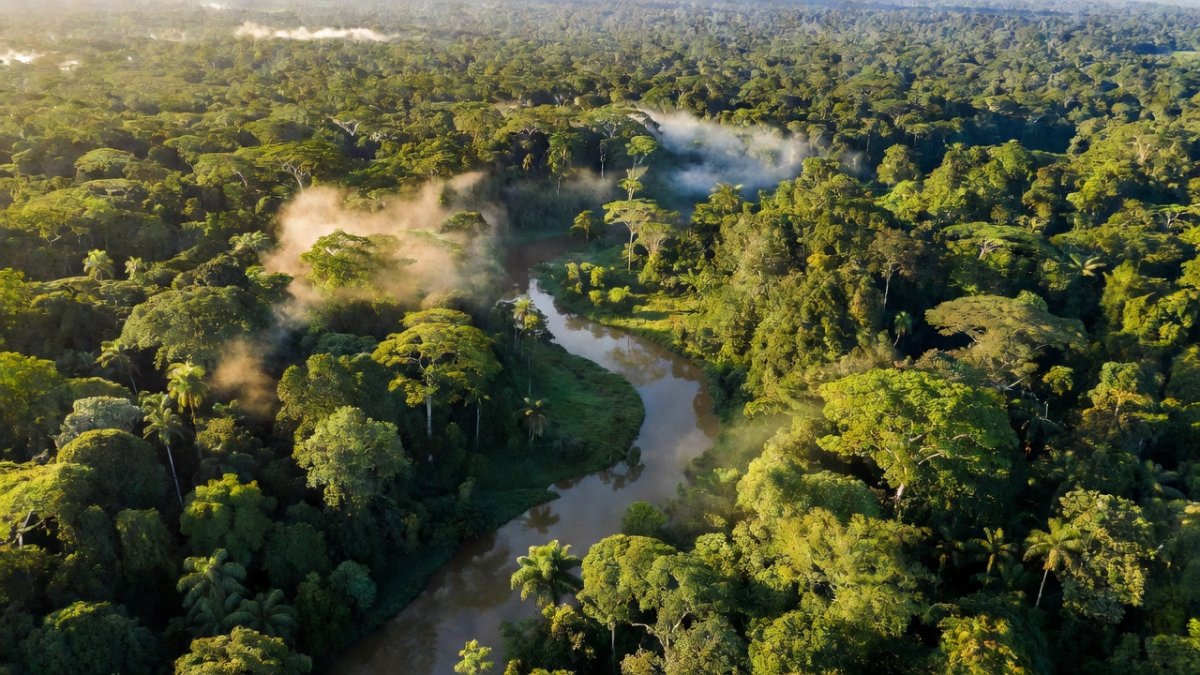
The Myth of the Magic Ledger — How Offsetting Was Sold
The architecture of carbon offsetting was built decades ago. In 1997, the Kyoto Protocol created the framework for emissions trading. By 2001, the Clean Development Mechanism (CDM) became the world’s first and largest offset scheme, registering more than 8,000 projects across 111 countries. It generated over 2 billion carbon credits and channeled an estimated $19 billion into renewable energy investments. But the documentary highlighted how this "magic ledger" was mired in controversy from the start—hydro dams flooded forests, and local communities were often displaced or ignored.
The language of "net-zero" and "carbon neutrality" became corporate shorthand. Amazon, Unilever, Disney, Google, and Shell all used offsets to claim sustainability goals without fundamentally altering their business models. The film’s central argument was that this system allows the biggest polluters to buy indulgences rather than change their behavior. In Latin America, this legacy is visible in the rush to monetize the Amazon and other forests. The CDM’s failures—lack of additionality, human rights abuses, and questionable emissions reductions—are the ghosts haunting today’s market.
The Carbon Math That Doesn't Add Up
The documentary dissected the scientific flaws of offsetting with devastating clarity. The most fundamental issue is the conflation of two different types of carbon. Fossil carbon—locked underground for millions of years—is being released into the atmosphere, while biological carbon (in trees and oceans) is part of a fast, active cycle. They are not interchangeable. Planting a tree cannot offset the burning of coal or oil.
Then there is the problem of baselines. Britaldo Soares-Filho, a Brazilian deforestation modeling expert who helped design REDD (Reducing Emissions from Deforestation and Forest Degradation, created in 2007), admitted in the film that baselines are "vulnerable to being gamed." The more deforestation you predict, the more credits you generate. A 2015 French study of 120 REDD projects across Latin America, East Africa, and Asia found that nearly 40% overlapped with existing protected lands, failing the crucial "additionality" test. Norway’s Auditor General reported in 2018 that despite $3 billion in funding, REDD results were "delayed and uncertain," with significant leakage risk—protecting one area simply shifts deforestation elsewhere. The permanence problem is equally stark: trees must survive centuries to match the timescale of fossil carbon, yet climate change itself—drought, fire, flood—makes tree carbon unstable. An Oxfam report in 2021 calculated that land needed for net-zero offset targets could be five times the size of India.
Guyana's Billion-Dollar Bet
In December 2022, US oil giant Hess signed a landmark deal to buy 37.5 million Guyana carbon credits for at least $750 million, paid in tranches from 2022 to 2032. This jurisdictional REDD+ agreement covers 18 million hectares (44 million acres) of forest, including 2.2 million hectares of titled Indigenous lands. Hess purchased roughly a third of the credits, making it the largest deal of its kind ever signed. The government of Guyana, led by President Irfaan Ali, has touted this as a model for forest conservation.
But the deal has drawn intense scrutiny. Mongabay, a leading environmental news outlet, raised questions over the accounting methodology and the inclusion of Indigenous territories without full, prior, and informed consent. Critics argue that the deal allows Hess to continue extracting oil off Guyana’s coast—one of the world’s most prolific new oil frontiers—while paying a relatively small sum to offset its emissions. The documentary’s critique of "compensation" rings true here: the money flows, but the structural problem of fossil fuel extraction remains untouched. Guyana’s bet is a test case for the entire region, showing how carbon markets can generate revenue while potentially enabling continued pollution.
Brazil's Regulated Carbon Market Arrives
Brazil, the region’s giant, has finally entered the fray. In December 2024, President Luiz Inácio Lula da Silva signed Law 15.042/2024, creating the Brazilian System of Greenhouse Gas Emissions Trade (SBCE). This cap-and-trade system sets a limit on GHG emissions and allows companies to buy and sell credits. Brazil plans to approve its first carbon credit methodologies by the end of 2026, with analysts estimating a market potential of up to $120 billion.
The backdrop is alarming. INPE satellite data cited in the documentary showed that more than 3,980 square kilometers of Amazon were cleared in the first six months of 2022 alone, up 10.6% from the previous year—the highest rate since 2015. While deforestation has slowed under Lula, the pressure to monetize standing forests is immense. The SBCE aims to channel funds into conservation and sustainable development, but the documentary’s warning looms large: if the baselines are gamed, or if credits are issued for forests that were never at risk, the market becomes a tool for greenwashing. Brazil’s challenge is to build a system that is rigorous enough to avoid the CDM’s failures while attractive enough to draw investment.
Colombia and Costa Rica — Two Paths, Same Question
Colombia and Costa Rica offer contrasting approaches to carbon pricing. Colombia has opted for a carbon tax, which rose from COP 27,398 (~USD 6.89) per ton in 2025 to COP 42,600 (~USD 10.62) in 2026—a 55% increase. The DIAN Resolution 000003, issued on January 30, 2026, updated the fuel and carbon tax rates. A 2026 Tax Reform Bill would set the rate at approximately COP 42,000/ton (USD 11.2), adjusted annually at CPI plus 2 points. Coal will be phased in starting in 2027 at 40%, reaching 100% by 2030.
Costa Rica, meanwhile, has pioneered the opposite approach. Since 1997, its Payment for Ecosystem Services (PES) program, managed by FONAFIFO, pays landowners for carbon sequestration, water protection, biodiversity, and scenic beauty. The program is still active as of April 2026, with a "PES 2.0" redesign under discussion. The question both countries face is whether these mechanisms actually reduce emissions or simply shift the burden. Colombia’s tax is designed to make polluting more expensive, while Costa Rica’s PES incentivizes conservation. Both are necessary, but neither substitutes for the structural cuts in fossil fuel use that the documentary argues are essential.
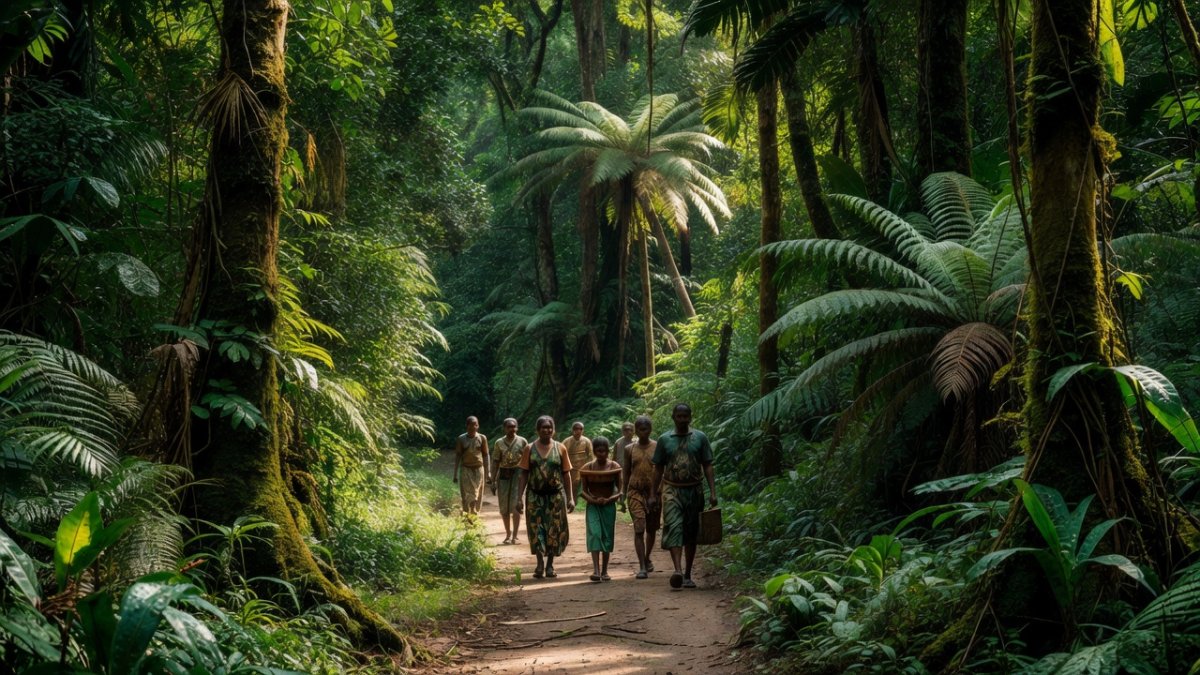
Indigenous Voices — Who Owns the Carbon in the Trees?
The documentary gave a powerful platform to Indigenous leaders who reject the entire premise of offsetting. Tom Goldtooth of the Indigenous Environmental Network stated: "There is no such thing as offsetting pollution by planting a tree... it is the biggest distraction and scam on mother earth." This sentiment is echoed across Latin America, where Indigenous peoples control or manage a significant portion of the region’s forests.
A Mongabay study from October 2024 found that REDD+ "doesn't work without Indigenous peoples, but fails to engage them." In response, COICA, the Amazon Indigenous organization, has created its own instrument that does not produce carbon certificates, rejecting the commodification of nature. However, the FSC Indigenous Foundation has published an open letter from Global South Indigenous leaders defending REDD+ as a vital channel for climate finance, arguing that without it, forests are worth more dead than alive. This is a deep and unresolved tension. The "conservation industry" risks enclosing Indigenous lands, turning them into carbon banks for the Global North, while the communities who protect these forests often see little of the revenue. The question of who owns the carbon in the trees is not just technical—it is a question of sovereignty and justice.
What This Means for Latin America
Latin America is now the global testing ground for carbon markets. Peru has approved additional Verified Carbon Standard (VCS) methodologies in 2026, expanding project types registered through its RENAMI system. Ecuador has established a legal basis for carbon markets. The voluntary market, meanwhile, is stabilizing: after a record ~190 million tonnes retired in 2024 (per Berkeley), the market value is hovering around $1.4 billion (BloombergNEF), even as issuance declines amid integrity scrutiny.
The risk is that these markets become a distraction from real decarbonization. Latin American economies are still heavily dependent on fossil fuels, agriculture, and mining. The documentary’s warning—that offsets allow polluters to avoid structural cuts—is particularly relevant here. If Brazil’s SBCE or Guyana’s Hess deal simply allows companies to continue emitting while paying for forest protection, the region will have sold its natural heritage for a fraction of its true value. The challenge is to ensure that carbon markets are a complement to, not a substitute for, deep emissions reductions.
The Bottom Line — Real Reductions, Not Accounting Tricks
The documentary’s conclusion was unambiguous: only real emissions cuts—reducing fossil fuel extraction and use—actually work. Tree planting and ecosystem restoration are necessary and vital, but they cannot substitute for structural changes in the global economy. For Latin America, this means balancing the short-term revenue from carbon markets with the long-term imperative of transitioning away from fossil fuels.
Governments in the region must resist the temptation to use carbon credits as a get-out-of-jail-free card. The $750 million from Hess, the potential $120 billion from Brazil’s SBCE, and the tax revenue from Colombia’s carbon levy are all welcome. But they must be invested in genuine decarbonization—renewable energy, public transit, sustainable agriculture—not just in preserving the status quo. The carbon offset system, as the documentary showed, is a tool that can be used for good or for ill. The question for Latin America in 2026 is whether it will be a tool for real climate action or a sophisticated accounting trick that lets the world continue burning fossil fuels. The answer will determine the fate of the Amazon, the region’s people, and the planet itself.
By Elena Vasquez, Staff Writer
This article was produced with AI-assisted research and editorial support. Reporting is based on sources cited in the article.
What's Your Reaction?
 Like
0
Like
0
 Dislike
0
Dislike
0
 Love
0
Love
0
 Funny
0
Funny
0
 Wow
0
Wow
0
 Sad
0
Sad
0
 Angry
0
Angry
0

Latin America Correspondent at Global1.News. Based in Mexico City, covering politics, economics, energy, and culture across the region. Brings an on-the-ground perspective to stories spanning from the Rio Grande to Patagonia.














Comments (0)