
Ukrainian Drone Barrage Kills One, Engulfs Wildberries Warehouse in Moscow Region
Ukrainian drones struck the Moscow region overnight in one of the largest attacks on the capital area, killing an 83-year-old man and setting a Wildberries warehouse ablaze, as Kyiv escalates its campaign against Russia's economic infrastructure.
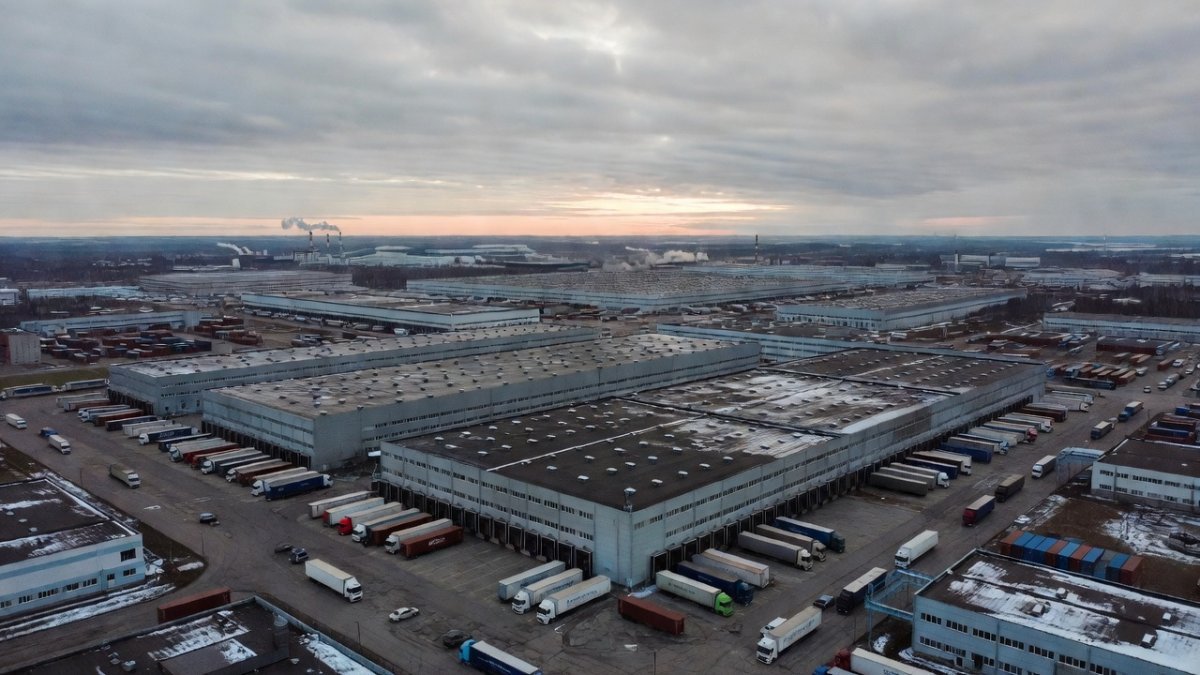
Ukrainian drones struck the Moscow region overnight on Sunday in what the provincial governor described as one of the largest attacks on the capital region since the war began, killing an 83-year-old man and setting ablaze a massive Wildberries warehouse. The assault, which involved more than 600 drones according to Moscow's mayor, marks a significant escalation in Ukraine's campaign to damage the Russian economic infrastructure that underpins the Kremlin's war effort. The attack on the e-commerce giant's logistics hub south of Moscow sent a plume of smoke visible for kilometers and underscored the vulnerability of Russia's civilian economy to long-range strikes.
Ukrainian Drone Barrage Kills One, Engulfs Wildberries Warehouse in Moscow Region
Moscow, Russia – Sunday — The overnight drone assault on the Moscow region was one of the largest of the conflict, according to Moscow region Governor Andrei Vorobyov, who confirmed the death of an elderly man in the city of Podolsk. The attack targeted multiple sites, including a sprawling logistics complex belonging to Wildberries, Russia's largest online retailer, in what Ukrainian officials have framed as a deliberate strike on a company they accuse of supplying the Russian military. The scale of the barrage — with Moscow Mayor Sergei Sobyanin reporting over 600 drones aimed at the region — signals a new phase in Ukraine's long-range strike campaign, one that is increasingly focused on the commercial arteries of Russia's war economy.
The Attack: Drones Over the Capital Region
Governor Vorobyov said in a series of Telegram posts that the attack was among the most significant to hit the Moscow region, with drones striking in waves throughout the night. The governor confirmed that an 83-year-old man was killed in Podolsk, a city roughly 40 kilometers south of the capital, and that several other residents were injured in the strikes. Vorobyov said damage was reported at several sites across the region, including a warehouse in the town of Domodedovo, located close to one of Moscow's main international airports.
Moscow Mayor Sergei Sobyanin provided a stark figure on the scale of the assault, stating that more than 600 drones were launched toward the Moscow region overnight, of which he said 201 were destroyed by air defense systems over the region. The discrepancy between the number of drones reported by Sobyanin and the number of interceptions claimed by the Defense Ministry — which said it had downed 822 Ukrainian drones throughout the country — highlights the fog of war surrounding the attack. Video footage filmed by Reuters of the aftermath showed a large plume of smoke rising over the Wildberries facility in Koledino, a settlement in the Podolsk district, approximately 45 kilometers south of Moscow.
Wildberries in the Crosshairs
The primary target of the overnight strike was a Wildberries logistics hub in Koledino, a facility that spans over 200,000 square meters and serves as the company's largest distribution center in Russia. The warehouse, which caught fire in the attack, is part of a network of Wildberries facilities that have come under repeated Ukrainian drone strikes in recent weeks. A second Wildberries warehouse in Domodedovo was also reported to have been targeted, according to Ukrainian officials, though Russian authorities did not immediately confirm the extent of the damage there.
Wildberries, founded by Tatyana Bakalchuk, has grown into a dominant force in Russian e-commerce, handling millions of orders daily across the country. The company has denied any involvement in military logistics, but Ukraine has repeatedly accused the retailer of facilitating the supply of military goods to the Russian armed forces. In July, Ukrainian President Volodymyr Zelensky confirmed that Kyiv's forces had struck Wildberries logistics hubs in southern Russia, accusing the company of helping supply the Russian military with drone components, navigation equipment, and other military hardware. The strikes on Wildberries facilities are part of a broader Ukrainian campaign targeting what Kyiv describes as the economic backbone of Russia's war machine.
Why Ukraine Targets Russia's Economic Backbone
The decision to strike a major e-commerce retailer marks a deliberate shift in Ukraine's targeting strategy, moving beyond purely military installations to hit the commercial infrastructure that sustains Russia's war effort. President Zelensky has been explicit about this rationale, stating that the drone strikes are aimed at eliminating logistics centers involved in supplying the Russian army with drone components and other military equipment. Ukrainian officials have also framed the attacks as a direct response to Russian strikes on Ukrainian cities, which have killed hundreds of civilians in recent months.
Analysts suggest this strategy is designed to impose costs on the Russian economy and to demonstrate to the Russian public that the war has consequences at home. The strikes on Wildberries, in particular, appear calculated to disrupt a company that has become a symbol of Russian consumer convenience, potentially sowing discontent among ordinary Russians who rely on the platform for everyday goods. According to United24 Media, a Ukrainian government-funded platform, the strikes have already damaged over a quarter of Wildberries' warehouses, disrupting the sale of military equipment and increasing pressure on Russia's economy. This could indicate that Ukraine is seeking to degrade Russia's logistical capacity while simultaneously undermining public confidence in the stability of daily life.
Air Defense Claims Under Scrutiny
Russia's Defense Ministry claimed to have downed 822 Ukrainian drones across the country overnight, a figure that, if accurate, would represent one of the largest air defense operations of the war. Mayor Sobyanin's assertion that 201 drones were destroyed over the Moscow region alone suggests that Russian air defense systems were overwhelmed by the sheer volume of the attack. The fact that a significant number of drones penetrated to strike targets in Podolsk and Domodedovo raises questions about the effectiveness of Moscow's layered air defense network, which has been touted by Kremlin officials as among the best in the world.
Military analysts note that Ukraine has adapted its drone tactics in recent months, using swarms of low-cost unmanned aerial vehicles to saturate Russian air defenses. The Ukrainian UJ-22 Airborne long-range drones, reportedly used in the attack on Koledino, are capable of flying hundreds of kilometers and carrying warheads that can cause significant damage to infrastructure. The ability of these drones to reach targets in the Moscow region, despite the presence of advanced S-400 and Pantsir systems, suggests that Russia's defenses are being stretched thin by the frequency and scale of Ukrainian strikes. This could indicate that the Kremlin's claims of near-total interception are increasingly difficult to sustain in the face of mounting evidence of successful Ukrainian penetrations.
The Human Cost
The human toll of the overnight attack was felt most acutely in Podolsk, where the 83-year-old victim was killed in the strike on the Wildberries warehouse. Governor Vorobyov expressed his condolences to the family of the deceased and said that several other residents had been injured, though he did not provide specific figures. The attack also had deadly consequences far from Moscow, with the governor of the Belgorod region reporting that one person was killed in a drone strike on a bus near the southern Russian city of Belgorod, which borders eastern Ukraine and has been subjected to near-daily cross-border attacks.
The civilian casualties in this latest wave of strikes underscore the indiscriminate nature of drone warfare, which has become a defining feature of the conflict. For residents of the Moscow region, the attack brought the war home in a visceral way, with the sight of smoke rising from a burning warehouse serving as a stark reminder that no part of Russia is beyond the reach of Ukrainian drones. The psychological impact on the population, which has largely been insulated from the direct effects of the war, is likely to be significant, as the sense of safety that many Muscovites have enjoyed since the conflict began is increasingly eroded.
Kremlin Response and the Politics of War at Home
The Kremlin has yet to issue a formal statement on the attack, but the response from regional officials has been focused on damage control and reassurance. Governor Vorobyov emphasized that emergency services were working to contain the situation and that residents would be compensated for any losses. The Russian Defense Ministry, for its part, framed the attack as a failure of Ukrainian aggression, claiming that the vast majority of drones were intercepted and that the strikes would not affect Russia's military operations.
However, the attack on Wildberries, a company that has become a household name in Russia, presents a particular challenge for the Kremlin's messaging. The government has sought to project an image of normalcy in Russian cities, with life continuing largely as before despite the war. The sight of a major warehouse burning on the outskirts of Moscow complicates that narrative, potentially fueling public anxiety about the war's reach. The Kremlin may also face pressure from business leaders, who have already been grappling with the economic consequences of Western sanctions and the diversion of resources to the military, as the threat of drone strikes adds a new layer of risk to operating in Russia.
Analysis and Implications
The overnight attack on the Moscow region represents a significant escalation in Ukraine's long-range strike campaign, one that analysts suggest could signal a shift in the trajectory of the conflict. By targeting Wildberries, Ukraine is not only seeking to degrade Russia's military logistics but also to strike at the heart of the Russian economy, which has proven remarkably resilient in the face of sanctions. The choice of targets suggests a sophisticated understanding of the vulnerabilities in Russia's supply chains, and the scale of the attack indicates that Ukraine has developed the capacity to launch large-scale drone operations against the capital region with impunity.
This could indicate that the war is entering a new phase, in which Ukraine seeks to use its drone capabilities to impose unsustainable costs on Russia, both economically and politically. The strikes on Moscow's outskirts, which have killed civilians and disrupted commerce, are likely to intensify domestic pressure on the Kremlin to find a way out of the conflict, even as President Vladimir Putin remains committed to his war aims. For the international community, the attack serves as a reminder that the war in Ukraine is not confined to the front lines but is increasingly being fought in the skies over Russian cities, with consequences that are felt by ordinary Russians as much as by soldiers on the battlefield.
The coming weeks will be critical in determining whether this escalation represents a temporary spike in violence or a sustained campaign that could reshape the course of the war. Ukraine has demonstrated that it has both the will and the capability to strike deep into Russian territory, and the Kremlin's ability to protect its cities and its economy will be a key test of its resolve. As the smoke clears over the Wildberries warehouse in Koledino, the question that hangs in the air is not whether Ukraine can continue these attacks, but how Russia will respond to a threat that it can no longer ignore.
By Irina Volkov, Staff Writer
This article was produced with AI-assisted research and editorial support. Reporting is based on sources cited in the article.
What's Your Reaction?
 Like
0
Like
0
 Dislike
0
Dislike
0
 Love
0
Love
0
 Funny
0
Funny
0
 Wow
0
Wow
0
 Sad
0
Sad
0
 Angry
0
Angry
0

Russia/Eastern Europe Correspondent at Global1.News. Covering Russian politics, energy, security, and the shifting dynamics of the post-Soviet space. Provides clear-eyed analysis on one of the world's most opaque regions.















Comments (0)