
Okanagan Elder's Climate Fears Echo Through the Ashes of the Bradley Creek Wildfire
91-year-old Okanagan Indian Band elder Frederick Louis lost his home of more than 50 years to the Bradley Creek wildfire near Vernon, B.C. He fears for future generations amid climate change as the province battles one of its most destructive fire seasons.
In a recent CBC News report, Okanagan Indian Band elder Frederick Louis stood amid the ashes of a community that has been his family's home for generations, expressing fears that reach far beyond the immediate devastation of the Bradley Creek wildfire. As some residents near Vernon, B.C., begin returning to their properties — or what remains of them — Louis's words carry a weight that resonates across a province grappling with the reality of a changing climate.
Okanagan Elder's Climate Fears Echo Through the Ashes of the Bradley Creek Wildfire Near Vernon
Vernon, B.C. – This week — The 91-year-old elder lost his home, every photograph, and the irreplaceable artifacts he and his late wife collected over a lifetime when the Bradley Creek wildfire tore through the North Okanagan. But as he stood in a Vernon hotel room, surrounded by family and the few possessions he managed to grab in a frantic evacuation, his concern was not for himself.
"I'm not worried for myself. I'm worried for the people who are going to be here long term," Louis told CBC News. His words come as British Columbia faces one of its most destructive wildfire seasons in recent memory, with the provincewide state of emergency declared on Aug. 8 and more than 21,000 people under evacuation orders at the peak of the crisis.
A Fire That Defied All Expectations
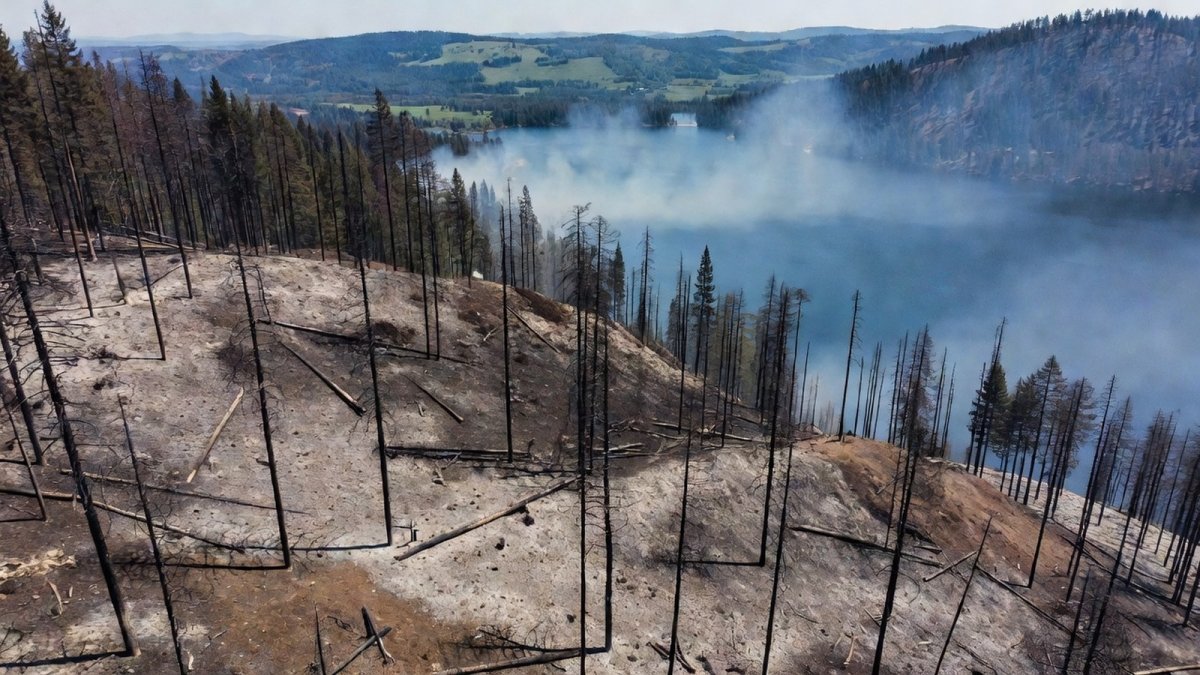
The Bradley Creek wildfire began after extreme winds swept through the region on July 31, 2026, igniting on Okanagan Indian Band reserve lands west of Vernon, near the head of Okanagan Lake. By Aug. 1, the fire had exploded through the forest, growing to 2,852 hectares at its peak — roughly 11 square miles — and earning the designation of a "wildfire of note" from the BC Wildfire Service.
Louis, who worked in forestry and as a firefighter in his younger years, has lived at the head of Okanagan Lake for more than half a century. In all his years working in the woods, he said he has never seen a fire burn as quickly or as intensely as the Bradley Creek blaze. But he had been expecting it.
"It came so fast that all of the residents on the west side there, they came out with nothing," Louis said. The fire destroyed an estimated 230 homes — about 30 band member homes plus roughly 200 non-band homes on reserve land — making it one of the most destructive wildfires in recent Canadian history. Evacuation orders covered the full stretch of Westside Road, the only road along the west side of Okanagan Lake, and the fire also threatened the outskirts of Armstrong, B.C.
A Lifetime of Memories Reduced to Ash
Louis was given just a few minutes to evacuate the home he had lived in for more than 50 years. "The only real home I had for, oh gee. For 50-60 years anyway," he said. During the evacuation, he went back to pack a small bag and his dog Princess, but he left behind his late wife's photo album.
"She loved taking pictures, ever since I met her, she took pictures. We had thousands of pictures and we lost everything," Louis said, his voice carrying the weight of a lifetime of memories. Among the losses were treasured berry-picking baskets gifted to his late wife by her great-grandmother — baskets more than 100 years old, so tightly woven they could still have carried water.
"[I] got a little emotional, but I got over it. I just have to go on," he said. The land that members of the Okanagan Indian Band have foraged for generations is now ash. The forests where his great-grandparents gathered traditional foods and medicines are gone. The community will rebuild, Louis said, but he worries about the environment his grandchildren will inherit.
Finding Refuge in a Garden
Louis's sister, Dora Louis Alexis, also an Okanagan Indian Band elder, has been watching the devastation unfold from a distance. Her home and garden were untouched by the fire, but she remains under evacuation order, receiving updates from her grandson who is a firefighter on the front lines.
Remarkably, animals from the community and forest have been finding refuge in her garden. "Right now we're not there, and it's OK for the chickens and the other animals — the wolves, the deer and everything — to come and eat because their habitat is being burnt out also," Alexis said. She worries about her rabbit, which she left behind, but takes some comfort in knowing it survived by burrowing underground. Two of her sons lost their homes in the fire.
Machell Louis, the niece of Frederick and Dora, offered a perspective that speaks to the resilience of the community. "My uncle may be houseless, but he is not homeless. He will always have a home. We will always have a home."
Prayers for Water and Rain
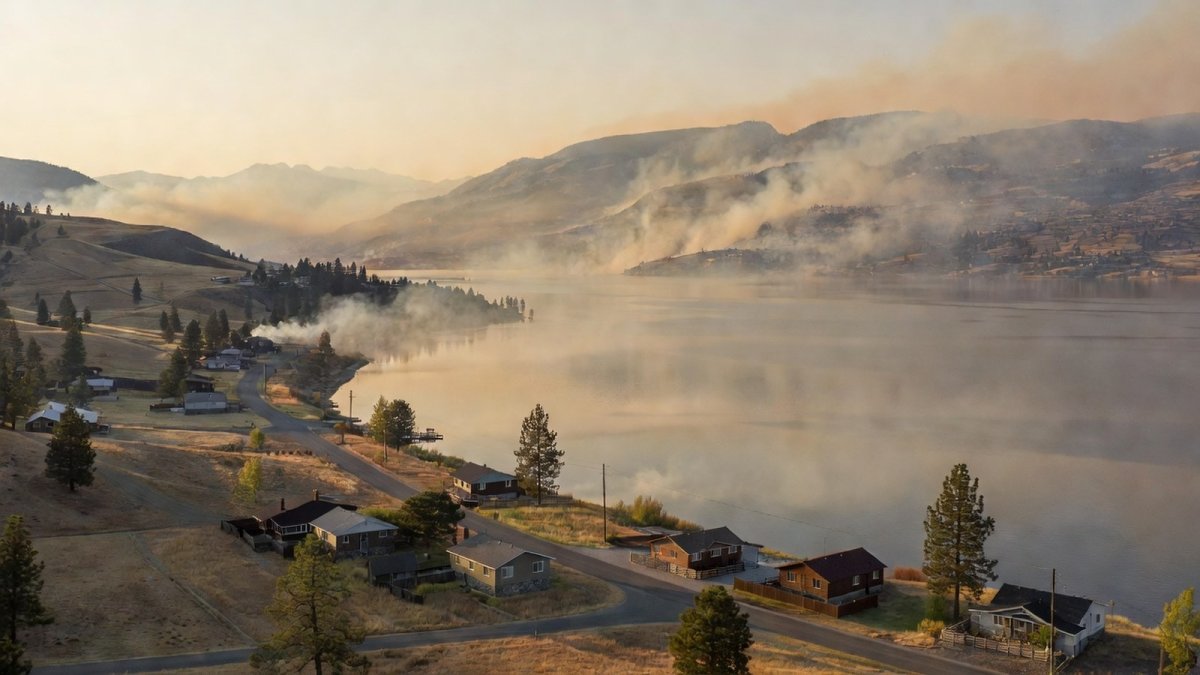
Sharnelle Paul, a band member who returned to her property on Okanagan Indian Band land this week with her husband and children, almost immediately left again to join others in prayer at Kin Beach in Vernon. "We came to pray for the water and the rain and everyone, not just ourselves," Paul said.
Prayers have been held throughout the Okanagan region by the Okanagan Nation Alliance, with a gathering at Kin Beach in Vernon on Aug. 11. The spiritual response reflects a deep connection to the land that has sustained the Okanagan people for millennia — a connection that the fire has tested but not broken.
Chief Dan Wilson of the Okanagan Indian Band is asking people to remain patient and support one another. Many homes and historic structures are gone, but the community's new school and powwow grounds were saved. Wilson thanked the communities and bands across Canada that supported the band by sending food and resources, and said more information for residents would be coming in the coming days.
A Province Under Siege
The Bradley Creek fire was one of more than 100 active wildfires burning across British Columbia at its peak. By mid-August, about 120 fires were burning with 38 per cent out of control. The province declared a provincewide state of emergency on Aug. 8, with over 21,000 people under evacuation orders and another 9,700 warned to be ready to flee. About 400 buildings had been destroyed across B.C. by mid-August, including the roughly 230 homes on Okanagan Indian Band land.
The first wildfire death in B.C. this season was an 80-year-old woman in the Bald Range fire near Summerland, reported on Aug. 10. That fire, which started Aug. 7 and grew rapidly, forced more than 20,000 people from their homes. Evacuation orders were slowly lifting around Summerland and Peachland in mid-August, with boil-water notices and bears reported in some returning areas. The Quilpituk Creek wildfire burned between Vernon and Kelowna, and smoke and air-quality advisories affected much of the region.
Vernon Mayor Victor Cumming described the chaos of the evacuation. "The people had a very rough Saturday night, some in their cars, some at friends, just a very difficult night. We opened again early the next morning and began to process people and find them accommodations."
The 'New Normal' Debate
Premier David Eby said the speed of Okanagan wildfires could be the "new normal" in a changing climate, a statement made in an interview with the Globe and Mail on Aug. 12. But some fire scientists push back on that term, noting that wildfire activity is shaped by a complex interplay of human-caused ignitions, forest management practices, drought conditions, and day-to-day weather patterns.
What is not in dispute is that the 2026 fire season started fast and early in British Columbia. Drought, heat, and wind drove explosive growth across the province. The BC Wildfire Service brought in 100 firefighters from Mexico in early August to help battle the blazes, a sign of the strain on provincial resources.
For Frederick Louis, the science is less important than what he has witnessed with his own eyes over the past decade. He has watched as climate change impacted his homeland, and he has seen the forests he once worked in become tinderboxes. The Bradley Creek fire was not a surprise to him — it was the inevitable result of conditions he has been observing for years.
The Road to Rebuilding
The Okanagan is British Columbia's wine country and a major tourism region on Okanagan Lake. The economic impact of the fires will be felt for years, not just in lost homes but in lost tourism revenue, damaged infrastructure, and the long process of rebuilding. For the Okanagan Indian Band, the losses are both material and cultural — artifacts that cannot be replaced, forests that will take generations to regenerate, and a way of life that has been fundamentally disrupted.
Louis is staying in a hotel in Vernon with family while next steps are figured out. He has been through hardship before, and he knows the community will rebuild. But his concern remains fixed on the long term — on the grandchildren who will inherit a landscape transformed by fire and a climate in flux.
"The way the fire was coming, I pretty much knew that this was it," he said. The words are simple, but they capture a truth that many British Columbians are beginning to understand: the fires are not anomalies anymore. They are becoming part of the rhythm of life in this province, and the question is not whether they will come again, but how communities will prepare for them.
As the smoke clears over the North Okanagan and residents begin the long process of assessing what was lost and what can be rebuilt, the words of a 91-year-old elder serve as both a warning and a call to action. The land will recover, in time. The question is whether the people who steward it will be ready for what comes next.
By Alex Thompson, Staff Writer
This article was produced with AI-assisted research and editorial support. Reporting is based on sources cited in the article.
What's Your Reaction?
 Like
0
Like
0
 Dislike
0
Dislike
0
 Love
0
Love
0
 Funny
0
Funny
0
 Wow
0
Wow
0
 Sad
0
Sad
0
 Angry
0
Angry
0
Canada Correspondent at Global1.News. Based in Toronto, covering Canadian politics, energy, trade, and US-Canada relations. Provides the Canadian perspective on North American and global affairs.










Comments (0)