
Alison Dilworth Departs Riyadh as US-Saudi Ties Shift
The departure of a Chargée d'Affaires is usually a footnote in the diplomatic calendar—a quiet transition handled by protocol officers and farewell receptions.
A Diplomat's Farewell at a Strategic Crossroads: Alison Dilworth Departs Riyadh as US-Saudi Relations Enter a New Era
Riyadh, Saudi Arabia – August 13, 2026 — Alison Dilworth, the top US diplomat in the Kingdom of Saudi Arabia, has bid farewell after serving as Chargée d'Affaires ad interim at the US Embassy in Riyadh. Her departure, marked by a video filmed at the Al Nasser Football Club and a formal reception hosted by the Dean of the Diplomatic Corps, comes at a moment of profound transformation in the US-Saudi axis—a relationship tested by wartime cooperation, energized by a historic nuclear deal, and complicated by Riyadh's visible hedging through new defense pacts.
A Farewell at Al Nasser
In her farewell video, aired by Al Arabiya English on August 13, 2026, Dilworth chose an unconventional backdrop: the Al Nasser Football Club, which she described as "one of the most inspiring Saudi teams that represent the kingdom's sports achievement and ambition." The choice was deliberate. For a diplomat who witnessed the rapid expansion of Saudi women's sports during her tenure—including the rise of the national women's football team—the setting underscored a broader narrative of transformation under Vision 2030. "Together, we've continued to build the U.S.-Saudi relationship in meaningful ways, from expanding economic and educational ties to welcoming President Trump to Riyadh," Dilworth said in the video. The US Embassy's official farewell post echoed this sentiment, noting that her tenure was "defined by numerous milestones—including President Trump's historic Riyadh visit, stronger security and economic ties, and the inspiring rise of Saudi women in sports." The Al Nasser choice also carried subtle diplomatic weight. Sports diplomacy has become a quiet pillar of Saudi soft power, from the Public Investment Fund's (PIF) acquisitions in global football to the Kingdom's successful bid to host the 2034 FIFA World Cup. By filming at a Saudi club, Dilworth acknowledged the Kingdom's ambitions while signaling that American engagement extends beyond security and oil into the cultural and social spheres.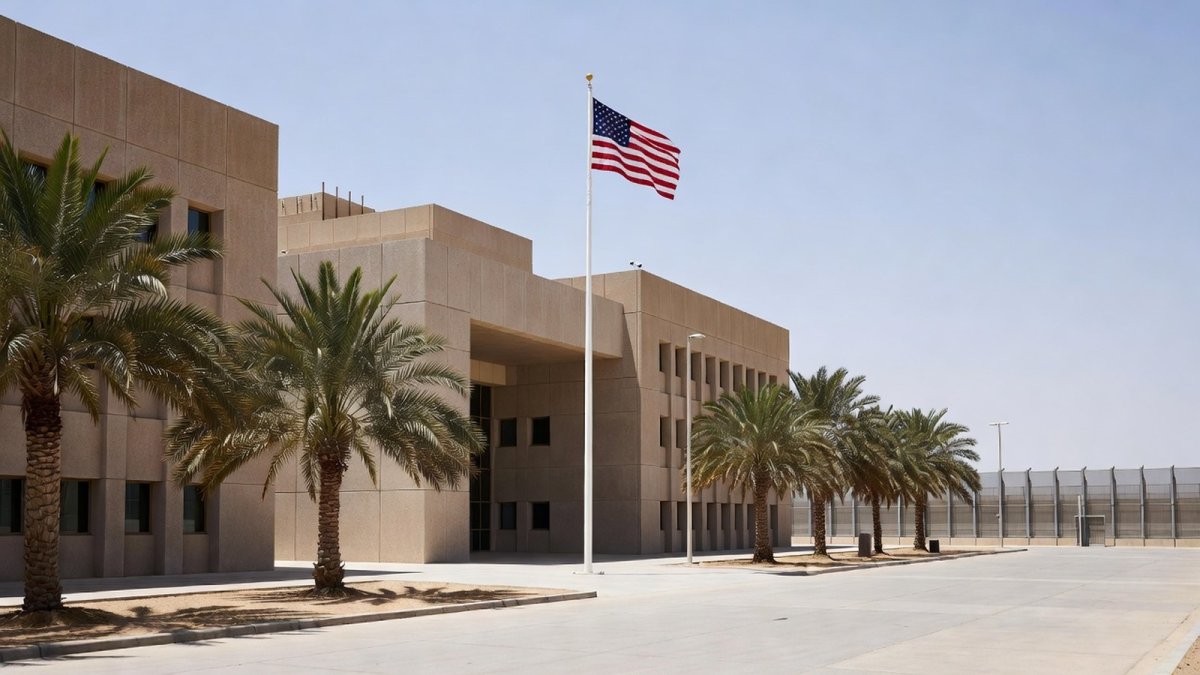
A Wartime Tenure
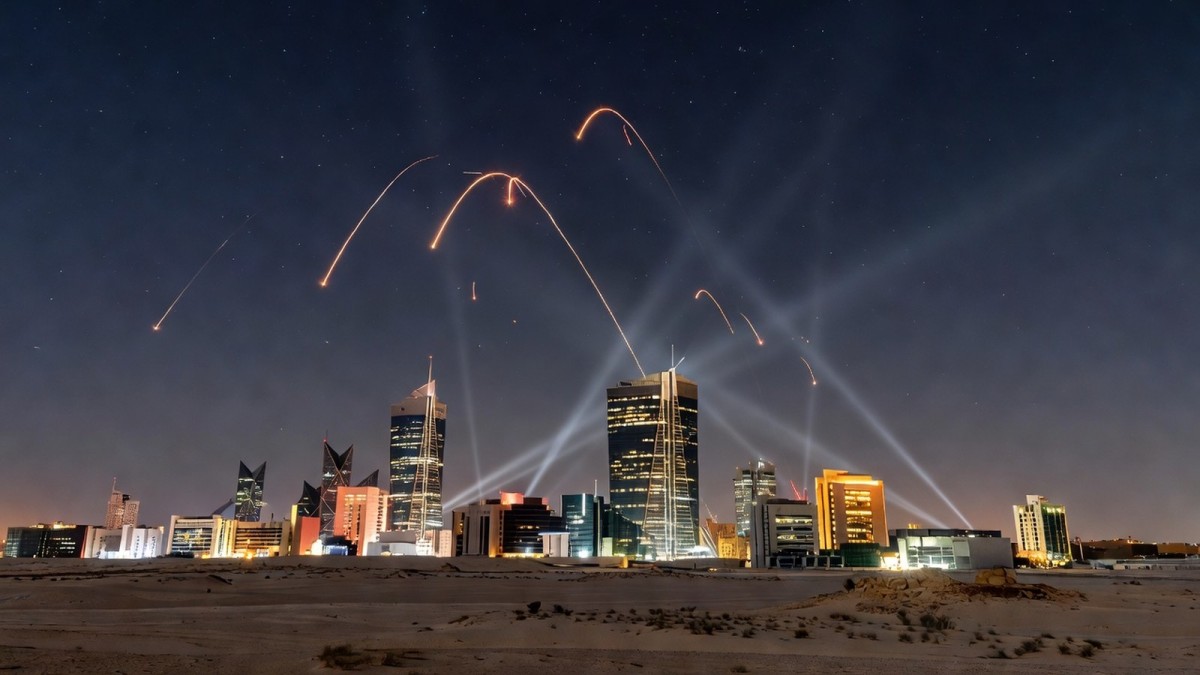
Dilworth's time in Riyadh was anything but routine. She arrived at a post that had been without a Senate-confirmed ambassador since the start of the Trump administration, following the unusual removal of career diplomat Michael Ratney. Forcing out a career ambassador before completing a standard tour is a rare step in American diplomacy—one that signaled the new administration's preference for political control over the Gulf portfolio. Then came the war. On February 28, 2026, US and Israeli strikes on Iran initiated a conflict that would redefine the region's security landscape. Saudi Arabia, despite its historical rivalry with Tehran, found itself in the crosshairs. Iranian retaliatory missile strikes hit Saudi oil refineries, and the Royal Saudi Air Force carried out strikes on Iranian drone and missile-launch sites—a level of direct military coordination with Washington that would have been unthinkable just a few years ago. In March 2026, the crisis hit home for the American diplomatic community. the Saudi Defense Ministry said two Iranian drones struck the US Embassy compound in Riyadh, causing limited fire and minor material damage to the building. Saudi forces shot down another drone near the diplomatic quarter. The US ordered the departure of nonessential personnel from its Saudi posts, and Americans in Riyadh, Jeddah, and Dhahran were told to shelter in place. For Dilworth, this was not abstract geopolitics—it was the daily management of a diplomatic mission under direct attack. Her meetings during this period reflected the gravity of the moment. In March 2026, she met with Saudi Deputy Minister of International Affairs Waleed Al-Khereiji to review bilateral relations and regional developments. Earlier, in April 2025, she had called on Riyadh Region Governor Prince Faisal bin Bandar bin Abdulaziz. These were not ceremonial visits; they were the working sessions of a wartime alliance.The Ambassador Question
Dilworth's departure shines an uncomfortable light on a structural weakness in the US-Saudi relationship: the absence of a Senate-confirmed ambassador in Riyadh. This vacancy is not a bureaucratic oversight—it is a political choice. The Trump administration removed career diplomat Michael Ratney, who had held the post, and has not nominated a permanent replacement. Political appointees in Washington have effectively left the embassy in the hands of career Chargés d'Affaires, a practice that signals a preference for transactional control over traditional diplomatic representation. The implications are significant. An ambassador carries weight in Riyadh's court politics—access to the Royal Court, the ability to negotiate at the highest levels, and the symbolic heft of a presidential appointment confirmed by the Senate. A Chargée d'Affaires, however capable, operates with a diminished mandate. In a relationship as layered as the US-Saudi one—spanning defense, energy, technology, and regional security—this vacuum matters. The timing is particularly acute. With the Iran war's aftermath still unfolding, the nuclear agreement signed in July 2026 requiring implementation, and the $600 billion investment commitment announced during President Trump's May 2025 Riyadh visit still being operationalized, the absence of a permanent ambassador leaves the relationship managed by deputies and working groups. It is a fragile way to run a strategic partnership.The Nuclear Breakthrough
One of Dilworth's final achievements was witnessing the signing of a Section 123 nuclear cooperation agreement between the US and Saudi Arabia in July 2026. The landmark deal allows for a Saudi civilian nuclear program, a development that has raised proliferation concerns among arms control experts. The Bulletin of the Atomic Scientists and USA Today have both flagged the risks of a Saudi enrichment capability in a region already bristling with nuclear tensions—Israel's undeclared arsenal, Iran's contested program, and now Saudi Arabia's entry into the nuclear club's waiting room. Yet Chatham House, in an August 5, 2026 analysis, offered a more nuanced reading: the agreement shows Saudi Arabia "continues to regard the US as its principal strategic partner." This is the core of the matter. Riyadh could have weighed bids from China's CNNC or Russia's Rosatom—both of which have courted civilian nuclear partnerships across the Gulf—yet it chose Washington, accepting the stringent nonproliferation conditions that come with Section 123 agreements. The choice was strategic: anchoring the nuclear program to the American umbrella, even as the Kingdom diversifies its other partnerships. For Dilworth, the nuclear deal was a capstone achievement. It represents the kind of long-term, institutional cooperation that survives changes in administration. But it also creates new obligations—monitoring, verification, and the delicate management of regional perceptions. Without a permanent ambassador, these obligations fall to a skeleton crew.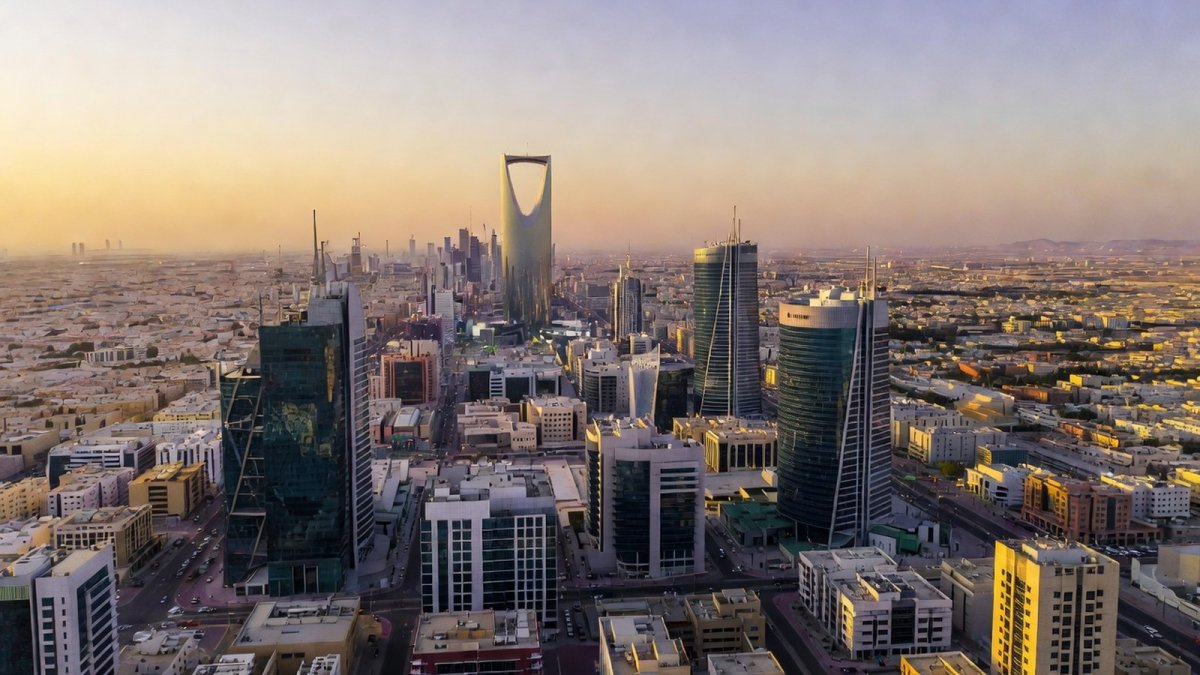
Hedging: The Mecca Pact
The most significant development of Dilworth's final months was one she could only observe from the sidelines. In August 2026, Saudi Arabia, Turkey, and Pakistan signed the Mecca Pact—a trilateral defense framework that signals Riyadh's determination to diversify its security partnerships beyond Washington. Qatar is also reported to be engaged in discussions. The Mecca Pact is a classic hedging strategy. Saudi Arabia has not abandoned the American alliance—the nuclear deal and the continued US military presence in the Gulf argue against that interpretation. But Riyadh is building redundancies. Turkey brings drone technology and a growing defense industry; Pakistan brings nuclear-armed Islamic solidarity and a battle-tested military. Together, they offer Saudi Arabia options that do not depend on the whims of Washington's electoral cycle. This is the context in which Dilworth's departure must be understood. She leaves a relationship that is simultaneously at its strongest—wartime cooperation, nuclear partnership, massive investment flows—and at its most complicated. The Houthi attacks on Saudi Arabia and commercial shipping have escalated since mid-July 2026, drawing a UN Security Council condemnation on August 7, 2026, which Saudi Arabia and the GCC welcomed. The security environment remains volatile, and Riyadh is clearly preparing for a future in which it cannot rely solely on the United States.Regional Implications
Dilworth's farewell reception on July 23, 2026, hosted by Dean of the Diplomatic Corps and Ambassador of Djibouti, H.E. Dya-Eddine Bamakhrama at the Cultural Palace in Riyadh, honored both her and the departing Ambassador of India, H.E. Suhel Ajaz Khan. The joint farewell was fitting—India and the United States are both navigating the complexities of a Saudi Arabia that is more assertive, more diversified, and less willing to be taken for granted. The trajectory of the US-Saudi relationship for the rest of 2026 and beyond will depend on several factors. First, whether Washington finally nominates a permanent ambassador—a test of whether the administration views Riyadh as a strategic priority or a transactional convenience. Second, the implementation of the nuclear agreement, which will require sustained technical and diplomatic engagement. Third, the evolution of the Mecca Pact and whether it remains a paper framework or becomes a functioning security architecture. For the region, the stakes are existential. The Iran war has redrawn the security map, with Saudi Arabia emerging as a more active military player. The nuclear deal has opened a new chapter in Gulf proliferation dynamics. The Mecca Pact signals a multipolar security order in which Washington is no longer the sole guarantor. And the Houthi threat continues to test the Kingdom's defenses and its patience. Dilworth's departure is a moment to take stock. She was not a headline-grabbing ambassador; she was a steady hand during a storm. Her farewell video at Al Nasser Football Club was characteristically understated—a diplomat's acknowledgment that the relationship she helped build will outlast her posting. But the questions she leaves behind are not understated. Who will represent America in Riyadh? What will the relationship look like when the next crisis hits? And can a partnership this consequential survive on Chargés d'Affaires and working groups? The answers will define not just US-Saudi relations, but the broader architecture of Middle East security for years to come. For now, Riyadh waits—as it has learned to do—for Washington to decide what it wants to be in the region.By Malik Hassan, Staff Writer
This article was produced with AI-assisted research and editorial support. Reporting is based on sources cited in the article.
What's Your Reaction?
 Like
0
Like
0
 Dislike
0
Dislike
0
 Love
0
Love
0
 Funny
0
Funny
0
 Wow
0
Wow
0
 Sad
0
Sad
0
 Angry
0
Angry
0

Middle East Correspondent at Global1.News. Based in Beirut, covering politics, conflict, energy, and society across the Middle East. Brings context and depth to a region often reduced to headlines.












Comments (0)