
China urges Israel to halt ‘forced establishment’ of settlement expansion in occupied West Bank
By labeling the activity as forced, Beijing underscores the coercive nature of settlement growth, which it argues undermines the viability of a future Palestinian state.
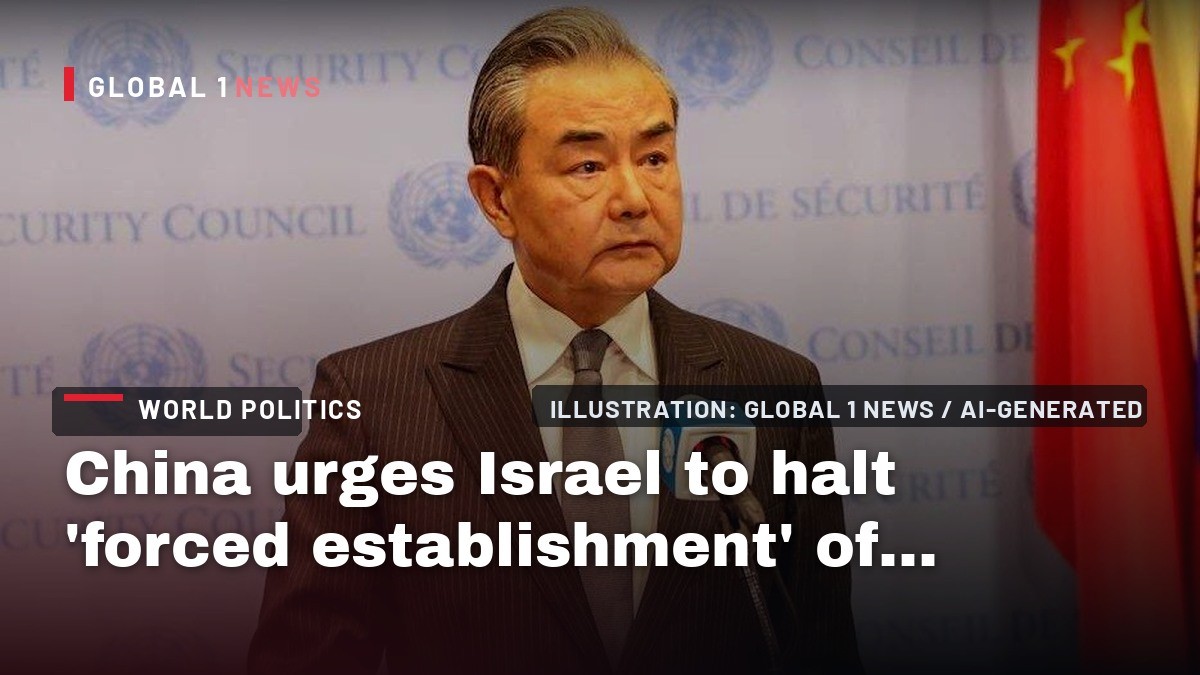
Chinese Foreign Minister Wang Yi used a meeting with Israeli President Isaac Herzog in Baku on the sidelines of the seventh CICA summit to issue a stark warning to Jerusalem: halt the “forced establishment” of settlements in the occupied West Bank and fully reopen the Gaza Strip to its two million residents. The remarks, reported by Anadolu, underscore Beijing’s growing diplomatic engagement on the Palestinian question, which it describes as “the biggest historical injustice of this century.” Wang’s statements arrive at a moment when the humanitarian situation in Gaza remains dire and settlement activity in the West Bank continues to intensify, raising fresh concerns about the prospects for a two‑state solution.
China’s diplomatic framing of the Palestinian issue
Wang Yi framed the Palestinian question as the root of the broader Middle East conflict, insisting that “both Israelis and Palestinians have the right to live in peace and establish independent states.” By invoking the two‑state solution as the “correct path” to resolution, Beijing aligns itself with long‑standing UN resolutions while positioning itself as a potential mediator willing to speak up for “the just cause of Palestine on multilateral platforms.” The language of “justice may be delayed but never absent” signals a moral stance that seeks to resonate with other nations concerned about international law and human rights.
Beyond rhetoric, Wang highlighted the urgency of reopening Gaza fully, warning that its two million inhabitants are “struggling on the brink of death.” He linked the humanitarian crisis directly to the need for unimpeded access, suggesting that without such measures the region risks a “further humanitarian catastrophe.” This emphasis on immediate relief reflects China’s broader diplomatic strategy of coupling political statements with calls for concrete humanitarian action.
The settlement expansion warning
In his conversation with President Herzog, Wang warned Israel to halt and reverse settlement expansion in the West Bank, describing it as “forced establishment.” The phrasing implies a violation of international law, echoing United Nations and International Court of Justice opinions that consider settlements illegal under the Fourth Geneva Convention. By labeling the activity as forced, Beijing underscores the coercive nature of settlement growth, which it argues undermines the viability of a future Palestinian state.
The Chinese foreign minister’s call comes amid reports of intensified attacks by Israeli forces and settlers across the occupied West Bank, including East Jerusalem. While the source does not provide specific figures on settlement growth, the qualitative description of “intensified” activity signals a worsening pattern that Beijing believes must be curbed to restore any chance of peace.
Humanitarian urgency in Gaza
Wang’s urgent priority was the full reopening of Gaza, a plea rooted in the stark reality that the enclave’s two million residents face a “brink of death” situation. Since the October 2023 Israeli offensive, the ministry of health reports more than 74,000 Palestinians killed and over 175,000 wounded, alongside the destruction of 90 % of Gaza’s infrastructure. These figures illustrate the scale of devastation and the pressing need for humanitarian corridors, medical supplies, and reconstruction assistance.
The Chinese foreign minister warned that without immediate and unrestricted access, Gaza’s population could slip further into catastrophe. By tying the call for settlement restraint to the humanitarian crisis, Wang presented a holistic view: settlement expansion fuels broader instability, while the siege of Gaza deepens human suffering, both of which must be addressed simultaneously for any durable peace.
China’s broader strategic interests
Beyond moral and humanitarian concerns, Wang highlighted the upcoming diplomatic milestones between Beijing and Israel: the 35th anniversary of diplomatic relations and the 10th anniversary of their “innovative comprehensive partnership” in 2027. By linking these celebrations to a call for peace, China signals its desire to balance deepening bilateral ties with advocacy for Palestinian rights. This dual approach allows Beijing to maintain strategic partnerships while positioning itself as a principled actor on the international stage.
Wang also expressed willingness to work with Israel to advance bilateral cooperation, indicating that China does not seek to isolate Israel but rather to influence its policies through engagement. This nuanced stance reflects China’s broader foreign policy pattern of combining economic partnership with selective political pressure, especially on issues it frames as matters of international justice.
International law and the “correct direction”
The foreign minister’s reference to “the correct direction” of the two‑state solution underscores Beijing’s alignment with established international legal frameworks. By invoking the “correct direction,” Wang alludes to UN Security Council resolutions, the Quartet’s Road Map, and the International Court of Justice advisory opinion that deem settlement activity illegal. This legal framing reinforces China’s claim to speak on behalf of “the oppressed nations” and to stand on the side of “international justice.”
In stressing that “lasting peace and stability cannot be achieved” without a fair resolution of the Palestinian issue, Wang connects the legal dimension directly to regional security. The implication is clear: continued settlement expansion and the blockade of Gaza not only violate international law but also perpetuate a cycle of violence that threatens broader Middle Eastern stability.
Regional reactions and the broader diplomatic landscape
While the source does not detail reactions from other regional actors, Wang’s statements were delivered at a multilateral forum—the CICA summit—suggesting that China seeks to rally broader support for its position. By addressing both Israeli and Palestinian leaders, the Chinese foreign minister positioned himself as a bridge between the two sides, urging both to recognize each other’s rights. This approach may resonate with other nations that view the settlement issue as a barrier to peace.
The emphasis on “not marginalizing” the Palestinian question and remembering the plight of Gaza’s residents aims to keep the issue on the international agenda, especially as other global powers grapple with competing priorities. By framing the Palestinian cause as a matter of “historical injustice,” China attempts to elevate it beyond a bilateral dispute to a universal principle of rights and dignity.
Implications for the future of the peace process
Wang Yi’s remarks signal a potential shift in how major powers engage with the Israeli‑Palestinian conflict. By coupling a call for settlement restraint with an urgent humanitarian plea, Beijing presents a comprehensive narrative that intertwines legal, moral, and practical dimensions. If Israel responds to the Chinese appeal, even modest steps toward halting settlement expansion and reopening Gaza could create space for renewed negotiations.
However, the effectiveness of China’s diplomatic pressure depends on the willingness of both parties to heed external calls. The source indicates that settlement activity and attacks have intensified, suggesting entrenched positions on the ground. Nonetheless, the articulation of a clear, rights‑based framework by a major global player adds weight to international calls for a two‑state solution and may embolden other states and multilateral bodies to press for concrete actions.
This article was produced with AI-assisted research and editorial support. Reporting is based on the source material cited below. Sources: Middle East Monitor; middleeastmonitor.com; Global1.News (17 October 2026).
By Fatima Al-Rashid, Staff Writer
What's Your Reaction?
 Like
0
Like
0
 Dislike
0
Dislike
0
 Love
0
Love
0
 Funny
0
Funny
0
 Wow
0
Wow
0
 Sad
0
Sad
0
 Angry
0
Angry
0
Gulf/MENA Correspondent at Global1.News. Based in Doha, covering Gulf politics, energy markets, diplomacy, and development across the Middle East and North Africa. Tracks the economic transformation of the Gulf states.












Comments (0)