
Drones Set Rostov Oil Terminal Ablaze as Russia Reports Mass Overnight Attack
Russian officials say a mass overnight drone attack on the Rostov region damaged a railway bridge, apartment buildings and two vessels, and set an oil-loading terminal in Rostov-on-Don ablaze. Ukrainian military officials had not claimed the strike.
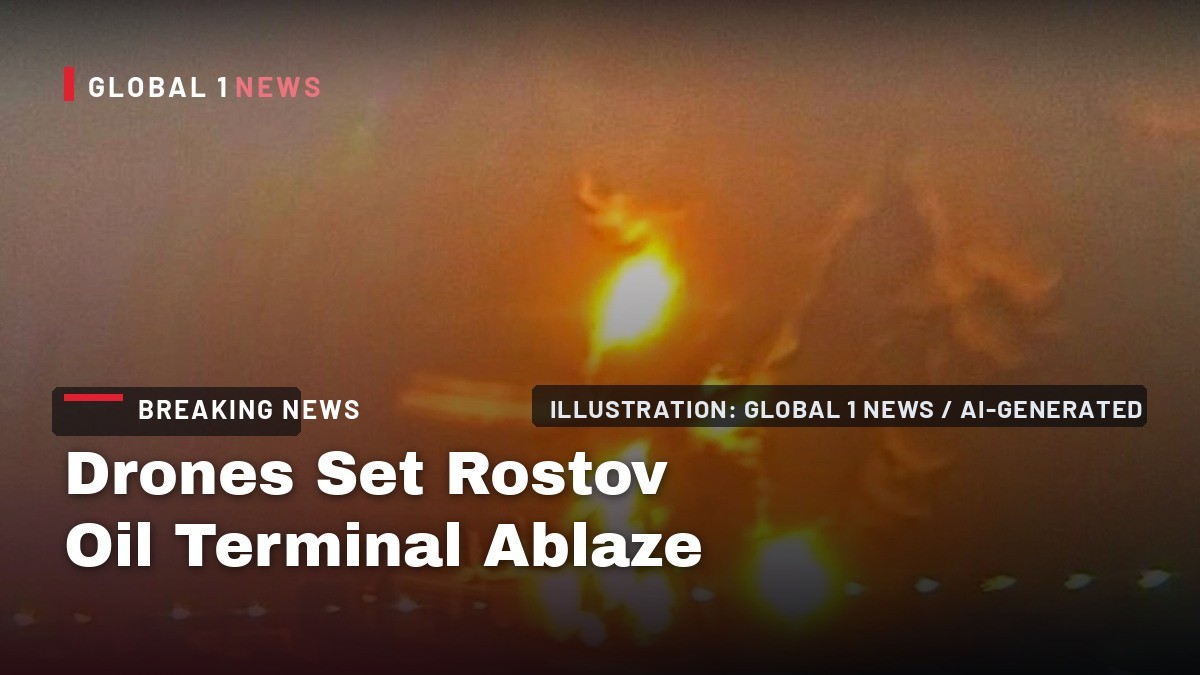
The fires were still burning at daylight. Overnight, Russia's Rostov region came under one of its heaviest aerial attacks in weeks: an oil-loading terminal in Rostov-on-Don ablaze, a railway bridge damaged, apartment blocks hit, and two vessels struck in the port of Azov. Russia's officials blamed Ukraine. Ukraine, for its part, had not claimed the strike by early Saturday.
Drones Set Rostov Oil Terminal Ablaze as Russia Reports Mass Overnight Attack
Rostov-on-Don, Russia — The attack ran from late Friday evening into Saturday morning, and by first light the damage reached across a city, a rail line and a fuel export terminal on the Don.
The Terminal That Burned
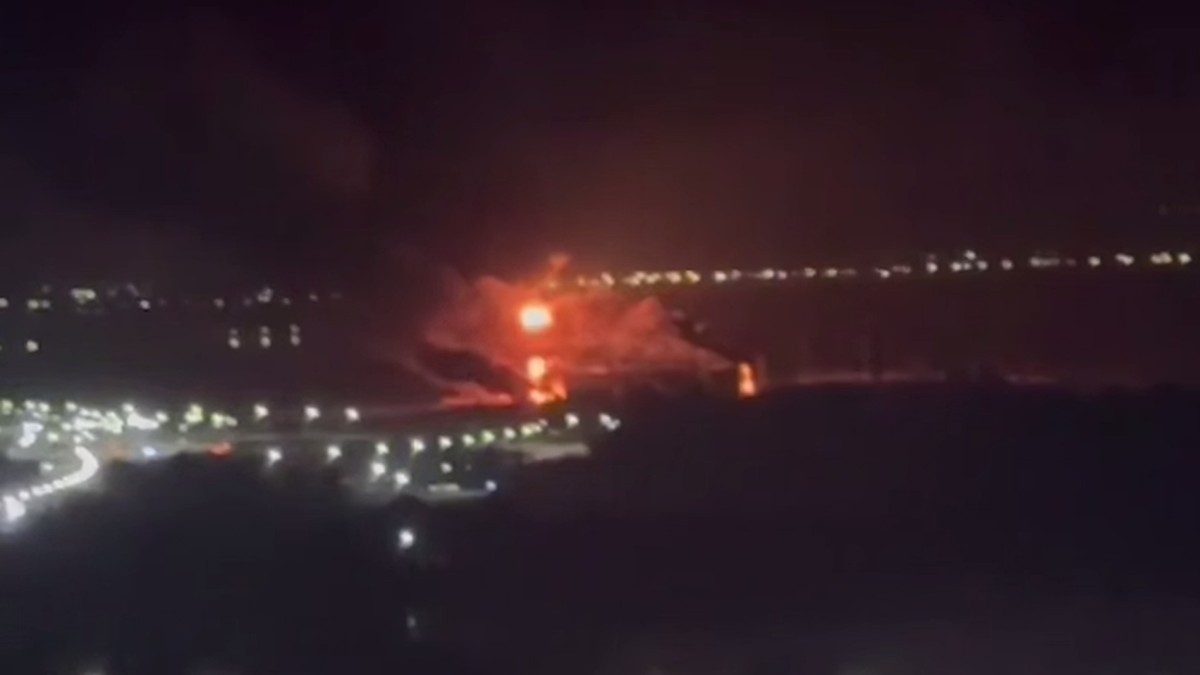
A fire broke out at an oil-loading terminal in Rostov-on-Don overnight, according to the independent Russian outlet ASTRA, which geolocated footage from local residents to the NZNP terminal, commercially known as Yug Rusi, in the city's Zheleznodorozhny district. The Exilenova+ monitoring channel published footage of the blaze and later reported the terminal was still burning. Kyiv Post reported that Ukrainian strike drones hit the Yug Rusi oil transshipment terminal early Saturday morning, igniting a blaze across the fuel logistics facility. Ukrainska Pravda reported that drones attacked the Novoshakhtinsk Oil Refinery's oil-loading terminal and that a large fire broke out in Rostov-on-Don after a series of powerful explosions. Russian regional authorities acknowledged a fire and said air defences were operating, but did not confirm damage to the terminal, the Kyiv Independent reported. Ukrainian military officials had not claimed responsibility for the reported attack.
A Rail Bridge and a Region on Edge
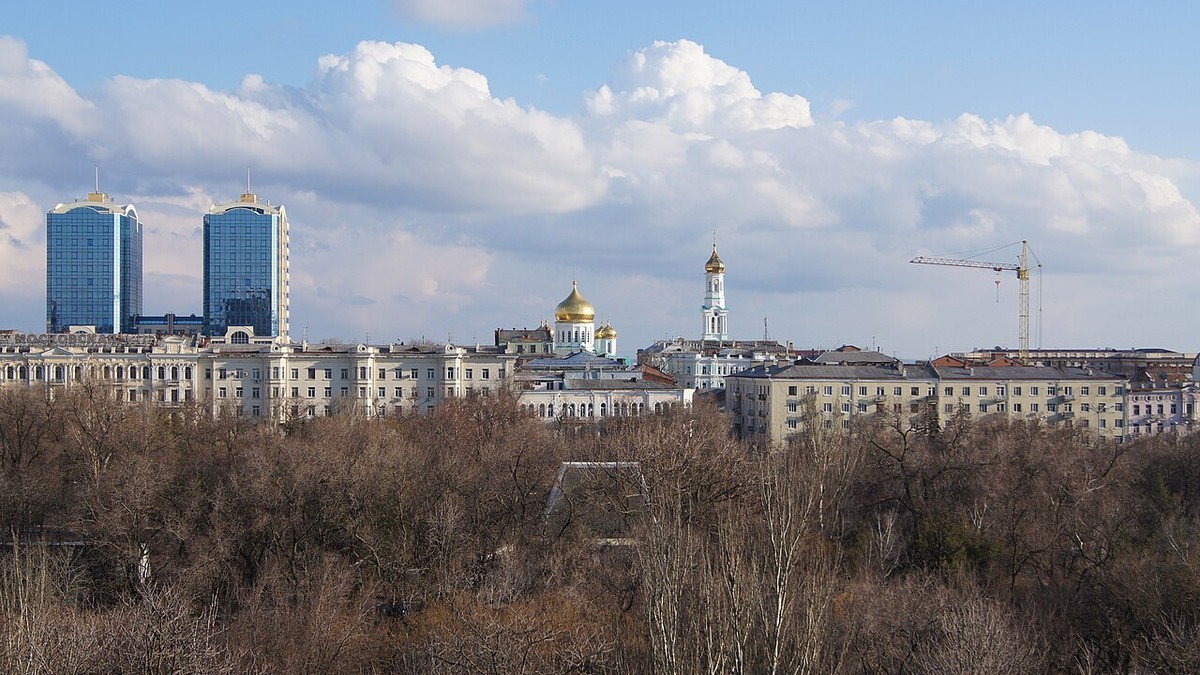
Governor Yuri Slyusar said the Rostov region came under a large-scale aerial attack through the night of the ninth into the tenth of October. In statements carried by Lenta, Ukrainska Pravda and RIA, he said a railway bridge was damaged and train services were suspended in both directions, with special crews carrying out repairs. SFG reported that traffic across the bridge had resumed by morning. Local residents reported explosions and visible air-defence fire beginning late Friday evening and continuing into the early morning, according to Kyiv Post. Slyusar also said a fire broke out at warehouse and industrial facilities in the region after the air attack and was being extinguished, RIA reported. The region operates under a standing governor's decree banning the filming of aerial attacks and their consequences, air-defence operations, and the locations of military units, as noted by Caucasian Knot.
What the Governor Told Residents
Slyusar reported that one man was injured and taken to hospital. "As a result of an enemy air attack on the Rostov region, a man was injured. The victim was taken to the hospital. Doctors are providing all the necessary assistance," he said, in a statement carried by RIA, Lenta, Interfax, Izvestia and Caucasian Knot. He said several apartment buildings and private homes were damaged in Rostov-on-Don, and that residents were evacuated, according to SFG, RIA, Lenta and Izvestia. In Bataysk, he said, a drone struck an uninhabited high-rise apartment building within a residential complex, sparking a fire, with firefighting under way, per RIA, Izvestia, Caucasian Knot and SFG. In Azov, he said two vessels were damaged. Preliminary data indicated that no one aboard was killed or injured, and emergency services continued work at the scene, URA.RU and SFG reported.
The Numbers Do Not Agree
The drone count over the Rostov region does not match across accounts. Slyusar said more than 50 unmanned aerial vehicles had been shot down since the previous evening, according to Ukrainska Pravda and thepublic. SFG reported that more than 100 drones were destroyed or suppressed over the region. Nationally, Russia's Defence Ministry said that since the evening of 9 October, air defences had intercepted and destroyed 560 Ukrainian drones over 16 regions, over annexed Crimea, and over the Sea of Azov and the Black Sea, per SFG. Moscow's mayor, Sergei Sobyanin, said 25 drones heading toward the capital were shot down in the morning, SFG reported. Every one of these figures describes interceptions, not launches. No source in this reporting states how many drones were launched at Rostov.
The Casualties and the Question That Remains
The casualty accounts also diverge, and the difference has not been reconciled. Russian officials, through RIA, Lenta, Interfax, Izvestia and Caucasian Knot, report one man injured and hospitalised. SFG reported six people injured in Rostov-on-Don, two of them remaining in hospital in moderate condition. Kyiv Post reported that Slyusar claimed no casualties had been recorded. Separately, ASTRA reported damage to a residential building in Rostov-on-Don's Donskaya Sloboda complex and said it remained unclear what struck it amid continued drone activity, as carried by the Kyiv Independent, Kyiv Post and SFG. No cause has been established for that damage. The identities of the injured man and of the two vessels in Azov have not been released.
Why an Oil Terminal Matters to the War
The terminal handles petroleum products for export, including shipments from the Novoshakhtinsk Oil Refinery, which belongs to the Yug Rusi group of companies, per the Kyiv Independent. It is separate from the refinery's main processing facilities. Kyiv Post reported that the terminal handles roughly 2.5 million metric tons of petroleum products a year, moving fuel from the Novoshakhtinsk plant toward the Russian military and toward export markets. The Kyiv Independent, citing the refinery's published specifications, put the terminal's annual capacity at 3.5 million metric tons. The terminal had been targeted once before, by Ukrainian drone strikes in July, according to Kyiv Post. Ukraine's General Staff has said the Novoshakhtinsk refinery itself has a refining capacity of about 7.5 million tonnes of crude oil a year and is involved in supplying fuel to Russian troops, per ukrmedia.
The Campaign Behind the Overnight Attack
Saturday's strike fits a sustained Ukrainian long-range campaign against Russian refineries, depots and fuel logistics aimed at disrupting supplies to the military and cutting Moscow's energy revenue, the Kyiv Independent reported. On 25 September, Ukraine's General Staff reported that the Novoshakhtinsk refinery itself was hit and a fire broke out on its premises, per the Kyiv Independent, ukrmedia and Ukrainska Pravda. On 9 July, Ukraine's defence forces confirmed a successful drone strike on the oil-loading terminal near Bataysk in Rostov Oblast, causing a fire, Ukrainska Pravda reported. The wider tempo has been high. On 2 October, Russia said it intercepted 646 drones overnight, with fires reported near major oil and chemical facilities in Volgograd and a large tank farm in Samara, per Kyiv Post. On 8 October, Ukrainian drones hit the Yandex data centre and industrial facilities across Russia, and Russia's Defence Ministry said it intercepted 399 Ukrainian drones over 18 Russian regions and annexed Crimea, The Moscow Times reported.
Trump's Diesel Warning and Kyiv's Condition
The overnight attack lands against direct American pressure on Ukraine's oil targeting. US President Donald Trump has urged Ukraine to halt strikes on Russian oil facilities, arguing that the attacks contribute to rising global diesel prices, the Kyiv Independent reported. Zelensky has said Ukraine is prepared to stop targeting Russian energy facilities if Moscow agrees to halt its own attacks on Ukrainian energy infrastructure, insisting that any pause must be reciprocal, according to the Kyiv Independent. The backdrop is a US move announced on 9 October, under which Trump said Russia would supply diesel to the United States and global markets and the Treasury issued a temporary general licence lifting sanctions on Russian-origin diesel. That pressure, and Kyiv's stated condition, now sit alongside a night in which a Russian oil-loading terminal burned.
What Is Not Known
Several core facts remain unresolved. The extent of the damage to the oil terminal is not known, and there is no information on when it will resume operations. No source states the exact number of drones launched at Rostov; only destroyed and intercepted figures exist, and they conflict. No total casualty figure for the whole attack has been established beyond what named sources report, and the one-injured and six-injured accounts have not been reconciled. No cause has been named for the damage at the Donskaya Sloboda complex in Rostov-on-Don; ASTRA said it was unclear what struck it. The railway bridge's exact location and what it carries have not been stated beyond the Rostov region. Ukrainian military officials had not claimed responsibility for this specific strike at the time of writing.
The Morning After
By Saturday morning, the picture from Rostov was a terminal still burning, a rail bridge under repair, trains suspended in both directions, and residents evacuated from damaged apartment blocks. Russia's Defence Ministry counted 560 intercepted drones since the previous evening across 16 regions, Crimea, and the Sea of Azov and Black Sea, per SFG. Slyusar counted more than 50 downed over his region; SFG counted more than 100 destroyed or suppressed there. Russian officials reported one man hospitalised; SFG reported six injured in Rostov-on-Don, two in moderate condition; Kyiv Post reported the governor claiming no casualties. The Novoshakhtinsk refinery was hit on 25 September. The terminal near Bataysk was hit on 9 July. The terminal in the Zheleznodorozhny district burned through the night. Folks, the numbers will keep moving. The fires are documented. Stay with Global1.News.
By Jessica Ali, Staff Writer
This article was produced with AI-assisted research and editorial support. Sources: RIA Novosti, Lenta.ru, Interfax, Izvestia, URA.RU, Caucasian Knot, SFG Media, Ukrainska Pravda, Kyiv Independent, Kyiv Post, The Moscow Times.
What's Your Reaction?
 Like
0
Like
0
 Dislike
0
Dislike
0
 Love
0
Love
0
 Funny
0
Funny
0
 Wow
0
Wow
0
 Sad
0
Sad
0
 Angry
0
Angry
0

Editor-in-Chief at Global1.News. Atlanta-based journalist who cuts through the BS and tells it like it is. Lead anchor, host, and the voice you hear when the spin stops and the truth starts.















Comments (0)