
Trump's Exercise Cut Risks Turning South Korea-US Alliance Readiness Into a Bargaining Chip
On Sunday, August 16, 2026, President Donald Trump took to Truth Social to announce his displeasure with the Ulchi Freedom Shield (UFS) 2026 combined military exercise, scheduled to commence within hours.
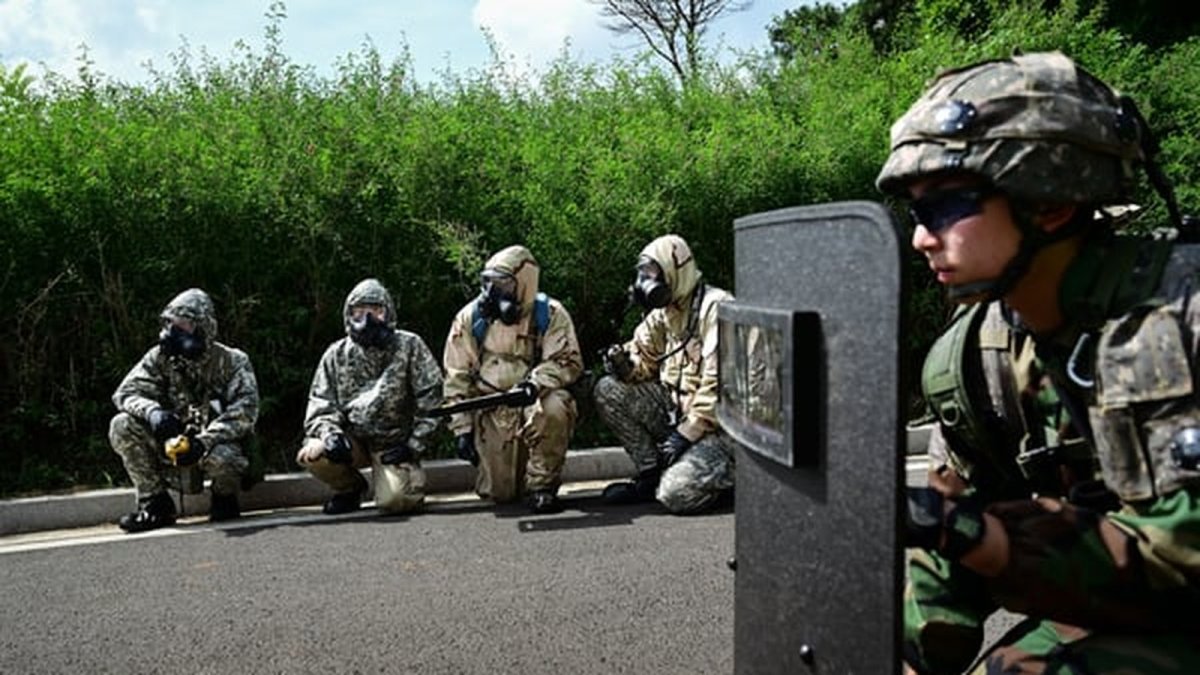
On Sunday, August 16, 2026, President Donald Trump took to Truth Social to announce his displeasure with the Ulchi Freedom Shield (UFS) 2026 combined military exercise, scheduled to commence within hours. Citing his "very good relationship" with North Korean leader Kim Jong Un, the President characterized the drills as "costly" and a signal "totally inappropriate and hostile" to a country he described as "unthreatening and respectful." While acknowledging it was "too late to cancel" the exercise, he ordered Secretary of Defense Pete Hegseth to "substantially reduce" its scope. The order, which arrived just hours before the August 17 start date, was explicitly linked to Seoul's refusal to join U.S. military action against Iran—a conflation of unrelated strategic theaters that has sent ripples through the alliance structure.
The exercise nevertheless began as scheduled on Monday, August 17, with the South Korean Joint Chiefs of Staff (JCS) confirming to Reuters that drills were proceeding. The Pentagon offered no public explanation of what would be cut, leaving commanders, planners, and allied officials in a state of operational ambiguity. This episode, unfolding against the backdrop of a delicate wartime operational control (OPCON) transition and heightened North Korean missile activity, represents a significant departure from the norms of alliance consultation that have underpinned the U.S.-ROK relationship for decades.
The Announcement and Its Precarious Timing
The timing of President Trump's intervention is as significant as its content. UFS 2026, an 11-day exercise running from August 17 to 27, involves approximately 18,000 South Korean personnel. Even before the presidential order, the allies had planned a reduction in field exercises—14 battalion-level or larger events under the Warrior Shield umbrella, down from 17 in 2025—though overall ROK participant numbers remained roughly unchanged. The exercise integrates computer-assisted command-post training with field maneuvers, incorporating lessons from recent conflicts including drone operations, GPS disruption, and cyberattacks.
The logistical reality is that canceling or redesigning the command-post phase at such short notice would create more disruption than savings. Likelier near-term options include narrower U.S. participation, fewer supporting assets, and reductions in field events that had not yet occurred. This suggests the order may be more symbolic than operational in its immediate impact, but the strategic signal is unambiguous. The Diplomat's analysis notes that a recurring combined exercise developed through months of bilateral planning against a nuclear-armed adversary was "recast overnight as an instrument of presidential diplomacy and leverage over an ally." The haphazard nature of the announcement—issued via social media, without prior consultation with Seoul—raises profound questions about the reliability of alliance commitments.
Seoul's Official Response: Measured but Concerned
The South Korean government's response has been carefully calibrated, reflecting both the necessity of maintaining the alliance and the gravity of the slight. The Blue House issued a statement expressing hope that "the friendly relationship between the U.S. and North Korean leaders will lead to meaningful dialogue between the two countries, opening discussions aimed at advancing peace and stability on the Korean Peninsula." On the Iran claim, the Blue House noted that Seoul was discussing potential military contributions while considering its defense readiness on the Korean Peninsula and domestic legal procedures—a formulation that leaves room for negotiation without committing to any specific action.
The Ministry of Defence was more direct, stating that the exercises would "proceed as previously notified and scheduled." This firmness, combined with the JCS confirmation that drills started on Monday, suggests a determination to maintain operational continuity despite the presidential intervention. However, the diplomatic undertone is one of concern. The Lee Jae-myung administration, which has prioritized the OPCON transition as a cornerstone of its defense policy, now faces the prospect of that transition being held hostage to Washington's broader geopolitical agenda. The Blue House's careful wording—acknowledging the U.S.-North Korea relationship while reaffirming the importance of peace and stability—reflects the delicate balancing act required of an ally navigating an unpredictable partner.
The OPCON Transition: Stakes at Their Highest
The most consequential dimension of this episode lies in its implications for the OPCON transition. Seoul seeks to retake wartime operational control from Washington before the Lee Jae-myung administration's five-year term ends in 2030, with some reports suggesting an even earlier timeline of next year. The allies are working on a conditions-based, three-phased transition plan, with the evaluation process for the second stage currently under way. This year's UFS was intended to serve a critical institutional purpose: assessing agreed capabilities supporting the transition, with Seoul hoping a successful assessment would permit certification of the future Combined Forces Command's (CFC) full operational capability and support discussion of a transition timeline later this year.
However, this year's UFS will not involve the ROK deputy commander of the CFC taking over the CFC commander role—a change from some previous drills. This omission has given rise to the view that Washington remains cautious over Seoul's push to expedite the transition. The 2026 U.S. National Defense Strategy calls for South Korea to take primary responsibility for deterring North Korea with "critical but more limited" U.S. support—a shift requiring stronger combined planning and credible validation of ROK command capacity. Curtailing exercises, especially without prior discussion, makes burden-sharing harder to implement. As The Diplomat's analysis emphasizes, UFS value cannot be counted only in troops or field events: it rehearses command relationships, intelligence flows, reinforcement, logistics, missile defense, and civil-military coordination—the machinery to operate as one force in a crisis. Undermining this rehearsal process directly threatens the credibility of the OPCON transition timeline.
The North Korea Diplomacy Calculus
President Trump's framing of the exercise reduction as a gesture toward Pyongyang must be understood within the broader context of his long-standing engagement with Kim Jong Un. The two leaders have a history of dramatic exchanges—from "little rocket man" and "fire and fury" to three summits and "we fell in love" letters—none of which changed North Korea's nuclear and ballistic programs. Trump has repeatedly sought to end or curtail exercises, notably after the 2018 Singapore summit, when he called the drills "expensive" and "provocative." The current episode follows a familiar pattern, amplified by the President's Saturday post of a photo with Kim, accompanied by commentary about how well the two leaders got along "despite the unfriendly look on this particular picture."
Pyongyang's recent behavior, however, suggests little appetite for reciprocal restraint. North Korea fired short-range ballistic missiles toward the East Sea in two separate launches on August 6 and August 12. A North Korean Foreign Ministry spokesperson stated on Friday that U.S.-Japan-South Korea military cooperation is turning into a nuclear alliance, warning that Pyongyang will respond to a new level of threat with a new level of deterrent. The North has also been heavily engaged in support of Russia in its invasion of Ukraine, with North Korean troops fighting alongside Russian forces and gaining combat experience. This context suggests that Trump's unilateral gesture is unlikely to yield the diplomatic opening he seeks. As Jenny Town, head of the Stimson Center's 38 North program, observes, the decision "may be part of a larger effort to create a diplomatic opportunity with Pyongyang, as Trump has consistently wanted since coming back to office, although the haphazard nature of this move is unlikely to make much of an impression in Pyongyang."
Analyst Views and Alliance Implications
The analytical community has responded with a mixture of concern and strategic interpretation. Victor Cha, head of the Korea program at the Center for Strategic and International Studies (CSIS), offers an alternative reading: Trump may be seeking greater influence over North Korea as a means of impeding the Russia-North Korea ties. "The other way to look at this is that Trump wants to engage Kim as a way to impede the Russia-NK ties," Cha suggests. This interpretation frames the exercise reduction not merely as a concession to Pyongyang but as a strategic move in the broader great-power competition, using the Korean Peninsula as a lever in the Ukraine conflict.
Regardless of intent, the alliance implications are profound. The United Nations Command (UNC) is sending around 70 personnel from 12 of its 18 member states to support UFS, underscoring the multilateral dimension of the exercise. The U.S. Eighth Army described UFS' focus as "modernizing the alliance" and "shaping the security environment in Northeast Asia," suggesting a scope potentially expanding beyond the Korean Peninsula—a framing Seoul maintains is strictly for peninsula defense. The conflation of the exercise with the Iran dispute, as The Diplomat notes, "undermines the alliance project Washington itself has long encouraged." Conditioning joint exercises on unrelated diplomatic disputes transforms the alliance from a security partnership into a transactional bargaining relationship, eroding the trust that underpins extended deterrence.
The Future of the Alliance: A Critical Juncture
Looking forward, the episode presents a critical juncture for the U.S.-ROK alliance. One shortened exercise will not undo the combined defense posture, but repeated uncertainty over whether future exercises proceed could weaken readiness, disrupt the OPCON transition, and reduce confidence in alliance consultation. The pattern is concerning: Trump has long clashed with Seoul over cost-sharing, and the approximately 28,500 U.S. troops stationed in South Korea have been a recurring point of contention. The U.S.-ROK Mutual Defense Treaty, centered on "common danger" in "the Pacific area," assumes a level of mutual commitment that this episode calls into question.
If Washington wants to use military restraint to reopen diplomacy with Pyongyang, it must do so in concert with Seoul and in return for meaningful North Korean restraint. Unilateral gestures, issued via social media without prior consultation, do not constitute a coherent strategy—they constitute a gamble with alliance credibility. The Lee Jae-myung administration, which has staked its defense policy on the OPCON transition, now faces the prospect of that transition being delayed or undermined by Washington's unpredictability. The coming months will reveal whether this episode represents an aberration or a new normal in alliance management. For now, the alliance endures, but its foundations have been tested in ways that will not be quickly forgotten in Seoul.
This article was produced with AI-assisted research and editorial support. Sources: The Diplomat, Yonhap News Agency, Defense News, Al Jazeera, Reuters.
By Prof. David Park, Staff WriterWhat's Your Reaction?
 Like
0
Like
0
 Dislike
0
Dislike
0
 Love
0
Love
0
 Funny
0
Funny
0
 Wow
0
Wow
0
 Sad
0
Sad
0
 Angry
0
Angry
0

East Asia/Technology Correspondent at Global1.News. Seoul-based voice covering Korean politics, technology, business, and culture. Analyzes how technology and geopolitics intersect across East Asia.














Comments (0)