
Trump Declares 'Economic D-Day' on Iran: The Crushing Campaign, Explained
Trump declared "economic D-Day" on Iran on Aug 19, pairing new sanctions with a naval blockade after the June truce collapsed. Treasury hit Hezbollah and cash smugglers; China refused to cooperate. Oil nears $94 a barrel as Iran vows a "devastating" response. Can the pressure campaign work?
The Escalation That Breaks a Fragile Truce
President Donald Trump has declared what he calls the "most crushing economic operation ever taken against any country" in a dramatic escalation of the nearly seven-month-old US-Iran conflict. The announcement, posted on Truth Social Wednesday evening, frames the new campaign as a final ultimatum: Iran "failed to take" the opportunity to make a deal, and now faces "Economic Warfare and Isolation on an unprecedented scale." The declaration lands as the June truce — already frayed — officially collapses with the expiration of a 60-day sanctions waiver on Friday.
The President's rhetoric was characteristically blunt, painting a picture of a nation in ruins: "Their navy is gone, their air force is destroyed, their military factories are now rubble, their currency is worthless, and their country is hanging by a thread." He warned that any country providing "any type of lifeline to Iran" will face "TREMENDOUS Economic Consequences" from the United States. The message is unmistakably directed at Beijing, which has thus far refused to abandon its position as Iran's primary oil purchaser.
This is not a symbolic gesture. Treasury Secretary Scott Bessent told CNBC on Thursday that the administration is pairing the new sanctions with the existing naval blockade to constrain Iran's economy, curtail its ability to "project power through its proxies," and reduce its capacity to fund its military. The campaign, Bessent said, will increase economic pressure through inflation and financial isolation. He pledged "the toughest sanctions in history" on Iran, with further details slated for announcement Monday, August 24.
A 60-Day Waiver That Was Always Going to Expire
To understand where we are, you have to rewind to June 17, when the "Islamabad Memorandum" was signed. That agreement, brokered amid the chaos of the late-January outbreak of war, included a US Treasury-issued 60-day waiver on Iranian oil sanctions covering crude, petrochemicals, and petroleum products. The waiver went into effect June 22, offering Tehran a brief window of economic relief in exchange for a ceasefire that was supposed to de-escalate the conflict.
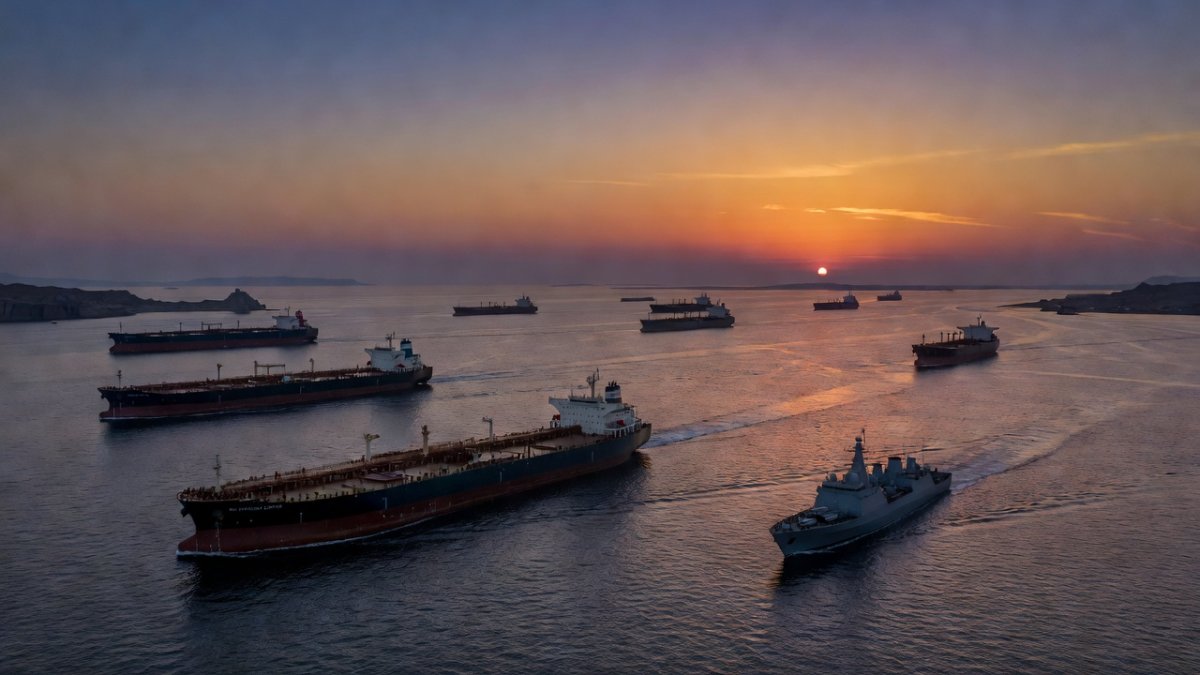
That window slammed shut on August 21. The truce collapsed in July — the US re-imposed its naval blockade of Iran's shipping and ports on July 13 — and now the sanctions waiver has expired, snapping the full weight of US economic penalties back into place. The sequencing is deliberate: the blockade physically strangles Iran's ability to move oil, and the sanctions regime now makes any attempt to circumvent it a financial crime punishable by US retaliation against third parties.
Iran's parliament speaker and top negotiator, Mohammad Bagher Ghalibaf, has issued a list of demands the US must meet before the Strait of Hormuz reopens: removal of the blockade, lifting sanctions on Iranian oil, unfreezing Iran's assets abroad, and ending military threats. These demands echo the June truce terms that already failed once. Trump maintains the Strait is already open, the blockade stays, and no negotiations are scheduled. The diplomatic channel is effectively dead.
Hezbollah Sanctions: Squeezing the Proxy Network
On Thursday, the US Treasury moved against Hezbollah in a coordinated strike designed to sever the financial arteries of Iran's most capable proxy. The department re-designated the Lebanese militant group as acting on behalf of Iran's Islamic Revolutionary Guard Corps-Quds Force (IRGC-Qods Force), a legal classification that carries significant consequences for any financial institution or business that engages with the group.
More concretely, Treasury sanctioned ten individuals who ran a cash-smuggling network that moved up to hundreds of millions of dollars for Hezbollah. The operation used couriers on commercial flights linking Lebanon, Turkey, the United Arab Emirates, and Iran — a low-tech but highly effective pipeline that Treasury says exploited oil smuggling, illicit shipping, commodities sales, and bulk cash smuggling. The US first designated Hezbollah a foreign terrorist organization in 1997, but this new action targets the group's operational financing with surgical precision.
The timing is no accident. With Iran's own economy under siege, Hezbollah's ability to fund its operations becomes a critical vulnerability. Bessent explicitly linked the campaign to curtailing Iran's ability to "project power through its proxies" — and Hezbollah is the crown jewel of that proxy network. Cutting off the cash flow is a direct assault on Iran's regional influence, not just its domestic economy.
China's Defiance: The Elephant in the Room
The entire strategy hinges on one question: will China cooperate? So far, the answer is a resounding no. Beijing publicly rejected Washington's demand to cooperate, with a Chinese foreign ministry spokesperson stating Thursday that sanctions will not solve the conflict. This is not diplomatic hedging — it is a direct rebuke of the Trump administration's core assumption that economic pressure can force Iran to capitulate.
The numbers explain why China's position matters so much. According to 2025 data from Kpler, China buys more than 80% of Iran's shipped oil. That is not a minor trading relationship; it is the economic lifeline that keeps the Iranian regime afloat. The Institute for the Study of War (ISW) noted in its August 20-21 analysis that Chinese economic engagement cannot offset the blockade if Iran cannot physically supply its largest customer — and that is precisely the point of the naval interdiction.
Trade sources told Reuters that the number of Iranian oil cargo offers to Chinese buyers for September and October delivery has already declined from July and August as the blockade bites. The physical reality of the blockade is doing what sanctions alone could not: cutting the flow of oil before it even reaches the market. But China's political defiance means the US cannot rely on Beijing to enforce the sanctions regime voluntarily — it must rely on the blockade to do the heavy lifting.
Oil Markets Brace for $100 a Barrel
The market is already pricing in the chaos. ICE Brent crude traded near $94 a barrel on Friday, August 21 — its highest level since late 2025 — with analysts watching a potential push toward $100. The Strait of Hormuz, through which roughly a fifth of global oil passes, has seen transits in single digits all week. That is not a slowdown; that is a near-total shutdown of the world's most critical energy chokepoint.
The ripple effects are being felt far beyond the crude market. Asian LNG prices have hit about $24 per MMBtu, and VLCC freight rates are at exorbitant levels as shipping companies price in the risk of transiting a war zone. The US consumer is not insulated: the national average gas price is $4.07 per gallon, up $0.93 from a year ago, according to AAA data cited by CNN and al.com. That is a record-high gas price for the month of August.
These are not abstract market movements. Every dollar at the pump is a political data point in an election year, and the administration is acutely aware that economic pain at home undermines the narrative of a successful campaign abroad. The question is whether the White House can sustain this pressure long enough to force Iranian concessions before domestic political costs become unbearable.
Iran's Military Response: Defiance From Tehran
Iran is not waiting passively for the economic noose to tighten. Maj. Gen. Ali Abdollahi, Iran's armed forces chief of staff, said Friday that Tehran's reaction would be "broad and decisive." In a statement that matched Trump's rhetoric blow for blow, Abdollahi declared: "With preparedness across land, sea, air, air defence and cyberspace, Iran's armed forces will respond to the enemy's new threats with crushing, punishing and devastating responses." Reuters reported that Iran said its response to any new US threats would be "devastating."
The military posture is matched by diplomatic defiance. Iranian Foreign Ministry spokesman Esmaeil Baghaei framed the new sanctions as an overreach that extends US jurisdiction to other independent states: "No state has the right to compel foreign banks, businesses or nations." This is a direct appeal to the international community — and particularly to China and other non-aligned powers — to resist US pressure as a matter of sovereignty, not just commercial interest.
The risk of escalation is real. With the Strait of Hormuz effectively closed and Iran's military leadership promising devastating retaliation, the window for a miscalculation is wide open. The US Navy's USS Lincoln has been on extended deployment throughout the war, and military families and lawmakers have raised concerns about the crew's mental health and morale, according to CNN's live coverage of the conflict. The human cost of this campaign extends beyond the battlefield to the sailors and Marines enforcing the blockade.
Can "Economic D-Day" Actually Work?
Sen. Jim Banks (R-Ind.) told Newsmax that "Economic D-Day Has Begun," adding that "We've set their nuclear ambitions back by a generation." That is the administration's theory of victory: economic strangulation will force Iran to abandon its nuclear program and regional ambitions without requiring a larger ground war. But the theory has a critical flaw — there is no indication that economic pressure has changed the anti-concessions position of some top Iranian officials.
The ISW's August 20-21 analysis paints a more nuanced picture. While hardliners remain defiant, a group of Iranian officials responsible for managing the economy — the "realists" — are increasingly warning that worsening economic pressure could threaten regime stability. That is the opening the administration is hoping to exploit: if the regime fears collapse more than it fears concession, it may eventually come to the table. But that is a gamble, not a certainty.
The Week's August 22 analysis captures the central question: can Trump's "economic D-Day" actually work given China's resistance and Iran's defiance? The blockade is biting, the sanctions are the toughest in history, and the proxy networks are being systematically dismantled. But Iran has survived decades of sanctions, and its leadership has shown a remarkable capacity for endurance. The next few weeks will determine whether this is a decisive blow or another chapter in a long, grinding conflict with no clear end in sight.
This article was produced with AI-assisted research and editorial support. Sources: CNN, Reuters, Al Jazeera, Institute for the Study of War, The National, Gulf News, Democracy Now!, The New York Times, US Department of the Treasury, Newsmax, The Week.
By Jessica Ali, Staff Writer
What's Your Reaction?
 Like
0
Like
0
 Dislike
0
Dislike
0
 Love
0
Love
0
 Funny
0
Funny
0
 Wow
0
Wow
0
 Sad
0
Sad
0
 Angry
0
Angry
0

Editor-in-Chief at Global1.News. Atlanta-based journalist who cuts through the BS and tells it like it is. Lead anchor, host, and the voice you hear when the spin stops and the truth starts.













Comments (0)