
Iran confirms US reply to latest proposal but provides no detail
As the seven‑month war that erupted in February continues to reshape the Gulf’s strategic calculus, Tehran and Washington remain locked in a fragile diplomatic dance.
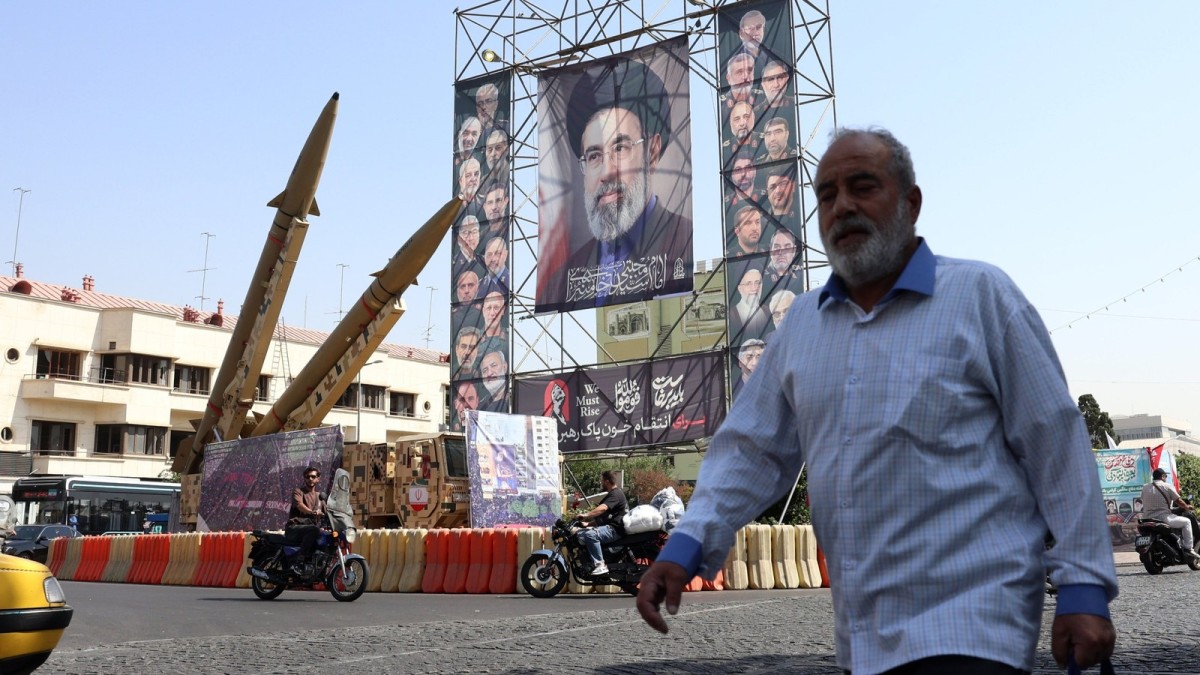
As the seven‑month war that erupted in February continues to reshape the Gulf’s strategic calculus, Tehran and Washington remain locked in a fragile diplomatic dance. Recent developments reveal that the United States has formally responded to Iran’s latest overture to end the conflict, yet the substance of that reply remains shrouded in secrecy. The episode underscores the broader contest between Sunni‑Shia regional rivals, the leverage of great‑power involvement, and the ever‑pressing imperative of securing energy flows through the Strait of Hormuz.
Iran’s Confirmation of a U.S. Reply
Iranian officials confirmed on Wednesday that they have received a response from the United States to Tehran’s most recent proposal aimed at halting hostilities. The acknowledgement came from Foreign Minister Abbas Araghchi, who presented the U.S. reply to President Masoud Pezeshkian during a Cabinet meeting, according to a statement by government spokesperson Fatemeh Mohajerani to the state‑run IRNA news agency.
President Pezeshkian stressed that Iran would “make every effort to bring the agreement to fruition” and framed any prospective settlement as a “win‑win strategy” that safeguards the rights of the Iranian people. The Cabinet’s discussion of the U.S. response follows Araghchi’s return from New York, where he participated in the United Nations General Assembly and engaged in indirect talks with American officials, as well as with Qatari and Pakistani mediators.
Negotiation Dynamics in New York
During the UN General Assembly, Araghchi briefed senior officials on the conditions Tehran deems necessary for reopening the Strait of Hormuz. These conditions, relayed through mediators, include a U.S. commitment to lift the blockade of Iranian ports, release frozen Iranian assets, and waive sanctions on Iranian oil sales. The American diplomat reportedly floated a proposal to reopen the strait within a week, contingent on those concessions.
Despite the diplomatic overture, former President Donald Trump publicly dismissed the American proposal, characterising Iran’s willingness to negotiate as a sign of “losing so badly” and deeming the offer “unacceptable.” Nonetheless, unnamed officials close to the mediation process indicated that talks continued behind the scenes, suggesting that the public rebuff did not entirely halt diplomatic engagement.
U.S. Economic Pressure and “Operation Economic Outcast”
Parallel to the diplomatic channel, the United States has intensified its economic campaign against Tehran. On Tuesday, the U.S. Treasury Department announced a fresh round of sanctions targeting individuals and entities accused of facilitating Iran’s military supply chain. The sanctions, part of the administration’s “Operation Economic Outcast,” aim to sever “critical financial lifelines” for the heavily sanctioned Iranian government.
Ten persons and companies based in Iran, Hong Kong and Pakistan were listed, alleged to have procured weapons and components for Iran’s Defense Ministry. The move reflects a broader strategy to exert pressure on Tehran’s war‑fighting capacity while maintaining leverage in any prospective settlement over the Strait of Hormuz.
Economic Fallout Within Iran
The war has exacerbated Iran’s pre‑existing economic fragility. Since the conflict began in late February, the Iranian rial has spiralled to unprecedented lows. On Tuesday, traders exchanged more than 2.5 million rials per U.S. dollar, a new record that eclipsed the previous low of 2.2 million set on 2 September. The rapid depreciation underscores how the war has steadily eroded Iran’s economic stability.
Such monetary weakness fuels domestic discontent, a factor that the Iranian government has struggled to contain. The deteriorating currency, combined with sanctions and the costs of sustained military operations, has placed the Iranian economy in a “free fall,” according to the state‑run IRNA agency.
Domestic Unrest and Repression
Amid the economic crisis, Iran has witnessed a resurgence of internal dissent. In January, nationwide protests erupted over the collapsing rial and broader grievances against the regime. The unrest began in the northeastern city of Mashhad, where demonstrators clashed with security forces, resulting in the death of four officers.
On Wednesday, the Iranian judiciary announced the execution of two men convicted of involvement in the Mashhad violence. Their death sentences, upheld by the Supreme Court, were carried out in the early morning. Rights groups have documented thousands of fatalities and tens of thousands of arrests during the crackdown, while Iranian authorities have reported a substantially lower death toll.
Trump’s Rhetoric and Political Calculus
President Trump has repeatedly framed the conflict in stark terms, claiming that Iran is “failing very badly” and forecasting that the war will conclude “very, very soon.” Earlier in the conflict, he predicted a swift resolution lasting only weeks, a timeline that has since stretched into months.
More recently, Trump hinted that the war’s duration might extend beyond the upcoming U.S. midterm elections on 3 November, suggesting that domestic political considerations are influencing the administration’s approach to the conflict and its diplomatic overtures.
Outlook for a Settlement
With the United States having formally responded to Tehran’s latest proposal—though the content remains undisclosed—the diplomatic pathway remains open but fraught with uncertainty. Iran’s insistence on lifting the blockade, releasing assets, and waiving sanctions signals a high‑stakes bargaining position, while the U.S. continues to wield economic sanctions as a lever of pressure.
The interplay of regional rivalries, great‑power interests, and internal Iranian pressures will shape the next phase of negotiations. Should a “win‑win” arrangement materialise, it would likely involve a calibrated easing of sanctions in exchange for a definitive reopening of the Strait of Hormuz, thereby restoring a critical conduit for global energy markets. Absent such a breakthrough, the war’s economic toll on Iran and the broader Gulf’s stability may deepen, further entangling the region in a protracted conflict that reverberates far beyond its borders.
This article was produced with AI-assisted research and editorial support. Reporting is based on the source material cited below. Sources: Daily Sabah Middle East; dailysabah.com; Global1.News (01 October 2026).
By Malik Hassan, Staff Writer
What's Your Reaction?
 Like
0
Like
0
 Dislike
0
Dislike
0
 Love
0
Love
0
 Funny
0
Funny
0
 Wow
0
Wow
0
 Sad
0
Sad
0
 Angry
0
Angry
0

Middle East Correspondent at Global1.News. Based in Beirut, covering politics, conflict, energy, and society across the Middle East. Brings context and depth to a region often reduced to headlines.










Comments (0)