
The Governors Who Courted the AI Buildout Are Now Running From It
Sitting governors who recruited the data center boom are now clamping down as the 2026 midterms near. States from Pennsylvania to Texas are tightening permit rules and clawing back tax breaks - a founder on the political flip.
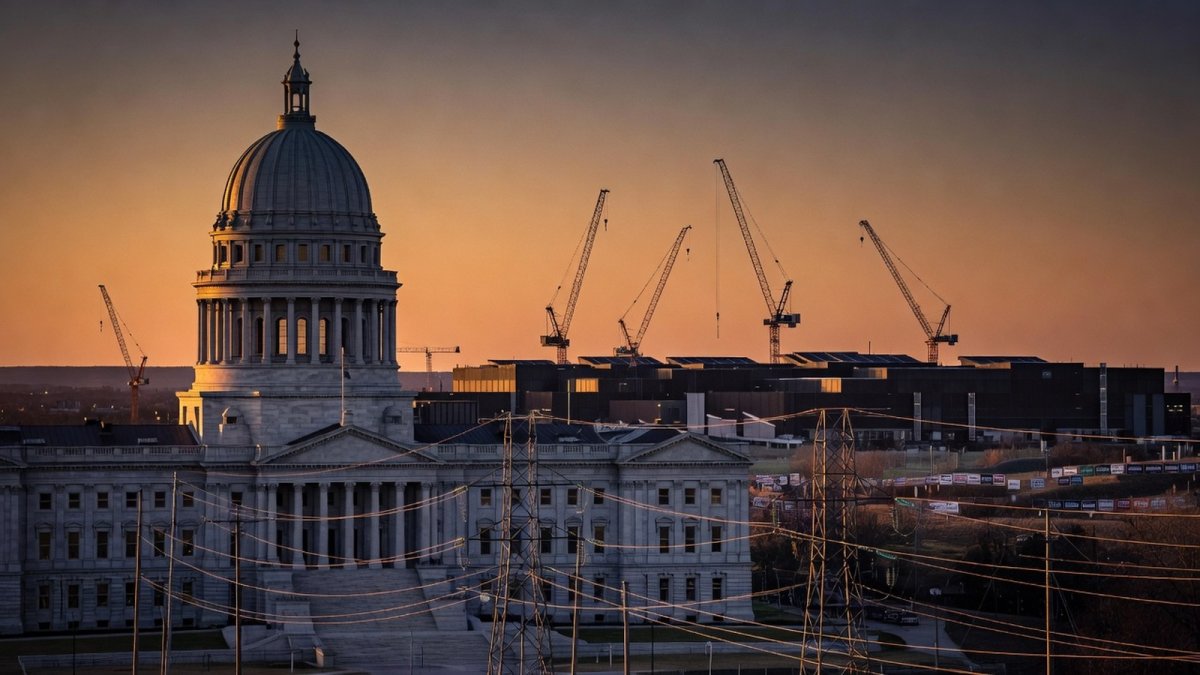
The Governors Who Courted the AI Buildout Are Now Running From It
Let me tell you something that's been sitting heavy with me all week. I've been running hosting infrastructure for over a decade, and in all that time I've watched politicians fall over themselves to recruit data centers. Ribbon cuttings. Tax breaks. "We're building the AI capital of the world." That was the script, every single time. Then Monday happened, and I realized the script just flipped.
Pennsylvania Governor Josh Shapiro stood up on August 18 and said his administration would stop putting data center projects at the head of the line for permits and tax exemptions — unless they pay the full cost of their electricity, prove they'll limit water use, and win local approval first. He called it the "strictest guardrails in the nation." The same Josh Shapiro who once stood next to Amazon executives announcing a $20 billion investment in Pennsylvania. The cheerleader just became the referee. And he's not alone.
The News — The Cheerleaders Just Flipped
This isn't one governor having a bad week. It's a coordinated stampede, and it's all aimed at the same election. The Associated Press laid it out on August 18: governors' races across the country are now being "buffeted by the toxic politics of data centers" as the midterms approach and public opinion sours on the energy-hungry behemoths powering AI.
Go down the list and it's the same story everywhere. In Texas, Democratic challenger Gina Hinojosa released a TV ad Tuesday accusing Governor Greg Abbott of "selling you out" to data center executives. In Arizona, Governor Katie Hobbs — who voted to create data center tax credits when she was a legislator — got lawmakers to slap a three-year moratorium on the state's sales tax exemption and now calls it a "corporate handout." In Illinois, Governor J.B. Pritzker halted new sales tax exemptions until lawmakers impose tougher standards. In New York, Kathy Hochul ordered a one-year ban on large data centers. In Ohio, both major party nominees — Democrat Amy Acton and Republican Vivek Ramaswamy — rolled out dueling plans in recent days to make developers meet tougher standards before they build. In Wisconsin, Republican Tom Tiffany is running TV ads calling his Democratic opponent "Data Center David Crowley."
Seven states, both parties, one message: the party is over.
Pennsylvania — "Predatory Developers" and the 100 Projects That Will Never Be Built
Shapiro's announcement deserves a closer look, because buried inside it is the thing independent hosting folks should actually be scared of. He didn't just add guardrails. He called out "predatory developers" trying to bully local officials and ram through projects — and his administration says it counted more than 100 data center proposals in Pennsylvania that will likely never be built because they don't have the financing, the power supply, or the tech clients to use the space.
Think about that number. More than a hundred announced projects. The AP reports Pennsylvania developers were aiming to build six campuses of about 50 server warehouses in tiny Archbald Borough alone — a community uprising, a lawsuit from one developer, and motions to force the recusal of six of the town's seven council members later, the whole thing is a war zone.
That's the part the industry doesn't want to talk about. A good chunk of what gets announced as "AI infrastructure" is speculative theater — land options, press releases, and a prayer. When the governor of a major state says it out loud, the public hears "these guys are con artists," and every real developer in the state pays for the fakes.
Texas — From "AI Epicenter" to "Selling You Out"
Texas is the sharpest flip of all, because nobody recruited harder. Abbott signed House Bill 2712 back in 2015 to hand hyperscale data centers 20-year tax breaks. He stood with Google executives announcing a $40 billion investment. He touted Texas as the AI epicenter. Now he's ordering regulators to hold up data center projects, promising a legislative agenda to take away the state's billion-dollar-plus-per-year tax break, and telling Texans he's making sure they don't pay higher electric bills because of data centers.
Meanwhile Hinojosa is on Bloomberg this week saying Texas has "no real protections" against the data center gold rush descending on rural parts of the state. She's calling for a full moratorium until the legislature passes real laws. And here's the kicker: it's working in Republican strongholds. The AP and CBS both report rural conservative voters who've never voted for a Democrat in their lives are telling reporters they'll vote for Hinojosa because she's against data centers in rural areas. A woman in a rural Texas county said she won't vote for Abbott and might vote Democrat for the first time — "because she's against data centers in rural areas."
When the tax-break giveaway is costing you rural Republican votes, the 20-year incentive you signed in 2015 is worth exactly nothing politically. That's the arithmetic every governor in America just did.
The Wave — Arizona, Illinois, New York, Ohio, Wisconsin
Let me run the rest of the board, because the pattern is unmistakable. Hobbs in Arizona: moratorium on the sales tax exemption she once championed, calling it a handout. Pritzker in Illinois: no new sales tax exemptions until standards get tougher. Hochul in New York: a year-long ban on large data centers while the state figures out grid and environmental protections. In Ohio, Acton wants a conditional moratorium unless developers meet requirements on costs, union labor, transparency, environmental standards, and community benefit agreements; Ramaswamy opposes a ban but still wants tougher standards — and the state's Libertarian candidate wants restrictions too. Every candidate for Ohio governor now calls for restricting the boom.
In Wisconsin, the nuance is instructive. Crowley beat a primary challenger who made a one-year moratorium the centerpiece of her campaign — but he's still running on local veto authority, tougher renewable and labor conditions for tax incentives, and enhanced water-use reporting. Even the "pro-data center" candidate in Wisconsin is campaigning on accountability. Political science professor Barry Burden at UW-Madison put it plainly: this is the first election cycle where data centers are a top-of-mind concern for voters, and the candidates aren't far apart.
The Secondary Bottleneck Nobody's Talking About — The Incentive Clawback
Here's the thing nobody in the hype machine wants to admit. We've spent two years talking about GPU supply, power grids, transformers, water, and community consent as the bottlenecks on AI infrastructure. But the bottleneck that just got real is the one nobody priced in: the tax incentive is being clawed back, state by state, in an election year.
Do the math on what that does. Data center economics have been built on a subsidy stack — sales tax exemptions, property tax abatements, cheap power deals. When states start yanking exemptions, imposing full-cost electricity requirements, and forcing local approval before state approval, two things happen. First, the marginal projects die — the speculative ones, the ones announced on a land option and a slide deck. Second, the survivors get more expensive to build, which means higher prices for compute, which means the "AI is getting cheaper every year" story takes a hit.
And here's the structural part: this isn't a one-cycle backlash. The 2026 midterms are the first election where data centers are a top-tier voter issue in swing states — Pennsylvania, Wisconsin, Michigan-adjacent Ohio, Texas. Politicians respond to voters, and voters are angry about electric bills, water, and rural character. The governors who built their careers recruiting this industry are now building their re-election campaigns on regulating it. That incentive structure doesn't flip back after November. It compounds.
What This Means for Independent Hosting Providers
If you're running an independent hosting or colo operation, this wave hits you in ways the hyperscalers barely feel. Let me give you the practical list.
First, stop planning around subsidies. If your business model assumed a sales tax exemption or a property tax abatement survives the next legislative session, it doesn't. In Texas the billion-dollar-plus annual break is on the chopping block. In Arizona it's already suspended for three years. Model your pricing on the full cost of your power and your taxes, today, and treat any incentive as a bonus that can vanish in a budget cycle.
Second, watch the speculators poison the well — and don't be one. Shapiro's "more than 100 projects that will never be built" line is going to be quoted in every zoning hearing in America. Announced-but-ghost projects are now political ammunition. If you're going to tell a community you're building, you'd better have the financing, the power contract, and the client. One more "AI data center coming soon" press release with nothing behind it hurts every real operator in that county.
Third, local approval is now the real permit. The new Pennsylvania rule — local approval before state approval — is going to spread. That means your site selection just got a lot more political. Communities with organized opposition, water stress, or diesel-generator anxiety are now multi-year risk, not a site-selection footnote. Do the community-consent diligence before you sign the lease, not after the first town hall.
Fourth, expect your power costs to rise and your edge to widen. When states force data centers to "pay the full cost of their electricity," that's a cost-pass-through event for the entire industry. But independent operators who already run efficient facilities, buy power smart, and have real relationships with their communities are better positioned to absorb it than a 500-megawatt spec build with no tenant. The squeeze on the marginal projects is your opportunity — if you're real.
The Bottom Line
I've said before that community consent was the structural constraint on this buildout. I was wrong about the timing — the constraint just went electoral, and it moved fast. The governors who cut the ribbons are now the governors setting the guardrails. The tax breaks that built the last decade of data center economics are being clawed back in real time. And the "more than 100 projects that will never be built" line is going to haunt every speculative announcement between now and November.
Here's my advice, blunt as always: build something real, in a place that wants you, on economics that work without a handout. Because the free lunch this industry was promised is officially off the table — and the states just took the menu away.
— Allan Ali, Founder
This article was produced with AI-assisted research and editorial support. Sources: Associated Press (August 18, 2026), Bloomberg, CBS News Texas, Ars Technica, Wisconsin Public Radio, Ohio Capital Journal, Crain's Cleveland.
What's Your Reaction?
 Like
0
Like
0
 Dislike
0
Dislike
0
 Love
0
Love
0
 Funny
0
Funny
0
 Wow
0
Wow
0
 Sad
0
Sad
0
 Angry
0
Angry
0

Publisher of Global1.News. Automation architect, systems builder, and the guy making sure the truth gets published.











Comments (0)