
Wyoming Republican Gubernatorial Primary: Trump-Backed Candidate Loses to Eric Barlow
Folks, grab a cup of coffee and sit down, because the political earthquake you didn’t see coming just hit the high plains of Wyoming. On Tuesday, August 18, the unthinkable happened in the Cowboy State: the Trump-endorsed candidate for governor lost. Not to a moderate, not to a Never-Trumper, but to a 14-year legislative veteran and Gillette rancher named Eric Barlow.
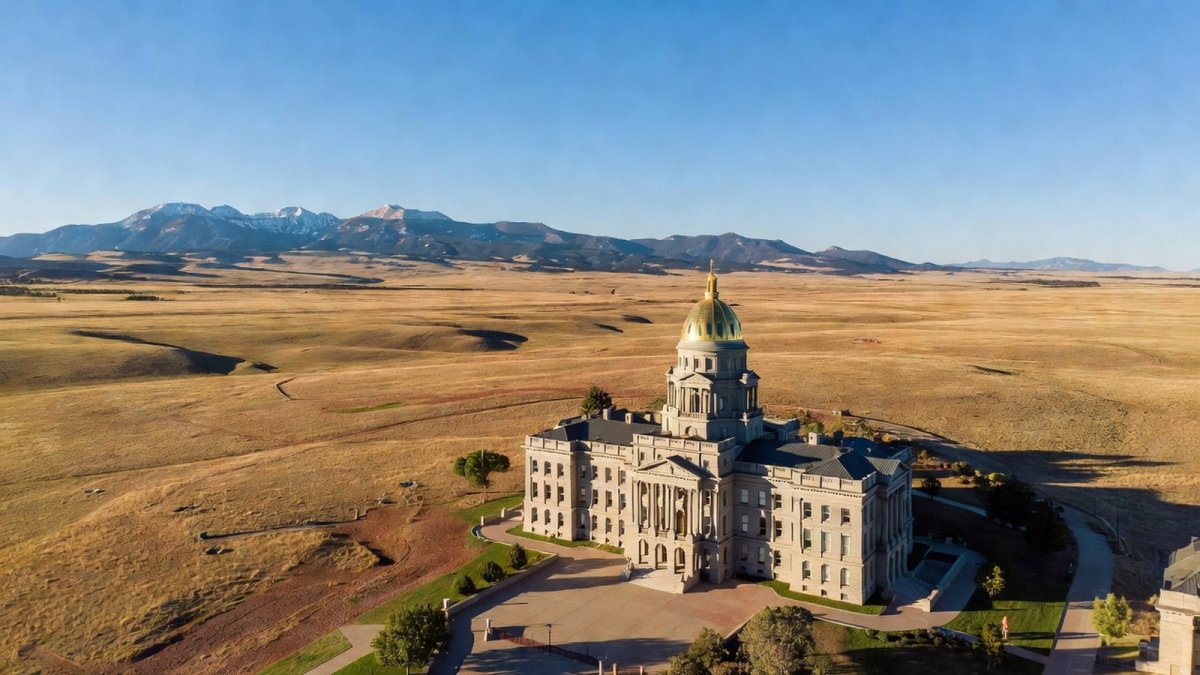
Folks, grab a cup of coffee and sit down, because the political earthquake you didn’t see coming just hit the high plains of Wyoming. On Tuesday, August 18, the unthinkable happened in the Cowboy State: the Trump-endorsed candidate for governor lost. Not to a moderate, not to a Never-Trumper, but to a 14-year legislative veteran and Gillette rancher named Eric Barlow. The Associated Press called it, the New York Times confirmed it, and the Washington Post is already writing the obituary for another presidential endorsement. This wasn’t just a primary loss; it was a message sent from the Equality State straight to Mar-a-Lago.
Let’s be real for a second. Wyoming is about as red as it gets. It’s a state where the Democratic Party is practically a rumor, where the Republican primary is the general election, and where the winner of Tuesday’s GOP nod is essentially the next governor. So when State Sen. Eric Barlow beat Megan Degenfelder—the state superintendent of public instruction and the hand-picked choice of President Donald Trump—it wasn’t just a local upset. It was a seismic shift in the tectonic plates of the 2026 midterm cycle. And I’m not going to sugarcoat it: this is the latest in a run of failed gubernatorial endorsements for the President, and the pattern is getting harder to ignore.
The Upset That Shook the Equality State
Let’s set the scene. It’s a Tuesday night in August. The air is crisp, the sagebrush is blowing, and the votes are coming in. Megan Degenfelder had the machine behind her. She had the name recognition from her statewide role as superintendent. She had the endorsement of the most powerful man in the Republican Party. And she had the backing of a national media apparatus that assumed this was a coronation, not a contest. But Wyoming voters had other ideas.
Eric Barlow, a rancher from Gillette and the former speaker of the Wyoming House, didn’t just win. He beat Degenfelder in a race that included retired Marine Corps Col. Brent Bien and Curt Blake. The AP called it for Barlow, and the political world collectively gasped. This wasn’t a squeaker decided by a handful of votes in a county that forgot to count; this was a decisive repudiation of the idea that a Trump endorsement is a golden ticket in a deep-red state.
WyoFile, the state’s premier political outlet, didn’t mince words. They described Barlow as "the overwhelming favorite to become the state's next chief executive officer." That’s not a prediction; that’s a eulogy for the Degenfelder campaign. In a state where the GOP primary is the whole ballgame, Barlow just punched his ticket to the governor’s mansion. The general election against Democrat Ken Casner on Tuesday, Nov. 3? That’s a formality, folks. A speed bump. A courtesy lap.
Who Is Eric Barlow, and Why Did He Win?
Let’s talk about the man of the hour. Eric Barlow isn’t a political newcomer. He’s a legislator of 14 years, a former speaker of the Wyoming House, and a rancher who understands the land, the water, and the people of this state. He’s not a firebrand. He’s not a social media warrior. He’s the kind of guy who shows up to county fairs, shakes hands with coal miners, and talks about property taxes and water rights like he actually knows what he’s talking about. Because he does.
In a state that values independence and self-reliance, Barlow represents a return to a certain kind of conservatism—the kind that’s more about local control and less about national loyalty tests. He’s the anti-celebrity candidate. While Degenfelder was getting endorsements from national figures, Barlow was getting endorsements from the folks who actually live in Wyoming. And in a primary, that’s the only endorsement that matters.
This isn’t to say Barlow is a moderate. Far from it. He’s a conservative’s conservative. But he’s a Wyoming conservative, not a cable-news conservative. He understands that the issues facing his state—energy policy, federal land management, rural healthcare—aren’t solved by Twitter fights. They’re solved by legislation, negotiation, and a deep understanding of the local economy. That’s a message that resonated, and it resonated hard.
The Trump Endorsement: A Blessing or a Curse?
Here’s where it gets spicy, folks. President Trump endorsed Megan Degenfelder. He put his name, his brand, and his political capital on the line. And the voters of Wyoming looked at that endorsement and said, "Thanks, but no thanks." This is the latest in a run of failed gubernatorial endorsements for Trump in the 2026 cycle. The pattern spans multiple states—we saw it in Iowa, and now we’re seeing it in Wyoming. Politico put it bluntly: "Trump's pick for Wyoming governor is the latest endorsee to lose a primary."
Let’s be clear about what this means. It doesn’t mean Trump is weak nationally. It doesn’t mean his base is abandoning him. But it does mean that in certain states, at certain times, the voters are making their own decisions. They’re looking at the candidate, not the endorsement. They’re asking, "Who’s going to do the best job for my state?" And in Wyoming, they decided that answer was Eric Barlow.
The New York Times framed it perfectly: "Rancher Beats Trump-Backed Candidate in Primary for Governor of Wyoming. Eric Barlow's defeat of Megan Degenfelder, the state superintendent of education, again showed the limits of the president..." The limits. That’s the key phrase. There are limits to the power of an endorsement, even from a president who dominates the news cycle. And Wyoming just drew a line in the sand.
But here’s the twist, and I want you to pay attention because this is where the narrative gets complicated. The same night, in Florida, Trump-backed Rep. Byron Donalds won the GOP gubernatorial primary in the race to succeed Ron DeSantis. So Trump’s endorsement record on Tuesday was mixed. He won in Florida, he lost in Wyoming. That’s not a clean sweep, and it’s not a total collapse. It’s a mixed bag, and that’s actually more interesting than a total defeat.
What Does This Say About the 2026 Midterms?
Folks, let’s zoom out. This isn’t just about Wyoming. This is about the broader political landscape heading into November. The 2026 midterm cycle is shaping up to be a referendum on the Trump administration, but it’s also shaping up to be a test of whether the President’s coattails are as long as they used to be. In Iowa, we saw a similar dynamic. In Wyoming, we just saw it again. The Washington Post headline says it all: "Trump pick for Wyoming governor loses primary, adding to string of defeats."
What’s the common thread? It’s not that voters are rejecting Trumpism. It’s that they’re rejecting the idea that a national endorsement can substitute for local credibility. In a gubernatorial race, voters want someone who understands their state’s budget, their state’s infrastructure, their state’s unique challenges. They don’t want a puppet. They don’t want a celebrity. They want a governor.
And that’s a lesson that cuts both ways. For Democrats, it’s a reminder that even in deep-red states, there’s room for a compelling candidate to break through. For Republicans, it’s a warning that the base isn’t a monolith. The MAGA movement is powerful, but it’s not the only force in the GOP. There’s a strain of conservatism that’s more libertarian, more localist, more focused on the statehouse than the White House. And in Wyoming, that strain just won.
The Race to Succeed Governor Mark Gordon
Let’s not forget the context here. This primary was to succeed term-limited Republican Gov. Mark Gordon, who is retiring. Gordon has been a steady hand for Wyoming, navigating the state through energy transitions, budget shortfalls, and the COVID-19 pandemic. He’s not a flashy guy, but he’s been effective. And his departure opened up a wide-open race with no incumbent advantage.
That’s part of why this primary was so competitive. With no sitting governor to clear the field, you had four candidates fighting for the soul of the Wyoming GOP. You had Degenfelder, the establishment-backed superintendent. You had Barlow, the legislative veteran. You had Bien, the retired Marine Corps colonel with a national security background. And you had Blake, the wildcard. It was a crowded field, and in a crowded field, the candidate with the deepest roots often wins.
Barlow’s roots are deep. He’s been in the legislature for 14 years. He’s been speaker of the House. He knows the budget, he knows the committees, he knows the backroom deals and the public hearings. He’s not a newcomer to the dance; he’s the guy who’s been running the floor for over a decade. And when voters had to choose between a national brand and a local institution, they chose the institution.
The General Election: A Formality or a Fight?
Now, let’s talk about November. Barlow will face Democrat Ken Casner in the general election on Tuesday, Nov. 3. In any other state, this would be a competitive race. In Wyoming? It’s a coronation. The state hasn’t elected a Democratic governor since Dave Freudenthal won re-election back in 2006 — nearly two decades ago — and Casner is facing an uphill battle that would make Sisyphus blush. But don’t count him out entirely—stranger things have happened. But let’s be honest: this is Barlow’s race to lose, and he’s not going to lose it.
The real story isn’t the general election. The real story is what this primary says about the state of the Republican Party. Wyoming is the most Republican state in the nation. It’s a state where Trump won by nearly 43 points in 2020. And yet, when given the chance to rubber-stamp his endorsed candidate, the voters said no. That’s not a fluke. That’s a signal.
It’s a signal that the grassroots are paying attention. It’s a signal that they care about issues over personalities. It’s a signal that the "cult of personality" narrative is oversimplified. Yes, Trump has a loyal base. But that base isn’t blind. They’re capable of making distinctions. They’re capable of saying, "I like Trump, but I want a governor who knows Wyoming." And that’s a healthy sign for democracy, even if it’s a headache for the President’s political operation.
The Limits of Power: A National Pattern
Let’s dig into this pattern a little more, because it’s not just a one-off. The Washington Post noted that this loss is "adding to a string of defeats." That’s not hyperbole; that’s a trend. In Iowa, we saw a similar dynamic play out. In other states, we’re seeing it too. The President’s endorsement is powerful, but it’s not omnipotent. It can move votes, but it can’t manufacture credibility.
Why is that? I think it’s because voters are getting smarter about the difference between national politics and local governance. A president can set foreign policy, sign executive orders, and dominate the news cycle. But a governor has to fix the roads, fund the schools, and manage the state’s water rights. Those are different skill sets, and voters know it. They’re not going to elect someone just because a president likes them. They’re going to elect someone who can do the job.
And that’s a good thing. It’s a sign that the system is working, that voters are engaged, and that local issues still matter. It’s a reminder that politics isn’t just about the big national battles—it’s about the nitty-gritty, day-to-day work of governing. And in Wyoming, the voters just sent a message that they value that work over the glitz and glamour of a national endorsement.
What’s Next for Wyoming and the Nation?
So, what does this mean going forward? For Wyoming, it means Eric Barlow is likely to be the next governor. He’ll bring his legislative experience, his ranching background, and his pragmatic approach to the statehouse. He’ll have to deal with the same issues that Gordon faced—energy transition, federal land management, rural healthcare, and the perennial challenge of a small population spread across a vast state. But he’ll do it with a mandate from the voters, not from a distant president.
For the nation, this is a wake-up call. The 2026 midterms are going to be unpredictable. The President’s endorsement is not a guarantee of victory. Candidates who rely solely on national support are vulnerable. And candidates who build local coalitions, who understand their states, and who run on local issues are going to be the ones to watch. This is a lesson for both parties, and it’s a lesson that’s going to play out in primaries and general elections across the country.
Folks, this is the kind of story that gets me fired up. It’s a reminder that politics is local, that voters are independent, and that no one—not even a president—can take a community for granted. Wyoming just proved that. And I, for one, am here for it.
Stay Informed, Stay Engaged
Here’s the takeaway, and I want you to write this down: don’t let anyone tell you that your vote doesn’t matter. The voters of Wyoming just showed us that a single primary can upend the national narrative. They showed us that endorsements aren’t destiny. They showed us that the person who shows up, who knows the issues, and who respects the voters can beat the machine. That’s not just a Wyoming story; that’s an American story.
So, what should you do? First, stay informed. Check your own state’s primary calendar. Find out when you’re voting and who’s on the ballot. Don’t wait for the general election to start paying attention. The real action often happens in the primaries, and that’s where you can have the most impact. Second, watch the November general election. Barlow vs. Casner might not be competitive, but there are races all over the country that will be. And third, don’t be cynical. This story proves that the system can work, that voters can surprise you, and that the underdog can win.
I’m Jessica Ali, and I’ll be watching this race—and every other race—like a hawk. Because this is the kind of political drama that reminds me why I love this job. The cowboys of Wyoming just rode against the tide, and they won. Now, let’s see who else is brave enough to do the same.
By Jessica Ali, Staff Writer
This article was produced with AI-assisted research and editorial support. Sources: The Associated Press, The New York Times, Politico, The Washington Post, WyoFile, Cowboy State Daily, Newsmax.
What's Your Reaction?
 Like
0
Like
0
 Dislike
0
Dislike
0
 Love
0
Love
0
 Funny
0
Funny
0
 Wow
0
Wow
0
 Sad
0
Sad
0
 Angry
0
Angry
0

Editor-in-Chief at Global1.News. Atlanta-based journalist who cuts through the BS and tells it like it is. Lead anchor, host, and the voice you hear when the spin stops and the truth starts.













Comments (0)