
The Global Economy in 2026: A World Squeezed Between Inflation, Geopolitics, and the Fight for Technological Supremacy
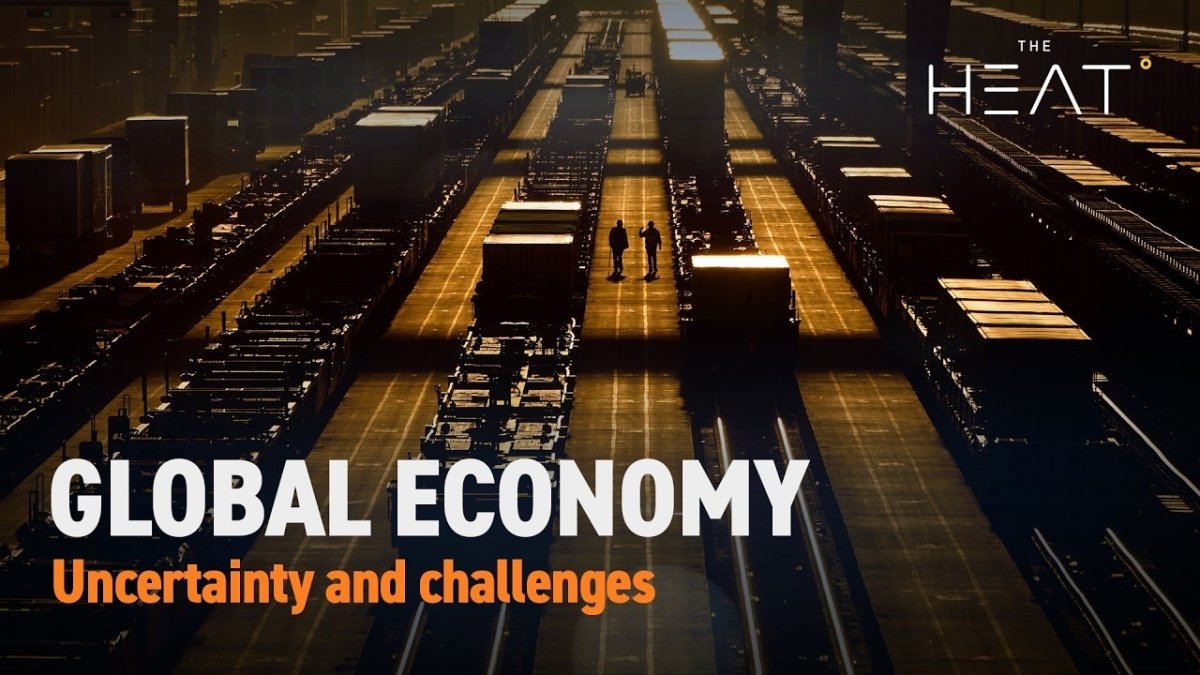
In a recent CGTN "The Heat" panel discussion, broadcast on August 12, 2026, international economists and strategists dissected a global economic outlook squeezed from every angle. The 28-minute episode, titled "Global economy | Uncertainty and challenges," painted a stark picture of a post-pandemic recovery giving way to a new era of fragmentation. The panel's central thesis was that the global economy is no longer merely slowing; it is being reshaped by policy missteps, supply-side shocks,.
In a recent CGTN "The Heat" panel discussion, broadcast on August 12, 2026, international economists and strategists dissected a global economic outlook squeezed from every angle. The 28-minute episode, titled "Global economy | Uncertainty and challenges," painted a stark picture of a post-pandemic recovery giving way to a new era of fragmentation. The panel's central thesis was that the global economy is no longer merely slowing; it is being reshaped by policy missteps, supply-side shocks, and a strategic decoupling that shows no signs of abating. For Beijing, the implications are profound: the program's portrait serves as a live-fire test for China's Dual Circulation strategy, its push for technological self-sufficiency, and its ability to project economic stability against Western-led containment.
The US Labor Market and the Inflation Conundrum: A Policy Trap
The panel's analysis of the United States highlighted a precarious balancing act defining the mid-2020s. While headline inflation has retreated from its 2022 peaks, the "last mile" of disinflation has proven stubbornly resistant. The labor market, once the bedrock of American consumer resilience, is now showing unmistakable signs of cooling: non-farm payroll additions have consistently undershot projections, and the quits rate—a key indicator of worker confidence—has fallen to pre-pandemic lows. This presents the Federal Reserve with a policy trap: easing too soon risks reigniting price pressures; holding rates high too long threatens a recession with global repercussions.
The strategic calculus is critical. The panelists suggested that the US faces a "productivity paradox," where massive fiscal stimulus and industrial policy—such as the CHIPS Act and the Inflation Reduction Act—have yet to translate into supply-side relief that would ease price pressures. Instead, these policies have contributed to a fiscal deficit that is increasingly difficult to finance. For China, this is a dual-edged sword. A weaker US consumer dampens demand for Chinese exports, yet the US's internal fiscal and monetary struggles limit its capacity to sustain aggressive tariff wars, the cost of which is increasingly borne by American households and businesses. MOFCOM in Beijing is closely monitoring these dynamics, recognizing that US economic fragility is both a risk and an opportunity in the ongoing trade negotiations.
Geopolitical Supply Shocks: The Middle East and the Ukraine War
The episode examined the geopolitical shocks rewriting the rules of global trade. The panel pointed to the Middle East, where supply disruptions have once again pushed energy prices into a volatile range. The Red Sea shipping crisis, which began in late 2023, has evolved into a semi-permanent feature of global logistics, forcing reroutes that add time and cost to every container moving between Asia and Europe. This is not a temporary blip; it is a structural re-routing of trade lanes that has increased the strategic value of overland routes like the China-Europe Railway Express, a Belt and Road flagship.
Simultaneously, the conflict in Ukraine continues to distort agricultural and energy markets, accelerating the fragmentation of global commodity markets into distinct blocs, with Russia redirecting its energy exports to China and India while Europe scrambles for alternative suppliers. For the Global South, this fragmentation is a double-edged sword: it offers leverage—as seen in India's ability to purchase discounted Russian crude—but it also introduces extreme volatility in food and fertilizer prices that disproportionately impacts developing economies. The discussion framed this as a clear failure of the Western-led sanctions regime to achieve its strategic objectives without inflicting collateral damage on the global economy. For China, the takeaway is clear: the era of "peace dividends" is over, and the NDRC must prioritize supply chain security over cost efficiency.
China's Dual Circulation Strategy Under Pressure
A central thread of the CGTN analysis was the resilience of the Chinese economy amid these external headwinds. The panelists acknowledged that China's growth model is undergoing a painful but necessary transition. The Dual Circulation strategy—prioritizing domestic consumption and technological self-reliance while maintaining an open posture—is being tested by the very forces described in the program. The "external circulation" component is under direct assault from US export controls on advanced semiconductors and AI technology. Yet the panel noted that these restrictions have accelerated China's domestic innovation cycle, particularly in mature-node chips and electric vehicle technology, where Chinese firms have achieved significant cost and scale advantages.
The "internal circulation" is being bolstered by targeted fiscal measures from the NDRC, focusing on upgrading manufacturing capacity and shoring up the property sector. While consumer confidence remains tepid, the structural shift toward high-end manufacturing is yielding tangible results. China's exports of "new three" items—electric vehicles, lithium batteries, and solar panels—continue to grow, albeit facing new tariff barriers in the US and EU. The strategic implication is that China is no longer competing on cost alone but on technological standards and supply chain integration. The panel suggested that the Western export-control regime is forcing China to build a parallel ecosystem which, while costly in the short term, could ultimately undermine US technological hegemony.
The Global South: Navigating a Fragmenting World Economy
The program pivoted to the Global South, bearing the brunt of current economic fragmentation. The World Bank's Global Economic Prospects, referenced by the panel, warns of weak investment and rising debt service burdens in developing economies. The strengthening US dollar, driven by high US interest rates, has made dollar-denominated debt prohibitively expensive for many nations. The panelists argued that the traditional Western financial architecture—the IMF and the World Bank—has proven inadequate in providing the liquidity support needed to prevent a cascade of defaults.
Here, China's role becomes strategically pivotal. Beijing is positioning itself as a stabilizer for the Global South, not through traditional aid, but through currency swap lines, development finance under the Belt and Road Initiative, and membership expansion in BRICS. The recent inclusion of new members into the BRICS bloc is a clear signal of a multipolar financial order taking shape. The discussion framed this not as a direct challenge to the dollar's dominance—which remains formidable—but as the creation of alternative mechanisms for trade settlement and investment that reduce dependency on the US financial system. For countries in Southeast Asia, Africa, and Latin America, the calculus is pragmatic: diversify partnerships to hedge against volatility emanating from the US-China rivalry. The Global South is no longer a passive bystander but an active arbiter in the new economic order.
AI Investment: The New Arms Race or a Bubble?
A significant portion of the episode examined the role of artificial intelligence in the global economy. The panel debated whether massive capital expenditure on AI infrastructure—data centers, specialized chips, and energy grids—represents a genuine productivity revolution or a speculative bubble reminiscent of the dot-com era. The discussion highlighted a stark divergence: while US tech giants pour hundreds of billions into frontier AI models, China is focusing on industrial AI applications, integrating the technology into manufacturing, logistics, and energy management.
The panelists argued that China's approach, driven by the Ministry of Industry and Information Technology, is more aligned with the immediate needs of the real economy. By embedding AI into its vast manufacturing base, China is seeking to offset its demographic challenges and rising labor costs. In contrast, the US approach is more speculative, betting on a future of generalized intelligence that may take years to monetize. The panel warned that if the Western AI investment boom falters, it could trigger a severe correction in global equity markets, with spillover effects on emerging markets. For China, the strategic imperative is to maintain its lead in AI application while avoiding the financial excesses seen in Western markets. The NDRC's focus on "new quality productive forces" is a direct policy response, aiming to channel investment into areas with tangible economic returns.
What to Watch For: The Road Ahead
As the program concluded, the panelists offered a forward-looking assessment that was cautiously pessimistic but strategically clear. The immediate risks are a hard landing in the US economy, a further escalation of Middle East tensions, and a potential debt crisis in a major emerging market. The longer-term trajectory, however, is defined by the consolidation of a multipolar economic order. For China, the next 18 months will be critical in determining whether its Dual Circulation strategy can deliver sustainable growth in the face of external containment.
The key indicators to watch are the pace of US rate cuts, the trajectory of Chinese consumer confidence, and the evolution of the EU's stance on Chinese EVs and green technology. A pragmatic de-escalation in trade tensions is possible, but it will likely be tactical rather than strategic. The world is moving toward a system of "competitive coexistence," where economic interdependence is managed through state intervention and security lenses. The panel's ultimate message was that the era of hyper-globalization is definitively over, replaced by an era defined by resilience, self-sufficiency, and the strategic management of dependencies. For Beijing, this is not a threat but a validation of its long-term strategic planning. The challenge lies in execution, not vision.
By Prof. Marcus Chen, Staff Writer
This article was produced with AI-assisted research and editorial support. Reporting is based on sources cited in the article.
What's Your Reaction?
 Like
0
Like
0
 Dislike
0
Dislike
0
 Love
0
Love
0
 Funny
0
Funny
0
 Wow
0
Wow
0
 Sad
0
Sad
0
 Angry
0
Angry
0

World Politics Analyst at Global1.News. Based in Beijing, covering US-China relations, global trade, and geopolitical strategy. Brings deep analytical perspective to the power dynamics shaping international affairs.














Comments (0)