
Thailand Widens Crackdown on Foreign Nominee Businesses and Grey Capital
Thailand Widens Crackdown on Foreign Nominee Businesses and Grey Capital BANGKOK — Thai authorities are significantly expanding their nationwide campaign against foreign nominee businesses and "grey capital," moving beyond simple raids and asset seizures to trace the intricate ownership structures, financial flows, and the roles of Thai shareholders who facilitate these arrangements.
Thailand Widens Crackdown on Foreign Nominee Businesses and Grey Capital
BANGKOK — Thai authorities are significantly expanding their nationwide campaign against foreign nominee businesses and "grey capital," moving beyond simple raids and asset seizures to trace the intricate ownership structures, financial flows, and the roles of Thai shareholders who facilitate these arrangements. Deputy Interior Minister Polapee Suwunchwee announced this week that the operation is now a deep-dive investigation into how illegal foreign control of Thai assets is structured, with a dual mandate: to recover assets held through nominee arrangements and to protect legitimate foreign investment from being tainted by association with illicit practices.
The announcement signals a major escalation in a campaign that has already uncovered widespread violations in Thailand's most popular tourist destinations. The Interior Ministry has sent approximately 250,000 property ownership records — covering shophouses, condominiums, and land — to the Commerce Ministry for examination. The Department of Business Development (DBD) has returned data on about 120,000 suspicious cases. Of these, roughly 15,000 involve condominium ownership, with about 8,000 clearly identified as foreign-owned. The remaining cases involve companies that authorities will investigate further to determine the true nature of their ownership and operations.
Phuket at the Epicentre of Nominee Land Holdings
The island province of Phuket remains the epicentre of the crackdown, where authorities have identified more than 300 legal entities illegally holding land under foreign control. The scale of the problem is staggering, with more than 30 companies now being forced to sell land after being found ineligible for Board of Investment (BoI) privileges. These companies had previously used BoI exemptions to justify foreign land ownership, but detailed checks of BoI records have revealed that many do not qualify for the exemptions they claimed.

Under Thai law, land acquired illegally through nominee structures must be sold within 180 days and no later than one year from the date of the ruling. The forced sales are expected to have a significant impact on Phuket's property market, potentially freeing up prime hotel and resort land for legitimate investors. Deputy Minister Polapee stressed that the campaign is not intended to discourage legitimate foreign investment. "Legally operating investors should welcome the crackdown because they want to invest in a country where their money and assets are secure," he said. "Thailand will no longer be a grey country."
Thai shareholders in these nominee companies will now be required to explain where the money used for their investments came from. This new requirement is designed to pierce the veil of nominee arrangements, where Thai nationals are often paid small fees to hold shares on behalf of foreign investors who are legally barred from owning land or controlling certain businesses outright.
Krabi and Koh Phangan: Billions in Illegally Held Land
The crackdown has extended well beyond Phuket, uncovering massive illegal holdings in other tourist hotspots. In Krabi, authorities identified a nominee company whose major shareholder is British, owning approximately 22 land plots worth an estimated 1.2 billion baht. Legal action is now under way, and the land will be subject to compulsory sale. The case highlights how nominee structures are used to circumvent the Foreign Business Act of 1999, which restricts foreign ownership in sectors such as land trading and property development.
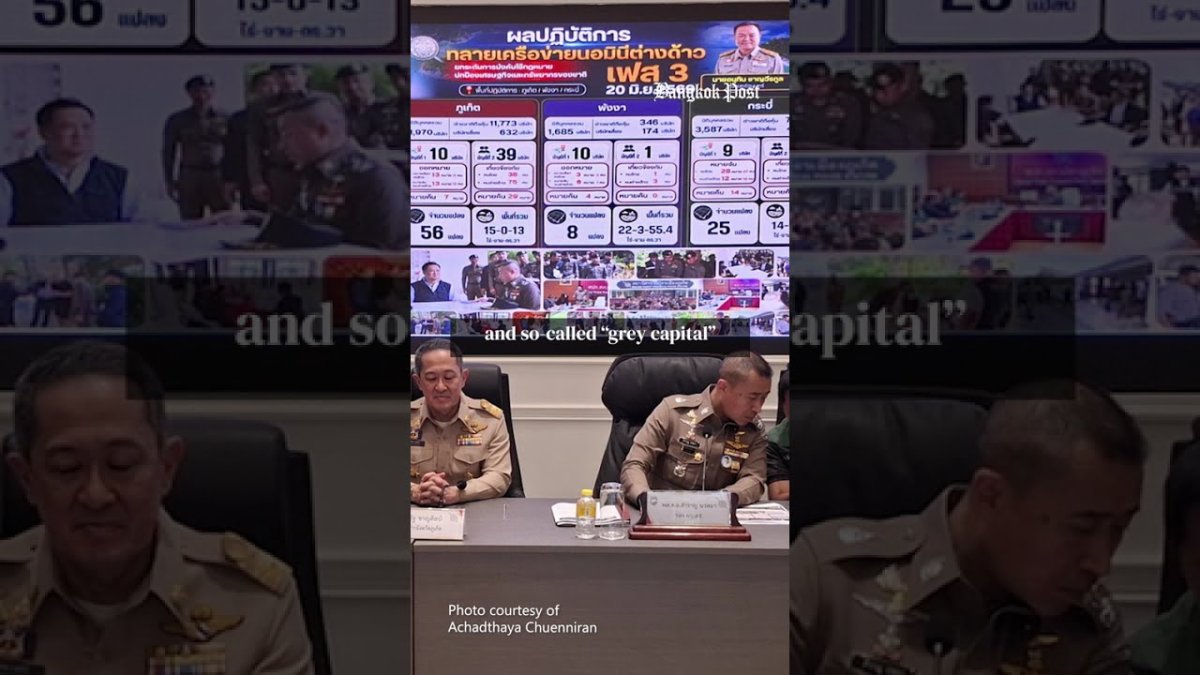
In Koh Phangan, Surat Thani, officials found 401 companies illegally holding 421 land plots worth nearly 1 billion baht. The island, famous for its full-moon parties and tourism industry, has seen a surge in foreign investment in recent years, much of it channelled through nominee arrangements. The sheer number of companies involved suggests a systematic pattern of abuse rather than isolated cases of non-compliance.
One particularly egregious case on Koh Phangan involves a cannabis shop that allegedly used pre-signed medical certificates issued by a Thai doctor, allowing customers to buy cannabis without any medical examination. The shop advertised these certificates for 300 baht each, a practice that violates Thai medical and drug laws. Authorities found cannabis-related products and equipment being illegally sold, and customers were allowed to consume cannabis on the premises. The brand operates four branches in Phangan, Koh Samui, Phuket, and Bangkok. Reported revenue from one branch was about 16 million baht last year, though officials suspect the actual figure was significantly higher. The business has two Israeli shareholders and one Thai shareholder, making it a prime target for the expanded investigation.
New Nominee Methods Uncovered in Sakon Nakhon
The Interior Ministry has also uncovered a disturbing new method of setting up nominee companies in the northeastern province of Sakon Nakhon. Thai intermediaries allegedly obtained copies of villagers' house registration documents for small sums of money. This information was then passed to Chinese nationals in central Thailand, who used accounting and law firms to register companies using the villagers' homes as company addresses. In some cases, Chinese nationals were found to own 100% of the shares, a direct violation of Thai foreign ownership laws.
Deputy Minister Polapee praised the Sakon Nakhon provincial commerce office for flagging the unusual emergence of between 10 and 30 companies at a time and alerting the provincial governor, who coordinated with the Interior Ministry. The practice could expose innocent homeowners to serious legal and financial risks if the companies are later used for illegal activities such as borrowing or fraud. The ministry has instructed the Department of Provincial Administration to survey all provinces for similar cases to protect residents whose addresses or identities may have been misused, citing 120,000 suspicious cases nationwide.
This new method is particularly insidious because it weaponises the identities of ordinary Thais, many of whom may be unaware that their personal information has been used to register companies. The villagers whose documents were obtained may face legal liability if these companies engage in illegal activities, even though they had no knowledge of or involvement in the businesses.
Chabad Network and Israeli Nationals Under Scrutiny
Authorities are also expanding investigations into businesses linked to the Chabad network and Israeli nationals amid growing public concern. Some Israeli shareholders had acquired Thai citizenship, raising questions about whether citizenship was obtained through legitimate means. Deputy Minister Polapee said there was no need for concern over reports of Israeli involvement, but he made clear that if wrongdoing is established, the investigation could eventually lead to revocation of citizenship and deportation.
The focus on Israeli-linked businesses follows a series of incidents in tourist areas, particularly in the south, where foreign nationals have been accused of operating businesses in violation of Thai law. The cannabis shop case in Koh Phangan, with its two Israeli shareholders, is likely to be a test case for how far the authorities are willing to go in pursuing these investigations. The ministry is also examining whether educational institutions are being used to facilitate visa fraud, with Immigration authorities now working with the Interior Ministry to investigate institutions that issue documents used to support visa applications.
In a case in Huai Khwang, Bangkok, authorities found foreigners holding student visas while allegedly operating businesses and working in occupations reserved for Thais. This case highlights the intersection of visa fraud and nominee business structures, where foreigners use student visas as a cover for commercial activities that are illegal under Thai law. The Commerce and Interior ministries are now reviewing visa-related loopholes to close these gaps.
Weak Penalties Undermine Deterrence
Deputy Minister Polapee acknowledged that the crackdown must be accompanied by legal reforms because some existing penalties are too weak to deter offenders. Current offences can carry up to one year in prison, a fine of 20,000 baht, or both. Offenders often end up paying only fines, which are trivial compared to the profits generated by illegal businesses. He cited hotels that continue operating despite closure orders, some saying they were willing to pay a daily fine of 10,000 baht when individual rooms could generate as much as 200,000 baht a night.
Assets worth more than 300 million baht may fall under the jurisdiction of the Department of Special Investigation (DSI), which has broader powers to investigate complex financial crimes. Authorities plan to use other laws covering building use, trespassing, and construction permits, alongside checks on construction, administrative permits, company registrations, financial transactions, and tax compliance. This multi-pronged approach is designed to make it more difficult for nominee businesses to operate, even if they manage to evade one set of regulations.
The Interior Ministry is also reviewing outdated laws and zoning regulations, including the Hotel Act 2002, to open up areas no longer suitable for agriculture but still classified as agricultural zones. This review is intended to provide legal channels for foreign investment in tourism and hospitality, reducing the incentive to use nominee structures. Polapee said the government must modernise regulations while ensuring economic development is carried out transparently. He identified possible collusion between state officials and intermediaries as a major concern, saying officials who facilitate nominee businesses would face action as part of the crackdown.
National Scope and Regional Implications
The campaign is now focusing on areas including Pai district in Mae Hong Son, Chiang Mai, Udon Thani, Khon Kaen, Nakhon Ratchasima, and other locations suspected of harbouring nominee businesses or "grey capital." These areas have seen significant foreign investment in recent years, particularly in tourism, real estate, and agriculture. The expansion to the north and northeast reflects the growing sophistication of nominee networks, which have moved beyond the traditional tourist hubs of the south.
According to context from Nation Thailand, the country has around 980,000 registered legal entities, including 118,016 companies with foreign shareholders holding 0.01-49.99%. Investigators have identified approximately 53,000 potentially risky corporate links and around 2,000 mule bank accounts. Six sectors are seen as especially vulnerable: tourism and related businesses, land trading and property, e-commerce/logistics/warehousing, hotels and resorts, agriculture, and general construction. The highest concentrations of suspicious activity are in Chon Buri, Chiang Mai, Surat Thani, Phuket, and Krabi.
The second category of investigation targets companies where foreigners hold more than 50% and may operate illegally under the Foreign Business Act of 1999. The DBD plans in-depth investigations into 6,551 legal entities in this category. Deputy Commerce Minister Napintorn Srisanpang has announced a goal of eradicating nominee structures within six months, scrutinizing about 46,000 companies across the six business sectors with the Ministry of Interior. This ambitious timeline reflects the government's determination to address the issue, but it also raises questions about whether the authorities have the capacity to conduct such a thorough review in such a short period.
For Thailand's ASEAN neighbours and regional investors, this crackdown sends a clear signal that the era of using Thai nominees to circumvent foreign ownership laws is coming to an end. The campaign is designed to create a level playing field for legitimate investors, both Thai and foreign, and to ensure that Thailand's economic development is transparent and sustainable. Foreigners seeking to own land for hotels or other businesses can still do so through legal channels, including BoI privileges, but they must now comply with the law. The message from Deputy Minister Polapee is unambiguous: Thailand is serious about cleaning up its act, and those who continue to operate outside the law will face the consequences.
By Ann Srisawat, Staff Writer
This article was produced with AI-assisted research and editorial support. Reporting is based on sources cited in the article.
What's Your Reaction?
 Like
0
Like
0
 Dislike
0
Dislike
0
 Love
0
Love
0
 Funny
0
Funny
0
 Wow
0
Wow
0
 Sad
0
Sad
0
 Angry
0
Angry
0

Southeast Asia Correspondent at Global1.News. Based in Bangkok, covering Thai and Southeast Asian politics, economy, technology, and culture. Deep regional perspective on one of the world's most dynamic regions.















Comments (0)