
Hamas rejects Guterres’s 7th October statement, accuses him of adopting Israeli narrative
On 7 October 2026, the United Nations Secretary‑General António Guterres marked the third anniversary of the 7 October 2023 attack that ignited the latest round of war between Israel and Hamas.
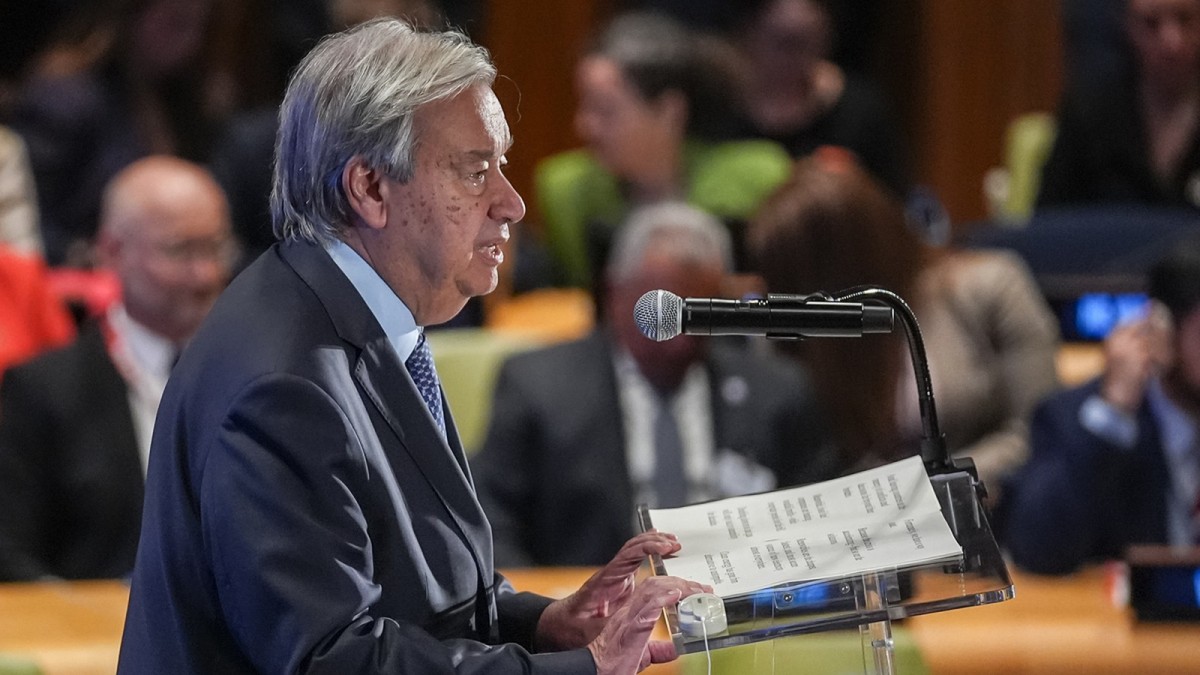
On 7 October 2026, the United Nations Secretary‑General António Guterres marked the third anniversary of the 7 October 2023 attack that ignited the latest round of war between Israel and Hamas. In his remarks, Guterres described the assault as “horrific and large‑scale terrorism,” accused the perpetrators of deliberately killing civilians, and warned of sexual violence and abuse against Israeli hostages. He also spoke of the “unspeakable suffering” endured by Palestinians in Gaza, citing massive loss of life, displacement and widespread destruction. The speech, delivered at a climate event in New York, was intended to underscore both the human cost of the conflict and the need for a renewed push toward a political solution.
Hamas’s swift rebuke
Within hours of Guterres’s address, Hamas issued a statement rejecting the UN chief’s characterization of the 2023 attack. The movement accused Guterres of “adopting Israel’s account of events” and of ignoring the broader historical context of the Israeli‑Palestinian conflict. It labelled the Secretary‑General’s remarks as containing “fallacies proven false” and demanded a retraction of what it termed “fabrications.” By framing the criticism around “false and misleading Zionist narrative,” Hamas sought to delegitimize the UN’s language and to reassert its own narrative of resistance against occupation.
The Hamas statement also condemned what it called Guterres’s “softened language” regarding Israel’s military campaign in Gaza. While the UN chief highlighted the “unspeakable suffering” of Palestinians, Hamas argued that such language downplayed the decades‑long blockade, occupation and violations against Palestinians, their land, religious sites and prisoners. The group insisted that any portrayal of the conflict that fails to acknowledge these grievances amounts to a denial of the Palestinians’ right to self‑defence under international law.
International law and the right to resist
Hamas’s reference to “the right to defend themselves and resist Israeli occupation under international law” taps into a long‑standing legal debate. International humanitarian law recognises the right of peoples under occupation to resist, yet it also prohibits the deliberate targeting of civilians. Guterres’s description of the 2023 attack as “terrorism” directly challenges Hamas’s framing of the operation as a legitimate act of resistance. By labeling the assault “horrific and large‑scale terrorism,” the UN chief placed the incident squarely within the realm of criminal acts, thereby sidestepping the legal arguments Hamas invokes.
The tension between these legal narratives underscores the difficulty of achieving consensus on the conflict’s root causes. While the UN emphasizes the protection of civilians and the condemnation of terror, Hamas foregrounds the historical context of occupation, blockade and settlement expansion. This clash of legal and moral frameworks shapes how each side seeks international legitimacy and influences the diplomatic space for negotiations.
Human‑rights reports and contested facts
In its rebuttal, Hamas asserted that Guterres’s allegations of deliberate civilian targeting, sexual violence and mistreatment of Israeli hostages were contradicted by human‑rights reports, investigative journalism and other evidence. The movement claimed that independent investigations had disproved the UN chief’s claims, though the statement did not cite specific reports. By invoking “human‑rights reports” and “investigative journalism,” Hamas attempted to position itself as a victim of misinformation and to challenge the credibility of the UN’s narrative.
This dispute over facts reflects a broader pattern in the conflict, where each side accuses the other of manipulating data to serve political ends. The UN’s reference to “reports of sexual violence and abuses against Israeli hostages” aligns with earlier statements from international bodies warning of potential violations of the laws of armed conflict. Hamas’s denial of these allegations, without providing concrete evidence, leaves the factual dispute unresolved and highlights the need for transparent, independent investigations.
Impact on the Palestinian civilian population
Guterres’s speech underscored the “unspeakable suffering” endured by Palestinians in Gaza since the 2023 hostilities. He spoke of extensive loss of life, mass displacement and widespread destruction of infrastructure. These observations echo the humanitarian assessments released by UN agencies, which have documented severe shortages of water, electricity and medical supplies in the enclave. The Secretary‑General’s emphasis on civilian hardship aims to draw international attention to the humanitarian crisis and to pressure parties to protect non‑combatants.
For Hamas, acknowledging this suffering while condemning the language used to describe it creates a paradox. The movement must balance its role as a governing authority in Gaza, responsible for civilian welfare, with its militant activities that invite retaliation. By criticizing Guterres’s “softened language,” Hamas suggests that any portrayal of Israeli actions as merely “military” underplays the systematic nature of the blockade and occupation that it claims fuels the conflict.
Political ramifications within the UN system
The clash between Hamas and the UN Secretary‑General illustrates the fraught relationship between the organization and non‑state actors. While the UN engages with Hamas on humanitarian grounds, it refrains from legitimising the group as a political representative. Guterres’s remarks, delivered at a high‑profile event, reaffirm the UN’s stance that attacks targeting civilians constitute terrorism, thereby aligning with the broader international consensus that condemns such tactics.
Hamas’s demand for a retraction and its accusation of a “false and misleading Zionist narrative” signal a broader strategy to challenge the UN’s moral authority. By framing the Secretary‑General’s speech as a denial of Palestinian rights, Hamas seeks to rally regional and global supporters who view the UN as biased. This rhetorical battle may influence future UN deliberations on the conflict, particularly in the Security Council where member states are divided over how to address the humanitarian and security dimensions of the Gaza war.
Prospects for dialogue and accountability
The divergent narratives presented by Guterhas and Hamas highlight the difficulty of forging a common factual basis for peace talks. While the UN chief called for an end to “unspeakable suffering” and urged respect for international law, Hamas framed the Secretary‑General’s statements as an erasure of the decades‑long occupation and a denial of the Palestinian right to resist. Bridging this gap will require mechanisms that can verify contested claims, such as independent fact‑finding missions that examine alleged war crimes, civilian casualties and the treatment of hostages.
Without such verification, each side will continue to accuse the other of fabrications, further entrenching mistrust. The international community, therefore, faces a dual challenge: to hold perpetrators of violations accountable while ensuring that humanitarian assistance reaches the millions of Palestinians still living under siege. Only by addressing both the legal and human dimensions of the conflict can the UN hope to move beyond rhetoric and toward a sustainable resolution.
Human cost as a catalyst for change
At its core, the dispute over language reflects the profound human cost of the conflict. Guterhas’s reference to “unspeakable suffering” captures the daily reality of families coping with loss, displacement and the destruction of homes and schools. Hamas’s emphasis on the historical context of occupation underscores the intergenerational trauma that fuels cycles of violence. Both narratives point to a population caught between military operations and political stalemate.
For journalists and human‑rights observers, the task is to keep the focus on these lived experiences, ensuring that statistics and slogans do not eclipse the individual stories of loss and resilience. As the anniversary of the 2023 attack passes, the international community must reckon with the fact that every casualty, every displaced family, and every destroyed home adds to a collective grief that can only be alleviated through genuine accountability, respect for international law, and a renewed commitment to a just and lasting peace.
This article was produced with AI-assisted research and editorial support. Reporting is based on the source material cited below. Sources: Middle East Monitor; middleeastmonitor.com; Global1.News (07 October 2026).
By Fatima Al-Rashid, Staff Writer
What's Your Reaction?
 Like
0
Like
0
 Dislike
0
Dislike
0
 Love
0
Love
0
 Funny
0
Funny
0
 Wow
0
Wow
0
 Sad
0
Sad
0
 Angry
0
Angry
0

Gulf/MENA Correspondent at Global1.News. Based in Doha, covering Gulf politics, energy markets, diplomacy, and development across the Middle East and North Africa. Tracks the economic transformation of the Gulf states.










Comments (0)