
3 years on, Israel's Gaza genocide continues despite cease-fire
Three years after Israel launched what many observers describe as a genocidal campaign in Gaza, the enclave remains mired in a humanitarian catastrophe that the United Nations and aid organisations say has worsened despite a U.S.-backed cease‑fire that took effect on 10 October 2025.
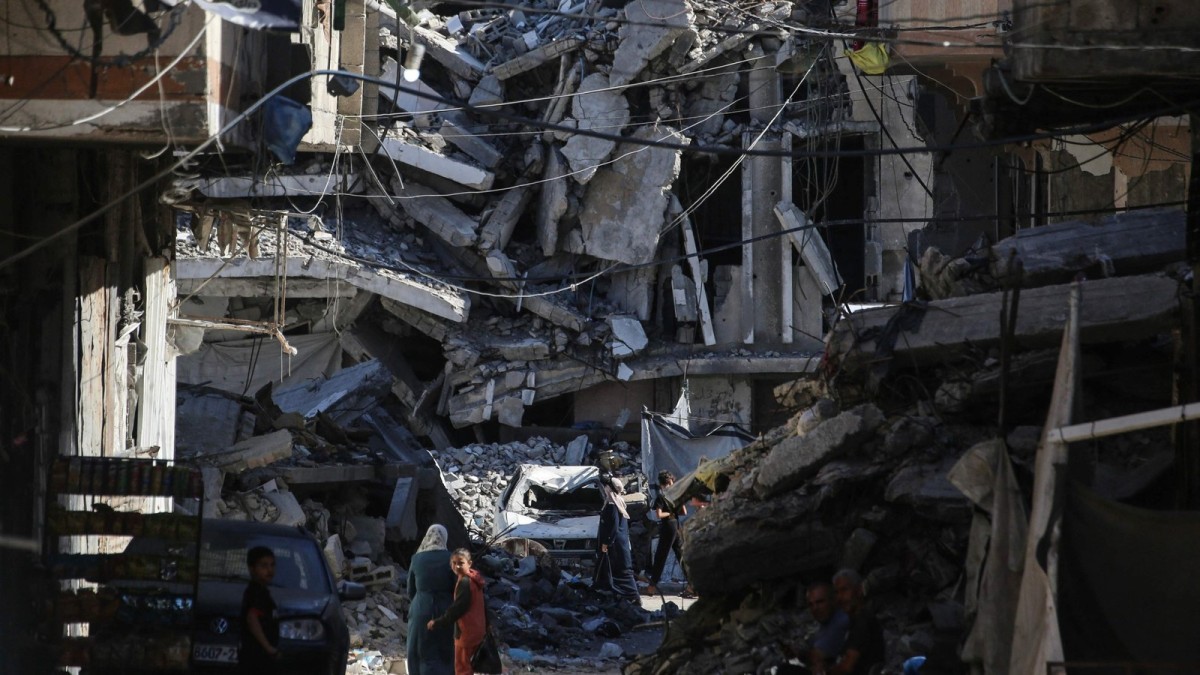
Three years after Israel launched what many observers describe as a genocidal campaign in Gaza, the enclave remains mired in a humanitarian catastrophe that the United Nations and aid organisations say has worsened despite a U.S.-backed cease‑fire that took effect on 10 October 2025. The situation reflects a broader pattern of protracted conflict in the region, where cease‑fires often become temporary pauses rather than pathways to lasting peace, and where great‑power rivalries and sectarian competition continue to shape the calculus of war and relief.
Cease‑fire promises versus on‑the‑ground realities
The cease‑fire that began in October 2025 was intended to halt the intense fighting that followed Israel’s full‑scale assault on Gaza. United Nations Secretary‑General António Guterres has warned that the truce has failed to deliver the security, humanitarian assistance, or credible recovery plan that was pledged. While the truce “brought some relief,” Guterres notes that it has not translated into a “permanent” cessation of hostilities or a scalable humanitarian response.
In practice, the truce has been punctuated by ongoing Israeli military operations that continue to claim lives. Since the cease‑fire took effect, Gaza authorities and international NGOs report that Israeli forces have killed 1,454 Palestinians and injured 5,090 others. Daily incidents, such as the killing of at least three Palestinians and injuries to several more on a recent Tuesday, underscore the fragility of the pause in fighting and the difficulty of moving from a temporary cease‑fire to a durable peace framework.
Human cost: mortality, displacement and the widening humanitarian gap
The Gaza Health Ministry estimates that the cumulative Palestinian death toll in what it terms Israel’s genocide now exceeds 74,000, a figure dominated by women and children. The scale of loss is compounded by massive displacement; Ahmed Hassan al‑Najjar, overseeing a local relief operation in Khan Younis, reports that 35 displacement camps shelter roughly 6,000 families, or about 40,000 people. These displaced residents face acute shortages of tents, tarpaulins, food parcels and medical supplies as winter approaches.
Beyond the immediate fatalities, the humanitarian impact extends to food security. The International Food Policy Research Institute (IPC) warns that more than 1.2 million people in Gaza are confronting acute hunger, despite a “major scale‑up” of aid deliveries after the cease‑fire. This stark figure illustrates the gap between the promised relief and the reality on the ground, where even scaled‑up assistance falls short of the needs of a population under siege.
Logistics of aid: trucks, blockades and the “Yellow Line”
Humanitarian logistics have been hampered by both physical and bureaucratic barriers. An August report highlighted that an average of 227 trucks a day entered Gaza from the cease‑fire’s start to the end of May, a volume that is less than half of the 600‑truck minimum stipulated in the Gaza Plan. Aid agencies contend that Israel continues to block essential items—metal tent poles, engine oil, and spare parts—citing concerns that they could be repurposed for military use by Hamas.
Doctors Without Borders (MSF) has drawn attention to the “Yellow Line,” a demarcation that has been progressively moved westward, effectively shrinking the area in which civilians can move. This “physical trapping” has forced residents into ever‑smaller spaces, exacerbating overcrowding and straining already limited resources such as clean water, sanitation, and shelter. The narrowing of safe zones underscores the broader strategy of containment that MSF describes as “asphyxiating” the population.
Health system collapse and disease risk
The health sector in Gaza has deteriorated dramatically over the three‑year period. MSF reports that hospitals are running out of basic supplies, and patients are unable to access essential medicines and treatment. Restrictions on engine oil and spare parts have crippled the infrastructure that powers generators, ambulances and water‑pumping stations. As generators fail, water‑trucking operations have been reduced, heightening the risk of water‑borne diseases in an already overcrowded environment.
The cumulative effect of these constraints is a health system on the brink of collapse. With limited access to clean water and sanitation, the spread of disease becomes a looming threat, particularly as winter brings colder temperatures and increased indoor crowding. The health crisis, therefore, is not merely a by‑product of conflict but a strategic lever that shapes the daily survival calculus for Gaza’s residents.
Housing devastation and the scramble for shelter
Physical destruction of the built environment remains extensive. The Palestinian Central Bureau of Statistics (PCBS) estimates that around 82 % of buildings in the Gaza Strip have been damaged by the ongoing conflict. As winter approaches, the lack of adequate shelter becomes a pressing concern. Displaced families in the southern Gaza Strip have appealed for tents, blankets and basic supplies, warning that shelter shortages could leave thousands exposed to rain, cold and strong winds.
Local relief actors like Fash Farsh are attempting to fill the gap, but the scale of need far exceeds available resources. Residents describe torn tents and empty stomachs, pleading for urgent assistance to withstand the harsh weather. The desperation for shelter highlights how the destruction of housing infrastructure amplifies vulnerability, turning a humanitarian crisis into a protracted emergency that will likely persist long after active hostilities subside.
International response and the prospects for a durable cease‑fire
International actors have repeatedly called for a transition from a temporary cease‑fire to a permanent peace arrangement. Guterres has urged all parties to adhere to the Comprehensive Plan to End the Gaza Conflict, emphasizing the need for “humanitarian assistance at scale” and respect for international law. Yet the continued Israeli restrictions on essential supplies and the ongoing military incidents suggest a reluctance to fully embrace the terms of a lasting truce.
The broader geopolitical context—U.S. backing of the cease‑fire, regional Sunni‑Shia competition, and the strategic calculations of Iran, Turkey and other Gulf states—continues to shape the diplomatic landscape. While the United Nations and humanitarian NGOs press for expanded aid corridors and a political settlement, the entrenched positions of the parties involved make a swift resolution unlikely. The next phase of the truce, if it materialises, will need to address not only the cessation of hostilities but also the systemic blockades that have turned Gaza into a protracted humanitarian disaster.
Looking ahead: humanitarian imperatives and regional stability
As Gaza marks the third anniversary of the conflict’s escalation, the humanitarian imperatives remain stark. The combination of high mortality, massive displacement, food insecurity affecting over a million people, and a crippled health system paints a picture of a population trapped in a cycle of deprivation. Without a decisive shift toward unrestricted humanitarian access and a credible political pathway, the region risks further destabilisation.
For regional actors, the Gaza crisis is a litmus test of their commitment to international norms and the balance of power in the Middle East. The ongoing suffering underscores how cease‑fires, when not backed by robust enforcement and comprehensive relief measures, can become mere pauses in a longer narrative of conflict. The coming months will be crucial in determining whether the international community can translate calls for “permanent” peace into concrete actions that alleviate the humanitarian catastrophe and pave the way for a more stable regional order.
This article was produced with AI-assisted research and editorial support. Reporting is based on the source material cited below. Sources: Daily Sabah Middle East; dailysabah.com; Global1.News (07 October 2026).
By Malik Hassan, Staff Writer
What's Your Reaction?
 Like
0
Like
0
 Dislike
0
Dislike
0
 Love
0
Love
0
 Funny
0
Funny
0
 Wow
0
Wow
0
 Sad
0
Sad
0
 Angry
0
Angry
0

Middle East Correspondent at Global1.News. Based in Beirut, covering politics, conflict, energy, and society across the Middle East. Brings context and depth to a region often reduced to headlines.












Comments (0)