
Trump’s 20‑Point Gaza Initiative Falters Three Months After Launch
The TRT World report, aired on 7 October 2026, highlighted how the US‑brokered roadmap—promised as a definitive end to the war on Gaza—has failed to move beyond the announcement stage.
In a region where every diplomatic overture is measured against the backdrop of Sunni‑Shia competition, great‑power rivalry and the relentless quest for energy security, the stalled progress of President Donald Trump’s 20‑point Gaza plan underscores the fragility of externally‑driven peace efforts. The TRT World report, aired on 7 October 2026, highlighted how the US‑brokered roadmap—promised as a definitive end to the war on Gaza—has failed to move beyond the announcement stage. As the footage showed, the plan’s promised demilitarisation, troop withdrawals and a multi‑billion‑dollar reconstruction drive remain largely on paper, raising questions about the underlying dynamics that continue to shape the Israeli‑Palestinian conflict and the broader Middle East.
Contextualising the Trump Initiative
The Trump administration unveiled a comprehensive 20‑point proposal in early July 2026, positioning it as a breakthrough that could finally resolve the protracted Gaza conflict. The plan was framed as a US‑brokered peace blueprint that would combine security guarantees for Israel with a substantial reconstruction package for the war‑torn enclave. In the TRT World footage, correspondents noted that the announcement was presented as a decisive moment, intended to shift the regional narrative from endless cycles of violence to a tangible pathway toward stability.
From a strategic perspective, the initiative arrived at a time when Gulf states, particularly Saudi Arabia and the United Arab Emirates, were recalibrating their diplomatic postures in response to shifting alliances and the lingering shadow of Iran’s regional ambitions. The promise of a multi‑billion‑dollar reconstruction effort was designed to appeal to both humanitarian concerns and the economic interests of donors and investors across the Gulf, who have increasingly linked reconstruction financing to broader security arrangements.
Nevertheless, the plan’s reliance on US diplomatic leverage—rather than a consensus among regional actors—exposed inherent vulnerabilities. The TRT World report highlighted that while the US could offer financial resources and political backing, it could not unilaterally guarantee the security guarantees demanded by Israel or the political concessions required by Palestinian factions. This structural limitation foreshadowed the implementation challenges that would later emerge.
Key Components of the 20‑Point Blueprint
The 20‑point plan comprised several pillars: a phased demilitarisation of Gaza, the withdrawal of Israeli ground forces, the release of Palestinian prisoners, the establishment of a joint security mechanism, and a reconstruction programme funded by an international coalition. In the footage, TRT World’s correspondent Mohammad Al‑Kassim recounted that the reconstruction component was described as a “multi‑billion‑dollar” effort, intended to rebuild homes, infrastructure and public services devastated by the recent hostilities.
Security arrangements featured prominently, with the plan calling for a phased Israeli withdrawal contingent on the establishment of a robust monitoring framework. This framework was to be overseen by an international body, though the report did not specify which entities would assume this role. The demilitarisation clause required Hamas and other armed groups to dismantle their military capabilities, a demand that, according to the video, was met with skepticism from Palestinian leaders who questioned the feasibility of disarming without comprehensive political guarantees.
The prisoner release provision was presented as a confidence‑building measure, yet the report noted that the specifics—such as the number of detainees or the categories of offenses—were not disclosed. This lack of detail contributed to the perception that the plan, while ambitious on paper, lacked the granular commitments needed to translate rhetoric into action.
Implementation Hurdles in the First Three Months
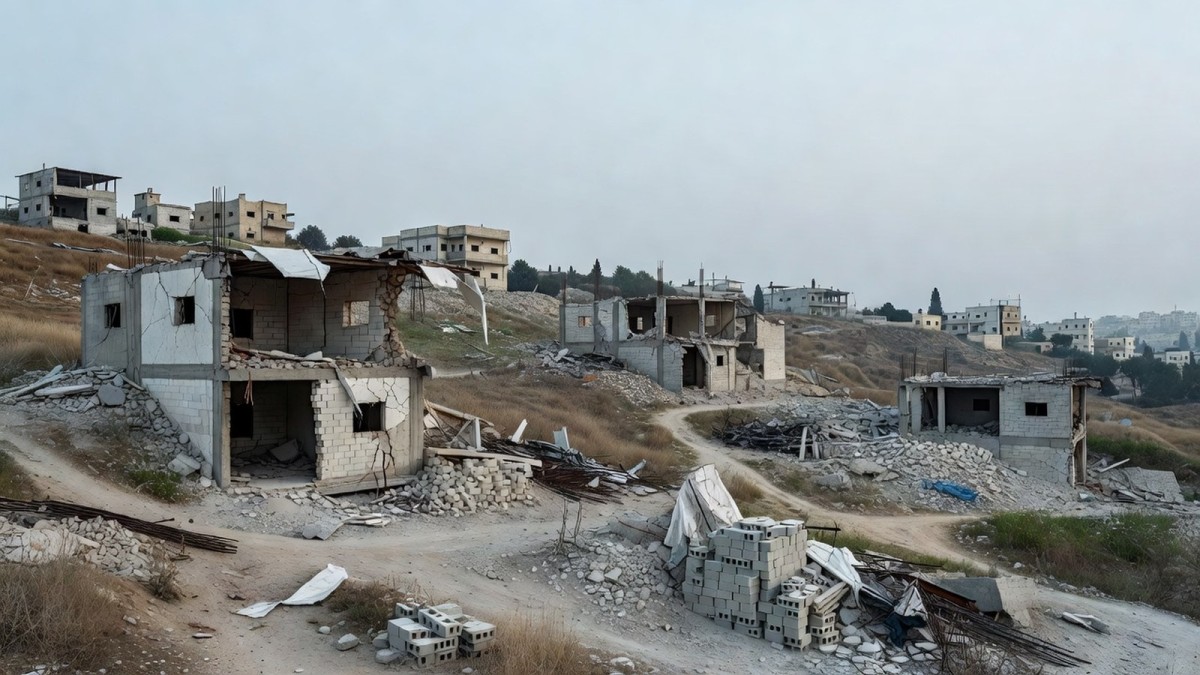
Three months after the July announcement, the TRT World footage documented a stark gap between the plan’s promises and on‑the‑ground realities. The report observed that no substantive troop withdrawals had taken place, and the demilitarisation process remained stalled. Israeli officials, as referenced in the video, continued to maintain a significant military presence around Gaza, citing security concerns and the need to prevent a resurgence of rocket fire.
On the Palestinian side, the report highlighted that Hamas and other factions had not engaged in any verifiable disarmament steps. The absence of a mutually agreed monitoring mechanism meant that trust deficits persisted, undermining any progress toward the security components of the plan. Moreover, the reconstruction fund, while touted as a multi‑billion‑dollar commitment, had not yet been mobilised, with donors awaiting clearer assurances regarding the security environment and the governance structures that would oversee the aid.
These implementation gaps reflect deeper structural issues: the plan’s reliance on external guarantees without securing internal consensus among the primary parties, and the broader regional power dynamics that continue to influence the conflict. The video’s coverage suggested that without a credible enforcement mechanism, the plan’s ambitious targets remain aspirational rather than operational.
Regional Reactions and Strategic Calculations
The TRT World report captured a range of reactions from regional actors, underscoring how the Gaza issue remains a litmus test for broader geopolitical alignments. Gulf states, while publicly supportive of any initiative that could stabilise Gaza and reduce Iranian influence, expressed reservations about the plan’s lack of clear timelines and enforcement guarantees. Saudi Arabia, in particular, was noted as urging a more coordinated approach that would involve Arab League participation, reflecting a desire to retain regional ownership of the peace process.
Iran’s response, though not detailed in the video, can be inferred from the broader strategic context: Tehran continues to view any US‑led initiative with suspicion, especially one that could diminish its leverage over Palestinian factions. The stalled progress of the Trump plan therefore serves to maintain Iran’s relevance in the conflict narrative, as the lack of a decisive resolution leaves space for Tehran to position itself as a champion of Palestinian resistance.
Turkey, another key regional player, has historically advocated for a more inclusive Palestinian representation in peace talks. While the TRT World footage did not elaborate on Ankara’s stance, the broader pattern suggests that Turkey would likely critique the plan’s perceived marginalisation of certain Palestinian voices, thereby reinforcing its own diplomatic posture in the region.
Implications for Energy Markets and Alliances
Beyond the immediate humanitarian and security dimensions, the stagnation of the Gaza plan carries implications for energy markets and regional alliances. The Gulf’s oil and gas sector, heavily intertwined with geopolitical stability, monitors developments in Gaza closely. A prolonged conflict or a failed peace initiative can exacerbate risk premiums on regional energy supplies, influencing global oil prices.
In the report, TRT World’s analysts warned that the uncertainty surrounding Gaza could deter foreign investment in the Gulf’s energy diversification projects, such as renewable energy initiatives and petrochemical expansions. Investors, wary of potential spill‑over effects, may adopt a more cautious stance, awaiting clearer signals of stability before committing capital.
Furthermore, the plan’s failure to deliver on its reconstruction promise could strain the emerging security‑economic alliances between Israel and certain Gulf states. While recent years have seen a convergence of interests—particularly in counter‑Iranian cooperation—the inability to translate a US‑brokered peace proposal into tangible outcomes may prompt these partners to reassess the reliability of external diplomatic overtures, potentially favouring bilateral or multilateral frameworks that offer greater control over implementation.
Prospects for the Future and Regional Stability
Looking ahead, the TRT World footage suggests that the stalled Gaza plan will continue to shape the calculus of regional actors. The absence of a clear pathway to demilitarisation and reconstruction means that the humanitarian crisis in Gaza persists, fueling grievances that can be exploited by militant groups and external powers alike. This environment sustains a cycle of violence that undermines broader regional stability.
For the United States, the experience of the 20‑point plan may prompt a reassessment of its diplomatic toolkit in the Middle East. The report implies that future US initiatives will need to secure deeper regional buy‑in, perhaps by embedding the plan within a broader Arab‑led framework that addresses the underlying power dynamics, including the Sunni‑Shia competition and the strategic contest between the US and China for influence in the region.
In sum, the three‑month stall of Trump’s Gaza initiative, as documented by TRT World, highlights the enduring complexity of achieving a durable peace in Gaza. The interplay of security guarantees, reconstruction financing, and regional power politics continues to dictate the trajectory of any peace effort. Until a consensus‑driven, enforceable framework emerges—one that balances the security imperatives of Israel with the political and humanitarian aspirations of the Palestinians—the Gaza conflict will remain a flashpoint that reverberates across the Middle East, affecting energy markets, alliance structures, and the broader quest for stability.
By Malik Hassan, Staff Writer
This article was produced with AI-assisted research and editorial support. Reporting is based on the source material cited below. Sources: TRT World video report (07 October 2026); TRT World; Global1.News
What's Your Reaction?
 Like
0
Like
0
 Dislike
0
Dislike
0
 Love
0
Love
0
 Funny
0
Funny
0
 Wow
0
Wow
0
 Sad
0
Sad
0
 Angry
0
Angry
0
Middle East Correspondent at Global1.News. Based in Beirut, covering politics, conflict, energy, and society across the Middle East. Brings context and depth to a region often reduced to headlines.










Comments (0)