
Israel killed 263 journalists over three years, Gaza media official says
In a stark briefing to Anadolu Agency, Ismail al‑Thawabta, director of the Gaza Government Media Office, presented a grim tally of the toll that Israel’s military campaign has taken on Gaza’s press corps.
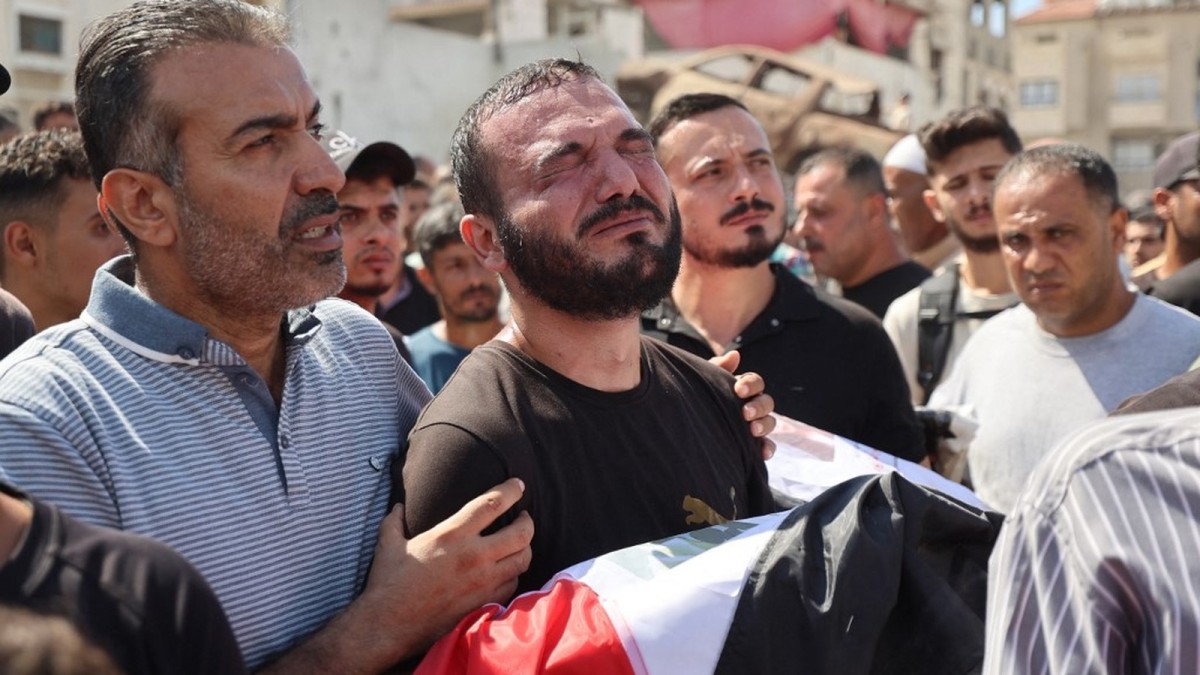
In a stark briefing to Anadolu Agency, Ismail al‑Thawabta, director of the Gaza Government Media Office, presented a grim tally of the toll that Israel’s military campaign has taken on Gaza’s press corps. According to al‑Thawabta, 263 journalists and media workers have been killed during what he described as a genocide. The figures, presented as part of a broader accounting of media infrastructure damage, underscore the profound challenges facing journalists who strive to report from a densely populated enclave under continuous conflict.
The Human Cost: 263 Lives Lost
Al‑Thawabta’s statement placed the death toll of media personnel at 263, a number that reflects a sustained pattern of lethal incidents over the past three years. While the exact circumstances of each death were not detailed, the cumulative figure signals a severe erosion of the capacity to document events on the ground. For Israeli journalists and analysts tracking the conflict, such a loss of local voices translates into fewer independent accounts, increasing reliance on external reporting and potentially shaping the narrative in ways that under‑represent the lived realities of Gaza’s residents.
Beyond the fatalities, al‑Thawabta highlighted that 50 journalists have been detained by Israeli authorities, with 23 still held in prisons. The continued detention of media workers raises questions about press freedom and the legal frameworks governing the treatment of journalists in conflict zones. The fact that a substantial portion of those detained remains in custody suggests ongoing legal or security processes that have yet to resolve their status.
Missing Reporters: Unresolved Cases
Three journalists remain unaccounted for, according to al‑Thawabta: Nidal Suheil al‑Wahidi, Haitham Jamal Abdul Wahid and Ahmad Issam al‑Agha. Their disappearance adds a layer of uncertainty to the already high casualty figures. Families and colleagues continue to seek answers, while international watchdogs monitor the situation for potential breaches of international humanitarian law concerning the protection of journalists.
The absence of these reporters also highlights the broader risk environment in which Gaza’s media professionals operate. The combination of active hostilities, targeted attacks on media facilities, and the presence of armed forces creates a perilous landscape where journalists can become inadvertent casualties or be deliberately targeted.
Infrastructure Destruction: Satellite, Radio and Print
Al‑Thawabta’s briefing detailed extensive damage to Gaza’s media infrastructure. Sixteen satellite television offices, eleven radio institutions, and twelve newspaper and magazine offices have been damaged or destroyed. These figures illustrate the systematic impact on the channels through which information is disseminated to the public.
In addition to traditional broadcast outlets, the conflict has also crippled digital and print capacities. Twenty‑three digital media organisations, twenty‑seven printing houses, and five union and rights organisations involved in media work have suffered damage or destruction. The loss of printing houses, in particular, hampers the production of physical newspapers and flyers, which remain a vital source of information for many residents who lack reliable internet access.
Economic Impact: A $1 Billion Loss
Al‑Thawabta estimated that the total loss to Gaza’s media sector amounts to roughly $1 billion, encompassing premises, equipment, broadcast vehicles and technical devices. While the exact breakdown of this figure was not disclosed, the inclusion of both physical assets and operational infrastructure indicates a comprehensive assessment of the sector’s economic devastation.
From an economic perspective, such a loss represents a substantial blow to an already fragile economy. The media sector, which provides employment, training and a platform for public discourse, now faces a financial vacuum that could impede recovery even after hostilities subside. For the Israeli innovation ecosystem, the degradation of a neighboring media market eliminates a potential partner for technology pilots, joint content ventures and cross‑border digital initiatives.
Regional Context: Media Under Fire
The targeting of media facilities in Gaza aligns with a broader pattern observed in other conflict zones where information channels are perceived as strategic assets. In the Israeli‑Palestinian context, the destruction of media infrastructure not only hampers local reporting but also influences the flow of narratives to the international community. Israeli authorities have often justified security measures on the grounds of preventing the spread of hostile propaganda, while critics argue that such actions suppress legitimate journalism.
Within the regional media landscape, Gaza’s loss reverberates beyond its borders. Neighboring media outlets in the West Bank, Jordan and Egypt monitor the situation closely, as the ability of Gaza’s journalists to report impacts regional perceptions of the conflict. The weakening of Gaza’s press capacity may shift the balance of information power toward outlets that align more closely with Israeli or other regional narratives.
Implications for Israeli Tech and Innovation
Israel’s thriving tech sector, supported by bodies such as the Ministry of Economy and the Israel Innovation Authority, often looks to regional markets for collaboration and market expansion. The decimation of Gaza’s media infrastructure curtails opportunities for Israeli companies that develop broadcast equipment, satellite technology, and digital content platforms to engage with a once‑vibrant market.
Moreover, the loss of digital media organisations and printing houses reduces the demand for software solutions, cybersecurity services and hardware that Israeli firms could otherwise provide. This contraction not only affects potential revenue streams but also limits real‑world testing environments where Israeli innovations could be trialled under challenging conditions, a factor that has historically driven product robustness.
Humanitarian and Legal Dimensions
The figures presented by al‑Thawabta raise serious humanitarian concerns. International humanitarian law obliges parties to a conflict to protect journalists, who are considered civilians unless directly participating in hostilities. The high casualty and detention numbers, coupled with the extensive destruction of media facilities, suggest that the conflict’s impact on press freedom warrants further scrutiny by bodies such as the United Nations Human Rights Council and the International Committee of the Red Cross.
Humanitarian organisations rely heavily on media reports to coordinate aid delivery, assess needs and raise awareness. The degradation of Gaza’s media sector therefore has a cascading effect on the ability of NGOs and international agencies to operate effectively. As the sector grapples with a billion‑dollar loss, the capacity to produce reliable, on‑the‑ground reporting diminishes, potentially obscuring the full scope of humanitarian needs.
This article was produced with AI-assisted research and editorial support. Reporting is based on the source material cited below. Sources: Middle East Eye; middleeasteye.net; Global1.News (07 October 2026).
By Hannah Berg, Staff Writer
What's Your Reaction?
 Like
0
Like
0
 Dislike
0
Dislike
0
 Love
0
Love
0
 Funny
0
Funny
0
 Wow
0
Wow
0
 Sad
0
Sad
0
 Angry
0
Angry
0
Israel Correspondent at Global1.News. Based in Tel Aviv, covering Israeli politics, security, technology, and society. Provides balanced, deeply-sourced reporting on one of the most closely-watched regions in the world.










Comments (0)