
The Nobel in Chemistry Goes to Two Men Who Solved Life's Mirror-Image Problem
The Royal Swedish Academy of Sciences awarded the 2026 Nobel Prize in Chemistry to Henri Kagan of France and Kenso Soai of Japan for work that showed how chemists can make a reaction produce one mirror image of a molecule rather than both.
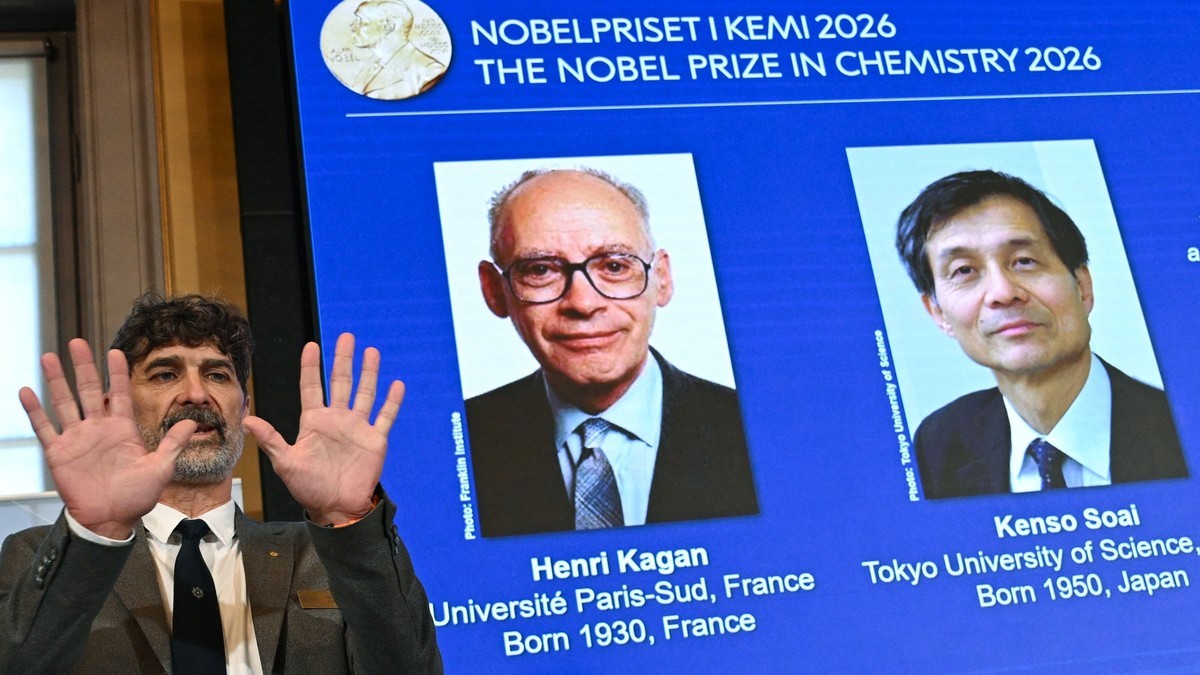
Two chemists who spent four decades answering a question that had defeated their field for more than a century got the call from Stockholm on Wednesday morning. One of them was out buying groceries.
The Nobel in Chemistry Goes to Two Men Who Solved Life's Mirror-Image Problem
Stockholm, Sweden — The Royal Swedish Academy of Sciences announced on Wednesday that the 2026 Nobel Prize in Chemistry goes to Henri B. Kagan, professor emeritus at Université Paris-Sud in France, and Kenso Soai, professor emeritus at Tokyo University of Science in Japan, "for the discovery of non-linear effects and autocatalysis in asymmetric organic synthesis." They share the prize equally. The award is worth 12 million Swedish kronor, about 1.2 million dollars or 904,000 pounds, and it recognises work that chemists say underpins how modern medicines are built.
What Happened in Stockholm
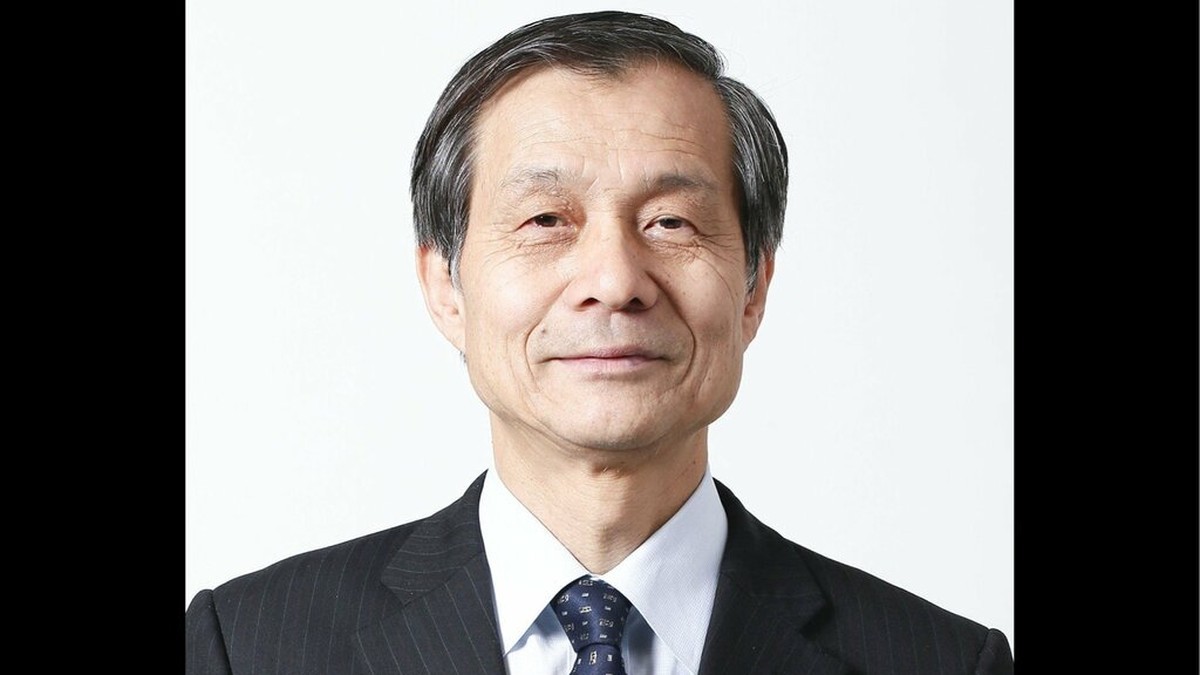
The prize was announced on Wednesday morning at the Academy's press conference in Stockholm, the third award of Nobel week after medicine on Monday and physics on Tuesday. Heiner Linke, chair of the Nobel Committee for Chemistry, told the room that the two men had provided "a solution to a chemical mystery that is over a century old: how homochirality can emerge spontaneously." The committee said their reactions "have been decisive for chemists who design reactions for the manufacture of pharmaceuticals." Kagan is 95 and was born in Boulogne-Billancourt, France, and took his doctorate at the Collège de France in 1960. Soai is 76, was born in Hiroshima, and completed his doctorate at the University of Tokyo in 1979. The wire services did not agree on the ages at first: several copies of the Associated Press dispatch still carried Soai as the 95-year-old before AP issued a correction clarifying that the figure belongs to Kagan.
What Homochirality Actually Means
Many of the molecules that make life work come in two versions that are mirror images of each other, like a left hand and a right hand. They look almost identical. They are not interchangeable. Amino acids, the building blocks of proteins, exist as both forms, yet living organisms use only one of them. The Academy's own explainer likened it to a locksmith who keeps cutting keys to order and keeps getting two mirrored blanks, where only one will fit the lock and the wrong one can damage it. Chemists call the phenomenon homochirality, from the Greek words for "same" and "hand." Chemistry professor Peter Somfai, a member of the committee, gave a plainer illustration: one mirror image of the molecule carvone smells of mint, he said, while the other carries a whiff of caraway.
The Riddle That Beat Chemistry for a Century
The puzzle is not new. The Academy traces the first link in the chain to Louis Pasteur, the nineteenth-century French chemist who died before the Nobel Prizes were first handed out in 1901. Pasteur was studying tartaric acid, important in winemaking, and noticed that bacteria fermented only one of its two forms, the one naturally found in grapes. That proved that some substances exist in two versions with genuinely different properties. But knowing the two forms existed was not the same as being able to choose between them. When chemists ran reactions in the lab, they got equal proportions of both mirror images, a fifty-fifty mix that is useless if you need just one. Driving a reaction toward a single mirror image became one of organic chemistry's standing frustrations.
Why It Matters: Thalidomide
The stakes were not academic. In the early 1960s, the sedative thalidomide caused birth defects in thousands of children, and when researchers went back through the chemistry they found that it was the mirror image of the active substance that did the harm. That scandal hardened the case for reactions that could deliver one form and not the other. Somfai put the point directly: the left-handed version of a drug can have one effect, the right-handed version another, and medicine needs methods that selectively prepare the one that works. Asked whether any specific drug could be tied to the laureates' work, Somfai declined to single one out and said the honest answer was broader. "I would say all of them," he said, "because we use this as a tool, we use this as an understanding, how to develop catalysts, how they function."
Kagan's 1986 Breakthrough
Kagan took the first decisive step in 1986, when he found a new way to manipulate such reactions. The assumption at the time was that a catalyst's handedness passed to the product in a straight line: use a catalyst that is slightly biased one way, get a product slightly biased the same way. Kagan showed the arithmetic did not have to work like that. When left- and right-handed versions of a catalyst were mixed, they formed combinations that behaved differently, and some barely drove the reaction at all. The consequence was counter-intuitive and enormously useful: a small imbalance in the catalyst could produce a much larger imbalance in the product. Chemists call the phenomenon a non-linear effect, and it gave them a lever for driving reactions toward one particular handedness.
Soai's Reaction: Two Percent In, Eighty-Seven Percent Out
Soai turned the insight into a working reaction. In 1990 he found that adding a zinc reagent to a particular aldehyde produced a molecule that was both autocatalytic and selective, though the product was less pure than the catalyst that started it. A 1995 paper in the journal Nature described the first chemical reaction with the potential to be homochiral. That year he showed that a reaction could amplify a tiny initial excess of one mirror image, taking a catalyst of only small purity and ending with a product far more strongly biased than what he began with. By 2003 he had gone further, demonstrating a reaction that snowballed on itself, amplifying a tiny chance imbalance between the two mirror images until more than 99 percent of the product carried the same handedness. The Nobel committee's background paper records a still more extreme case, in which starting material carrying almost no stereochemical bias produced a product more than 99.5 percent pure after three consecutive runs, an amplification of the stereochemical ratio by a factor of 630,000. The reaction now carries his name: the Soai reaction.
The Man Who Waited Twenty-Five Years
For Kagan, the call was a long time coming. In 2001 the chemistry prize went to William Knowles, Ryoji Noyori and Barry Sharpless for pioneering work in asymmetric catalysis, and the omission of the Frenchman regarded internationally as a father of the technique caused outrage among chemists in France. Twenty-five years later the committee came back for him. The Academy's citation credits him with the discovery of non-linear effects in asymmetric catalysis, described in its background paper as one of the most important classes of transformation in organic synthesis, and notes that the concept is now woven into the standard understanding of how asymmetric catalytic processes work. The same document spells out how strange his 1986 result looked at the time: it showed that the enantiomeric excess of a reaction's product could exceed that of the auxiliary used to run it, a situation, the Academy writes, that had previously been unthinkable. Kagan is now 95, and he is the older of the two laureates by nearly two decades.
"The Most Exciting Day in My Life"
Soai took the news by telephone from the Nobel Foundation during the announcement. He had been out shopping when the call came through, and he told the press conference he was delighted that the field itself had been recognised, praising what he called the many, many excellent researchers working in it. "This is the most exciting day in my life," he said. "I am very glad to share this prize with professor Henri Kagan." The committee was still trying to reach Kagan to tell him in person as the press conference got under way. For Japan, the award is a repeat: Kyodo News notes that Soai's win makes it two years running that a Japanese national has taken the chemistry prize, after Kyoto University's Susumu Kitagawa shared the 2025 award for porous materials that can store and release gases.
What the Committee Says It Proves
Linke called the reactions the two men developed "spectacular." Somfai went further and called one of them "probably the coolest experiment in organic chemistry," adding that the pair's work "reshaped our understanding of molecular chirality, how it is created, amplified, and transmitted." At a press conference he framed the question they answered as fundamental to biology itself: how a mirror image is created is "probably the most fundamental question in life, because somehow that happened four billion years ago when life was created," he said, and "now we have, for the first time, mimicked that in the lab." Robert Mokaya, president of the Royal Society of Chemistry, called it a powerful example of how fundamental chemistry underpins solutions to society's biggest challenges.
The Week Is Not Finished
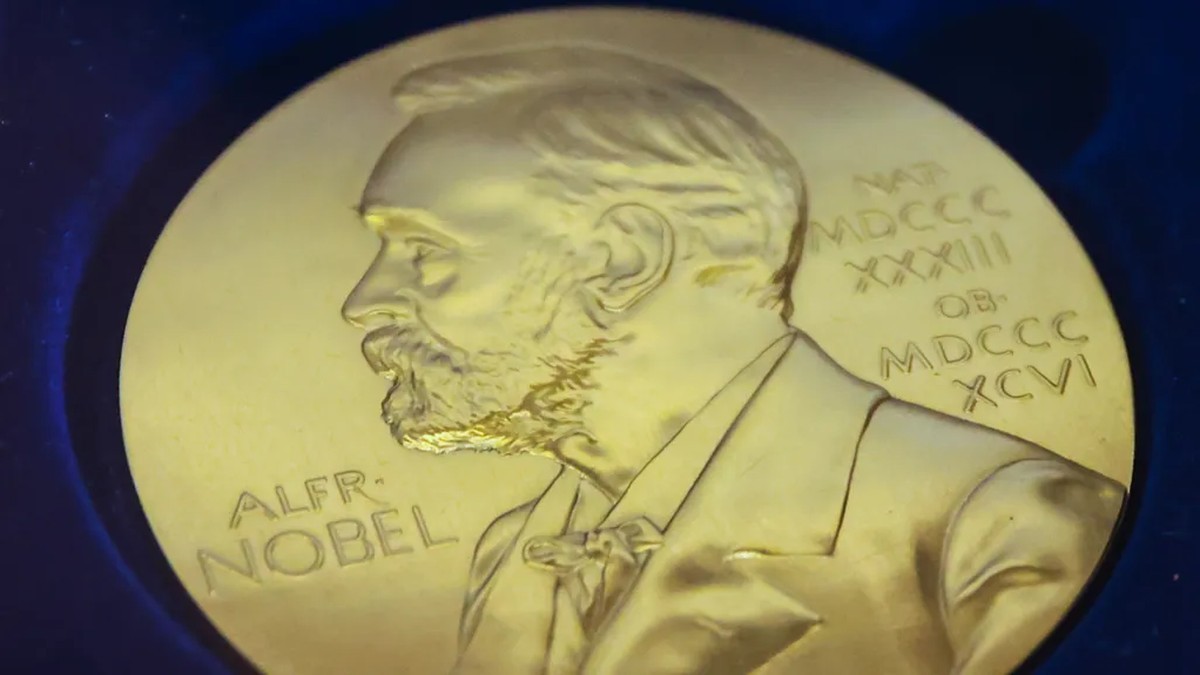
The chemistry prize closes the science half of Nobel week. Medicine went on Monday to Karl Deisseroth, Peter Hegemann and Georg Nagel for the light-based tools that let researchers switch brain cells on and off. Physics followed on Tuesday, honouring the Belgian physicist Francis Halzen for work using Antarctic ice to capture particles arriving from deep space. The literature laureate is due on Thursday, and the peace prize, the only Nobel presented in Oslo rather than Stockholm, lands on Friday. The economics prize closes the season on 12 October. The laureates will collect their medals from King Carl XVI Gustaf at a ceremony in Stockholm on 10 December, the anniversary of Alfred Nobel's death, followed by a banquet at the city hall.
By Jessica Ali, Staff Writer
This article was produced with AI-assisted research and editorial support. Sources: NobelPrize.org and the Royal Swedish Academy of Sciences, Reuters, The Associated Press, BBC News, The Guardian, Kyodo News, The Japan Times, Science, the Royal Society of Chemistry and Euronews. Images: Jonathan Nackstrand/AFP/Getty Images via BBC News, Kyodo News, and Beata Zawrzel/Getty Images via BBC News.
What's Your Reaction?
 Like
0
Like
0
 Dislike
0
Dislike
0
 Love
0
Love
0
 Funny
0
Funny
0
 Wow
0
Wow
0
 Sad
0
Sad
0
 Angry
0
Angry
0

Editor-in-Chief at Global1.News. Atlanta-based journalist who cuts through the BS and tells it like it is. Lead anchor, host, and the voice you hear when the spin stops and the truth starts.













Comments (0)