
France's School Revolt Hits Act Three as Riot Police Face Ten Brutality Probes
France's high-school protest movement staged its national Act Three day of action on 6 October 2026, with tear gas fired in Paris and Marseille, a 15-year-old losing a hand and a 16-year-old an eye, and Prime Minister Sebastien Lecornu defending police as ten brutality investigations opened.
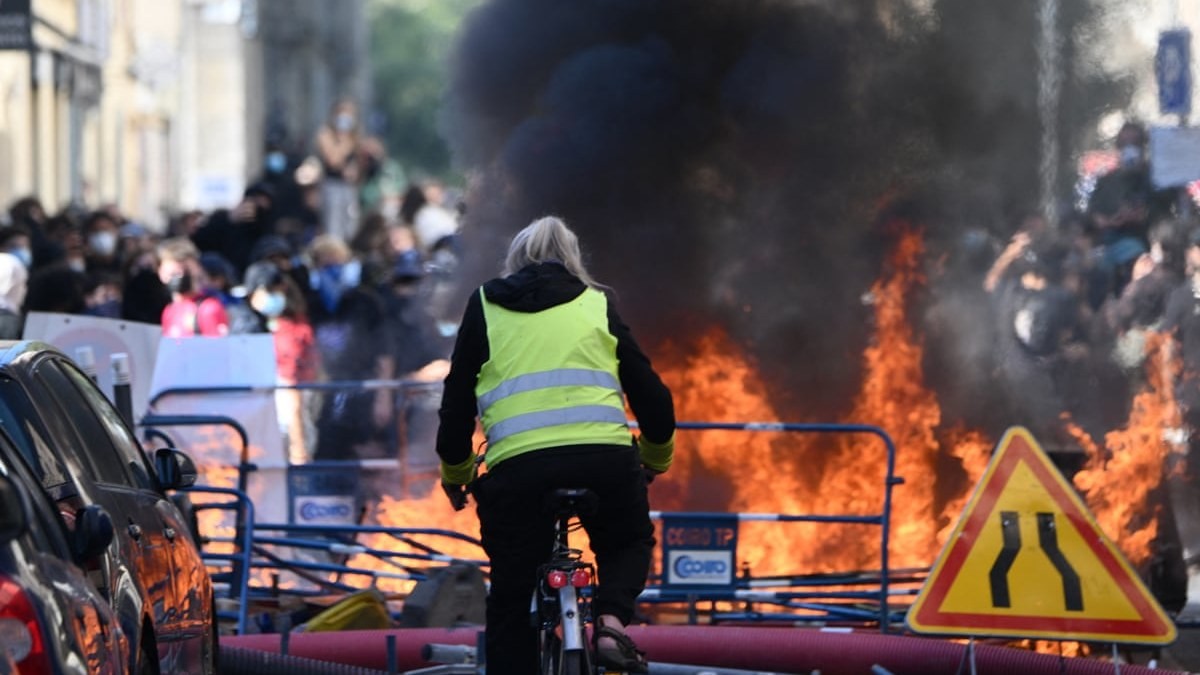
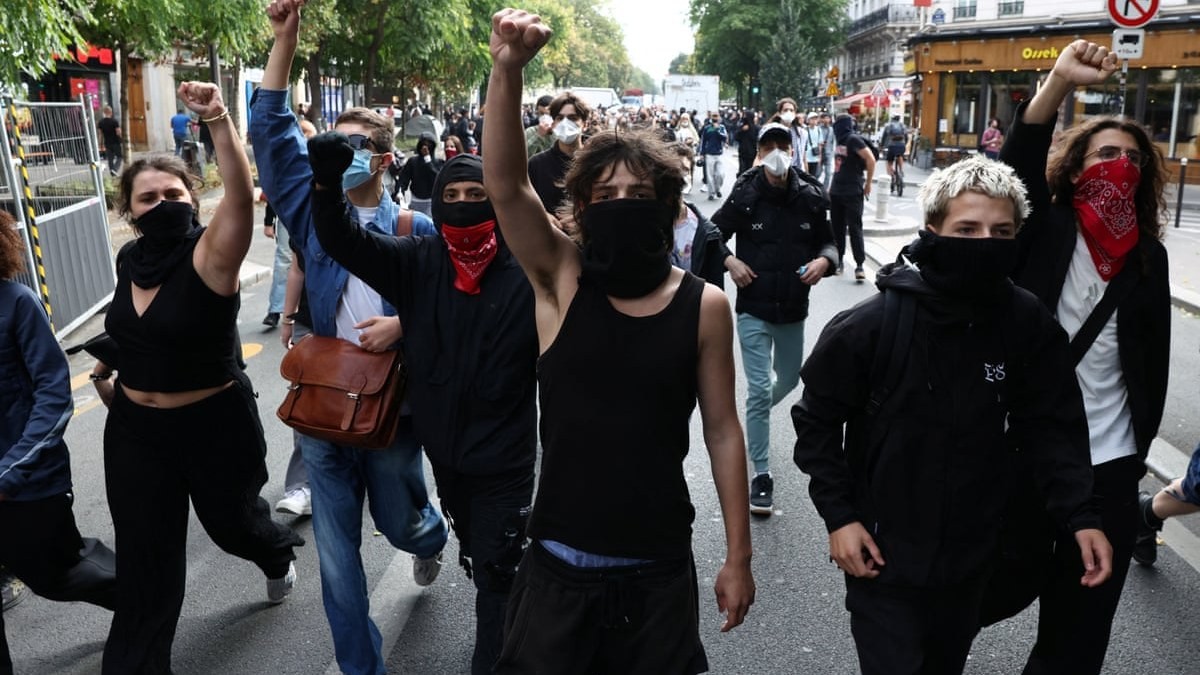
France's high-school protest movement staged its national "Act Three" day of action on Tuesday 6 October 2026, with demonstrations in Paris, Marseille, Lyon, Nantes, Lille, Toulouse, Nice, Bordeaux, Rennes, Strasbourg and elsewhere. Police fired tear gas in Paris and Marseille, per BBC and Reuters, as the interior ministry put turnout at about 86,000 protesters nationwide excluding the Paris region. The student body L'Union Etudiante said 450,000 had taken to the streets throughout France, calling it "absolutely historic," the BBC reported.
France's School Revolt Hits Act Three as Riot Police Face Ten Brutality Probes
Paris, France - The movement began in late September in the working-class banlieue suburbs of Paris and spread nationwide. On Tuesday it drew parents, university students, teachers and unions, including the CGT, France's largest union, whose members said they were there to "protect high-school students," per BBC. Prime Minister Sébastien Lecornu told parliament 215 students, 85 school workers and 715 gendarmes and police officers have been hurt since the protests began, the BBC, RTE, The Guardian and POLITICO reported.
Tear Gas in Paris and Marseille as France's School Revolt Hits Act Three
Police fired tear gas in Paris and in Marseille on Tuesday, according to BBC and Reuters. In Rennes, police used a water cannon and tear gas in the Place de la République, the BBC reported; later protesters lit a large garbage fire in Place Sainte-Anne. The prefect of Brittany and Ille-et-Vilaine said they were used to disperse a "hostile group" that threw "numerous projectiles" and tried to break through a police cordon; firefighters intervened under police protection, per BBC. In Lyon, masked protesters set barricades on fire and threw projectiles at riot police, per BBC and AFP. Authorities expected 20,000 to 40,000 in Paris, where the march was due to start at 14:00 local time, per RTE. One BBC reporter in Marseille described tear gas lingering: "I can feel it in my throat and eyes." Earlier in the week the damage was already severe: the education minister said 24 schools have been burned or ransacked since the movement began, per RTE, AFP and The Guardian. In Nantes, the entrance hall of Nelson Mandela high school was destroyed by fire, which the deputy head called arson. In Marseille, staff at the Victor Hugo high school were splashed with petrol; a firefighter was injured after rioters set a fire engine alight.
The Injuries That Changed the Story
On Monday 5 October, a 15-year-old boy in northern France lost his hand and part of his lower arm after picking up a police dispersal grenade, a "sting-ball grenade" fired by riot officers, per POLITICO, RTE, The Guardian and La Voix du Nord. The local prosecutor said he could not "say for certain whether the student picked up the grenade or whether it was thrown at him." In Tours, a 16-year-old lost an eye after being struck by a projectile that the prosecutor said may have been a sub-lethal riot police weapon, per POLITICO and The Guardian. A boy's jaw and teeth were shattered, leaving him barely able to eat with a straw in hospital, according to his mother, The Guardian reported. Earlier in the week, around 2 October, at least 65 school staff including 40 principals were injured, along with roughly 170 students, and more than 100 high schools suffered "severe damage," per Euronews.
Lecornu to Parliament: 'Accidents Happen'
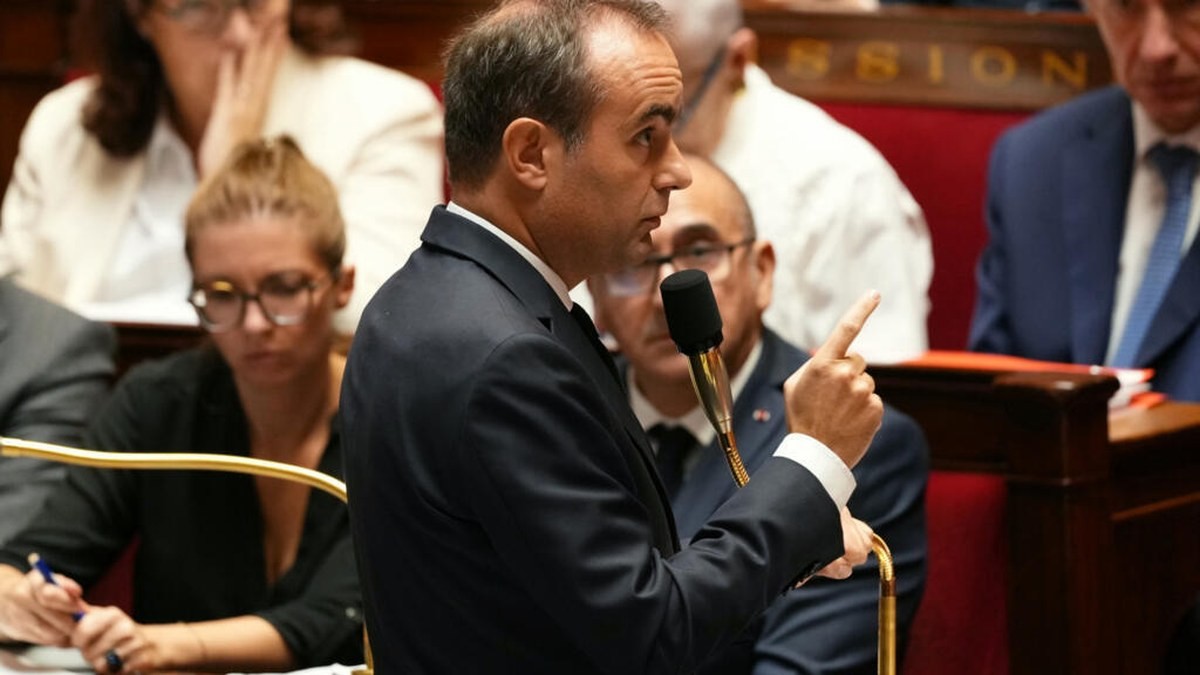
In parliament Tuesday afternoon, Lecornu condemned the violence: "(Ultra)violence must be condemned without condition. In a democracy that works, we cannot leave space for tolerance of violence," per BBC and POLITICO. He said: "Burning down a high school does not improve the state of high school buildings. Lynching a teacher does not help replace teachers." He rejected the label "police brutality," which he said implies officers had been given orders to use force: "Can accidents happen in such a sensitive public-order operation? The answer is yes. And I say accident, because I see the terminology being used — 'police violence'. 'Police violence' would suggest there were political instructions for police repression. That is false, it is a lie, and it casts opprobrium on the police of the Republic." He added: "In a democracy that works, the individual responsibility of individuals, of citizens, including minors, exists." He said it was not acceptable that there was "a normalisation of this violence against the staff of the national education system."
What the Students Are Actually Asking For
Protesters demand more funding and better working conditions in high schools, known as lycées: replacing absent teachers, smaller classes, repairs to crumbling and dilapidated buildings, lighter timetables, longer lunch breaks, and classrooms that cope with rising temperatures, per BBC and Reuters. Lecornu announced that classes in lycées will be suspended for half a day between Wednesday and Friday so that school heads can organise a "temps de démocratie interne," or internal democracy time, with students, per POLITICO. He promised to fix "everything we can correct" in Parcoursup, the criticised university-admissions platform: "Those who want Parcoursup abolished never say what they would replace it with." Asked whether it needs more transparency and simplicity, he said yes to both. After launching five "chantiers," or workstreams, Lecornu has ordered ministers to send their first proposals by the end of October, per RTE.
The Blame Game Ahead of 2027
The unrest erupts with just months to go before the 2027 presidential election to choose a successor to President Emmanuel Macron, who is stepping down after his maximum two terms, per BBC and Reuters. Jean-Luc Mélenchon, veteran leader of La France Insoumise and a declared 2027 presidential candidate, joined the Paris demonstration; a BBC correspondent described the crowd's excitement at his arrival and the chant "Mélenchon Président!" Mélenchon is currently either second or third in the presidential race, depending on the polls, per BBC. French intelligence agencies told a government crisis meeting that the protest movement had been initiated by politicians from the hard-left France Unbowed party, Reuters reported. LFI lawmakers reject the accusation, saying Macron's government is politicising the demonstrations ahead of the 2027 election. Mélenchon has denied responsibility for the violence. Marine Le Pen, the far-right, anti-immigration candidate high in the polls, accused LFI of a direct role, per POLITICO. In parliament, Lecornu told LFI's parliamentary group leader Mathilde Panot: "Lying about the government's intentions will not save you electorally."
Ten Police Investigations and a Charged Officer
Interior Minister Laurent Nunez said late Monday that police had launched ten internal investigations into allegations of brutality since the protests started, per RTE. Reuters earlier reported the interior ministry said three investigations into alleged police violence had been opened. A police officer who fired a projectile launcher that injured a high school student in Saint-Ouen-l'Aumône last week has been charged, multiple French outlets report, per BBC live coverage. Human rights organisations, including Amnesty International, have expressed "serious concern" about the "disproportionate police response" to protesters, the BBC reported. Boris Vallaud, leader of the centre-left Socialist group in parliament, said his lawmakers would introduce legislation addressing the use of sub-lethal weapons, which can cause irreversible harm, during high school protests, per POLITICO.
Why the Numbers Don't Agree
The reporting does not agree on scale. France's interior ministry said about 86,000 protesters took to the streets across France on Tuesday, a figure excluding the Paris region, per BBC, POLITICO and Reuters. L'Union Etudiante said 450,000 protesters had taken to the streets throughout France, calling it "absolutely historic," per BBC. On school closures, the education ministry earlier said 891 schools had suspended classes, totally or partially; the national secondary-students' union, the Union Syndicale Lycéenne, said 2,000 high schools had shut; RTE, citing AFP, reported teaching was disrupted at 589 of the country's 3,700 lycées and 32 universities. On arrests, the justice ministry said 5,060 people have been arrested since the protests began, 87% of them minors, with more than 1,800 prosecuted, including 1,483 minors, and 790 cases dismissed, per The Guardian. The interior ministry later said 6,100 people were arrested, the overwhelming majority minors, per BBC, Reuters and RTE.
A Country That Spends More Than Most on Its Lycees
According to the European Union, France's spending on education relative to GDP is the fifth highest in the EU27, behind Sweden, Finland, Belgium and Denmark, per BBC Paris correspondent Hugh Schofield. The absolute amount France spends per student is just below the EU average. According to the OECD, France spends close to the OECD average per student, but with strong differences by age group: below the average for primary and lower-secondary education, but 24% more than the average for upper secondary, meaning lycées. The BBC's Mark Lowen, reporting from Marseille, noted it was hard to see how the demands would be met by a government that urgently needs to rein in public spending. The Guardian has called this the biggest youth protest movement in decades; what began outside one school in a low-income Paris suburb has spread across the country and taken the government by surprise.
The Videos That Aren't From This Protest
Several viral videos on X claiming to show the recent protests are actually from months or years earlier, according to BBC Verify, by Lucy Gilder and Sarah Jalali. A clip of crowds dancing and cheering by a fire in front of the Eiffel Tower, in a post captioned "France has fallen" and viewed six million times, was first shared on 31 May and actually shows Paris Saint-Germain fans celebrating the Champions League final, per BBC Verify. Another post, viewed 2.7 million times, showing a man and woman outside a bar while a fire burns in the street, actually depicts protests in Bordeaux in March 2023, per BBC Verify. A post viewed nearly 500,000 times, captioned "the black uprising continues in France," used footage dated to December 2017, per BBC Verify.
What Comes Next
Lecornu's office called for "peaceful" gatherings and a return to "a structured, legal and democratic form of opposition," per POLITICO. The government is pushing legislation to make those responsible for damaging public property pay for repairs themselves instead of using public funds. Lecornu has said the draft law could allow compensation to be recovered from family allowances and housing benefits while ensuring a minimum income; CGT leader Sophie Binet said it would "end up targeting the most vulnerable families," per POLITICO. Justice Minister Gérald Darmanin said roughly two-thirds of those arrested were placed in police custody, and that parents whose children damage property should be required to pay reparations, per RTE. Education Minister Édouard Geffray said students should study remotely if protesters were blocking their schools: "Violence will not keep our students from their fundamental right to an education," per POLITICO.
By Jessica Ali, Staff Writer
This article was produced with AI-assisted research and editorial support. Sources: BBC, Reuters, AFP, POLITICO, The Guardian, RTE, Euronews and La Voix du Nord.
What's Your Reaction?
 Like
0
Like
0
 Dislike
0
Dislike
0
 Love
0
Love
0
 Funny
0
Funny
0
 Wow
0
Wow
0
 Sad
0
Sad
0
 Angry
0
Angry
0

Editor-in-Chief at Global1.News. Atlanta-based journalist who cuts through the BS and tells it like it is. Lead anchor, host, and the voice you hear when the spin stops and the truth starts.









Comments (0)