
Revealed: Government quietly dropped plan to prepare England for wildfires
Britain’s summer of 2026 has left a scarred landscape and a stark revelation: the government quietly abandoned a key element of its climate‑adaptation agenda – a nationwide wildfire risk programme – even as fire crews across England struggled with inadequate protective equipment.
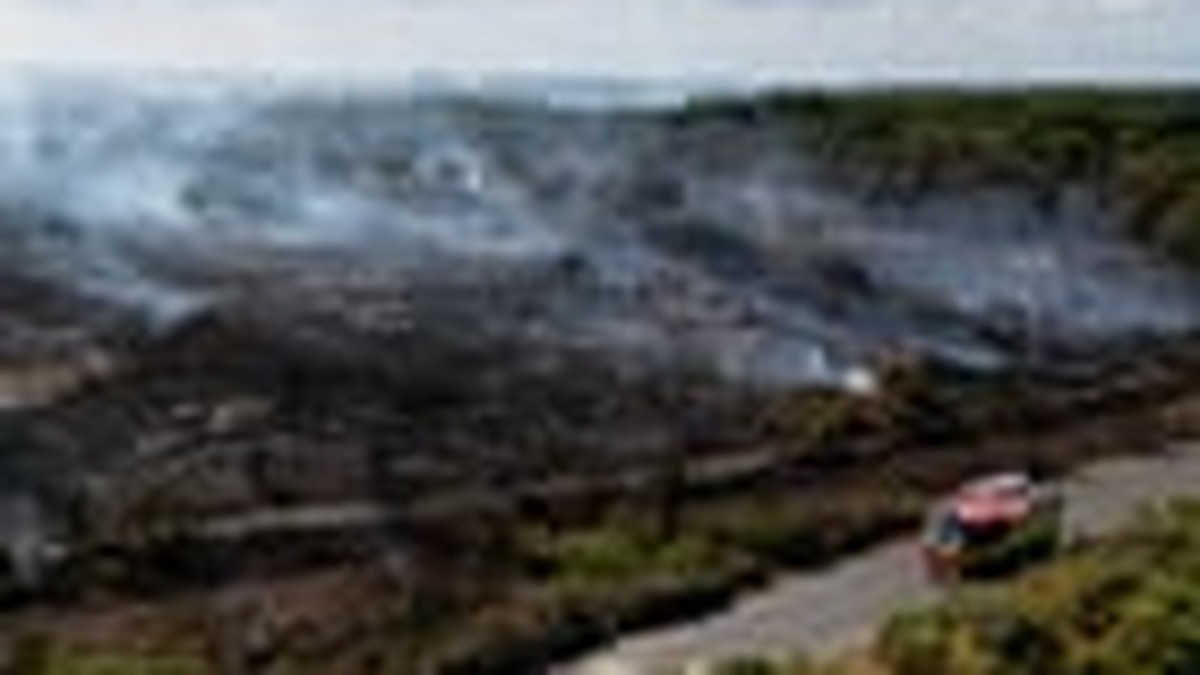
Britain’s summer of 2026 has left a scarred landscape and a stark revelation: the government quietly abandoned a key element of its climate‑adaptation agenda – a nationwide wildfire risk programme – even as fire crews across England struggled with inadequate protective equipment. The story, uncovered through a freedom‑of‑information request, exposes a gap between policy promises and on‑the‑ground preparedness, raising urgent questions about the nation’s resilience to a climate‑driven threat that is set to intensify.
The abandoned wildfire risk programme
In July 2023, the third national climate adaptation programme, then overseen by Prime Minister Rishi Sunak, pledged to run a wildfire risk scheme in England from 2023 to 2027. The aim was to adapt land‑management practices to the growing danger of wildfires, a risk that climate models have flagged as increasingly likely across the British countryside.
Documents obtained by environmental campaigner Guy Shrubsole reveal that the scheme was never set in motion. A current government spokesperson confirmed that the commitment “was made by the previous government but was not brought into effect”. Shrubsole described the omission as “appalling”, arguing that ministers only turned their attention to wildfire risk after the country was forced to confront a series of blazes this summer.
Summer 2026: a wake‑up call
Heatwaves and prolonged drought turned large swathes of England into a tinderbox, igniting record‑breaking wildfires. One of the most dramatic incidents unfolded in Stourbridge, West Midlands, where a blaze swept across an area that included several homes. The emergency prompted Prime Minister Andy Burnham – the Labour leader of Greater Manchester – to convene a Cobra meeting and temporarily ban the sale of disposable barbecues, a measure criticised as “too little, too late”.
The scale of the crisis forced the government to acknowledge the gap in preparedness. A spokesperson later insisted that “wildfire preparedness is now a government priority”, announcing a summit with fire and rescue partners to address equipment shortfalls and to build on the £100 million previously allocated to national resilience assets.
Fire services left exposed
New data from the Country Land and Business Association (CLAB) shows that more than half of the 29 fire services that responded to the information request lack dedicated wildfire personal protective equipment (PPE). The Suffolk Fire and Rescue Service, for example, faced an “apocalyptic” fire that threatened the Sizewell B nuclear power station and devastated a protected nature reserve, yet its crews were without specialised gear.
Standard particle‑filtering respirators, the type most services possess, do not guard against carbon monoxide – a dangerous component of wildfire smoke. Moreover, conventional PPE can be excessively hot and heavy, prompting firefighters to remove it and exposing themselves to heat, smoke and radiation hazards.
Training gaps widen the risk
The CLAB survey also highlighted a stark shortfall in wildfire training. In Cleveland, a mere five staff – just 1.2 % of the service – were qualified to provide tactical advice or command during a wildfire. In Cheshire, only 8.62 % of employees had received training for wildfire operations. Such limited expertise hampers coordinated responses and increases the likelihood of uncontrolled spread.
The Fire Brigades Union (FBU), represented by General Secretary Steve Wright, has called for comprehensive PPE provision and robust training programmes. Wright stressed that “better land management, stronger public awareness campaigns and long‑term prevention measures” are essential to bolster the country’s wildfire resilience.
Land‑management failures and calls for action
Beyond equipment and training, experts argue that land‑management practices have amplified the wildfire threat. Shrubsole urged the government to implement a plan to re‑wet peat bogs, restore lost ponds in agricultural fields and curb the practice of moorland burning by grouse estate owners. Peatlands, when dry, act as potent fuel sources; re‑wetting them could significantly reduce fire intensity.
Alistair Carmichael, Liberal Democrat MP and chair of the Commons Environment, Food and Rural Affairs Committee, warned that the lack of proactive land‑adaptation measures “begs further serious questions about whether this summer’s wildfires could have looked different with more resources on the ground”. His remarks echo a broader parliamentary concern that climate‑adaptation policies are being sidelined.
Government response and the road ahead
In response to the revelations, the government has pledged to convene a summit with fire and rescue partners to ensure services have the right equipment and resources. It also highlighted ongoing work with land managers to restore peatlands, create firebreaks and implement other landscape adaptations designed to prevent fires from igniting or spreading rapidly.
However, the promise to “build on the £100 million we previously gave to upgrade our national resilience assets” raises questions about the adequacy of funding, especially given the scale of the equipment shortfall identified by CLAB. The FBU’s demand for immediate PPE upgrades and expanded training suggests that the current financial commitment may fall short of what is required to protect crews and the public.
What the summer of 2026 means for future policy
The summer’s wildfires have turned a theoretical climate risk into a lived emergency, exposing a cascade of policy failures – from the abandonment of a dedicated wildfire programme to insufficient equipment, training and land‑management strategies. As the climate crisis drives hotter, drier conditions, the likelihood of similar or more severe incidents will only rise.
For Britain to avoid a repeat of this summer’s devastation, a coordinated approach is essential: reinstating the wildfire risk scheme, ensuring fire services are equipped with specialised PPE, expanding training to a meaningful proportion of crews, and implementing land‑management reforms that address the root causes of fire spread. The evidence presented by Shrubsole, Carmichael and the FBU makes clear that without decisive action, the country remains vulnerable to a threat that is no longer a distant possibility but an imminent reality.
This article was produced with AI-assisted research and editorial support. Reporting is based on the source material cited below. Sources: The Guardian UK; theguardian.com; Global1.News (06 October 2026).
By Erica Thornton, Staff Writer
What's Your Reaction?
 Like
0
Like
0
 Dislike
0
Dislike
0
 Love
0
Love
0
 Funny
0
Funny
0
 Wow
0
Wow
0
 Sad
0
Sad
0
 Angry
0
Angry
0

US Politics and Policy Correspondent at Global1.News. Based in Washington DC, covering American politics, policy, elections, and the courts. Knows how the system works and tells you what it actually means.















Comments (0)