
Takaichi's Abduction Gambit and the Long Shadow of the Tanaka Affair
Prime Minister Sanae Takaichi has staked her premiership on a promise that has eluded every Japanese leader for over two decades: a "breakthrough" on the abduction issue with North Korea.
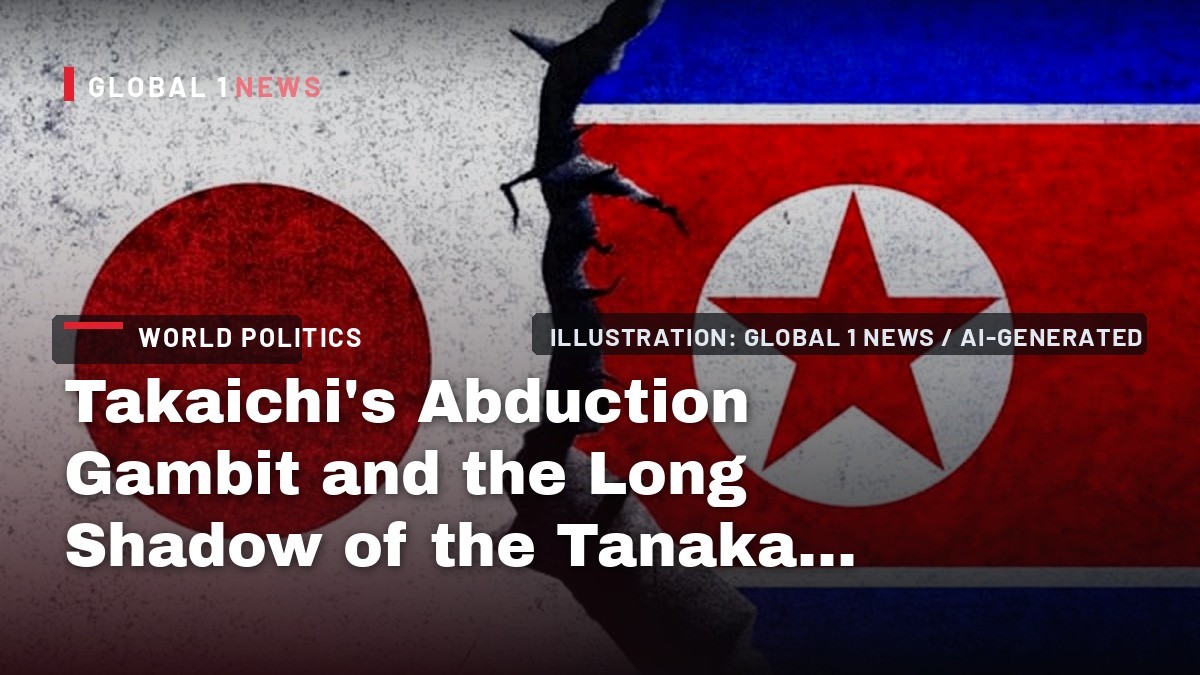
Takaichi's Abduction Gambit and the Long Shadow of the Tanaka Affair
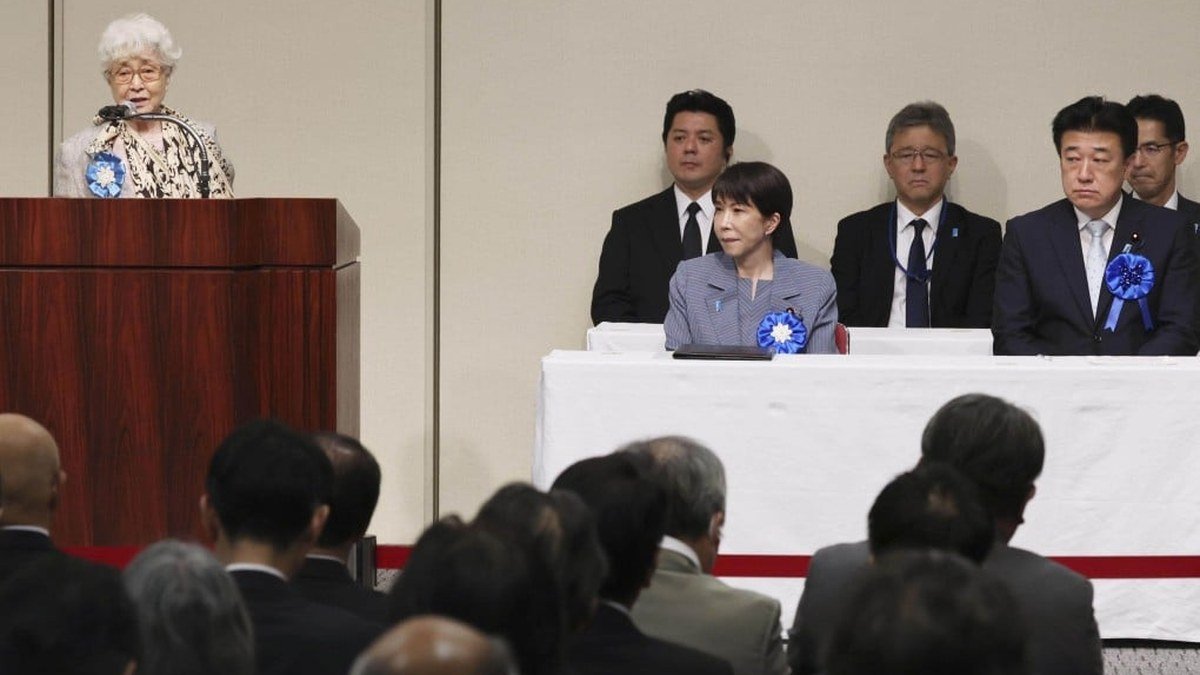
Prime Minister Sanae Takaichi has staked her premiership on a promise that has eluded every Japanese leader for over two decades: a "breakthrough" on the abduction issue with North Korea. Speaking at a rally in Tokyo on May 30, 2026, organized by family members of those abducted by North Korea and their supporters, Takaichi vowed, "Whatever it takes, I will resolve the abduction issue by making a breakthrough during my time (in office)." She has formally requested a summit with North Korean leader Kim Jong Un, urging him to take a "courageous step" together for the benefit of the peoples of the two countries.
Yet, as analysts and officials quoted by the Asahi Shimbun assess, Takaichi's request "appears likely to be rejected or ignored." The skepticism is not merely a function of Pyongyang's intransigence. As a new analysis in The Diplomat by Isozaki Atsuhito argues, the deepest obstacle to Tokyo's engagement with North Korea lies not in the current geopolitical landscape, but in a bureaucratic trauma that has cast a long shadow over Japan's Foreign Ministry for nearly a quarter-century: the "Tanaka affair." To understand why Japan structurally cannot commit to dialogue with North Korea, one must revisit the career of the diplomat who made the only two summits in history possible - and was destroyed for it.
The Historical Record: Only Two Summits in History
The diplomatic ledger between Japan and North Korea is remarkably sparse. As Isozaki notes in The Diplomat, "Only two Japan-North Korea summit meetings have ever been held, both between Japanese Prime Minister Junichiro Koizumi and former North Korean leader Kim Jong Il, in September 2002 and May 2004." The two countries do not maintain diplomatic ties, and no summit has been convened since the 2004 meeting in Pyongyang. The first summit, on September 17, 2002, was historic for a singular reason: Kim Jong Il admitted for the first time that North Korea had abducted Japanese citizens, apologized, and promised to prevent any further recurrence. In October 2002, five of the abductees returned to Japan after 24 years in North Korea. The Japanese government officially lists 17 Japanese nationals as having been abducted by North Korea in the 1970s and 1980s, according to Kyodo/SCMP reporting from May 30, 2026. The return of the five was a moment of national catharsis, but it also opened a wound that has never fully healed - because not all abductees came home, and the circumstances of the return were deeply controversial.The Architect of the 2002 Summit: Tanaka Hitoshi
The key figure who made Koizumi's historic visit possible was Tanaka Hitoshi, then the Director-General of the Asian and Oceanian Affairs Bureau of the Ministry of Foreign Affairs (MOFA). According to Isozaki's account in The Diplomat, Tanaka was the diplomatic ace who navigated the treacherous path to Pyongyang, securing the admission and apology from Kim Jong Il that no previous Japanese government had been able to extract. But the triumph was short-lived. After Kim Jong Il's admission and the return of the five abductees, public anger fell not only on North Korea but also on Tanaka. The controversy centered on a critical detail: not all abductees had returned, and it emerged that Tanaka had accepted a North Korean suggestion for a "temporary return" of roughly two weeks rather than permanent residency for the five abductees. In the inflamed atmosphere of October 2002, with the Japanese public demanding the immediate and permanent return of all abductees, this concession was seen as a betrayal. The Diplomat's Isozaki writes that Tanaka was "so thoroughly pilloried by Japanese conservatives as a 'traitor' that this once-promising diplomatic ace never became vice-minister for foreign affairs or ambassador to the United States." The trajectory of a stellar career was broken in a matter of weeks.Abe Shinzo's Exclusion and Tanaka's Fall
The political dynamics behind Tanaka's downfall are crucial to understanding the institutional memory of Japan's Foreign Ministry. At the time, Abe Shinzo served as Deputy Chief Cabinet Secretary under Koizumi. According to scholarly analysis by Wada Haruki published via the Asia-Pacific Journal Japan Focus (APJJF), Abe, who favored a hard line on the abduction issue, did not find out about the negotiations until they were revealed at a Pyongyang meeting of bureau heads of the two Foreign Ministries in August 2002. This exclusion was personal and political. As Isozaki notes, "Having taken a strong personal interest in the abduction issue, Abe could not forgive Tanaka for advancing negotiations without informing him." The government subsequently designated Abe to manage the abducted Japanese issue, formally separating Tanaka and then-Chief Cabinet Secretary Fukuda Yasuo from direction of Japan-North Korea negotiations. Tanaka was summoned to Diet deliberations, where he broke down in tears under withering criticism of how the negotiations had been handled. The image of a senior diplomat weeping before the Diet became a cautionary tale. For the career bureaucracy of MOFA, the lesson was unambiguous: pursuing North Korea diplomacy, however successful, could end one's career in disgrace. As Isozaki puts it starkly, "Having witnessed the keelhauling of Tanaka, even the most talented Foreign Ministry officials will not actively pursue North Korea diplomacy."
Takaichi's Gamble Against Structural Odds
It is against this backdrop that Prime Minister Takaichi's 2026 overture must be assessed. Takaichi, who became prime minister in October 2025, has made the abduction issue the centerpiece of her foreign policy. At the May 30 rally, she told the gathering, "We are tackling this issue seriously with a determination not to miss the slightest chance of making concrete progress as soon as possible, even by a day or an hour." Her request for a summit with Kim Jong Un, however, has been met with skepticism from multiple quarters. Kim Yo Jong, the powerful sister of Kim Jong Un, said in March 2026, as reported by AP via WTOP, that a summit between her brother and Takaichi won't happen if Japan sticks to "its anachronistic" approach. The Asahi Shimbun reports that experts and Japanese officials assess that Takaichi's summit request "appears likely to be rejected or ignored." The domestic roots of Takaichi's overture are significant. As an analysis in East Asia Forum (March 28, 2026) argues, Takaichi's push to engage North Korea is a "calculated attempt to resolve the abduction issue while strengthening her domestic authority and Japan's diplomatic influence." The abduction issue remains one of the most emotionally charged files in Japanese politics, and the families of the abductees - who organized the May 30 rally - wield considerable moral authority. For Takaichi, a conservative leader seeking to consolidate power, appearing to leave no stone unturned on the abduction file is politically essential, even if the diplomatic odds are long.Bureaucratic Memory and the Two-Level Game
The tension between Takaichi's political ambitions and the Foreign Ministry's institutional caution is a classic illustration of the "two-level game" in international relations. At the domestic level, Takaichi must satisfy a constituency that demands action on the abductions. At the international level, she must contend with a diplomatic apparatus that has been conditioned, for over two decades, to view North Korea engagement as a career-ending risk. The Tanaka affair created a perverse incentive structure within MOFA. The most talented officials, as Isozaki observes, will not actively pursue North Korea diplomacy because the potential downside - public vilification, Diet humiliation, and the end of a career - far outweighs any potential upside. This is not a matter of individual cowardice but of rational bureaucratic calculation. The Foreign Ministry's institutional memory has encoded the lesson of Tanaka's fall: engagement with Pyongyang is a trap. This structural aversion has profound implications for the prospect of Japan-North Korea normalization. Even if Takaichi were to secure a summit, the implementation of any agreement would require the active cooperation of the Foreign Ministry bureaucracy. But that bureaucracy has been taught, through the most painful possible lesson, that North Korea diplomacy is a poisoned chalice. The result is a diplomatic paralysis that no prime ministerial directive can easily overcome.Implications for Northeast Asian Security
The Tanaka shadow extends beyond the bilateral Japan-North Korea relationship. In the broader context of Northeast Asian security, Japan's inability to commit to dialogue with North Korea has significant consequences. It limits Tokyo's ability to play a constructive role in regional diplomacy, ceding the field to China, Russia, and the United States. It also complicates trilateral coordination with Seoul and Washington, as Japan's hard-line posture on the abduction issue can constrain the flexibility of allied approaches to Pyongyang. For South Korea, the implications are particularly acute. The Korea JoongAng Daily's reporting on Takaichi's summit request highlights the regional dimension: a Japan-North Korea rapprochement, however unlikely, would fundamentally alter the strategic calculus on the Korean Peninsula. Conversely, Japan's structural reluctance to engage means that the burden of dialogue with Pyongyang falls disproportionately on Seoul and Washington, a dynamic that can generate friction in the U.S.-Japan-ROK trilateral framework. The tragedy of the Tanaka affair is that it punished a diplomat for achieving a genuine breakthrough. The admission and apology extracted from Kim Jong Il in 2002 were unprecedented. But the incomplete return of the abductees, and the political firestorm that followed, transformed a diplomatic triumph into a cautionary tale. As Takaichi now discovers, the shadow of that affair still governs the behavior of Japan's diplomatic establishment. The prime minister may be willing to gamble her political capital on a summit with Kim Jong Un, but the institution she commands has been conditioned to run from the very opportunity she seeks. Until the Foreign Ministry's institutional memory is addressed - until the lesson of Tanaka Hitoshi is rewritten - Japan's commitment to dialogue with North Korea will remain, at best, a prime ministerial aspiration rather than a bureaucratic reality. This article was produced with AI-assisted research and editorial support. Sources: The Diplomat, MOFA, AP, Kyodo (SCMP), Asahi Shimbun, Korea JoongAng Daily, APJJF, East Asia Forum. By Prof. David Park, Staff WriterWhat's Your Reaction?
 Like
0
Like
0
 Dislike
0
Dislike
0
 Love
0
Love
0
 Funny
0
Funny
0
 Wow
0
Wow
0
 Sad
0
Sad
0
 Angry
0
Angry
0

Prof. David Park
East Asia/Technology Correspondent at Global1.News. Seoul-based voice covering Korean politics, technology, business, and culture. Analyzes how technology and geopolitics intersect across East Asia.















Comments (0)