
Second Monsoon Hits South Korea: Extreme Rain, Alerts
A late-season "second monsoon" is deluging South Korea with extreme rainfall — over 100mm per hour in places — triggering landslide cautions, emergency disaster alerts, and high-level government coordination as the KMA forecasts up to 200mm more in central regions.
Second Monsoon Hits South Korea: Extreme Rain, Landslide Alerts
Seoul, South Korea – September 1, 2026 — The second monsoon surge has moved the government into emergency coordination, with Prime Minister Han Seong-sook convening officials as rainfall totals across central and northern South Korea were forecast to exceed 200 millimeters in some areas. The Korea Meteorological Administration (KMA) has placed landslide crisis warnings at the "caution" level across ten cities and provinces, and emergency disaster text messages have been sent to residents in the hardest-hit districts. The late-season return of the monsoon front — arriving after a summer already marked by once-in-200-year floods on the southern coast — is testing both the country's forecasting capacity and its disaster response systems.
A Band of Rain Stretches Across the Peninsula
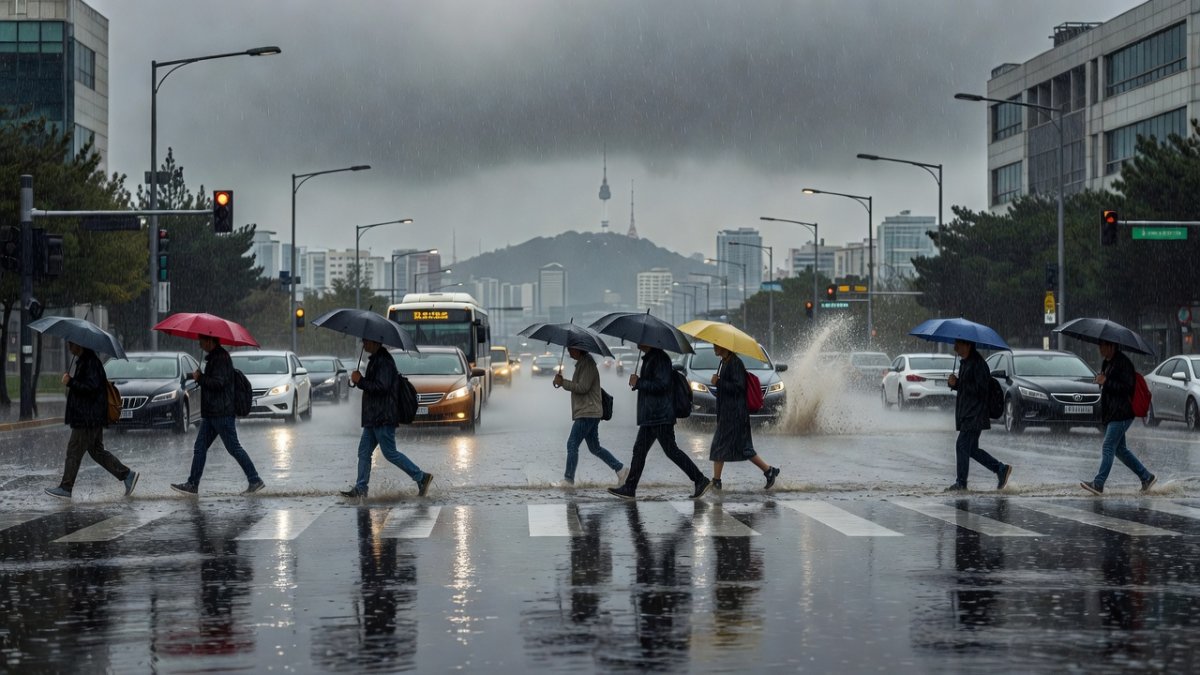
Radar imagery from the KMA on the morning of August 31 showed a long, wide band of rain clouds stretching over central Korea and the Honam region, which encompasses both North and South Jeolla Provinces. The heaviest precipitation was concentrated along the west coast of North Jeolla Province, where the convergence of moist air and a stationary front produced sustained, intense rainfall. The KMA issued Heavy Rain Warnings for Gimje, Buan, and other parts of North Jeolla Province, while Heavy Rain Advisories were activated for Daejeon, South Chungcheong Province, and additional areas of North Jeolla.
The overnight hours of August 30-31 were particularly treacherous. In Hongseong, South Chungcheong Province, hourly rainfall reached approximately 60 millimeters, a volume sufficient to trigger an emergency disaster text message (ho-u geupgin jaenam munja) to residents. These alerts, which are sent directly to mobile phones in affected areas, have become a standard feature of South Korea's disaster management protocol, but their activation underscores the severity of the localized downpours. By mid-morning, YTN reported that the rain clouds that had initially dumped heavy rain on South Jeolla had shifted northward over the central region, with Yeoju and Icheon in Gyeonggi Province expected to receive up to 100 millimeters through the morning hours.
Forecast: Up to 200mm More in Chungcheong
The KMA's forecast for the coming days paints a picture of sustained, unevenly distributed rainfall. By September 1, the Chungcheong region is expected to receive up to 200 millimeters or more of additional rain, while southern Gyeonggi Province and western North Jeolla Province could see 120 millimeters or more. These figures are not merely statistical abstractions; they represent a significant hydrological stress on urban drainage systems, agricultural land, and mountainous terrain already saturated by earlier August storms.
The rain is expected to ease in a staggered fashion. Southern regions and Jeju Island are projected to dry out by the night of August 31, while central regions should see conditions improve by the morning of September 1. Eastern Gyeonggi and Gangwon Province, however, may not clear until late afternoon on September 1. This phased withdrawal of the rain band reflects the complex interaction between the stationary front and the topography of the peninsula, where the Taebaek mountain range in the east often prolongs precipitation events.
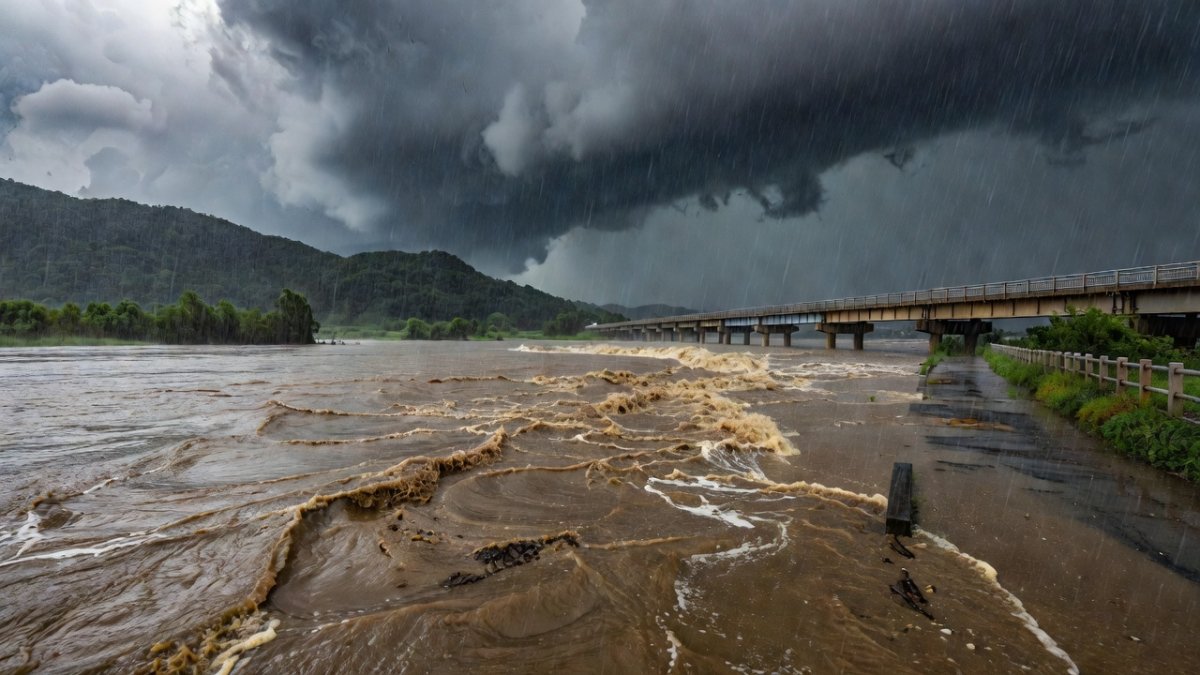
In response to the ongoing threat, the KMA has issued a landslide crisis warning level of "caution" (juui) across ten cities and provinces, including Gangwon, the Chungcheong region, and southern areas. The caution level — issued when slopes are already saturated and further rain is forecast — signals that localized landslides are possible and that local governments should step up monitoring of vulnerable slopes and prepare evacuation plans. The warning is particularly salient given the devastation wrought earlier in August, when Geoje and Tongyeong on the southern coast experienced once-in-200-year rainfall on August 22-23, resulting in landslides and significant property damage.
The Unusually Warm Yellow Sea: A Key Driver
Meteorologically, this second monsoon event is being intensified by an anomaly in the Yellow Sea. The Guardian's weather tracker reported on August 31 that weekend thunderstorms developed over the Yellow Sea, west of South Korea, and were expected to push eastward through Monday before easing on Tuesday. Critically, these storms were strengthened by an unusually warm Yellow Sea, with surface temperatures reaching approximately 29°C — roughly 4°C above the climatological average for this time of year.
This temperature anomaly is significant for several reasons. Warmer sea surface temperatures increase evaporation rates, injecting greater moisture into the atmosphere. When this moisture-laden air encounters the stationary front over the peninsula, it fuels more intense convection, leading to the extreme hourly rainfall rates observed. The 4°C deviation from the norm is not a trivial fluctuation; it represents a substantial shift in the regional energy balance, one that climatologists will likely study for years to come. The warm Yellow Sea also explains why the rain bands have remained so persistent, as the ocean continues to supply energy to the storm system even as it moves inland.
Prime Minister Han Seong-sook Mobilizes Government Response
The scale of the threat has drawn direct attention from the highest levels of government. According to The Guardian's weather tracker, South Korea's Prime Minister, Han Seong-sook, met with officials on August 31 to prepare for the heavy rain expected this week, with rainfall totals across central and northern parts of the country forecast to exceed 200 millimeters in some areas. This proactive engagement reflects the lessons learned from the August 22-23 disaster on the southern coast, where the sheer volume of rain overwhelmed local response capabilities.
Prime Minister Han, who took office in June 2026 after a National Assembly confirmation, is only the second woman to serve as South Korea's prime minister. Her background is notable: she previously served as CEO of Naver Corporation from 2017 to 2021 and as Minister of SMEs and Startups from 2025 to 2026. Her transition from the technology and business sectors to the highest echelons of government has been closely watched, and her handling of this natural disaster will be an early test of her administrative competence. The meeting on August 31 signals that the government is treating this second monsoon as a serious multi-day event requiring coordinated inter-ministerial response, rather than a routine late-summer shower.
Regional and International Context: A Summer of Extremes
The second monsoon in Korea is unfolding against a backdrop of regional meteorological turbulence. Monsoon warnings are also active in Thailand, where seasonal rains have caused localized flooding. In the Philippines, Tarlac province has been placed under a state of calamity due to prolonged heavy rain, a designation that unlocks emergency funds and expedites relief efforts. The north-west Pacific has been particularly active: Typhoon Bang-lang and Tropical Storm Etau developed near each other in the previous week and moved north without making landfall, while two additional systems near the Philippines and China currently have a medium-to-high chance of tropical cyclone development.
This regional pattern suggests that the atmospheric conditions driving Korea's second monsoon are part of a larger, interconnected weather system. The warm Yellow Sea, the active monsoon trough over Southeast Asia, and the potential for new tropical cyclones all point to a summer in which the usual meteorological boundaries have shifted. For South Korea, this has meant a jangma season that arrived later than its historical average — Seoul saw its monsoon onset around June 25-27, 2026 — and has been unusually erratic, alternating between extreme downpours and heat waves. Forecasters had flagged the possibility of a second monsoon in late August, and that prediction has now materialized with a vengeance.
Daily Life Disrupted: Heat, Rain, and Coastal Warnings
For residents, the second monsoon has created a peculiar duality of weather conditions. In the rain-affected areas, temperatures have dropped to around 26°C in Seoul and 25°C in Chuncheon, providing some relief from the summer heat. However, in parts of the Honam and Yeongnam regions and Jeju Island, heat warnings remain in effect, with apparent temperatures near 33°C. This juxtaposition of extreme rain and extreme heat within the same country on the same day is a hallmark of the erratic weather patterns that have defined the 2026 summer.
Coastal areas face a separate set of hazards. Sea levels are higher than normal, and strong swells are expected along the coast. Authorities have advised residents and visitors to avoid coastal areas, particularly during periods of high tide. The combination of heavy rain inland and rough seas offshore creates dangerous conditions for fishing vessels, recreational boaters, and those living in low-lying coastal communities. The advice to avoid the coast is not merely precautionary; it reflects the real risk of storm surge and rip currents that accompany such meteorological events.
As the rain begins to ease in the south and central regions, the focus will shift to recovery and assessment. The landslide caution level will remain in place until the ground has had time to drain, and local governments will need to inspect vulnerable slopes and infrastructure. The second monsoon of 2026 will likely be remembered not only for its intensity but for what it reveals about the changing character of Korea's summer climate — a shift toward more volatile, more concentrated rainfall events that demand ever more sophisticated forecasting and disaster response.
By Prof. David Park, Staff Writer
This article was produced with AI-assisted research and editorial support. Sources: Yonhap News Agency (August 31, 2026); The Guardian (August 31, 2026); KOREA NOW (YouTube).
What's Your Reaction?
 Like
0
Like
0
 Dislike
0
Dislike
0
 Love
0
Love
0
 Funny
0
Funny
0
 Wow
0
Wow
0
 Sad
0
Sad
0
 Angry
0
Angry
0

East Asia/Technology Correspondent at Global1.News. Seoul-based voice covering Korean politics, technology, business, and culture. Analyzes how technology and geopolitics intersect across East Asia.













Comments (0)