
Syria's Sanctions Relief: The Door Opens, But the House Is in Ruins
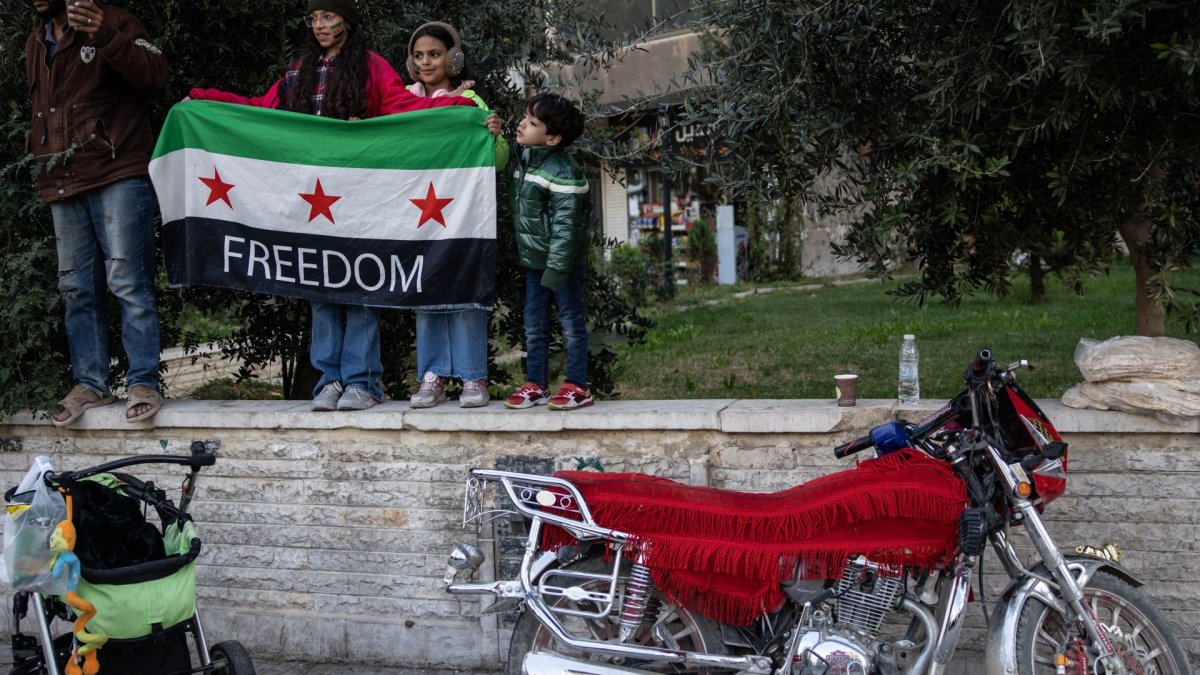
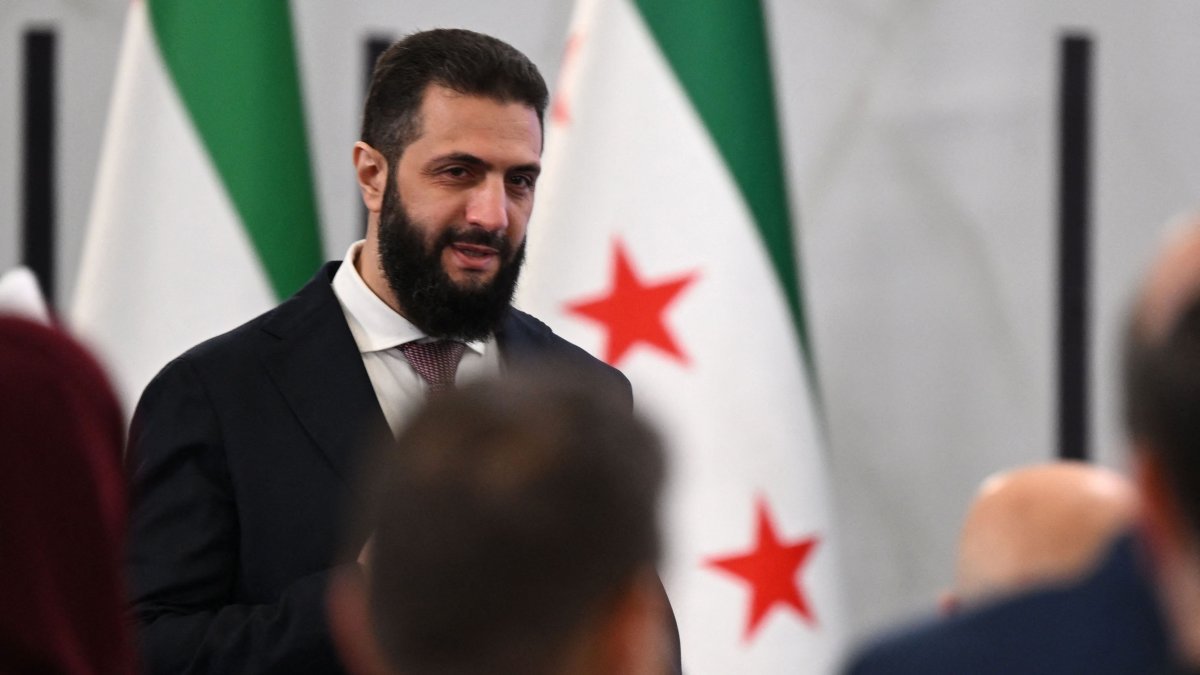
When the United States formally removed Syria from the State Sponsors of Terrorism list on August 24-25, 2026, President Ahmed al-Sharaa called it "historic." He was not wrong — but the word carries a double edge.
When the United States formally removed Syria from the State Sponsors of Terrorism list on August 24-25, 2026, President Ahmed al-Sharaa called it "historic." He was not wrong — but the word carries a double edge. The delisting ends a 14-year pariah status that crippled Syria's economy, yet it arrives in a country where the GDP has collapsed from roughly $60 billion in 2010 to about $10 billion today, where the banking system is in ruins, and where reconstruction needs are estimated at $216 billion. Sanctions relief opens the door; it does not rebuild the house.
Syria's Sanctions Relief: The Door Opens, But the House Is in Ruins
Damascus, Syria - August 27, 2026 - The sequence of events culminating in this week's delisting was methodical: Executive Order 14312 revoked the Syria sanctions programme in June 2025, the Syrian Sanctions Regulations were removed from the Code of Federal Regulations in August 2025, and the Caesar Syria Civilian Protection Act was repealed on December 18, 2025. The European Union had already removed its economic sanctions in May 2026. The final American step — coordinated by the State, Treasury, and Commerce Departments — was the removal of Syria from the terrorism list and corresponding sanctions relief.
For al-Sharaa's government, this is the culmination of a diplomatic offensive that included a direct phone call with US President Donald Trump on May 31, 2026, during which sanctions relief and reconstruction were discussed. But the delisting is not a blanket waiver. Targeted US restrictions and export controls remain in force, a nuance Washington has stressed in its public announcements. The relief is real; the reset is partial.
The Scale of Collapse: From $60 Billion to $10 Billion
The numbers tell a story of near-total economic destruction. Syria's GDP in 2010 stood at approximately $60 billion, a diversified economy with a functioning manufacturing sector, agricultural exports, and a regional services hub in Damascus and Aleppo. Today, that figure hovers around $10 billion. The 2026 government budget of approximately $10.5 billion is the most ambitious fiscal framework since the collapse — but it is a budget for a state that must simultaneously pay salaries, subsidize basic goods, and begin reconstruction with virtually no domestic capital base.
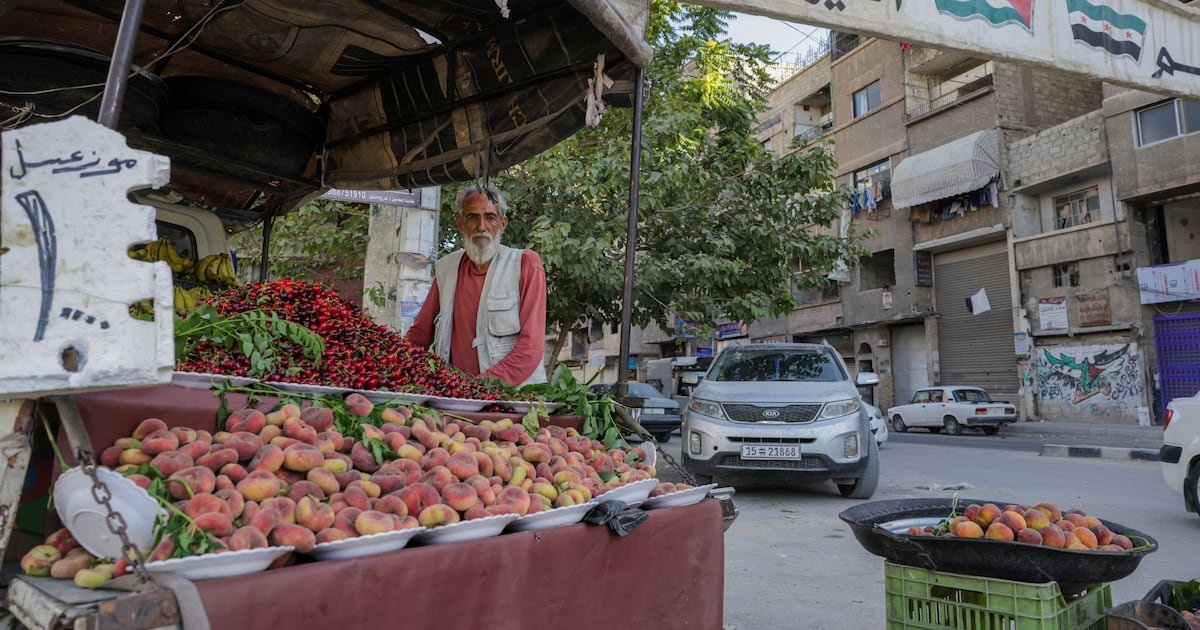
The human cost is equally stark. Unemployment remains endemic, poverty rates are among the highest in the region, and the Syrian pound's purchasing power has deteriorated dramatically since 2011. The banking sector, once the backbone of Syrian commerce, is functionally broken: international correspondent relationships were severed years ago, capital flight emptied private accounts, and the state's own finances were sustained through printing money and informal networks. Reintegrating Syria into the global financial system is not a switch to be flipped; it is a process of rebuilding trust, infrastructure, and institutional capacity that will take years.
The $216 Billion Question: Who Pays for Reconstruction?
The Israeli Institute for National Security Studies (INSS) published a July 2026 report titled "The Race for $216 Billion: Syria's Economy and Reconstruction Efforts in the al-Sharaa Era." The title is apt: the figure is not a plan, but a battlefield. Reconstruction financing is the central geopolitical contest of post-war Syria, and the players are positioning themselves with clear strategic objectives.
The Gulf states — particularly Saudi Arabia and the United Arab Emirates — have signaled interest in Syrian reconstruction as part of their broader economic diversification strategies. For Riyadh and Abu Dhabi, Syria represents both a humanitarian opportunity and a strategic investment: access to reconstruction contracts, influence in Damascus, and a counterweight to Turkish and Iranian presence. The Gulf's calculus is straightforward: if they do not fund Syria's rebuilding, someone else will — and that someone will shape Syria's future orientation.
Turkey, which maintains significant military presence in northern Syria and has deep economic ties to the opposition-held areas that are now integrating into state structures, views reconstruction through the lens of its own economic and security interests. Ankara wants a stable Syria that does not generate refugee flows or provide a haven for Kurdish militant groups. The dissolution of the Syrian Democratic Forces (SDF) into Syria's military in late August 2026 removed a major internal security complication, but Turkey's caution about Kurdish autonomy remains a persistent undercurrent in its Syria policy.
DP World and the Trade Corridor Gambit
Perhaps the most strategically significant economic development is DP World's $800 million port program at Tartous. The Dubai-based logistics giant has installed three new mobile cranes, lifting the port's capacity by 40%, and is planning a 400-kilometer Syria-Jordan rail segment. This is not merely infrastructure investment; it is a geopolitical play. The proposed corridor positions Syria as an alternative trade route bypassing the Strait of Hormuz, through which roughly 20% of global oil trade passes.
For the Gulf states, a functioning Syria-Jordan corridor would provide a land-based alternative to Hormuz, reducing vulnerability to Iranian threats or maritime disruptions. For DP World, it extends the company's network of ports and logistics hubs across the Eastern Mediterranean and Red Sea. For Syria, it offers the prospect of becoming a transit hub rather than a dead end — a role that could generate transit fees, logistics employment, and downstream economic activity. The corridor's viability depends on security, infrastructure quality, and regional cooperation, but the strategic logic is sound: Syria's geography, once a curse, could become its greatest economic asset.
State-Building Priorities: Mining, Electricity, and Institutional Capacity
Al-Sharaa's March 2026 state-building priorities — stimulating economic growth, reducing unemployment, and attracting foreign investment — are ambitious but face immediate structural constraints. The April 2026 decrees establishing a Syrian Mining Company and a Syrian Electricity Company, with boards comprising sector specialists and ministry representatives, signal an attempt to professionalize state economic institutions. But these entities are being created in a vacuum: the civil service was hollowed out by years of war, corruption, and sanctions; technical expertise fled the country; and the electricity grid operates at a fraction of pre-war capacity.
Electricity is the binding constraint on everything else. Without reliable power, factories cannot operate, hospitals cannot function, and foreign investors will not commit. The new Syrian Electricity Company faces a chicken-and-egg problem: it needs investment to rebuild generation capacity, but investment requires confidence that the grid can be maintained and that payments will be collected. Fuel imports, similarly, require hard currency that the state does not have. The sanctions relief helps — it allows international companies to engage — but it does not solve the fundamental liquidity crisis.
Iran's Diminished Role and Israel's Caution
The regional balance has shifted dramatically. Iran, which spent over a decade propping up the Assad regime with military advisors, proxy militias, and financial support, has seen its influence in Syria diminish sharply. The fall of the Assad government and the rise of al-Sharaa's administration — which has no historical ties to Tehran — has left Iran on the outside looking in. For Gulf states and Israel alike, this is a welcome development, but it creates a vacuum that other actors are racing to fill.
Israel's position is characterized by strategic caution. Jerusalem has conducted strikes against Iranian-linked targets in Syria for years and maintains a wary posture toward any military buildup near its borders. The INSS report's focus on Syria's economy suggests Israeli analysts are watching the reconstruction race closely, concerned that foreign investment could bring with it military dimensions. Israel's interest lies in a weak, stable Syria that does not threaten its security — a delicate balance that reconstruction could disrupt if it empowers hostile actors.
The Gulf states, for their part, are not merely competing with Turkey and Iran; they are also competing with each other. Saudi Arabia and the UAE have distinct visions for Syria's future, and their investment strategies reflect broader rivalries over regional leadership. The reconstruction race is thus not a single contest but a multi-layered game involving Gulf competition, Turkish ambitions, Iranian residual influence, Israeli security concerns, and great power interests — with the United States, Russia, and China all maintaining stakes in Syria's outcome.
The Hardest Work Is Only Beginning
Sanctions relief is a necessary condition for Syria's recovery, but it is far from sufficient. The structural collapse of the Syrian economy — destroyed infrastructure, a shattered currency, a banking system in ruins, endemic unemployment, and poverty — means that the hardest work is only beginning. The $216 billion reconstruction bill will not be paid by any single actor; it will require a coordinated international effort, private investment, and a sustained commitment from the Gulf states, Western countries, and international financial institutions.
The al-Sharaa government's credibility rests on its ability to deliver tangible improvements in living standards. Syrians who endured 14 years of civil war, displacement, and economic devastation are not patient. They expect the peace dividend to materialize in the form of jobs, electricity, functioning public services, and a currency that holds its value. The international community, for its part, will be watching whether Syria's new leadership can govern effectively, combat corruption, and create an environment conducive to investment.
The regional race for influence in Syria is already underway, and the winners will be those who can combine financial resources with strategic patience. The Gulf states have the money; Turkey has the geographic proximity and economic heft; Iran retains residual networks; Israel holds military leverage. Syria's future will be shaped by how these actors interact — and by whether the Syrian state can navigate between them without becoming a proxy for any single power.
For now, the delisting is a moment of hope. But hope, in the Middle East, is a fragile commodity. The real test of Syria's recovery will come in the months and years ahead, as reconstruction contracts are signed, foreign investors arrive, and the Syrian people begin to rebuild their lives. The door has opened. Whether Syria can walk through it — and who walks with it — will define the region's next decade.
By Malik Hassan, Staff Writer
This article was produced with AI-assisted research and editorial support. Reporting is based on sources cited in the article.
What's Your Reaction?
 Like
0
Like
0
 Dislike
0
Dislike
0
 Love
0
Love
0
 Funny
0
Funny
0
 Wow
0
Wow
0
 Sad
0
Sad
0
 Angry
0
Angry
0
Middle East Correspondent at Global1.News. Based in Beirut, covering politics, conflict, energy, and society across the Middle East. Brings context and depth to a region often reduced to headlines.











Comments (0)