
How Christian Networks in Asia Are Shaping Support for Israel
In the midst of a growing chorus of criticism toward Israel in North America and Europe, a distinct and increasingly influential voice is emerging from Asia and the broader Global South.
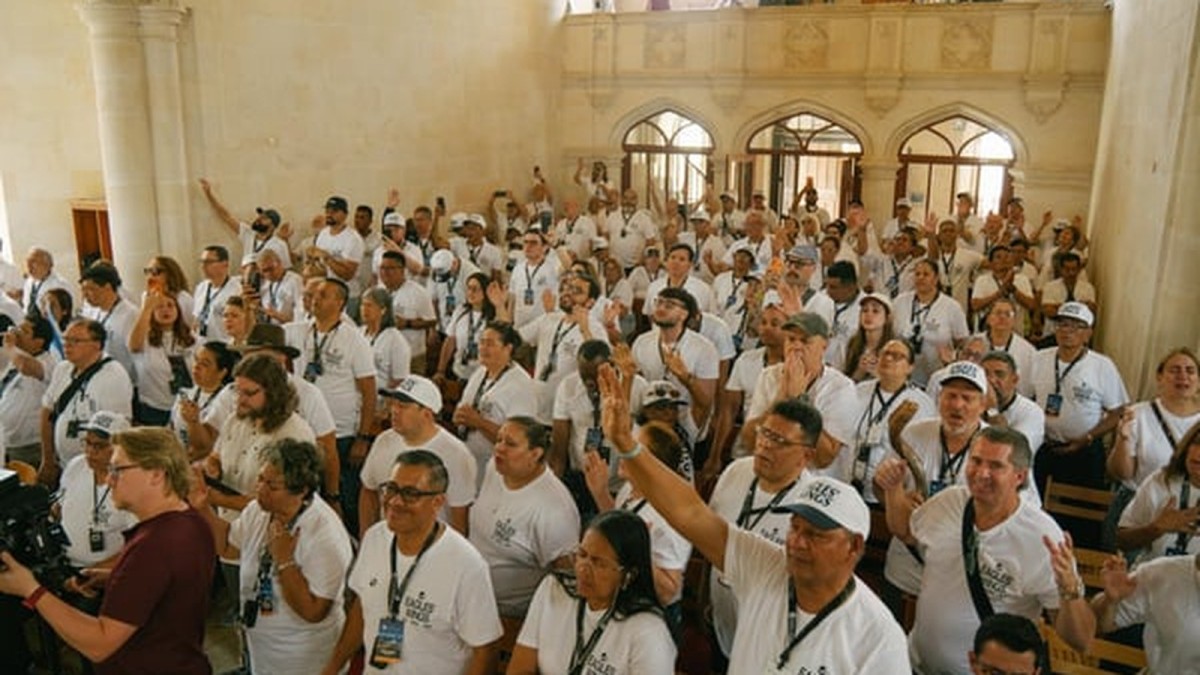
In the midst of a growing chorus of criticism toward Israel in North America and Europe, a distinct and increasingly influential voice is emerging from Asia and the broader Global South. Over the past ten days, more than 550 Christian leaders from 51 nations gathered in Jerusalem for the Eagles’ Wings delegation, a pilgrimage that underscores the depth of evangelical support for Israel across the region. The delegation, timed to coincide with the Jewish holiday of Sukkot and the third anniversary of the October 7th attack, offered participants a direct encounter with Israeli society and a platform to convey those experiences back to their own congregations. This article examines the scale of that mobilization, the underlying demographics of Asian evangelical communities, and the strategic implications for Israel’s diplomatic outreach.
Scale of the Eagles’ Wings Delegation
The recent Eagles’ Wings mission brought together more than 550 prominent Christian leaders, each representing sizable followings in their home countries. Organized in collaboration with Israel’s Ministry of Foreign Affairs and led by Bishop Robert Stearns, the delegation spanned ten days and featured a series of events designed to deepen participants’ connection to Israel. One highlight was the “Awake Jerusalem at the Tower of David” ceremony on October 3, which attracted hundreds of leaders and was broadcast by the Daystar Television Network, extending its reach to audiences worldwide.
Beyond the flagship event, the delegation incorporated intensive educational tours, known as Nexus Leadership Missions, and the “Israel Experience” program for college‑age students. Since its inception three decades ago, Eagles’ Wings claims to have facilitated visits for over 25,000 Christians, illustrating a sustained effort to shape evangelical perceptions of Israel through firsthand exposure.
Filipino Evangelical Leadership
Among the delegation’s participants, senior Filipino pastor Bishop Dr. David A. Sobrepeña stood out as a representative of the Philippines’ substantial evangelical sector. Bishop Sobrepeña heads Word of Hope Christian Ministries, a network that operates 43 satellite churches and conducts roughly 70 services each Sunday across Manila. In his remarks, he emphasized the spiritual significance of praying in Jerusalem and the responsibility of relaying Israeli narratives to his congregations, reflecting a broader pattern of Filipino evangelical engagement with Israel.
A Pew study cited in the source material indicates that 67 percent of Filipino Pentecostals surveyed expressed sympathy for Israel, underscoring the depth of pro‑Zionist sentiment within a nation where evangelical adherents number an estimated 13 million amid a predominantly Catholic population. This sizable constituency positions the Philippines as a “heavy hitter” on the East Asian evangelical pro‑Zionist front.
South Korean and Singaporean Evangelical Communities
The source material highlights South Korea’s evangelical landscape, noting the presence of nearly 9 million evangelical and Pentecostal Protestants. These believers regularly display the Israeli flag during rallies and prayers, signaling a visible alignment with Israel’s cause. While specific organizational details are not provided, the sheer scale of the Korean evangelical population suggests a potent base for mobilizing support.
In Singapore, roughly 8 percent of the population participates in a network of influential evangelical megachurches. Within this context, an active Christian Zionist movement orchestrates fundraising, educational tours, and pro‑Israel forums. Though the exact numbers of participants are not disclosed, the description points to a well‑organized community capable of influencing public discourse in a city‑state known for its strategic geopolitical positioning.
Western Antisemitic Trends and Their Contrast
The delegation’s timing reflects a stark contrast with rising antisemitic incidents reported in Western nations. In 2025, the Anti‑Defamation League recorded 6,274 antisemitic events across North America. The Hillel organization documented 2,334 incidents on U.S. campuses during the 2024‑2025 academic year, describing them as a record high. In Europe, the Community Security Trust logged 3,700 incidents in Britain for 2025, the second‑highest annual total, while French authorities reported 1,320 antisemitic acts in the same year, labeling the figure “historically high.”
These statistics illustrate a growing polarization over Israel in the West, a backdrop against which the Asian evangelical mobilization appears both counter‑cultural and strategically valuable for Israel seeking allies beyond its traditional Western partners.
Strategic Implications for Israel
Israel’s diplomatic calculus increasingly acknowledges the importance of relationships with Asia and the Global South. The gathering of 550 Christian leaders from 51 nations demonstrates a tangible network capable of shaping public opinion and policy within their respective societies. As the source material notes, the “potential benefits that Israel stands to reap from fostering non‑traditional alliances” hinge on cultural, religious, and interpersonal connections that may translate into political support.
Given the documented enthusiasm of evangelical communities in the Philippines, South Korea, Singapore, and elsewhere, Israel can leverage these ties to counterbalance the diplomatic challenges posed by heightened antisemitism and anti‑Israel sentiment in the West. The personal testimonies and narratives carried back by leaders like Bishop Sobrepeña could inform grassroots advocacy, fundraising, and media outreach, thereby reinforcing Israel’s global standing through a diversified alliance portfolio.
Historical Roots of the Evangelical‑Israel Connection
Eagles’ Wings traces its origins to Bishop Robert Stearns, a staunch supporter of Israel who has publicly advocated for moving the U.S. embassy to Jerusalem and has addressed legislative bodies such as the House of Lords and the Israeli Knesset. His 2008 book, “Evangelicals and Israel: The Story of American Christian Zionism,” frames Israel as a strategic bulwark in the region and underscores a theological commitment to defending the Jewish state. This ideological foundation has guided the organization’s mission to bring “tens of thousands of evangelical Christians” to Israel, fostering a sense of personal connection that translates into sustained advocacy.
The emphasis on “firsthand encounters” reflects a broader evangelical belief that pilgrimage and direct experience are essential for shaping theological understanding and political posture. By institutionalizing such visits through programs like Nexus Leadership Missions and the “Israel Experience,” Eagles’ Wings institutionalizes a pipeline of informed, motivated supporters who can influence discourse in their home countries.
Future Trajectories and Challenges
Looking ahead, the durability of this evangelical support will depend on several factors. Continued geopolitical tensions in the Middle East could test the resilience of these alliances, while internal dynamics within Asian churches—such as leadership changes or shifts in theological emphasis—may affect the scale of future mobilizations. Moreover, the effectiveness of translating pilgrimage experiences into concrete political advocacy remains an open question, particularly in societies where religious influence on policy varies.
Nonetheless, the 2026 Eagles’ Wings delegation illustrates a clear and growing conduit through which Asian evangelical networks can impact Israel’s diplomatic landscape. As Western antisemitic incidents climb, the strategic value of these non‑traditional alliances is likely to increase, positioning faith‑based diplomacy as a notable complement to conventional statecraft in the years to come.
This article was produced with AI-assisted research and editorial support. Reporting is based on the source material cited below. Sources: The Diplomat; thediplomat.com; Global1.News (06 October 2026).
By Kenji Tanaka, Staff Writer
What's Your Reaction?
 Like
0
Like
0
 Dislike
0
Dislike
0
 Love
0
Love
0
 Funny
0
Funny
0
 Wow
0
Wow
0
 Sad
0
Sad
0
 Angry
0
Angry
0

Japan Correspondent at Global1.News. Tokyo-based voice covering Japanese politics, technology, economy, and culture. Tracks the intersection of tradition and innovation in one of the world's most dynamic societies.















Comments (0)